General
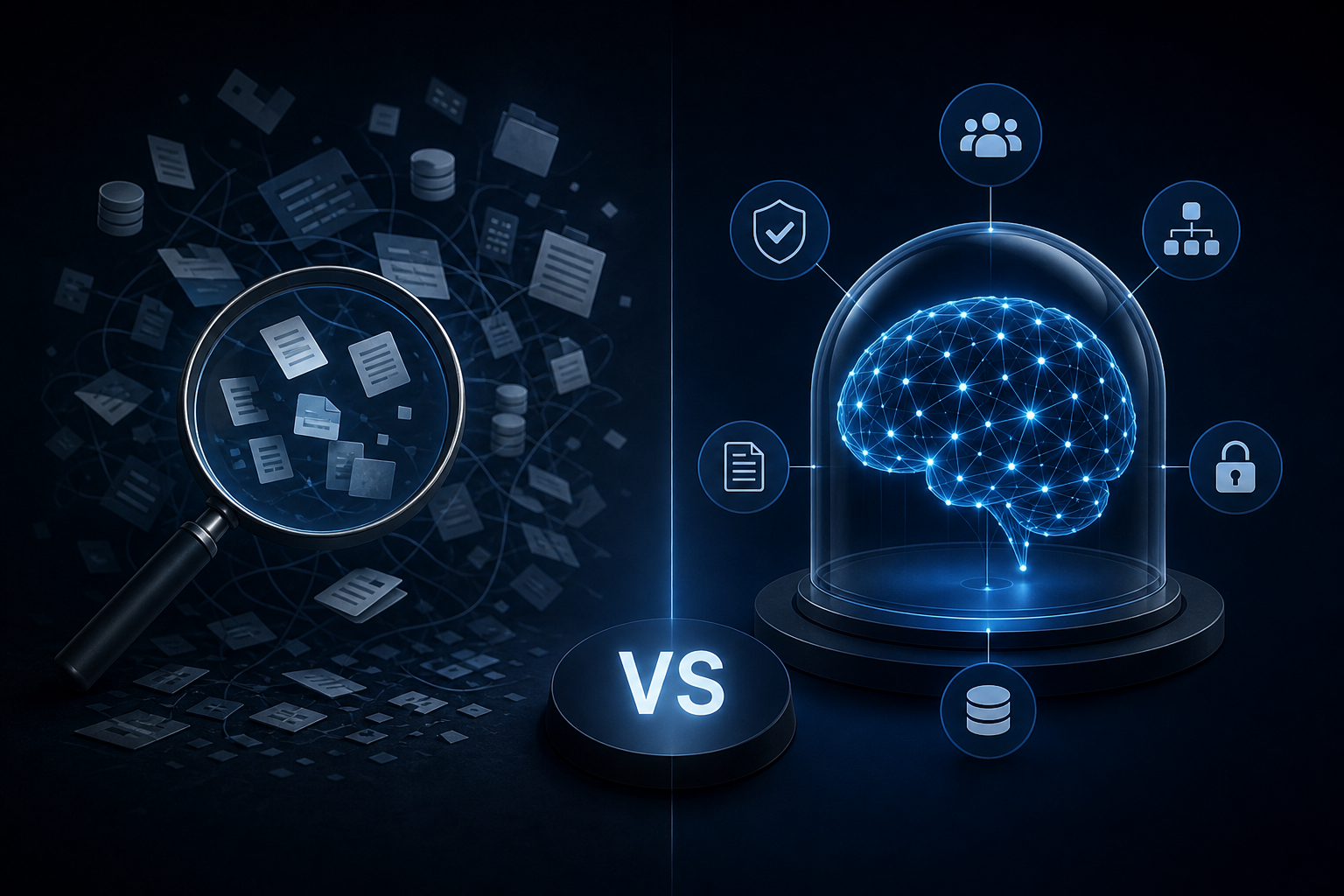
Enterprise AI Search vs. a Governed Company Brain: Key Differences
Discover how enterprise ai search differs from a governed company brain and which knowledge approach your team actually needs to act on trusted data.
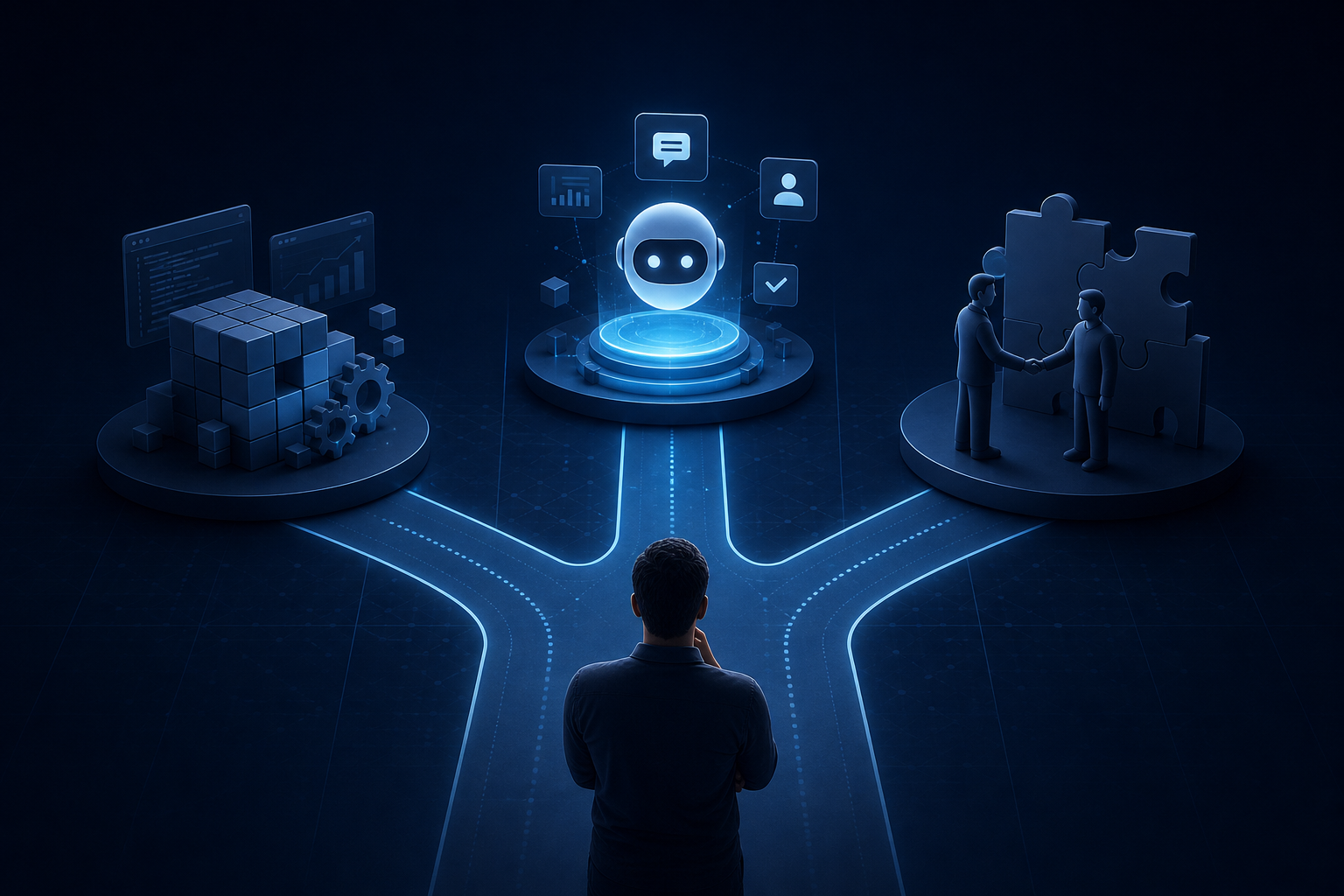
Explore custom ai agent development paths: build in-house, buy pre-built, or partner with a specialist. Find the right fit for your team today.
Growing teams choosing custom AI agent development face three realistic paths: build in-house, buy a pre-built platform, or partner with a specialist firm. The right choice depends on your workflow complexity, internal ML capacity, and how quickly you need agents running in production, not on sticker price alone.
Most teams frame this as a cost question. It isn't. The real question is whether your deployment actually ships and keeps running after week one. When agent deployments stall before production, the cause is rarely the underlying model. It's state management, context loss, and nobody owning the operating layer once the build is done.
This article walks through each path so you can match the right option to your team's actual situation before you commit budget. Each section covers a specific path: what it costs, who carries the risk, and when it makes sense.
Each path has a distinct profile across cost, speed, and who carries the risk after launch. The table below maps the main options so you can orient yourself before reading the detail sections.
| Option | Best for | Time to production | Failure risk | Ownership |
|---|---|---|---|---|
| LangGraph (in-house build) | Teams with ML engineers and complex stateful workflows | Longest; full build cycle | High without dedicated ops support | Full client ownership |
| ZoryxAI Systems (pre-built/specialist) | Teams needing task-specific agents fast (lead follow-up, outbound) | Faster than in-house | Lower for single-task agents | Vendor-managed |
| Centigen AI (governed specialist) | Business-critical processes needing audit trails and human escalation | Varies by integration scope | Lower with governance layer | Client-owned with vendor support |
| AI Agents Directory (marketplace) | Teams exploring options before committing to a build | Immediate discovery | Depends on chosen agent | Varies by listed tool |
According to a LangChain survey of professionals, 57.3% of respondents now have AI agents running in production. That sounds encouraging, but it also means a large share of teams still haven't gotten there.
In-house builds give you the most control and full ownership of the output. They also carry the highest risk of stalling before you see a single result.
LangGraph is the dominant framework for this path. It handles stateful, cyclical agent workflows that simple chain-based models cannot support. Complex multi-step processes need an orchestration layer like LangGraph, but the framework itself is only part of the problem.
An in-house build means owning every stage from discovery to controlled release, and that pace assumes a team that already knows what it's doing. Most growing companies don't have two or three ML engineers available to own this work from discovery through controlled release. Projects commonly run into the tens of thousands of dollars once you account for engineering time, infrastructure, and iteration cycles.
When in-house deployments fail, the cause is rarely model quality. It's inadequate state management, missing escalation paths, and no one accountable for keeping the agent connected to real business context after launch. If your team can't staff that accountability, in-house is the wrong path regardless of your budget.
For a detailed breakdown of what external development actually costs by engagement type, the 2026 AI automation agency cost guide covers that math specifically.
Pre-built platforms and marketplace tools trade customization for speed. That's a reasonable trade for some workflows and a costly one for others.
ZoryxAI Systems builds bespoke AI agents for specific tasks: lead follow-up, outbound sales outreach, and similar repeatable processes. Starter packages focus on a single task with one round of revisions, per zoryxaisystems.com. That scope works well if your problem is well-defined and bounded. It breaks down when your workflow crosses multiple tools or requires agents to make context-dependent decisions. Pricing is by custom quote, per zoryxaisystems.com.
AI Agents Directory takes a different approach. It's a centralized marketplace where you can discover, evaluate, and compare business-oriented AI agents before committing to a build or a vendor. It follows a freemium model with premium search filters, though some sources note a limited number of tools in the catalog. It's most useful early in your evaluation, when you're still mapping what's available.
Pre-built platforms can reach a positive return faster than an in-house build, provided the agent's task scope matches your actual workflow.
When a workflow is business-critical, touches sensitive data, or requires a human in the loop at specific decision points, a governed specialist is worth the additional cost.
Centigen AI builds AI agents specifically for these conditions. Their deployments include approval gates, audit trails, and human escalation paths built into the architecture from the start, per meduzzen.com. They specialize in RAG-based solutions, which means the agent draws from a structured, governed knowledge layer rather than relying on general model knowledge.
This is also where Singular Innovation's approach fits. Singular Innovation builds AI-native operating systems for businesses by consolidating scattered data sources, automating recurring workflows, and deploying AI agents called HyperAgents inside the tools a company already uses. The result is a Company Brain: a governed, auto-updating knowledge layer that gives every team member and AI worker a single source of truth. The entire system is handed over fully owned by the client from day one.
The distinction between a governed specialist and a pre-built platform is the operating layer. A pre-built agent executes a task. A governed deployment keeps the agent connected to your actual business context, your approval logic, and your data as it changes. That connection is what determines whether an agent is still useful six months after launch, not just six days after.
For a closer look at how this kind of deployment works in practice, the AI agent deployment overview covers the full architecture and what each phase of a governed rollout involves.
If you want to skip the long engagement and move faster, the no-consulting-engagement deployment guide lays out how that works.
Three questions separate the right path from the wrong one. Work through them in order.
Step 1: Define the specific operating change. Identify a recurring workflow where context loss or delayed decisions create a measurable business consequence. Not "we want AI to help with sales." Something like: "Our ops lead spends 11 hours a week pulling data from HubSpot, Airtable, and QuickBooks to produce a report that's already outdated by the time it lands." That specificity tells you whether you need a single-task agent or a multi-system deployment.
Step 2: Review the delivery method. Understand how the workflow moves through discovery, design, implementation, and controlled release with each option you're considering. In-house builds require you to own every phase. Pre-built platforms compress the middle stages but hand you a narrower output. Specialist partners own the full path and hand you a working system.
Step 3: Evaluate the operating layer. Ask who stays accountable after launch. Does the deployment stay connected to your data as it changes? Are there approval gates for decisions that carry real consequences? A Retool survey of 817 builders found that 35% of teams have already replaced the functionality of at least one SaaS tool with a custom build. The teams that made that shift successfully didn't just build agents. They built the operating layer that keeps agents useful.
If you can staff all three steps internally, in-house is viable. If you can't, a specialist partner is the faster and lower-risk path to production.
Prices and plan limits verified as of October 2026.
Yes, with significant constraints. Pre-built platforms and marketplace tools like AI Agents Directory let you deploy task-specific agents without ML expertise. For complex, multi-system workflows, you'll hit limits quickly. Failures cluster in teams that underestimated the state management and context work that comes after the initial build, not in the model selection itself.
Specialist partners and pre-built platforms can compress the in-house timeline significantly, depending on workflow complexity and how much of your data layer is already organized. Teams without existing ML capacity typically take longer. The more your data is already organized before you start, the faster any path moves.
The primary cause of failed deployments is inadequate state management rather than model quality. Agents lose context between steps, escalation paths are missing, and no one owns the operating layer after the build phase ends. Governance architecture and clear accountability matter more than the choice of underlying model.
For a specialist partner such as Singular Innovation, pricing depends on scope. In-house builds vary widely depending on engineering time and infrastructure. Pre-built platforms offer lower entry points but narrower scope. The right budget question is not "what's the minimum?" but "what does the workflow cost us right now, and what does a failed deployment cost us?"
LangGraph is the leading production framework for stateful, cyclical agent workflows. It handles complex workflows that simple chain-based models cannot support. The framework is well-suited for teams with ML engineers who can own the orchestration and state management work through to production.
The build-vs-buy decision for custom AI agent development is not primarily a cost question. It's a question of who owns the operating layer after launch and whether your deployment survives contact with real business data. In-house builds offer full control but require ML capacity most growing teams don't have. Pre-built platforms move faster but cap your workflow complexity. Specialist partners carry the highest upfront cost and the lowest production failure risk.
Start by writing down the one recurring workflow where context loss or delayed decisions cost your team measurable time or money each week. If the workflow crosses three or more tools and touches decisions that carry real consequences, a governed specialist is almost always the faster path to a working system.
Discover how enterprise ai search differs from a governed company brain and which knowledge approach your team actually needs to act on trusted data.
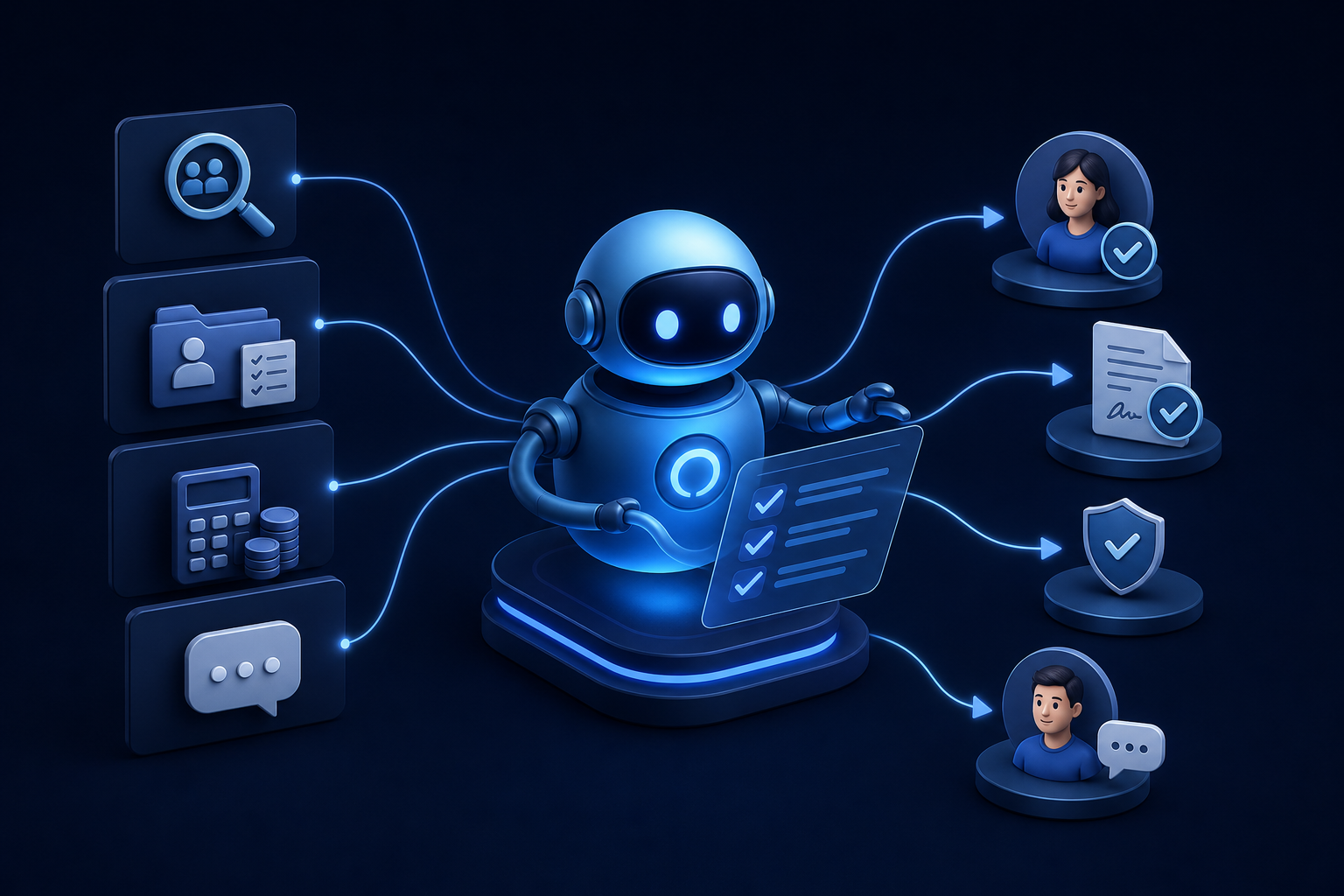
Discover how ai for hr automation handles recruiting, onboarding, payroll checks, and employee Q&A so your team can focus on work that matters.
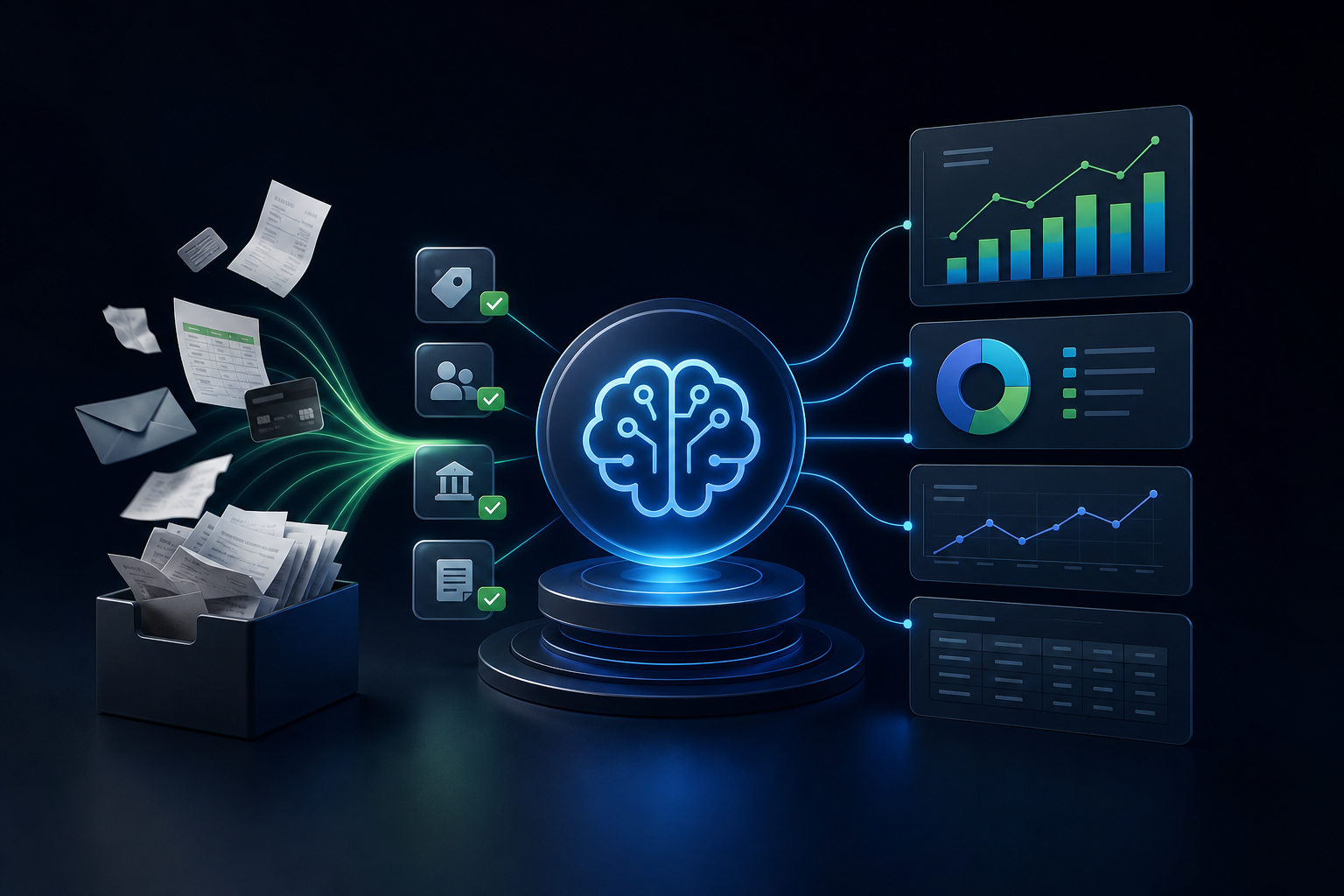
Learn how quickbooks ai automation with Intuit Assist eliminates manual data pulls so your finance team gets faster, cleaner, and more accurate reports.


