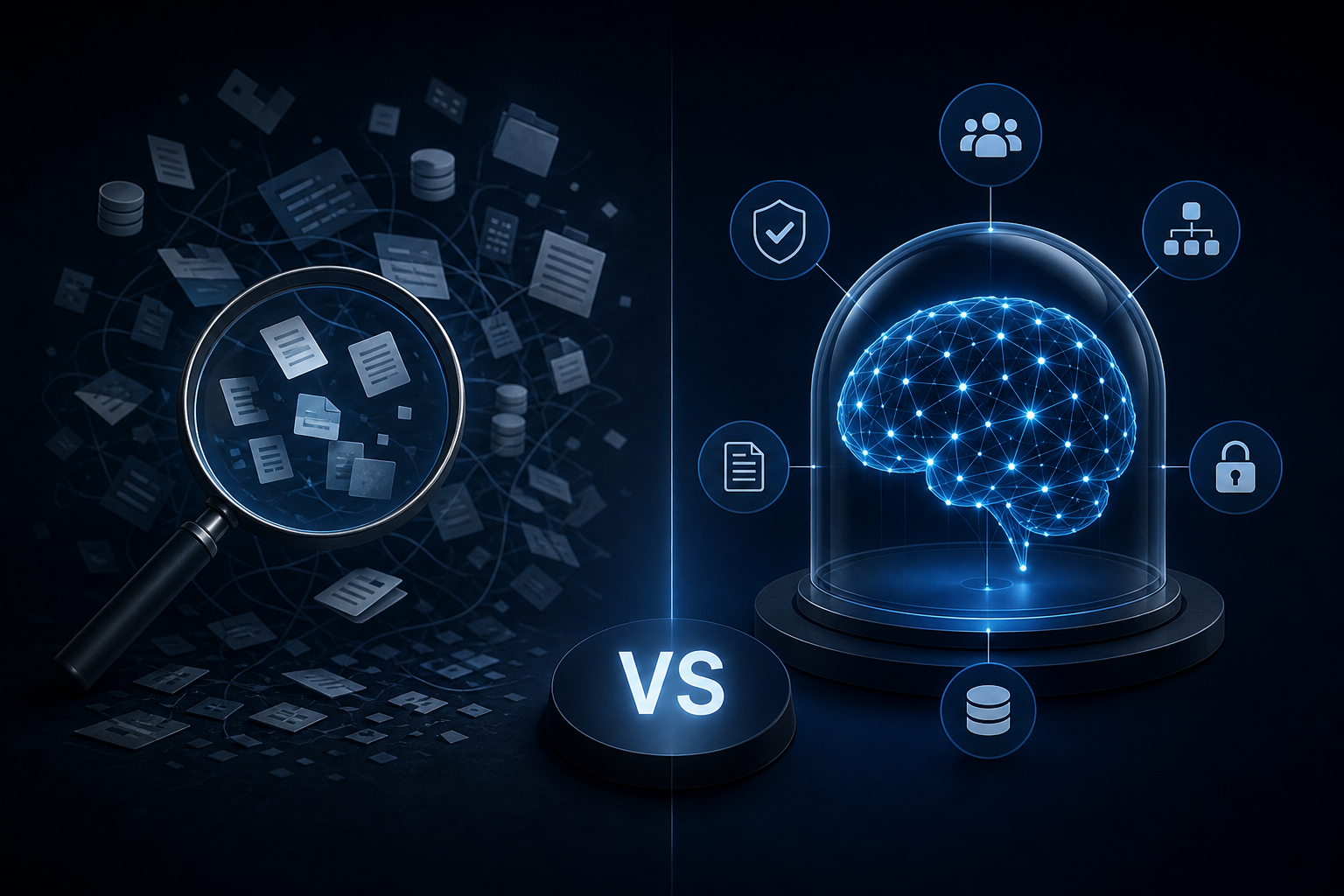
General
Enterprise AI Search vs. a Governed Company Brain: Key Differences
Discover how enterprise ai search differs from a governed company brain and which knowledge approach your team actually needs to act on trusted data.
AI consulting cost goes far beyond the invoice. Discover the hidden costs most proposals ignore before you sign your next engagement.
You finally pulled the trigger. Three discovery calls, a five-figure retainer, six weeks of your team's time. What did you get? A 47-slide deck, a Miro board full of swim lanes, and zero working automations. Your operations are exactly where they were before you signed.
This isn't an edge case. The real AI consulting cost is rarely what's on the invoice. It's the time burned, the internal momentum lost, and the opportunity cost of waiting for something that never ships. Here's what most AI consultants leave out of their proposals — and what to ask before you sign anything.
Most AI consulting engagements are scoped around deliverables that sound like progress but aren't. Strategy documents. Technology assessments. Roadmaps. Proof-of-concept demos that need three more phases before they touch production.
The invoice covers the consultant's time. It doesn't cover what you lose while waiting.
Think about the compounding cost of a delayed deployment. If your operations team spends 15 hours a week manually pulling data from Slack, HubSpot, and QuickBooks into a weekly executive report, that's roughly 780 hours a year. At a fully loaded cost of $50 per hour for an operations manager, you're looking at $39,000 in labor doing something a well-configured AI worker can handle on a schedule. Every month a consulting engagement stays in the "strategy phase" is another $3,250 in avoidable cost.
And that math is conservative. It doesn't account for errors, for that person not doing higher-value work, or for the decision-maker not having the report until Tuesday afternoon.
A surprising number of AI consulting engagements end with the client owning very little. The consultant owns the methodology. The platform owns the data layer. The SaaS tool owns the workflow logic. When the engagement ends or the relationship sours, you're left with a dependency, not an asset.
Enterprise knowledge platforms like Glean do not publish pricing at all, and are sold through a demo and a sales conversation, so the number you end up with is the one they quote you. You don't own the intelligence layer — you rent access to it. Stop paying, and the context layer disappears. Bespoke dev shops often require $100,000+ minimums and deliver custom code, but that code needs ongoing agency support to stay functional. Neither model leaves you with owned, portable infrastructure.
Before signing anything, ask: "On day one after delivery, who owns the workflows, the prompts, the automations, and the code?" If the answer is anything other than "you do," the true cost of that engagement is higher than the invoice.
Many AI consultants arrive with a preferred stack. They'll recommend a new data warehouse, a new orchestration platform, or a new SaaS layer that "integrates with everything." Each new tool is a new license, a new login, a new training burden, and a new failure point.
If your business already runs on Slack, Airtable, HubSpot, and QuickBooks, the last thing you need is a consultant who wants to replace two of those tools before the AI work even starts. The hidden cost here is implementation drag: months of migration work, employee retraining, and data cleanup before you see a single AI output.
A more honest scoping conversation starts with what you already have and builds on top of it — not around it.
There's a particular kind of organizational fatigue that sets in after a consulting engagement produces only documents. Your team sat through workshops, filled out surveys, and attended readouts. Then nothing changed.
That fatigue is expensive. The next time you propose an AI initiative, the internal response will be skepticism. You'll spend political capital convincing people that this time is different. The hidden cost of a non-delivering engagement isn't just the retainer — it's the organizational trust you burned getting there.
This is why "what does week one look like?" is more diagnostic than any RFP question. If the answer involves discovery workshops and stakeholder interviews rather than a scoped first deliverable with a delivery date, you're looking at a strategy engagement, not an implementation.
Most AI tools — and most AI consultants — build reactive systems. You ask a question, the system answers. You pull a report, the system generates it. Useful, but not the same as AI that does work without being asked.
The gap between a reactive AI assistant and a proactive AI worker is significant. A reactive system saves you time when you remember to use it. A proactive system — one that generates your executive briefing every morning, flags anomalies in your pipeline before you open your CRM, and coordinates task updates across your team on a schedule — removes entire categories of manual work from your week.
Most consulting proposals don't distinguish between these two models. The reactive model is easier to demo in a slide deck. The proactive model requires actual deployment and scheduling infrastructure. If your proposal doesn't specify which one you're getting, assume reactive.
The alternative to slide-deck consulting isn't cheaper consulting. It's a different kind of engagement entirely.
A well-scoped AI engagement starts with a clear audit of what you already have: which tools your team uses, where data lives, which recurring tasks consume the most time, and where manual handoffs create the most errors. That audit should be free or low-cost, and it should produce a specific first deliverable — not a multi-phase roadmap.
The deliverable should be working software or a working automation, not a document describing what working software would do. And it should ship within a defined window. Ten business days is achievable for a first working capability when the scope is right and the agency has done this before.
At Singular Innovation, the engagement model is built around exactly this structure. The Company Brain — a governed context layer that unifies data from Slack, HubSpot, QuickBooks, Airtable, and other tools you already use — is deployed without replacing any existing tool or requiring a new SaaS license. HyperAgents, the custom AI workers that run on top of that layer, execute recurring tasks on a schedule: daily briefings, dashboard generation, reporting, triage. The first working capability ships within 10 business days. Clients own all workflows, prompts, automations, and code from day one.
That ownership model matters more than it might seem. The value you build doesn't disappear when the engagement ends. Your team can modify and extend the system without calling the agency. The AI infrastructure you build today is an asset, not a recurring line item on someone else's invoice.
Before you sign a proposal, run it through these four questions.
What ships in the first 10 business days? If the answer is a document, a plan, or a prototype that isn't in production, the clock on your real cost starts immediately. You want a working first capability with a named owner and a delivery date.
Who owns everything after delivery? Workflows, prompts, automations, code, documentation. If the agency retains any of it, or if a platform license is required to access it, you have a dependency, not an asset.
Does this require replacing any existing tool? A good implementation works with your current stack. If the proposal requires migrating off Airtable, switching CRMs, or standing up a new data warehouse before anything AI-related can happen, factor that migration cost into your total.
Is the AI proactive or reactive? Ask for a specific example of a task the system will execute without being prompted. If the consultant can't name one, you're buying a reactive assistant, not an AI worker.
The invoice is a fixed cost. The real number to track is the cost of the problem the engagement is supposed to solve — measured in hours, errors, delayed decisions, and headcount.
A $25,000 engagement that ships a working system in 10 business days and saves your operations team 15 hours a week pays for itself in roughly four months. A $40,000 engagement that produces a roadmap and a pilot that never reaches production costs you $40,000 plus every month of continued manual work while you figure out what went wrong.
The math isn't complicated. The hard part is asking the right questions before you sign.
If you're not sure where your operation stands, the free AI Readiness Audit at Singular Innovation is a useful starting point — a structured assessment of your current stack, your highest-leverage automation opportunities, and what a realistic first deliverable would look like for your business, before any money changes hands.
What does AI consulting typically cost for a small or mid-sized business? AI consulting cost varies widely depending on scope and model. Enterprise knowledge platforms like Glean publish no pricing, so the figure is whatever comes out of a sales conversation. Bespoke dev shops often require $100,000+ to start. Pricing depends on scope — book a call to get a number specific to your situation.
Why do so many AI consulting engagements end with a deck rather than a working system? Most consulting firms scope their work around strategy deliverables because they're easier to produce and easier to bill for. Discovery, workshops, and roadmaps are low-risk for the consultant and high-cost for the client. The fix is to require a working deliverable with a defined delivery date before signing.
What does "owning your AI workflows" actually mean in practice? It means the workflows, prompts, automations, and code that make up your AI system are yours to keep, modify, and extend without paying the agency or maintaining a SaaS subscription. If you can take the system and run it independently after the engagement ends, you own it. If you can't, you're renting it.
What's the difference between a reactive AI assistant and a proactive AI worker? A reactive assistant responds when you ask it something. A proactive AI worker executes tasks on a schedule without being prompted — generating your morning briefing, flagging pipeline anomalies, or coordinating task updates across tools. Proactive workers remove categories of manual work; reactive assistants reduce the time to complete tasks you still have to initiate.
How long should it take to see a working AI capability from a consulting engagement? A scoped first capability — not a complete organizational transformation, but a real working automation in production — should be achievable within 10 business days when the scope is well-defined and the agency has the right infrastructure. If a proposal doesn't name a delivery date for a working first output, that timeline will expand.
What hidden costs should I watch for in an AI consulting proposal? The four most common: not owning what gets built, tool sprawl from rip-and-replace requirements, organizational fatigue from non-delivering engagements, and the ongoing labor cost of the problem the AI was supposed to solve but didn't. Add those to the invoice before comparing proposals.
How do I know if my business is ready for an AI implementation? Readiness is less about technical infrastructure and more about having clear, recurring workflows that consume predictable time. If your team does the same manual tasks every week — compiling reports, triaging requests, updating dashboards — you have the raw material for a working first AI capability. A structured AI Readiness Audit can map that out before you commit to a full engagement.
The slide deck is not the product. The working system is. Before your next AI consulting conversation, decide which one you're actually buying.
Book your free 20-minute AI Audit at singular-innovation.com and find out what a working first capability would look like for your operation.
Discover how enterprise ai search differs from a governed company brain and which knowledge approach your team actually needs to act on trusted data.
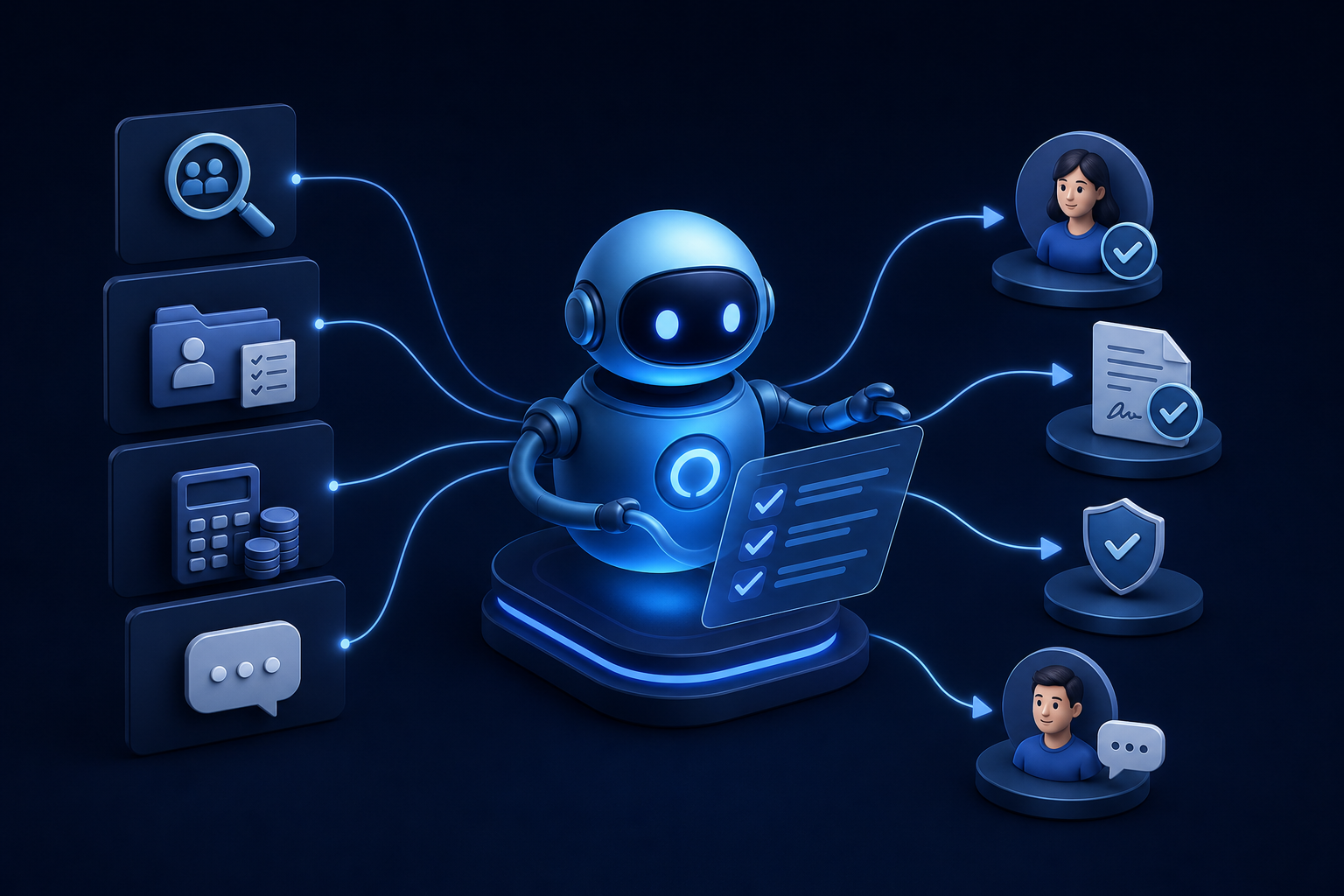
Discover how ai for hr automation handles recruiting, onboarding, payroll checks, and employee Q&A so your team can focus on work that matters.
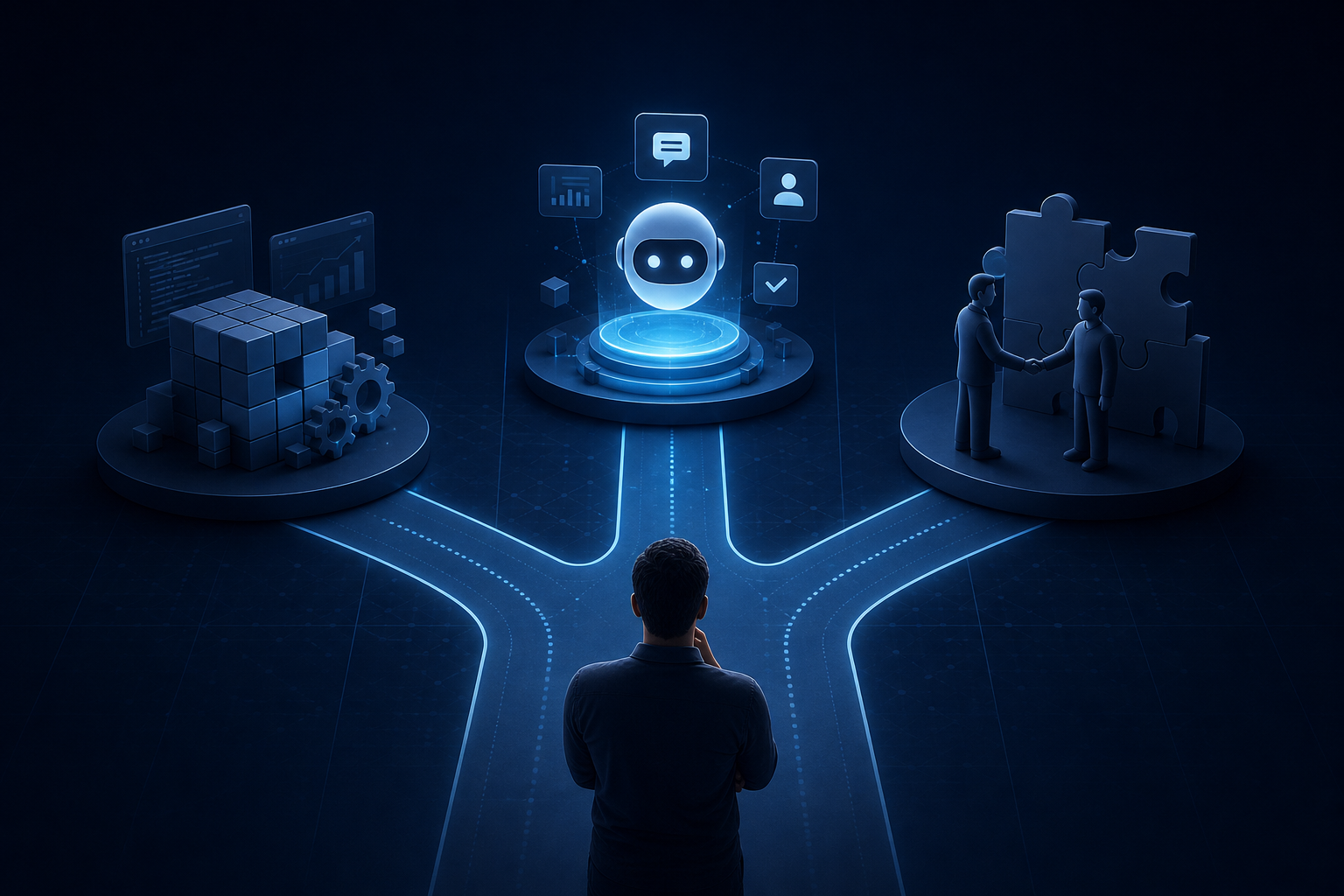
Explore custom ai agent development paths: build in-house, buy pre-built, or partner with a specialist. Find the right fit for your team today.


