General
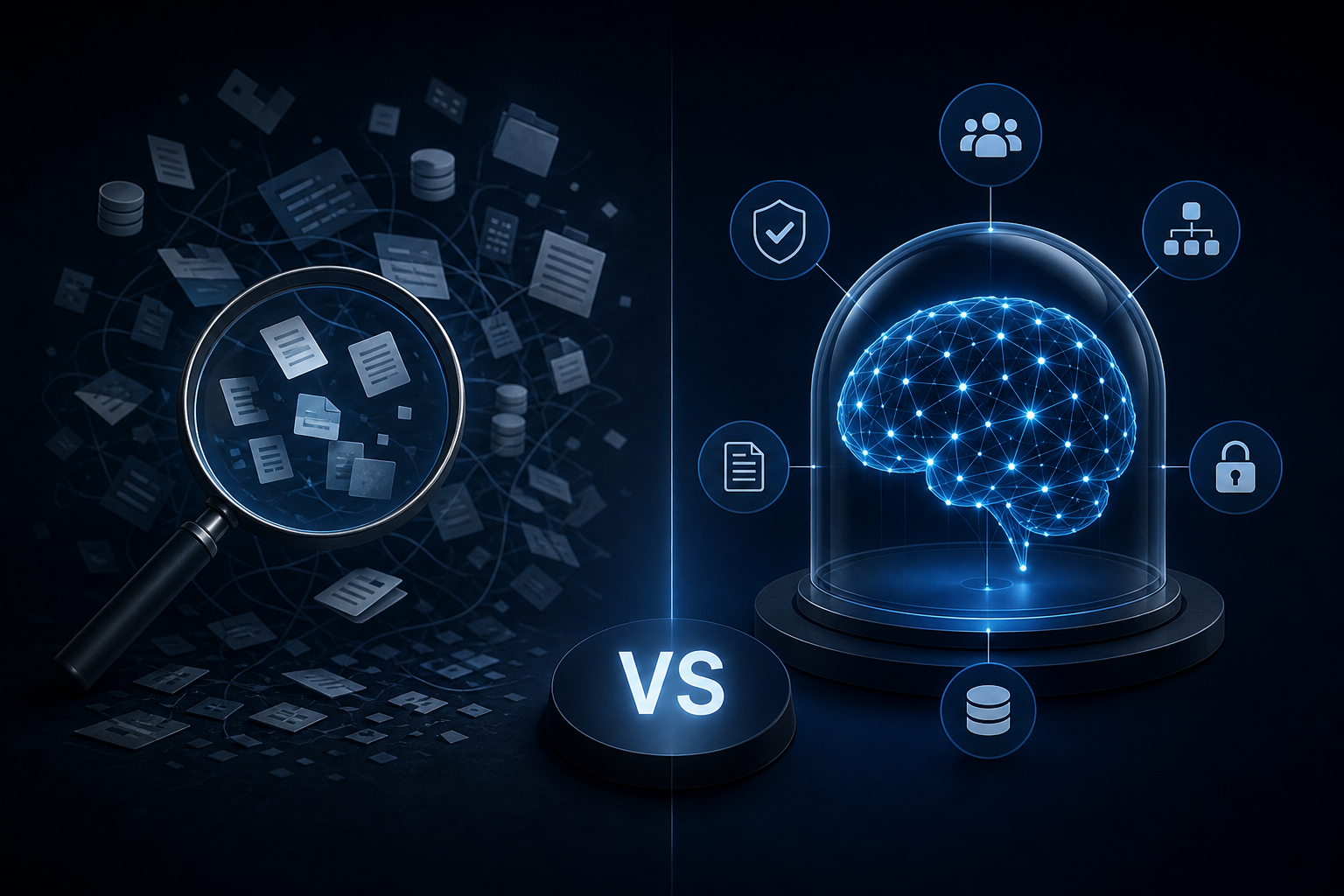
Enterprise AI Search vs. a Governed Company Brain: Key Differences
Discover how enterprise ai search differs from a governed company brain and which knowledge approach your team actually needs to act on trusted data.
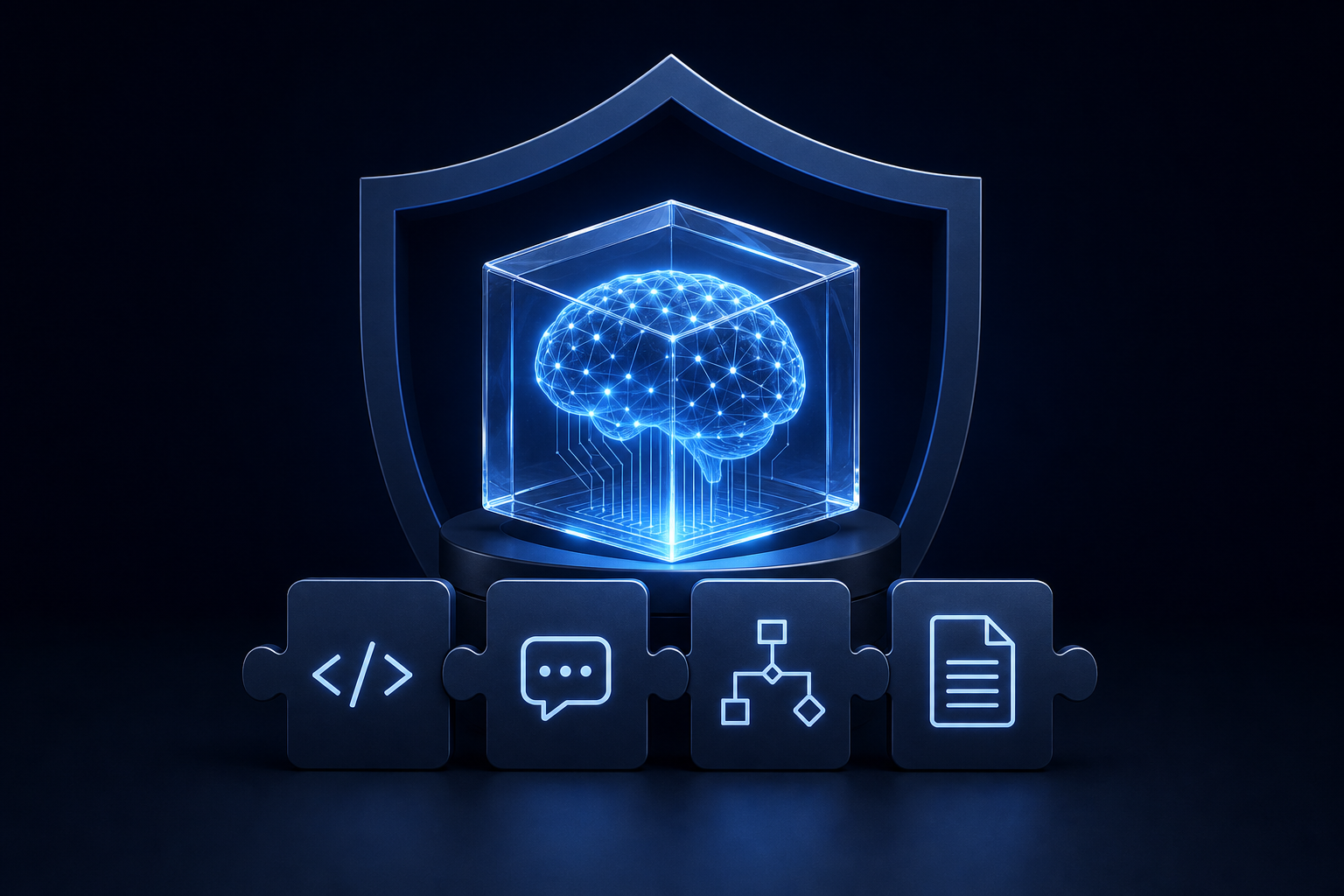
Custom AI development ownership is often overlooked — learn what full ownership means and how to protect your investment before you sign.
You paid an agency to build your AI system. Six months later, you want to change how it works — and you find out you can't touch it without going back to them. The prompts live on their servers. The automation logic is locked inside their platform. The documentation, if it exists at all, is a Loom recording from the kickoff call.
This is not a rare situation. For growing businesses investing in custom AI development, ownership of the systems they commission is one of the most important — and most overlooked — questions to ask before signing anything. This article walks through what full ownership actually means, what to look for in a contract and delivery, and how to make sure the AI work you fund stays yours.
Most AI agencies are not trying to trap you. But the way they work often creates lock-in by default.
When an agency builds on top of a proprietary platform — their own orchestration layer, their own prompt management system, their own SaaS tool — the outputs of that work get entangled with their infrastructure. You might receive a working system, but it only works inside their environment. Move away from the agency, and the system stops working.
The same problem shows up when agencies use third-party tools without documenting how they connect. You end up with a Zapier workflow, a Make.com automation, and a ChatGPT assistant that were built by someone else and that nobody on your team can maintain or modify. The agency is not malicious. They just never handed over the keys.
Then there is the question of prompts. Prompts are the instructions that tell an AI model how to behave — what tone to use, what data to pull, what decisions to make. They are intellectual property. If your agency wrote them and kept them in their own system, you do not own the logic of your AI system, even if you paid for it.
When you commission a custom AI system, full ownership means four distinct things:
1. You own the code. Every automation script, integration, and custom function should be delivered in a format you can read, copy, and modify — not locked inside someone else's platform.
2. You own the prompts. The instructions that define how your AI workers behave are the core IP of the system. They should be documented, versioned, and transferred to you — not stored in an agency-controlled environment.
3. You own the workflows and automations. The logic connecting your tools — the rules that say "when this happens in HubSpot, do this in Slack, then update this row in Airtable" — should be yours to open, read, and hand to a new developer if needed.
4. You own the documentation. A working system with no documentation is a liability. Whoever built it can explain it. When they leave, you're starting over. Full ownership includes written documentation that a new team member or a different agency could pick up and run with.
If any of these four elements are missing, you do not fully own the system you paid to build.
Most ownership problems are preventable. They just require asking direct questions during the sales process — before you have any leverage gone.
Ask the agency: "Who owns the prompts after delivery?" If the answer is vague or involves a license, that is a red flag.
Ask: "Where will the automations and workflows live after the project ends?" If the answer is "in our platform," ask what happens to them if you stop the engagement.
Ask: "Will we receive the source code and documentation?" Get specifics on format, and ask whether it is delivered throughout the project or only at the end.
Ask: "Can we modify the system ourselves, or do we need to come back to you for changes?" A system you cannot modify is a system you are renting, not owning.
Ask: "What happens to our data if we end the engagement?" Your data should be exportable and portable at any point — this is separate from system ownership, but equally important.
None of these questions are adversarial. A good agency will answer them clearly and without hesitation, because they have already thought through the answer.
Ownership is not just about contracts. It is also about how the agency structures the delivery itself.
The cleanest model is one where ownership transfers incrementally — not at the end of the project, but as each component is built. When a workflow is completed, it is documented and handed over. When a prompt set is finalized, it is versioned and stored somewhere you control. You are not waiting for a final handoff that may never arrive in the form you expected.
This also means the agency should be building inside your stack, not theirs. If they are deploying AI workers that run inside your Slack, your HubSpot, your Airtable — configured in a way you can inspect and modify — you are in a much stronger position than if the system lives inside their proprietary environment and simply connects to your tools via API.
Singular Innovation's 10-business-day delivery commitment, for example, is only meaningful if what gets delivered at the end of those 10 days is something you actually own. A working first capability with a defined scope, a named owner on your side, and documentation you can hand to someone else is a fundamentally different outcome than a prototype that requires ongoing agency involvement to function.
Beyond ownership of the system itself, there is a second layer that matters: governance. Who can access what? What data sources does the AI system pull from? What happens when it makes a mistake?
A well-built AI system should have role-based permissions built in from the start. Not everyone on your team should be able to query every data source. Not every AI worker should have write access to every tool. Audit logs — records of what the system did and when — should be part of the infrastructure, not an afterthought.
This is not just about security. It is about accountability. When an AI system takes an action — sends a message, updates a record, generates a report — you should be able to trace exactly what happened and why. If the agency built the system without audit logs, you have no visibility into how it behaves once they hand it over.
Governance also protects you at the model level. If your AI system is deeply entangled with a single provider's proprietary features, switching models later becomes expensive. A well-structured system treats the AI model as a replaceable component, not the foundation.
If you are reading this because you already commissioned a system and are now realizing you do not fully own it, the situation is recoverable — but it takes some work.
Start by documenting what you do have. Get a list of every tool the system touches, every automation that is running, and every prompt that has been written. Even if the documentation is incomplete, knowing the scope of what exists is the first step.
Then have a direct conversation with the agency. Ask for full documentation and source code delivery. Many agencies will provide this without resistance — they simply never prioritized it because no one asked. If there is resistance, that tells you something important about the relationship.
If you need to rebuild, prioritize portability from the start. Choose an agency that delivers into your environment, documents as they build, and transfers ownership of every component before the engagement closes.
The goal is a system your team can maintain, modify, and hand off without going back to the people who built it. That is what you paid for.
Singular Innovation structures every engagement around a single principle: clients own everything from day one. All workflows, prompts, automations, code, and documentation transfer to the client as each component is built — not at the end of the project, not under a license, and not contingent on staying in the engagement.
The Company Brain and HyperAgents that Singular deploys run inside the client's existing stack. No new SaaS licenses. No proprietary platform to get locked into. No dependency on Singular's infrastructure to keep the system running. If a client ends the engagement after 10 business days, they leave with a working, documented, fully owned AI capability.
Every AI worker includes role-based permissions, approved data source scopes, review gates, and audit logs. Governance is built into the system from the start, not added later. And the documentation is written for the client's team — not for Singular's internal use.
Pricing depends on scope — book a call to get a number specific to your situation.
If you are evaluating AI agencies and ownership is a priority, the questions in this article are the right ones to ask. You can also start with a free AI Readiness Audit to understand what your current stack is ready to support before any build begins.
What does "custom AI development ownership" mean in practice? It means you hold the rights to all the code, prompts, automations, workflows, and documentation that make up your AI system. You can modify it, hand it to a different developer, or shut it down without needing permission from the agency that built it.
Can an agency legally keep the prompts they wrote for my project? Yes, unless your contract specifies otherwise. Prompts are intellectual property, and many agencies retain them by default. Always confirm in writing that prompts are included in the IP transfer.
What is the difference between owning the system and licensing it? If you own it, you can do anything with it — modify, copy, transfer, or shut it down. If you are licensing it, you have permission to use it under specific conditions the agency controls. Many "custom" AI systems are actually licensed, not owned.
How do I know if my AI system is built on the agency's proprietary platform? Ask where the system will run after delivery. If the answer involves the agency's own infrastructure, dashboard, or platform, you are likely in a licensing arrangement. A fully owned system runs inside your tools and environments.
What should be included in the documentation I receive? At minimum: a description of every workflow and what it does, the prompts used by each AI worker, the data sources each component connects to, the logic for any conditional rules or triggers, and instructions for how to modify or extend the system.
What is a reasonable timeline to receive full documentation? Documentation should be delivered alongside each component as it is built, not as a final deliverable at the end. If an agency delivers a working system with no documentation, ask for it before the engagement closes — not after.
What happens to my AI system if the agency goes out of business? If you own the system outright and it runs inside your stack, nothing changes. If the system depends on the agency's infrastructure or proprietary platform, it may stop working. This is one of the strongest arguments for insisting on full ownership before the project starts.
The question of custom AI development ownership rarely comes up before a project starts. It comes up constantly after something goes wrong. Ask the hard questions early, get the answers in writing, and make sure the agency you choose builds inside your environment rather than their own.
If you want to understand what your current stack is ready to support before committing to a build, book your free 20-minute AI Audit with Singular Innovation. You will leave with a clear picture of where you stand — and what full ownership of your AI systems would actually look like.
Discover how enterprise ai search differs from a governed company brain and which knowledge approach your team actually needs to act on trusted data.
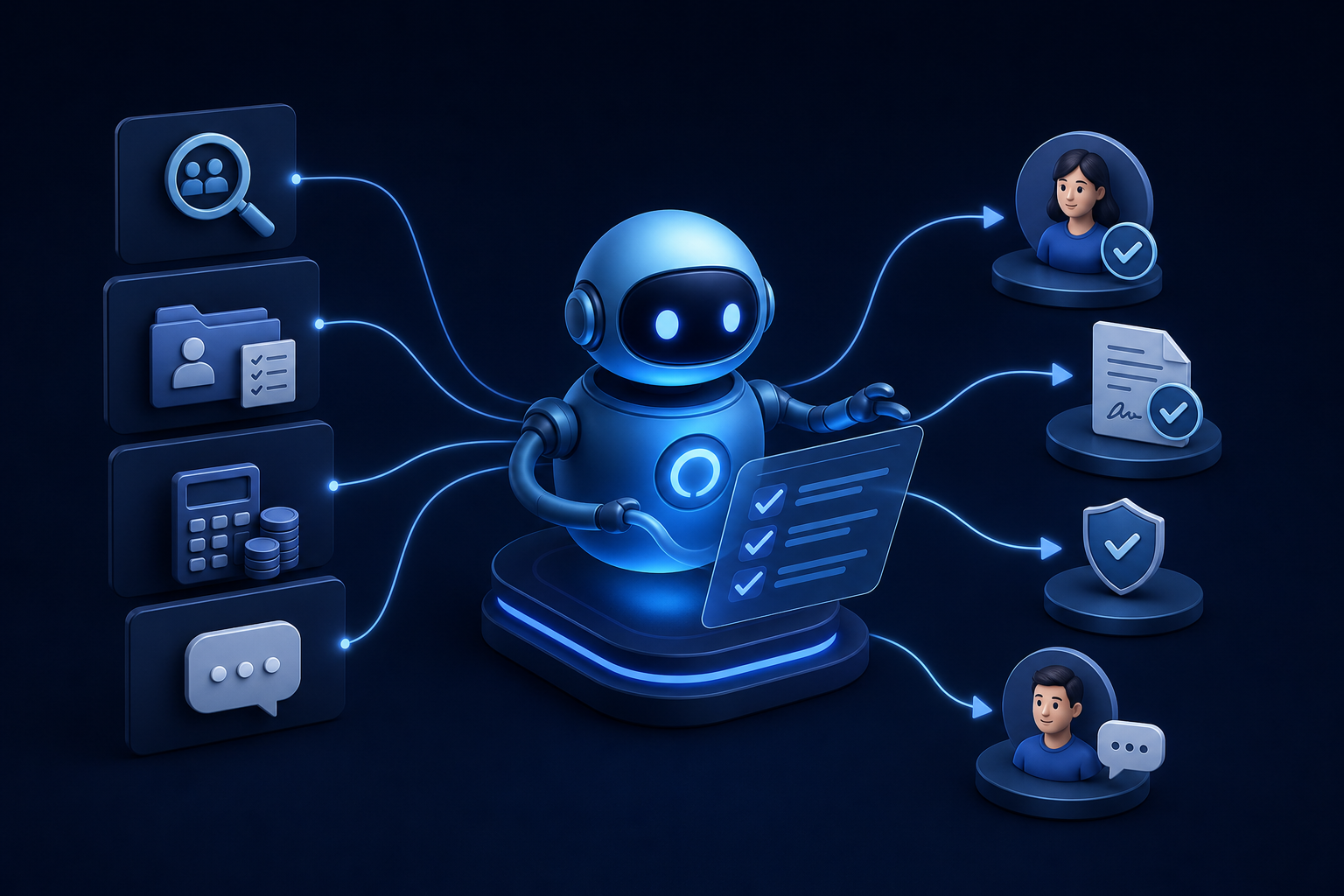
Discover how ai for hr automation handles recruiting, onboarding, payroll checks, and employee Q&A so your team can focus on work that matters.
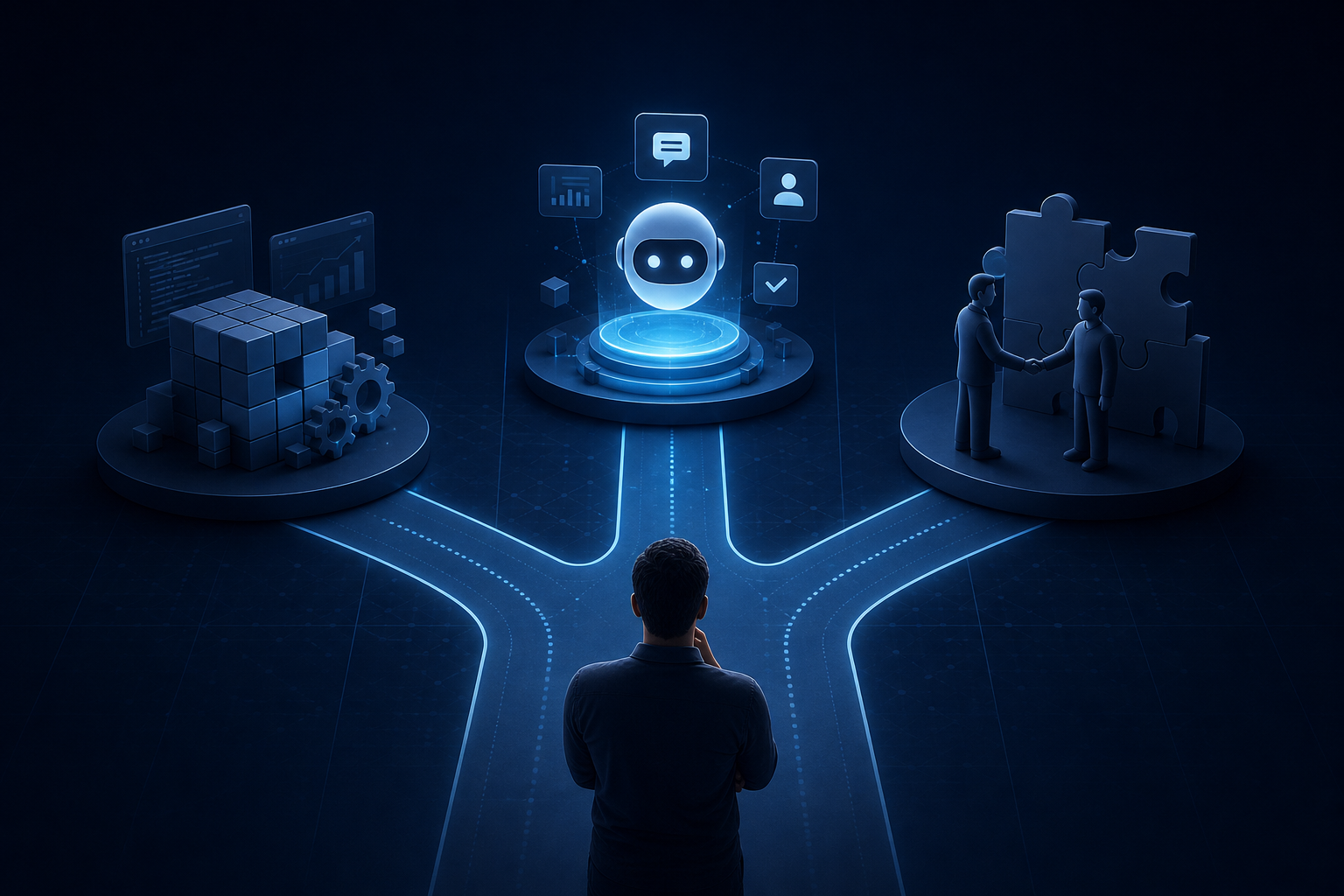
Explore custom ai agent development paths: build in-house, buy pre-built, or partner with a specialist. Find the right fit for your team today.


