General
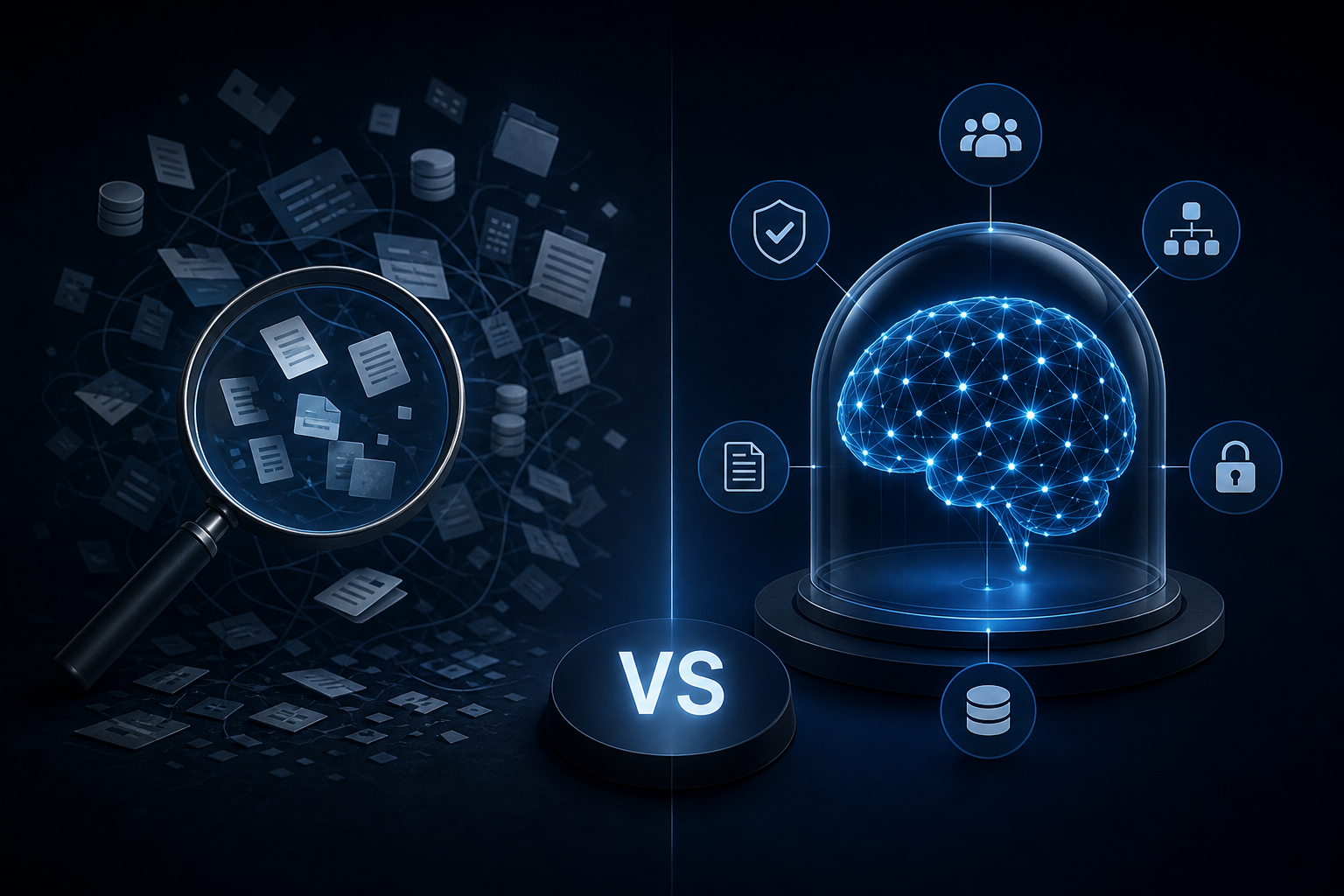
Enterprise AI Search vs. a Governed Company Brain: Key Differences
Discover how enterprise ai search differs from a governed company brain and which knowledge approach your team actually needs to act on trusted data.

Nail your AI automation project scope from day one and ship a working solution in days, not months. Here's the exact framework to do it.
Most AI automation projects don't fail because the technology isn't ready. They fail because nobody agreed on what "done" meant before the work started. A vague brief becomes a six-month discovery phase, a requirements list that keeps growing, and a final deliverable that solves a slightly different problem than the one that was actually causing pain.
Getting your AI automation project scope right from the start is the single biggest factor separating teams that ship a working capability in two weeks from teams still debating use cases at the end of the quarter.
Here's exactly how to do it.
The most common scoping mistake is starting with a category instead of a problem. "We want to automate our operations" is a category. "Our ops lead spends four hours every Monday pulling numbers from HubSpot, QuickBooks, and Google Sheets to build an executive summary that's already stale by Tuesday" is a problem.
The second version gives you everything you need: the person affected, the tools involved, the time cost, and the expected output. You can draw a boundary around it.
Before writing a single requirement, answer three questions:
If you can't answer all three clearly, the scope isn't ready. Keep narrowing until you can.
A well-scoped AI project has a clear edge. You know what's inside it and what isn't. Without that edge, every stakeholder adds one more thing, and the project doubles in size before a single line of code is written.
A useful scope boundary covers four things:
Inputs: What data sources does this automation read from? Name them specifically. "Our CRM" isn't specific. "HubSpot contacts and deal stages, pulled via API" is.
Outputs: What does the automation produce? A Slack message? A populated dashboard? A drafted email sitting in a queue for human review? Name the format, the destination, and who sees it.
Trigger: What starts the automation — a schedule, a form submission, a status change, a human request?
Exclusions: What is explicitly out of scope for this version? Writing these down prevents scope creep and protects your timeline.
When you have all four, you have a boundary. Everything outside it is version two.
One of the fastest ways to blow up a project timeline is introducing new software during scoping. Every new tool means new licenses, new logins, new integrations, and new training time. None of that ships fast.
The better move is to audit what's already in use and build inside that stack. Most mid-sized teams already have more connectable infrastructure than they realize — a CRM, a project management tool, a finance system, a communication platform, and a handful of spreadsheets holding data that nobody has unified yet.
When Singular Innovation scopes a project, the first step is mapping the existing tool stack and identifying where data already lives. The Company Brain built for each client doesn't require new software licenses. It unifies and indexes data from tools the client already uses — Slack, HubSpot, QuickBooks, Airtable, CRMs, ERPs, Google Sheets, Microsoft Teams — into one governed context layer. Automations then run inside that same stack.
This is a scoping principle, not just a product feature. Building inside the existing stack removes an entire category of delay before the project even starts.
Projects without a named owner drift. Someone needs to be accountable for the scope document, for approving the output definition, and for signing off when the deliverable is complete.
That person doesn't need to be technical. They need to be the one who feels the problem most directly and can say "yes, this solves it" when the automation ships.
The same rule applies on the vendor side. Every deliverable should have a named owner, a defined scope, and a delivery date. Vague accountability produces vague timelines.
Feature-based requirements tend to grow. Output-based requirements stay tight.
Instead of: "Build an AI assistant that monitors our pipeline and generates insights."
Write: "Every Monday at 7 a.m., send a Slack message to the #exec channel listing the five deals most likely to close this week, each with a one-sentence status note pulled from the last HubSpot activity."
The second version has a schedule, a destination, a format, a number, and a data source. A developer can build it. A stakeholder can approve it. A QA process can test it.
Output-based requirements also make it easier to scope version one versus later versions cleanly. If the Monday briefing works, adding a Friday pipeline risk report is a simple, additive second scope — not a reason to reopen the original project.
Long timelines invite complexity. When a project has a six-month runway, every meeting produces new ideas that feel reasonable to add. When the runway is 10 business days, the conversation stays focused on what's essential.
Singular Innovation's standard delivery commitment is a working first AI capability within 10 business days. That constraint is a scoping tool as much as a delivery promise. It forces the right question: what is the smallest version of this that would genuinely solve the problem?
The answer is almost always more useful than the fully featured version that takes three months to ship. A daily executive briefing running automatically on day 10 creates real organizational value immediately — the team starts learning from it, adjusting it, and building on it. A comprehensive AI platform that goes live in month four is still waiting to prove itself.
Build the smallest version that proves the value. Scope everything else as a follow-on.
AI automations that skip governance create problems downstream. If an automation touches financial data, customer records, or internal communications, you need to know who can see what it produces, who can modify it, and how you'd audit its outputs if something looked off.
This doesn't have to be complicated. But it has to be decided before launch, not retrofitted afterward.
At minimum, define:
That last point matters more than most teams realize. If your automation vendor retains ownership of your workflows, you're dependent on them indefinitely. A well-scoped project specifies that the client owns all workflows, prompts, automations, code, and documentation from day one — no exceptions.
Before you approve a scope document or kick off a project, run through this list:
If any item is blank, the scope isn't ready.
Here's how these principles come together on a real project:
Problem: The finance team spends roughly three hours each week manually pulling revenue data from QuickBooks and pipeline data from HubSpot into a Google Sheet to produce a weekly forecast summary for leadership.
Scope: Build a HyperAgent that runs every Friday at 4 p.m., pulls closed revenue from QuickBooks and open pipeline by stage from HubSpot, and posts a formatted summary to the #leadership Slack channel — current-month revenue, projected close for the month, and top three open deals by value.
Exclusions (v1): No year-over-year comparison, no deal commentary, no email version.
Owner: Finance operations lead (client side), delivery lead (agency side).
Delivery target: 10 business days.
Governance: Output visible to #leadership channel members only. Prompt and workflow owned by the client. Audit log retained for 90 days.
That's a complete scope. It can be built, tested, and shipped. The finance team gets three hours back every week starting on day 11.
Some teams have the internal capacity to scope and build AI automations themselves. Many don't — and the cost of a poorly scoped project, measured in months of delay and a deliverable that doesn't fit, is higher than the cost of getting expert help at the start.
If you're evaluating external partners, look for agencies that commit to defined delivery dates rather than open-ended retainers, build inside your existing stack rather than requiring new tools, and hand over full ownership of everything they build. Those three criteria filter out most of the engagements that drag.
Singular Innovation works with operations-led businesses that want a working AI capability fast — not a roadmap that takes a year to execute. The 10-business-day delivery commitment exists because a tight scope, applied consistently, is what makes it possible.
What is an AI automation project scope? A defined agreement that specifies the problem being solved, the data sources involved, the expected output, the trigger condition, explicit exclusions, ownership, governance requirements, and a delivery timeline. A complete scope prevents the requirement creep and timeline drift that cause most AI projects to run long.
How long should scoping take? A focused first project should scope in one to three working days. If it's taking longer than a week, the problem definition is probably too broad. Narrow it to a single, specific output before continuing.
Do I need to replace my existing tools? No. Most AI automation projects can be built entirely inside the tools you already use — Slack, HubSpot, QuickBooks, Google Sheets, Airtable, Microsoft Teams. Introducing new software during scoping adds delay and cost without improving the first deliverable.
Why do AI automation projects take months instead of days? Usually because the problem definition is too vague. When the brief says "automate our operations" rather than naming a specific task, a specific person, and a specific output, every stakeholder adds requirements and the project expands before work begins.
Who should own the project internally? One person — typically whoever feels the problem most directly and can approve the final output. Shared ownership without a named lead produces slow decisions and unclear sign-off criteria.
What governance should be in place before launch? At minimum: role-based access controls on who sees the output, an audit log of what the automation did and when, and documented ownership of all workflows, prompts, and code. Governance is far easier to build during scoping than to retrofit after the fact.
The teams that get the most from AI automation are rarely the ones with the biggest initial ambitions. They're the ones that scoped a small, specific problem, shipped something real in under two weeks, and used what they learned to scope the next one.
A three-hour weekly task automated on day 10 pays for itself in the first month. A comprehensive AI platform that ships in month four is still waiting to prove its value.
Start small. Ship fast. Build from there.
To identify your first high-value automation target, book your free 20-minute AI Audit with the Singular Innovation team. Pricing depends on scope — book a call to get a number that reflects your actual situation.
Discover how enterprise ai search differs from a governed company brain and which knowledge approach your team actually needs to act on trusted data.
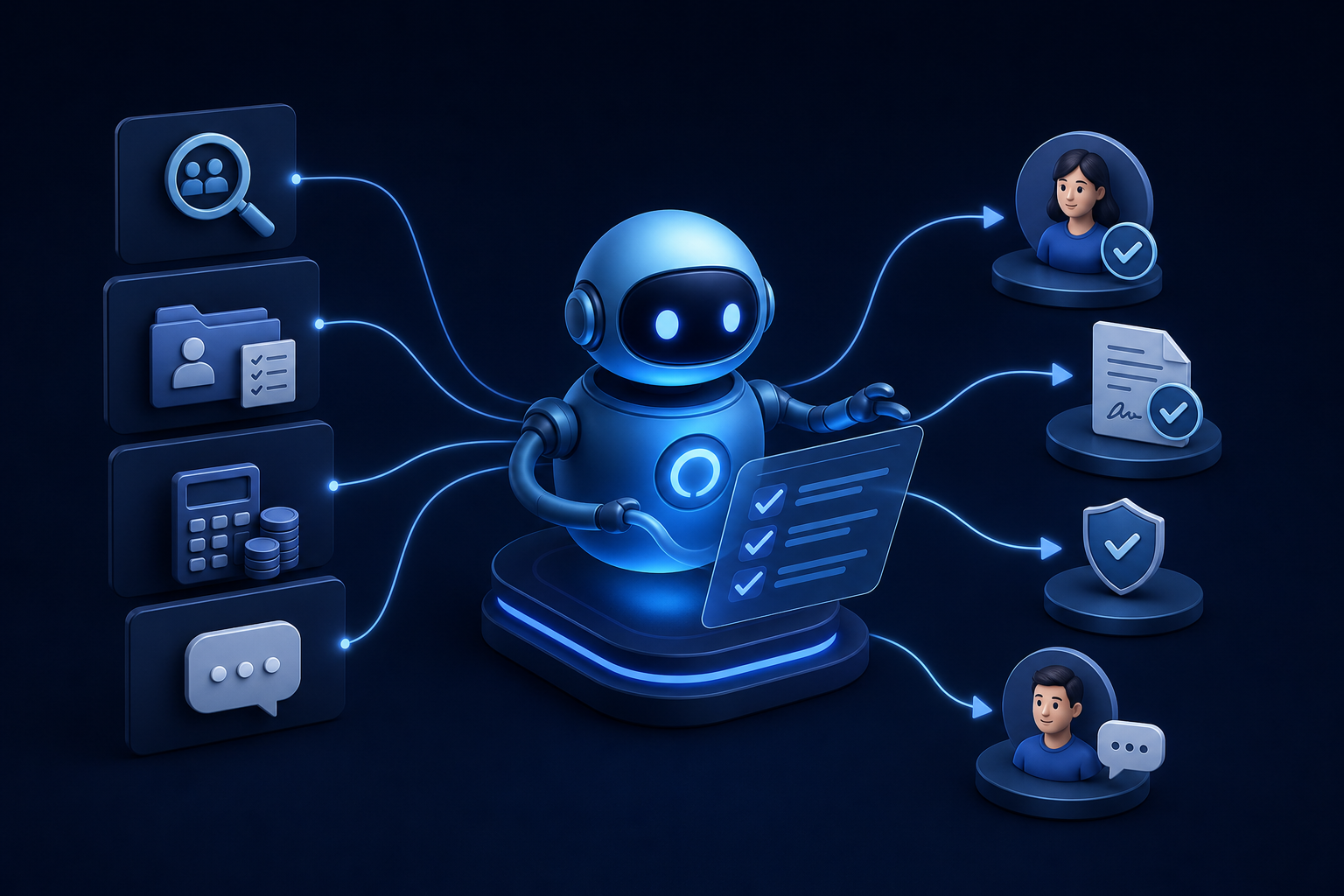
Discover how ai for hr automation handles recruiting, onboarding, payroll checks, and employee Q&A so your team can focus on work that matters.

Explore custom ai agent development paths: build in-house, buy pre-built, or partner with a specialist. Find the right fit for your team today.


