General
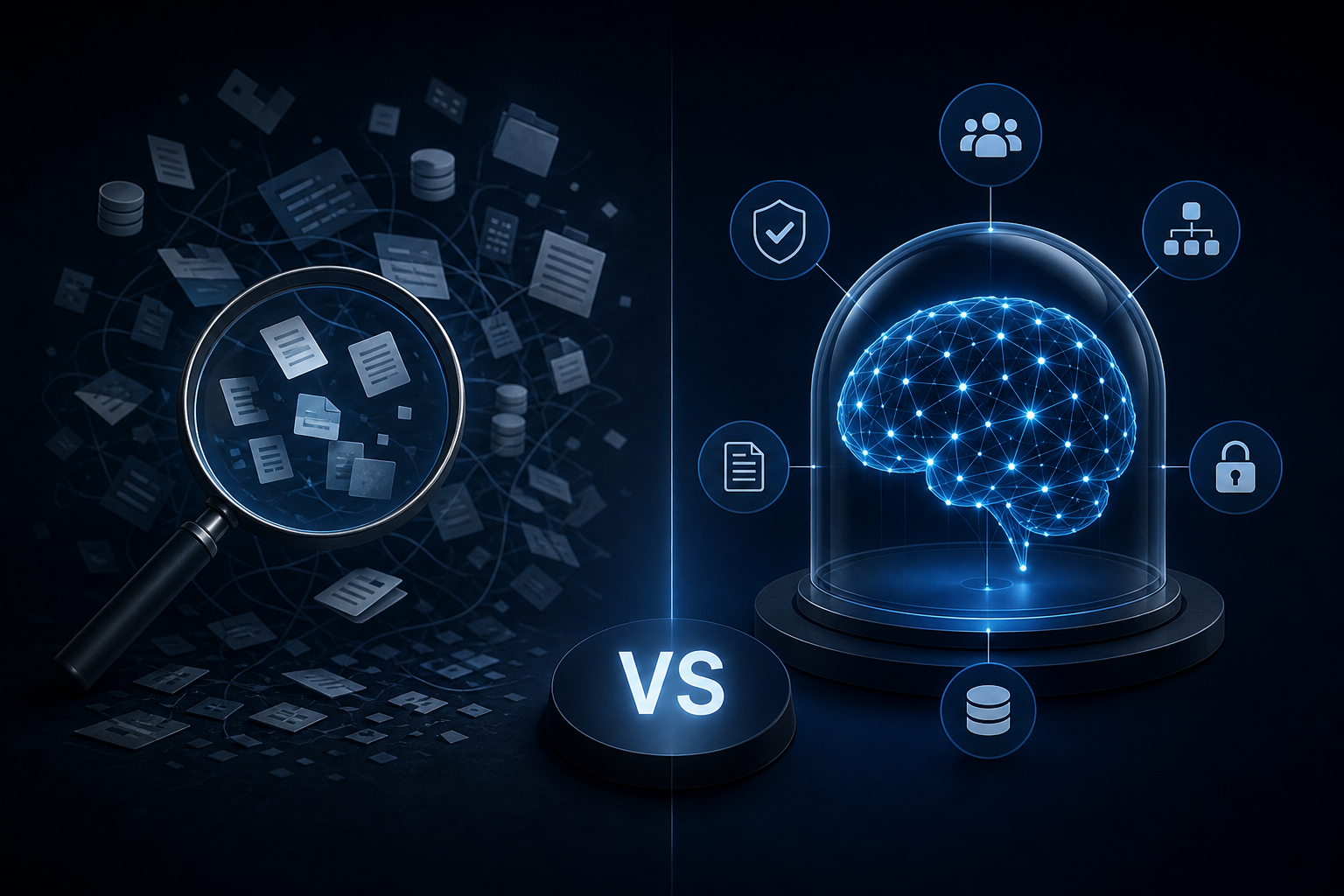
Enterprise AI Search vs. a Governed Company Brain: Key Differences
Discover how enterprise ai search differs from a governed company brain and which knowledge approach your team actually needs to act on trusted data.
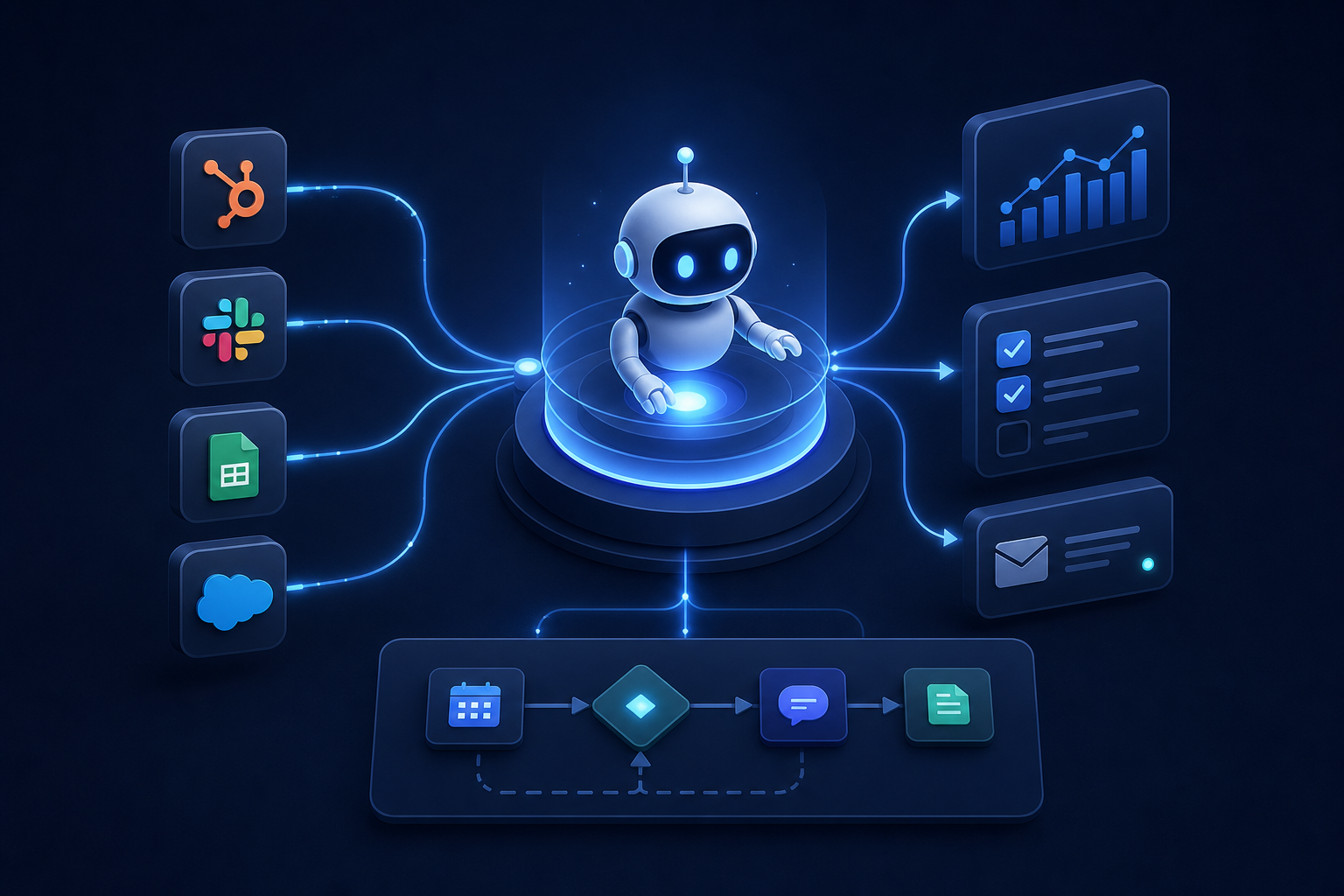
An AI agency for startups can build you a working AI system without a data science hire — here is what to look for and how it works.
You don't need a data science team to run AI inside your business. You need someone who builds the system for you — and hands you the keys when it's done.
That's the gap most growing companies fall into. They start researching AI, find enterprise platforms with 100-seat minimums, dev shops quoting $100K before the first meeting, or DIY tools that expect you to do all the wiring yourself. None of those options fit a company doing $5M–$20M in revenue with a lean ops team and real work to get done.
This article covers what a working AI system actually looks like at your scale, what it takes to get one running without hiring a data scientist, and how to evaluate whether an AI agency for startups can deliver something you own rather than something you rent.
ChatGPT is a tool. A system is something that runs on a schedule, pulls from your actual data, and produces outputs your team acts on.
The difference matters more than most people realize. A team member asking ChatGPT a question gets a generic answer. A system connected to your HubSpot, Slack history, and QuickBooks data can generate a daily executive brief that tells your COO what closed yesterday, what's at risk this week, and what invoices are overdue — without anyone prompting it.
That's not a chatbot. That's an AI worker with a job description.
Most companies skip straight to tools because building a system sounds like it requires engineers. It doesn't — if you work with someone who has already built the architecture and knows how to deploy it inside your existing stack.
Before you hire anyone or buy anything, it helps to understand the three layers every functional AI system needs.
Your data is scattered. Slack has context. HubSpot has deal history. QuickBooks has financials. Airtable has project status. Spreadsheets have everything else. An AI system that can't see all of that at once is operating with blinders on.
The first requirement is a governed context layer — a single indexed source of truth that pulls from the tools you already use, with role-based permissions so the right people see the right data and nothing else. No new software licenses. No replacing the tools your team already knows.
A retrieval layer is useful. An agent layer is what makes it operational.
The difference is proactive versus reactive. A retrieval system answers questions when asked. An agent executes tasks on a schedule — generating dashboards, sending briefings, coordinating handoffs, flagging anomalies — without waiting for a human to trigger it.
For a 20-person company, this is the difference between AI that saves thirty minutes a week and AI that actually changes how the business runs.
This is the part most vendors skip. If your AI system lives inside a SaaS platform you pay monthly to access, you don't own the system — you're renting it. When the vendor raises prices, changes the API, or gets acquired, your workflows disappear.
A properly built AI system delivers the prompts, automations, code, and documentation directly to you. You can run it, modify it, and hand it to a new hire without going back to the agency.
Here's where the assumption comes from: most AI infrastructure was built by engineers, for engineers. The tools assumed you had someone who could write Python, manage vector databases, and maintain model integrations.
That's changed. The tooling has matured enough that an agency with the right architecture can build a governed AI system inside your existing stack without requiring any technical hires on your side.
What you actually need internally is an owner — someone who can define what the system should do, approve the data sources it can access, and review outputs before they go to the team. That's an operations role, not a data science role.
The agency handles the build. You handle the direction.
Not every AI agency is set up to serve a 20–200 person company. Most are positioned for enterprises with large IT budgets and six-month timelines, or for solo operators who want a single chatbot. The middle ground — a growing company with real operational complexity — is underserved.
When evaluating an AI agency for startups and scaling SMBs, these are the questions that separate a real build from a strategy engagement.
Do they deliver a working system or a roadmap? A roadmap is a document. A working system is running inside your stack. Ask for a defined delivery date and a scoped first deliverable. If the answer is vague, that's your answer.
Do you own what they build? Ask directly: "Do we receive the prompts, automations, code, and documentation, and can we run them without you?" If the answer involves a monthly platform fee or an ongoing retainer to keep the lights on, you don't own it.
Can they connect the tools you already use? Replacing your stack is expensive and disruptive. A good agency builds inside what you have — Slack, HubSpot, QuickBooks, Airtable, your CRM, your ERP — without requiring new software licenses.
How fast can they deploy something real? A contained first capability should be deliverable in days, not months. If the timeline starts at three months before you've even scoped the work, the engagement is built around billable hours, not outcomes.
What does governance look like? For any AI system touching financial data, customer records, or internal communications, you need role-based permissions, defined retrieval scopes, and audit logs. Ask how those are built in — not bolted on after the fact.
Singular Innovation is an AI transformation agency that builds two core deliverables for each client: a Company Brain and a set of HyperAgents.
The Company Brain is a governed context layer that auto-indexes and unifies data from the tools a client already uses — Slack, HubSpot, QuickBooks, Airtable, CRMs, ERPs, Google Sheets, Microsoft Teams — into one searchable source of truth. Role-based permissions and audit logs are built into the architecture from the start, not added later.
On top of that layer, Singular deploys HyperAgents: custom AI workers that execute recurring tasks on a defined schedule. Daily executive briefings. Auto-generated dashboards. Cross-tool task coordination. These aren't chatbots waiting to be asked a question — they're workers with a schedule and a job to do.
The first working AI capability is delivered within 10 business days. That's a scoped deliverable with a defined owner and a delivery date.
Clients own everything from day one: all workflows, prompts, automations, code, and documentation. No vendor lock-in. No SaaS dependency. No ongoing agency fee to keep the system running.
Singular has built systems for clients including Burger King, Disney Planet Love, Invercorp, Osmo Wallet, and Charli Charging. The agency holds official Airtable Partner status, official FlutterFlow Partner status, and Vercel certification.
For companies that aren't sure where to start, Singular offers a free AI Readiness Audit as the entry point — a structured assessment of your current stack, your highest-value automation opportunities, and what a realistic first build would look like.
Pricing depends on scope. Book a call to get a number.
There's a meaningful difference between an AI system you build and one you rent, and it's worth naming directly.
Platforms like Glean are built for a different buyer, and they say so themselves. Glean describes itself as enterprise AI and states that it was built for enterprise from day one, publishing 275+ connectors to work applications and support for 40+ large language models. It does not publish pricing anywhere on its site: the pricing page carries no per-user price, no seat minimum and no dollar figure, and routes you to a demo request instead. What your team builds on it is yours, but it runs on Glean, so the platform is the thing you keep paying for. When the contract ends, the system stops with it.
Automation tools like Zapier are useful for connecting apps, but Zapier hands the configuration work back to you. You're the one building and maintaining the zaps. That works fine for simple triggers, but it's not a governed AI system with an agent layer and a unified data context.
The total cost of a rented system is never just the subscription price. It's the subscription, plus the internal time to configure and maintain it, plus the risk of losing everything if you switch vendors.
A system you own has a higher upfront cost and a much lower long-term cost. For a company at $5M–$20M in revenue, that math tends to favor the build.
You don't have to automate everything at once. The most effective first builds are narrow, high-frequency, and immediately visible to the team.
Common starting points for companies in this range:
Daily executive brief: An automated morning summary pulling from HubSpot, Slack, and your project management tool — delivered before 8am without anyone compiling it.
Operations dashboard: A live view of the metrics that matter most, auto-generated from your existing data sources on a defined schedule.
Triage and routing: An AI worker that monitors incoming requests — support tickets, Slack messages, form submissions — and routes them to the right person with context attached.
Reporting automation: Weekly or monthly reports that used to take a team member four hours to compile, generated automatically and delivered to the right inbox.
Each of these is a contained, scoped deliverable. Each one demonstrates the value of the architecture before you invest in the full build.
Getting a working AI system doesn't require a data science hire, a six-month engagement, or a platform you'll pay for indefinitely. It requires a clear first deliverable, a governed data layer, and an agency that builds something you own.
If your company is scaling manually and you're watching competitors automate things you still do by hand, that gap isn't going to close on its own.
Book your free 20-minute AI Audit at singular-innovation.com and find out what a realistic first build looks like for your stack.
Do I need technical staff to implement an AI system? No. A well-structured AI agency handles the build, configuration, and deployment. What you need internally is an operational owner who can define what the system should do and approve the data sources it accesses. No engineering background required.
What's the difference between an AI tool and an AI system? An AI tool responds when asked. An AI system runs on a schedule, connects to your real data sources, executes recurring tasks autonomously, and produces outputs your team acts on — without manual prompting.
How long does it take to get a working AI capability deployed? With a focused agency engagement, a scoped first capability can be delivered in as few as 10 business days. This assumes a defined deliverable, access to the relevant data sources, and a clear owner on the client side.
What does "client ownership" mean in practice? You receive all workflows, prompts, automations, code, and documentation at the end of the engagement. You can run the system, modify it, and hand it to a new team member without going back to the agency or paying a platform fee to keep it live.
What tools can an AI system connect to without replacing my existing stack? Most governed AI systems connect to Slack, HubSpot, QuickBooks, Airtable, Google Sheets, Microsoft Teams, and most major CRM and ERP platforms. The goal is to index and unify data from tools you already use — not replace them.
What is an AI Readiness Audit and why does it matter? It's a structured assessment of your current tech stack, your highest-value automation opportunities, and what a realistic first AI build would look like for your business. It's a useful starting point before committing to a full engagement — and it helps you avoid building in the wrong direction.
How is working with an AI agency different from using Zapier? Zapier is a useful automation tool, but it hands the configuration work back to you — you build and maintain the connections. An AI agency does the build for you, including the governed data layer, the agent logic, the permissions structure, and the documentation. The output is a system you own, not a set of zaps you maintain.
Discover how enterprise ai search differs from a governed company brain and which knowledge approach your team actually needs to act on trusted data.
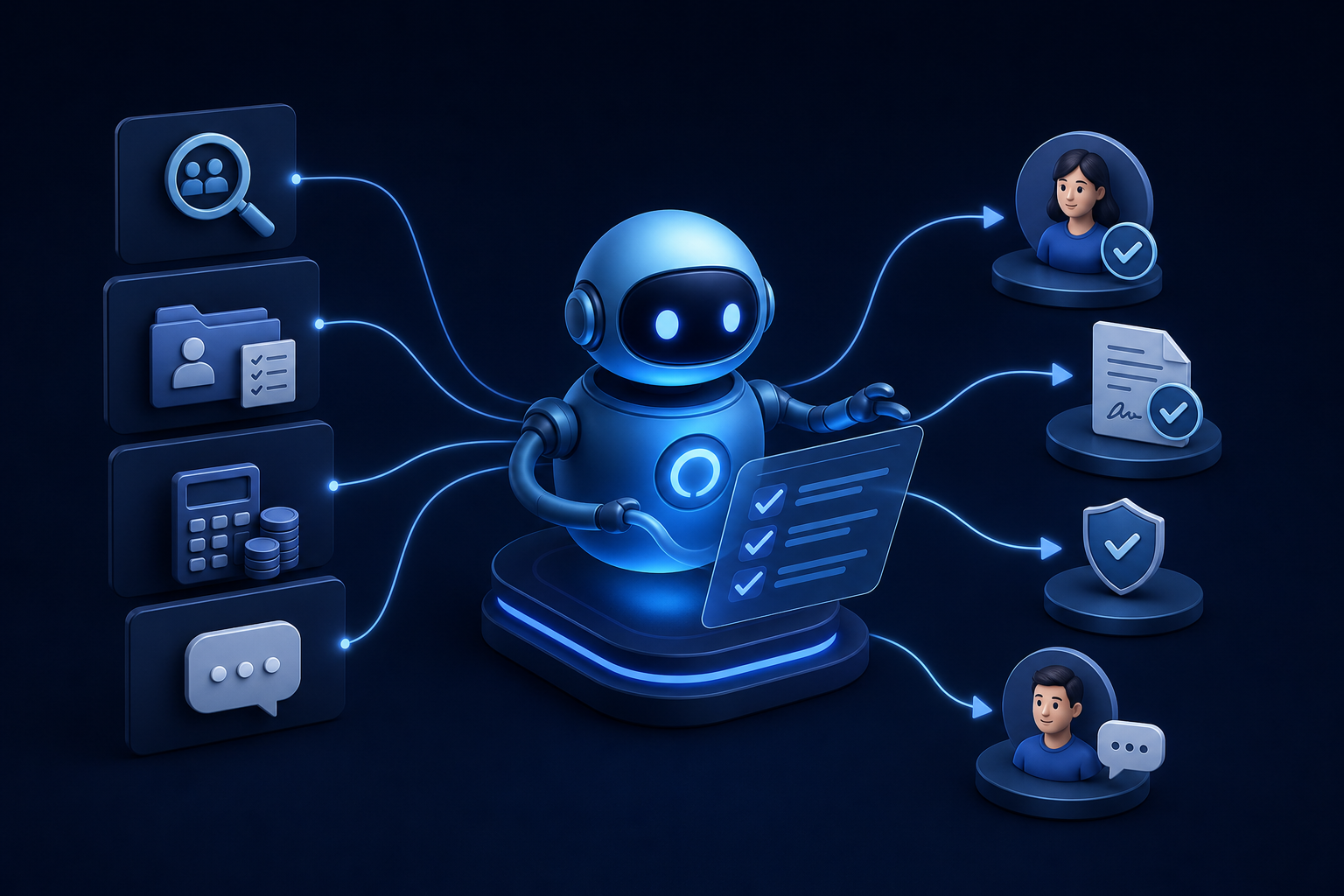
Discover how ai for hr automation handles recruiting, onboarding, payroll checks, and employee Q&A so your team can focus on work that matters.
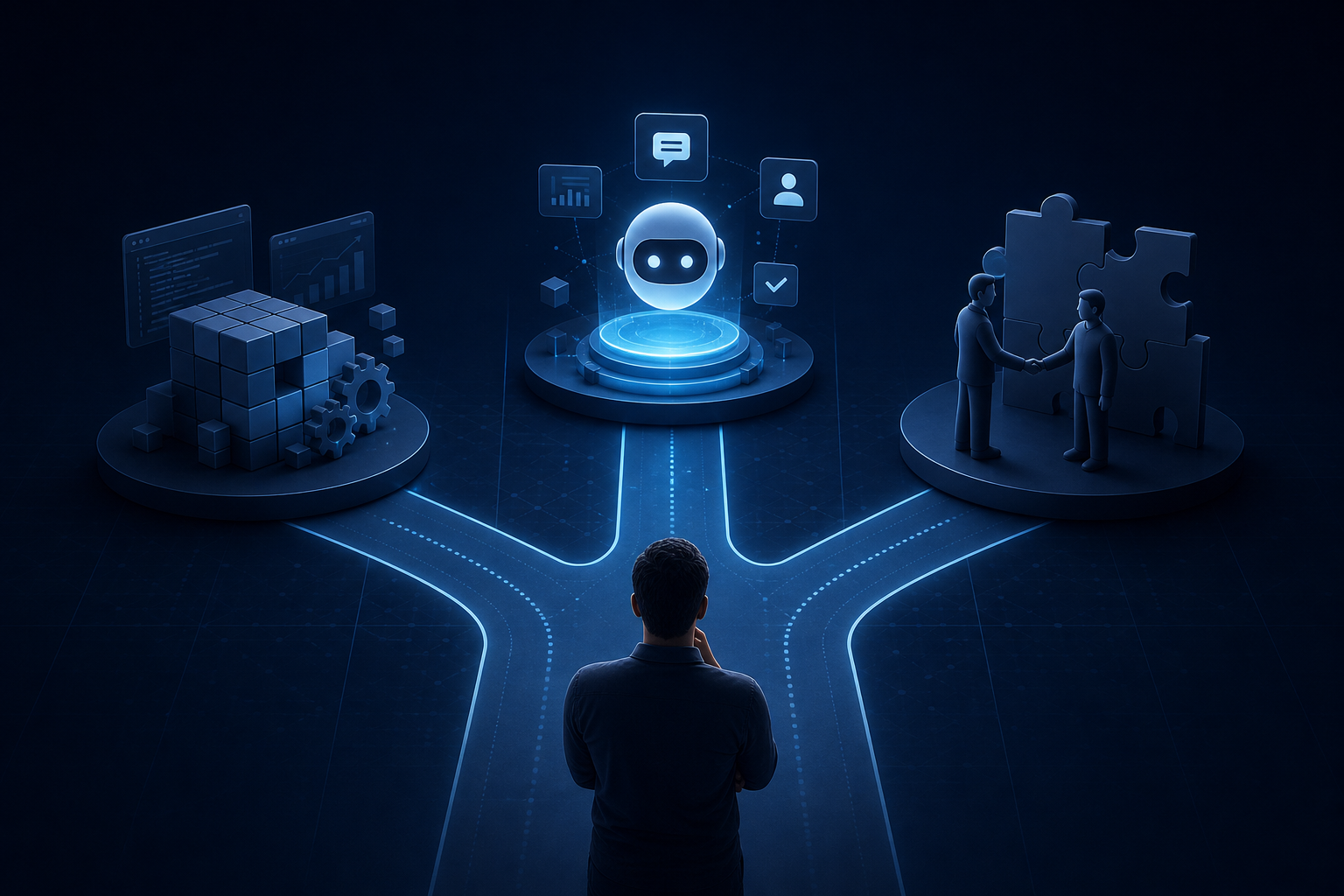
Explore custom ai agent development paths: build in-house, buy pre-built, or partner with a specialist. Find the right fit for your team today.


