



ai-automation
Autonomous Workflows. AI That Runs Operations
Autonomous workflows allow AI to coordinate tasks, decisions, and actions across systems. This shift moves businesses from manual processes to intelligent, self-operating workflows.
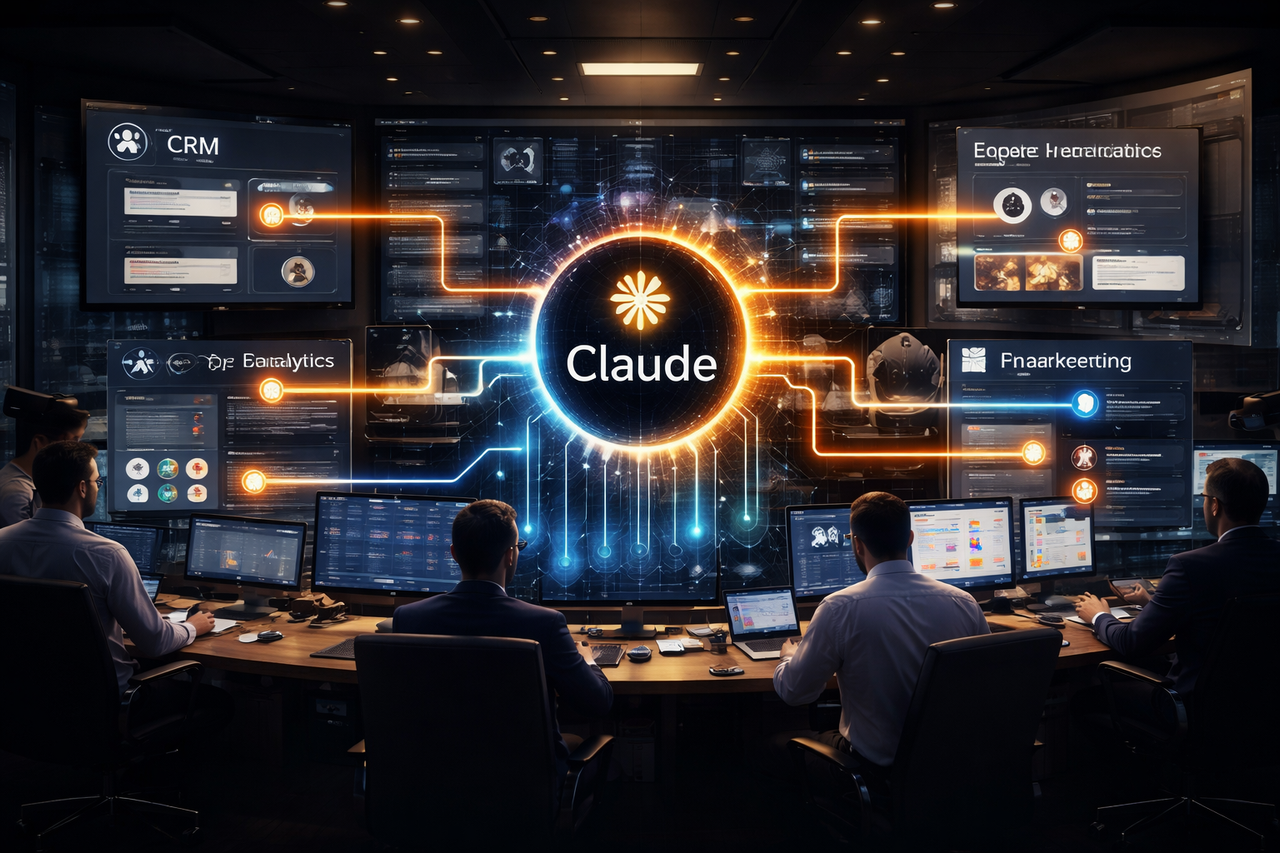
Dashboards show what happened. AI operations systems decide and act on what should happen next. This shift is redefining how companies run their day to day operations.
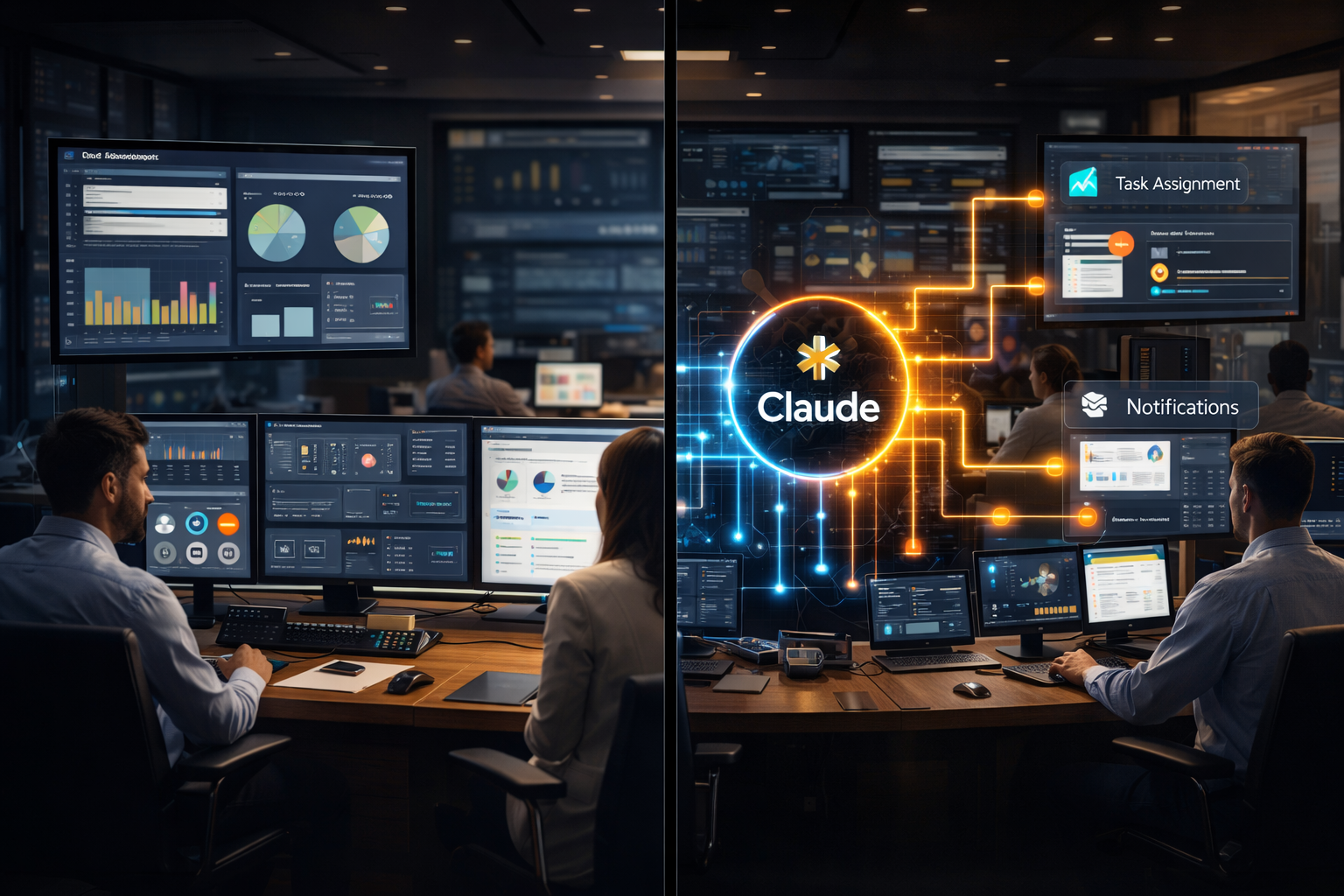
From static dashboards to AI driven execution across business workflows.
For years, businesses have relied on dashboards.
Dashboards track performance.
Dashboards visualize data.
Dashboards help teams understand what happened.
But dashboards do not act.
They inform decisions, but they do not execute them.
This creates a gap between insight and action.
A gap that slows down operations, introduces delays, and limits the real value of data.
Artificial intelligence is beginning to close that gap.
Not by improving dashboards.
But by replacing their role in the operational layer.
Dashboards were designed for visibility.
They answer questions like:
What happened yesterday
What is the current status
Where are the problems
These are important questions.
But they are not enough.
Modern businesses require speed.
Decisions need to happen in real time.
Actions need to follow immediately.
Dashboards introduce friction in this process.
A dashboard might show a drop in conversion rates.
But someone still needs to:
Analyze the cause
Decide what to do
Execute changes across systems
This takes time.
And time creates opportunity cost.
Dashboards aggregate metrics.
But they rarely provide full context.
Teams still need to interpret the data manually.
This introduces variability in decision making.
By the time insights are reviewed and actions are taken, the situation may have already changed.
This is especially critical in fast moving environments like marketing, sales, and operations.
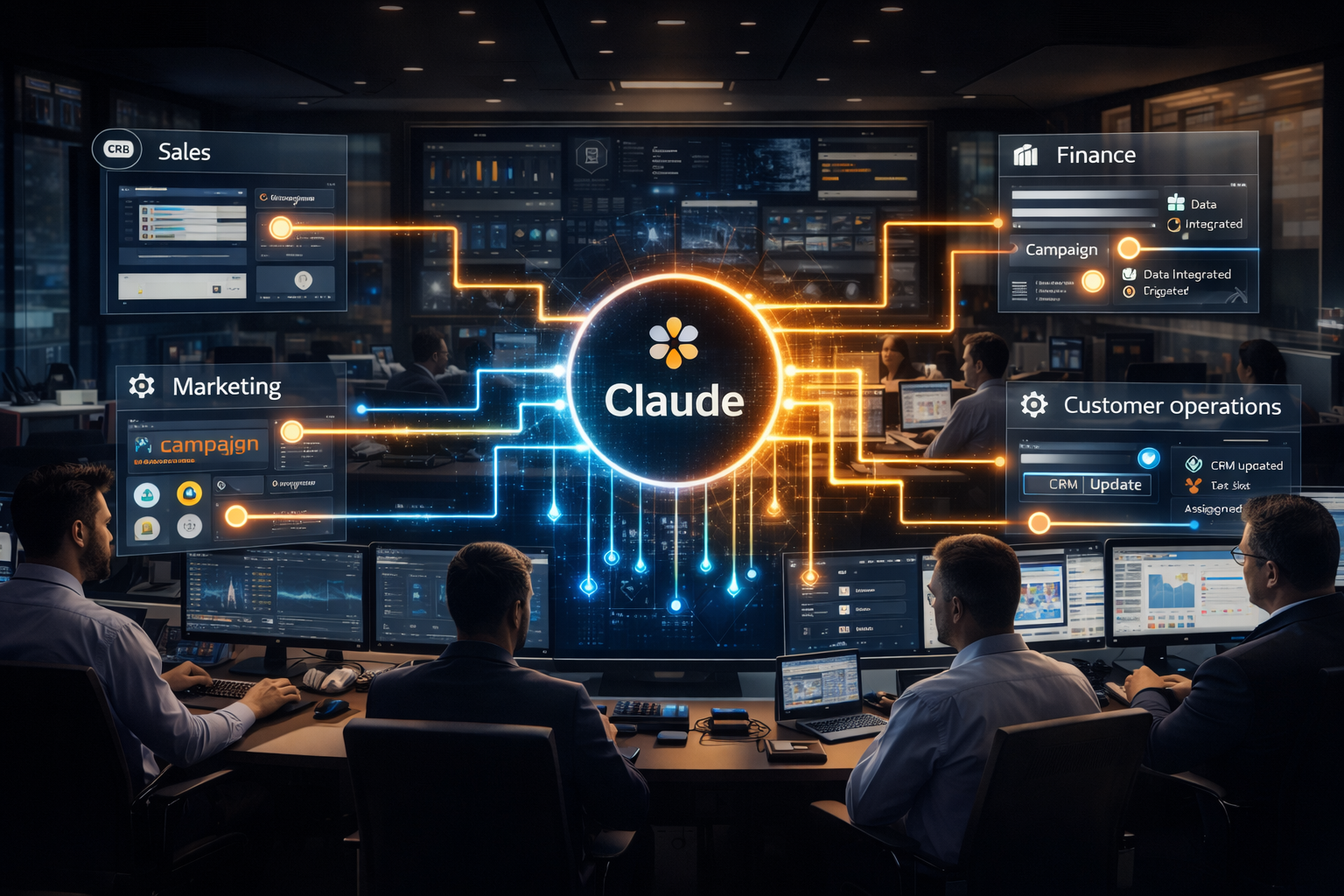
Claude connects data, decisions, and actions into a unified operational system.
AI operations represent a new model.
Instead of focusing on visibility, they focus on execution.
AI systems monitor data continuously.
They interpret signals.
They decide what actions to take.
They trigger those actions automatically.
This removes the gap between insight and execution.
AI operations automation is the use of AI systems to:
• Monitor business data in real time
• Analyze patterns and detect anomalies
• Recommend or execute actions
• Coordinate workflows across systems
This transforms operations from reactive to proactive.
From manual to automated.
Traditional systems:
• Collect data
• Display insights
• Depend on human action
AI operational systems:
• Collect data
• Interpret signals
• Trigger actions automatically
The difference is execution.
AI does not eliminate dashboards entirely.
But it changes their role.
Instead of being the primary interface for decision making, dashboards become secondary.
AI systems take over the operational layer.
AI systems do not check dashboards.
They monitor data streams continuously.
They detect changes instantly.
AI evaluates signals as they occur.
It identifies patterns and determines next steps.
Actions are triggered without manual intervention.
Campaigns are adjusted.
Tasks are created.
Systems are updated.
Humans shift from operators to supervisors.
They monitor systems instead of executing every task.
Traditional:
Teams review campaign performance manually.
Adjust budgets and targeting periodically.
AI operations:
Performance is monitored in real time.
AI adjusts campaigns automatically.
Budget allocation is optimized continuously.
Result:
Higher efficiency. Faster optimization.
Traditional:
Sales teams track pipeline through dashboards.
Follow up manually.
AI operations:
AI monitors pipeline activity.
Identifies stalled deals.
Triggers follow ups automatically.
Result:
Improved conversion rates.
Traditional:
Tasks are assigned manually.
Coordination happens through communication tools.
AI operations:
Tasks are generated automatically based on events.
Dependencies are managed dynamically.
Result:
Better coordination. Reduced delays.
AI operations require infrastructure.
This is where AI automation engines like OpenClaw play a key role.
They provide:
• Integration across systems
• Workflow orchestration
• AI decision layers
• Execution capabilities
Without this layer, AI cannot operate effectively.
Where do decisions slow down operations
Where do delays happen
Ensure real time data availability.
What conditions trigger actions
What actions should be taken
Use AI to interpret signals.
Allow the system to execute actions.
Continuously refine decision making.
SMBs often operate with limited resources.
AI operations allow them to:
• Reduce manual work
• Improve efficiency
• Scale operations
They can implement these systems faster than large enterprises.
Operations will not be managed through dashboards.
They will be managed through systems that:
Monitor
Decide
Act
AI will become the operational layer of businesses.
Dashboards were designed for a different era.
An era where data was scarce and decisions were slower.
Today, data is abundant.
Speed is critical.
AI operations automation bridges the gap between insight and execution.
It transforms businesses from reactive to proactive systems.
And it redefines how companies operate.
• McKinsey. AI & Advanced Analytics Insights
https://www.mckinsey.com/capabilities/quantumblack/our-insights
• IBM. Automation
https://www.ibm.com/topics/automation
• Stanford AI Index
https://aiindex.stanford.edu
• IBM. Data Management
https://www.ibm.com/topics/data-management
Ready to move beyond dashboards and into real AI driven operations.
👉 Schedule a free discovery call
https://app.iclosed.io/e/singularagency/schedule-a-discovery-call
This article was developed with the assistance of artificial intelligence tools to support research, structure, and editorial drafting. All strategic analysis, validation, and final editorial review were conducted by the Singular Innovation team.
Autonomous workflows allow AI to coordinate tasks, decisions, and actions across systems. This shift moves businesses from manual processes to intelligent, self-operating workflows.

LLMs are powerful, but prompts alone do not create business impact. Real value comes from embedding LLMs into workflows that connect data, decisions, and actions across systems.
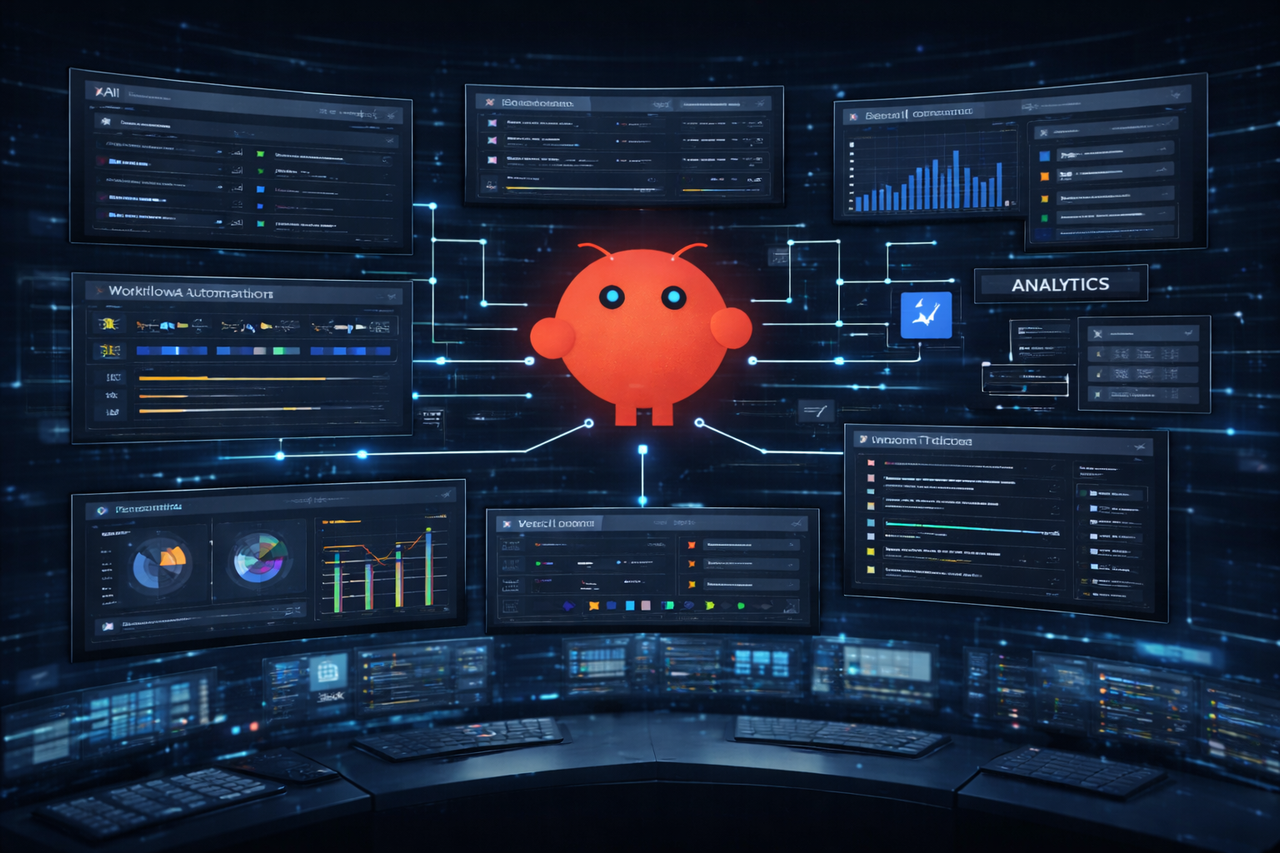
Most companies operate across disconnected tools. AI automation engines like OpenClaw unify systems, workflows, and data into one operational layer, enabling real automation, faster execution, and better decisions.


