



ai-automation
Autonomous Workflows. AI That Runs Operations
Autonomous workflows allow AI to coordinate tasks, decisions, and actions across systems. This shift moves businesses from manual processes to intelligent, self-operating workflows.

LLMs are powerful, but prompts alone do not create business impact. Real value comes from embedding LLMs into workflows that connect data, decisions, and actions across systems.
Large language models have changed how companies interact with software.
With a single prompt, teams can generate reports, analyze data, write content, and extract insights from documents.
This feels like a breakthrough.
And it is.
But there is a problem.
Most companies stop at prompts.
They treat LLMs as tools for isolated tasks rather than components of operational systems.
As a result, the impact remains limited.
To unlock real value, organizations must move from prompt usage to workflow automation.

Prompts are powerful.
They demonstrate what AI can do in seconds.
But prompts are not workflows.
A prompt is a request.
A workflow is a process.
This difference is critical.
When teams rely only on prompts:
• Work is still manual
• Context is limited to the session
• Outputs are not connected to systems
• No actions are triggered
The AI generates information, but the organization still executes manually.
This creates a false sense of progress.
Companies believe they are using AI effectively.
In reality, they are only augmenting isolated tasks.
A workflow connects multiple steps into a continuous process.
It includes:
• Inputs from systems
• Logic that determines what happens next
• Actions that update tools or trigger tasks
When LLMs are embedded into workflows, they become part of operations.
Not just a tool, but a component of execution.
LLM workflow automation is the integration of language models into business processes where they:
• Interpret data
• Make decisions or recommendations
• Trigger actions across systems
This transforms AI from a passive assistant into an active participant in operations.
Instead of responding to prompts, the AI operates continuously within workflows.
To move beyond prompts, companies need a structured architecture.
Data flows into the system from multiple sources:
CRMs
Databases
Documents
APIs
User interactions
This provides the context for the AI.
The LLM processes the information.
It can:
• Classify data
• Extract insights
• Generate content
• Recommend actions
This is where intelligence happens.
Rules define what happens next.
If a lead meets certain criteria
If a support ticket has high urgency
If a report shows anomalies
The system determines the next step.
The system executes tasks across tools.
Updating records
Sending notifications
Creating tasks
Triggering processes
This is where automation becomes real.
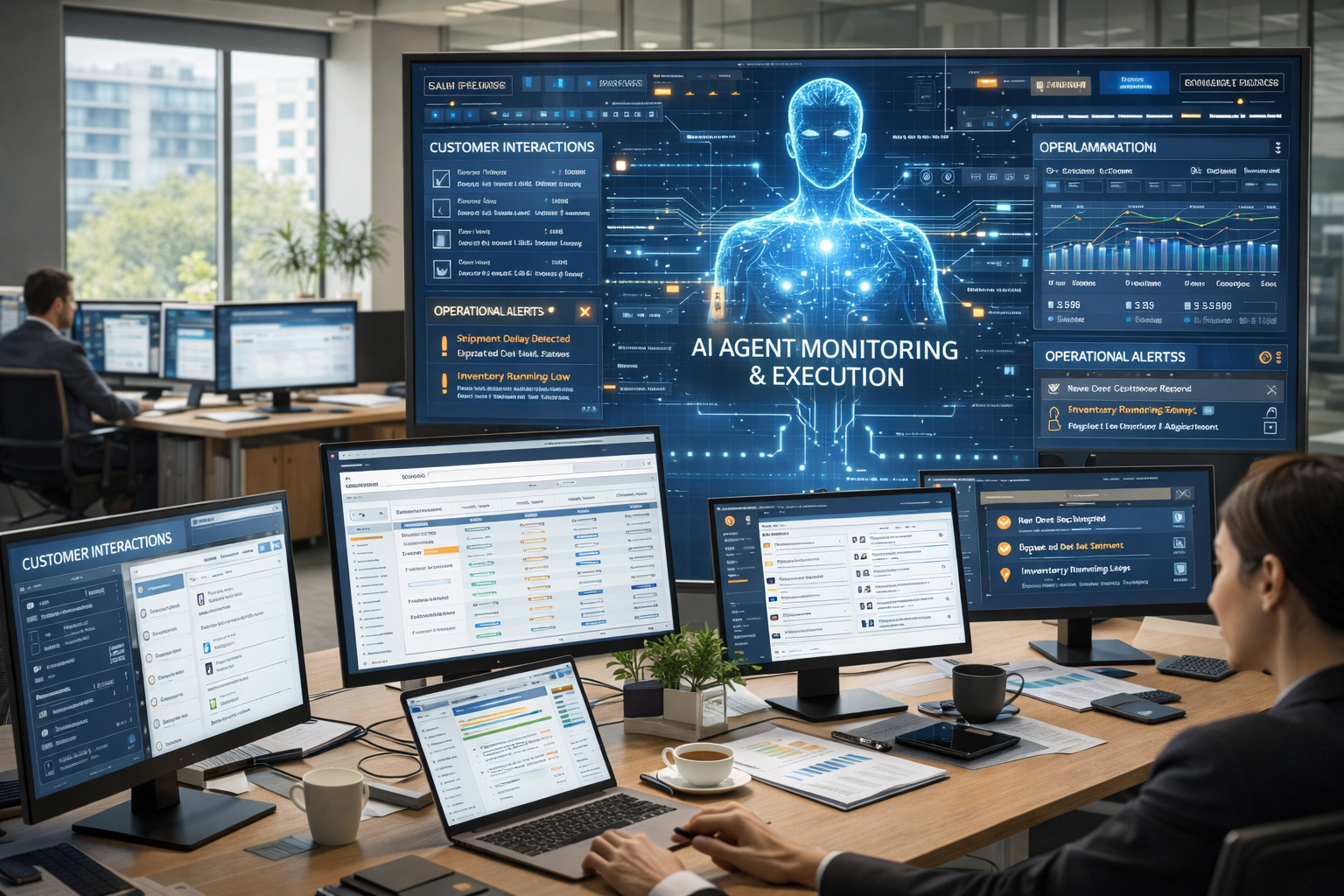
Prompt based approach:
A team asks the AI to analyze leads manually.
Workflow approach:
Leads enter the system automatically.
The LLM evaluates quality.
Scores are assigned.
Qualified leads are routed to sales.
Result:
Faster response. Higher conversion.
Prompt based approach:
Agents ask AI to summarize tickets.
Workflow approach:
Tickets are analyzed automatically.
AI categorizes and prioritizes.
Responses are generated or escalated.
Tasks are created in operations systems.
Result:
Reduced workload. Faster resolution.
Prompt based approach:
Teams request reports manually.
Workflow approach:
Data is aggregated continuously.
LLMs generate reports automatically.
Insights are delivered proactively.
Result:
Real time visibility.
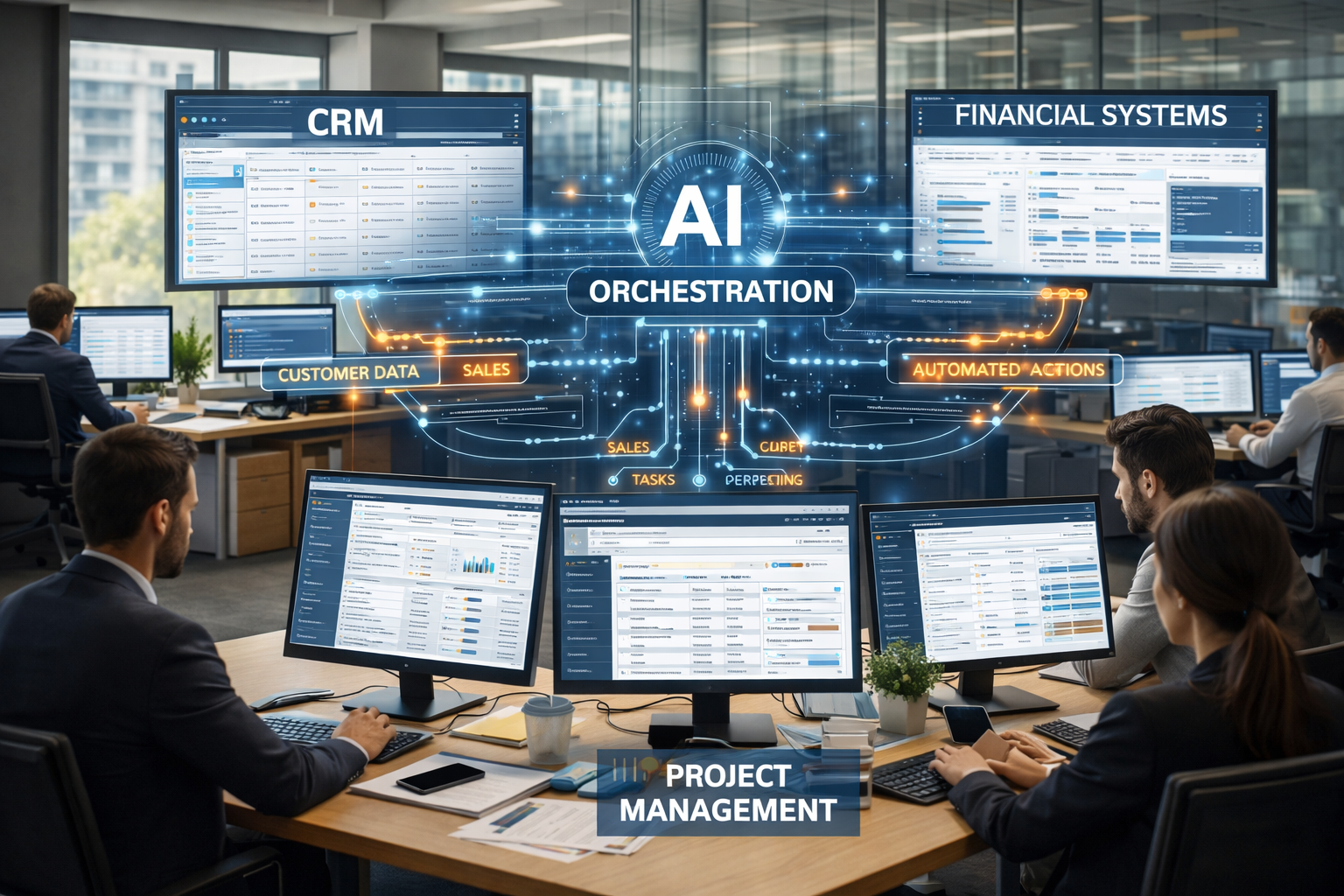
Organizations deploy chat interfaces instead of systems.
No integration. No automation.
LLMs do not connect to core systems.
Without integration, they cannot operate on real data.
AI cannot automate undefined processes.
Workflows must be mapped before automation.
Generating insights is not enough.
Systems must act.
This is where platforms like OpenClaw become critical.
They provide the infrastructure to:
• Connect data sources
• Embed LLMs into workflows
• Orchestrate processes
• Trigger actions across systems
Without this layer, LLMs remain isolated.
With it, they become operational.
Focus on processes with:
• High volume
• Repetitive tasks
• Clear structure
Ensure the LLM has access to relevant information.
Map decisions and actions.
Embed AI into the workflow.
Allow the system to trigger actions.
Expand to additional workflows.
SMBs can adopt LLM workflows faster.
They have:
• Simpler systems
• Faster decision making
• Less legacy infrastructure
This allows them to:
• Automate earlier
• Reduce operational costs
• Scale efficiently
The future is not prompt driven.
It is workflow driven.
LLMs will not sit in chat interfaces.
They will operate inside systems.
They will:
• Monitor signals
• Make decisions
• Trigger actions
This is the shift from assistance to execution.
Prompts show what AI can do.
Workflows define what AI delivers.
Companies that stay at the prompt level will see incremental gains.
Those that build LLM workflows will transform how they operate.
The difference is not technology.
It is architecture.
• McKinsey. AI & Advanced Analytics Insights
https://www.mckinsey.com/capabilities/quantumblack/our-insights
• IBM. Automation
https://www.ibm.com/topics/automation
• OpenAI
https://openai.com
• Snowflake. Data Cloud
https://www.snowflake.com/en/data-cloud/
Ready to move from prompts to real automation.
👉 Schedule a free discovery call
https://app.iclosed.io/e/singularagency/schedule-a-discovery-call
This article was developed with the assistance of artificial intelligence tools to support research, structure, and editorial drafting. All strategic analysis, validation, and final editorial review were conducted by the Singular Innovation team.
Autonomous workflows allow AI to coordinate tasks, decisions, and actions across systems. This shift moves businesses from manual processes to intelligent, self-operating workflows.

Dashboards show what happened. AI operations systems decide and act on what should happen next. This shift is redefining how companies run their day to day operations.
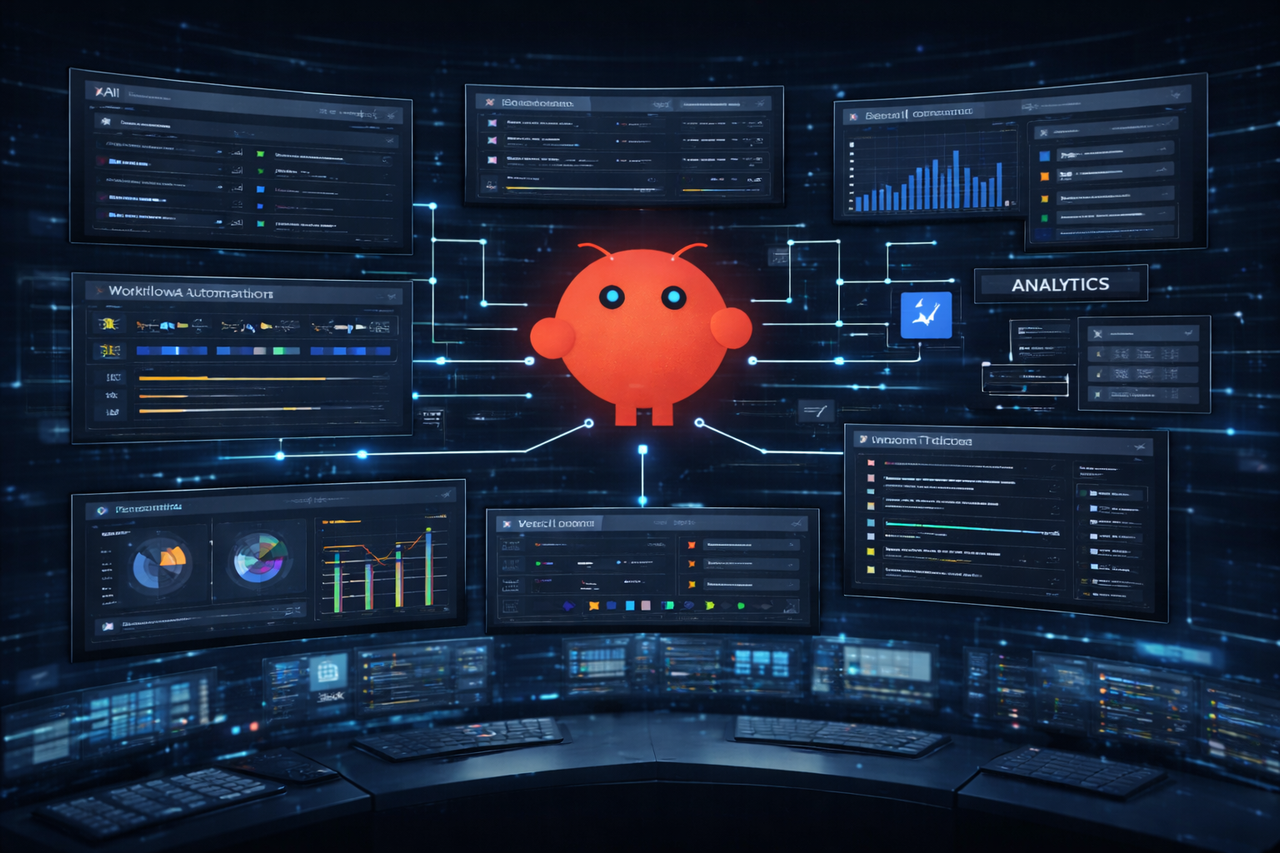
Most companies operate across disconnected tools. AI automation engines like OpenClaw unify systems, workflows, and data into one operational layer, enabling real automation, faster execution, and better decisions.


