



ai-automation
Autonomous Workflows. AI That Runs Operations
Autonomous workflows allow AI to coordinate tasks, decisions, and actions across systems. This shift moves businesses from manual processes to intelligent, self-operating workflows.
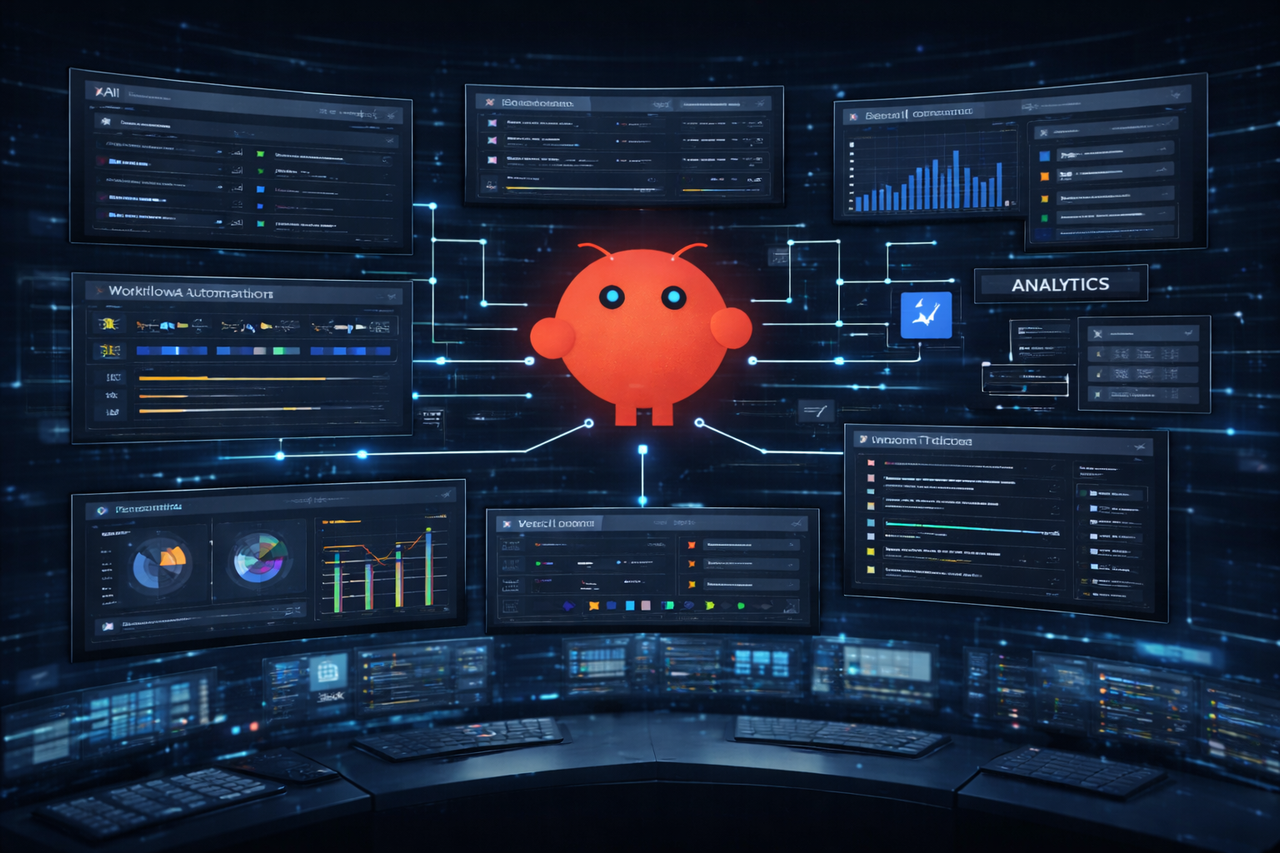
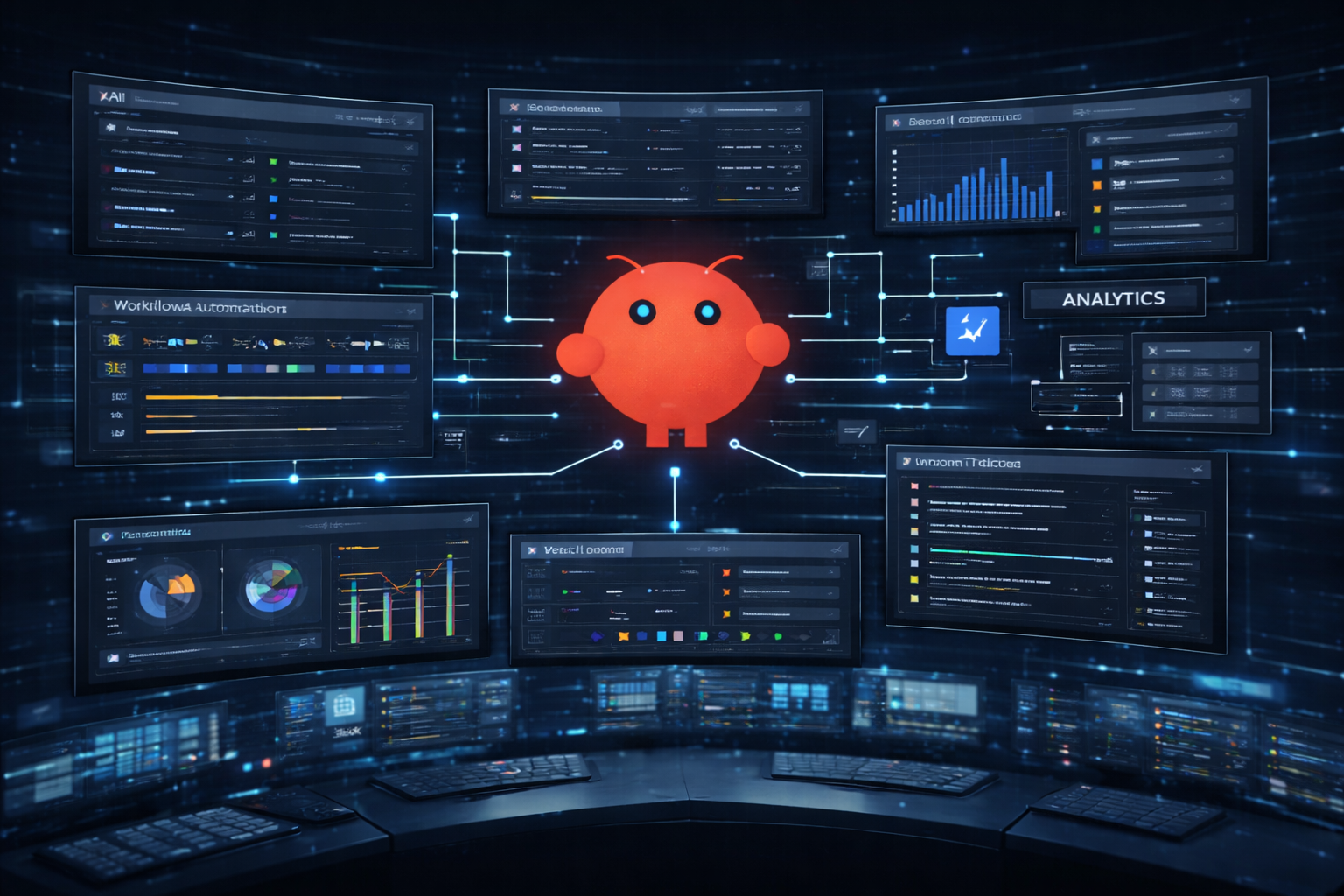
Most companies operate across disconnected tools. AI automation engines like OpenClaw unify systems, workflows, and data into one operational layer, enabling real automation, faster execution, and better decisions.
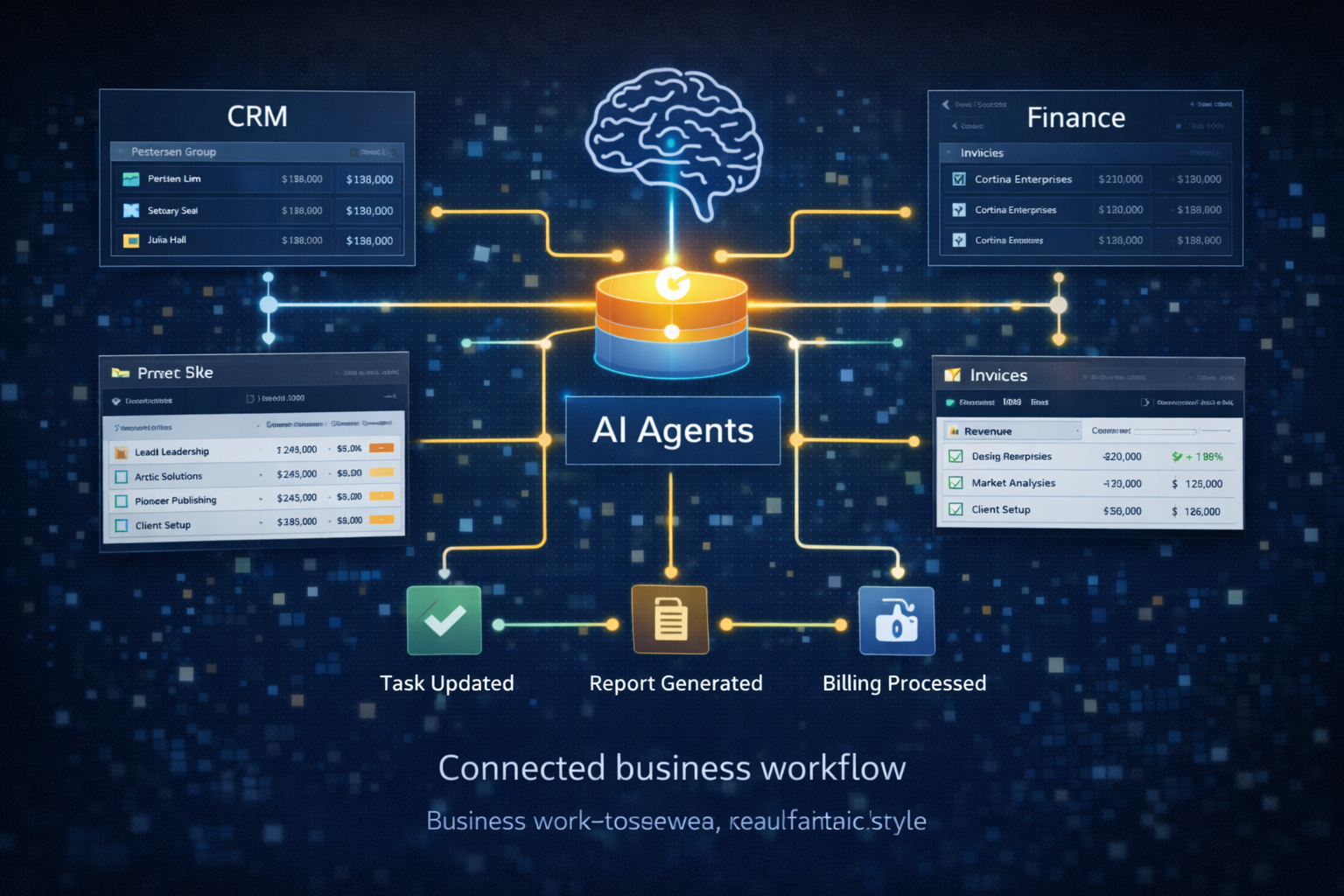
AI connects data, workflows, and actions into a single operational system.
Modern businesses run on tools.
CRMs manage customer relationships.
Project management platforms track execution.
Marketing systems generate demand.
Finance tools monitor revenue and costs.
Each of these tools works well in isolation.
But businesses do not operate in isolation.
They operate across processes. Across teams. Across decisions that require coordination between systems.
And this is where the problem begins.
Most companies are not lacking tools.
They are lacking a system.
Over the past decade, software adoption has accelerated dramatically.
What started as digital transformation has turned into tool fragmentation.
Companies now operate with dozens of platforms, each solving a narrow problem but failing to connect the full operation.
This creates a hidden layer of inefficiency that compounds over time.
Customer data lives in the CRM.
Campaign performance in marketing platforms.
Financial metrics in accounting systems.
Operational data in project tools.
No single source of truth exists.
Teams operate with partial visibility, leading to slower decisions and inconsistent execution.
Most business processes are cross functional by nature.
But systems are not.
A lead moves from marketing to sales.
A deal moves from sales to operations.
A project impacts finance and reporting.
Each transition introduces friction.
Manual handoffs. Delayed updates. Lost context.
Workflows do not flow. They break.
Teams adapt by creating manual bridges between systems.
Copying data. Sending updates. Managing spreadsheets outside core tools.
These workarounds become the real operating system of the company.
And they do not scale.

AI experiments generate outputs. AI workflows generate outcomes.
The solution is not adding more software.
It is rethinking how systems connect.
Instead of operating through disconnected tools, companies need a coordinated operational layer.
This is where AI automation engines come in.
An AI automation engine does not replace existing tools.
It connects them.
It creates a unified environment where:
• Data flows across systems
• Workflows execute continuously
• AI supports and triggers decisions
• Actions happen automatically
This is the transition from software usage to system orchestration.
An AI automation engine is an operational layer that integrates:
• Business tools and SaaS platforms
• Data sources and knowledge systems
• Workflows and business logic
• AI models that interpret and act on signals
The goal is not visibility.
The goal is execution.
AI becomes part of how work gets done.
Not just how information is analyzed.
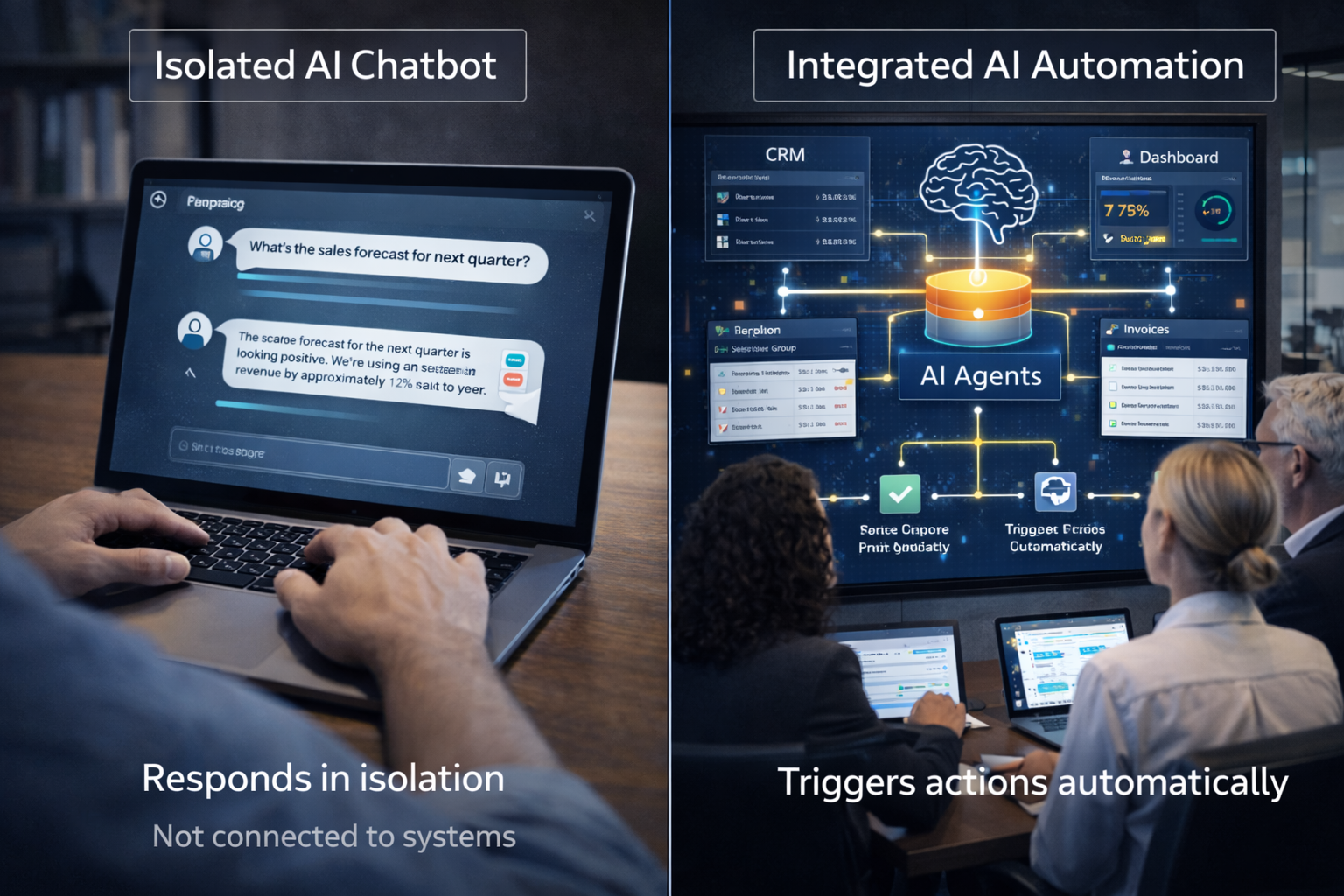
From fragmented tools to connected operations. How AI transforms business workflows into unified systems.
OpenClaw is designed as an AI automation engine that transforms fragmented tools into a coordinated system.
Instead of forcing companies to replace their stack, it builds on top of it.
OpenClaw connects the systems companies already rely on.
CRMs, databases, communication tools, project platforms, and internal systems.
This removes silos and enables continuous data flow.
All relevant information becomes accessible through a shared layer.
AI can analyze customer data, operational metrics, and internal documentation simultaneously.
This improves context and decision quality.
Processes are mapped and automated across systems.
Instead of manual coordination, workflows execute automatically.
For example:
• A new lead triggers qualification and enrichment
• A closed deal triggers onboarding workflows
• Project updates trigger reporting and financial tracking
Work becomes continuous.
AI models interpret signals across the system.
They detect patterns, identify issues, and recommend next actions.
In more advanced cases, they trigger actions directly.
This reduces dependency on manual decision making.
The most important layer is action.
OpenClaw can execute tasks across multiple platforms.
Updating records
Sending notifications
Launching workflows
Generating reports
This is where automation becomes operational.
Understanding the concept is useful.
Seeing it in action is what makes it real.
Traditional process:
Marketing generates a lead.
Sales reviews it manually.
Data is incomplete or outdated.
Follow up is delayed.
With an AI automation engine:
A lead is captured.
AI enriches the data automatically.
Lead scoring is applied.
Sales receives a qualified opportunity with context.
Result:
Faster response times. Higher conversion rates. Less manual work.
Traditional process:
A customer submits a ticket.
Support reviews it manually.
Operations are notified through separate channels.
With an automation engine:
The ticket is categorized by AI.
Priority is assigned automatically.
Relevant teams are notified instantly.
Tasks are created across systems.
Result:
Reduced response time. Better coordination. Improved customer experience.
Traditional process:
Teams gather data from multiple systems.
Reports are built manually.
Insights arrive too late.
With an automation engine:
Data is aggregated continuously.
AI generates reports automatically.
Anomalies are detected in real time.
Result:
Faster reporting cycles. Better decision making. Reduced manual effort.
Moving to an AI automation engine requires a structured approach.
Identify how work actually happens.
Not how it is documented. How it is executed.
Where does data move. Where do delays happen.
Connect the core tools.
Ensure data can flow between systems reliably.
This creates the foundation for automation.
Introduce AI models to interpret data and generate insights.
Focus on high impact workflows first.
Move from recommendations to execution.
Allow the system to trigger actions across tools.
Continuously improve workflows.
Refine decision logic. Expand automation coverage.
Many organizations attempt automation but fail to achieve impact.
The reasons are consistent.
Companies focus on models before understanding processes.
Without defined workflows, AI has nothing to operate on.
AI systems depend on reliable data.
Fragmented or inconsistent data limits effectiveness.
Trying to automate everything at once leads to failure.
Start with high impact workflows.
Scale gradually.
Automation requires clear responsibility.
Without ownership, systems become fragmented again.
Small and mid sized businesses are uniquely positioned to adopt AI automation.
They have fewer legacy systems.
They can move faster.
They can redesign workflows without large scale resistance.
With the right architecture, SMBs can:
• Automate operations early
• Reduce operational overhead
• Scale without increasing complexity
This creates a structural advantage.
Traditional systems focus on reporting.
AI automation engines focus on execution.
The shift is fundamental.
From: What happened
To: What should happen next
To: Executing what should happen
This reduces decision latency.
It increases operational speed.
It changes how companies function.
The future of business software is not more tools.
It is fewer, better connected systems.
AI automation engines represent this shift.
They unify:
Data
Workflows
Decisions
Actions
Into one operational layer.
Companies will not operate through dashboards.
They will operate through systems that think and act.
Most companies believe they need better tools.
What they actually need is better coordination.
AI automation engines like OpenClaw provide that missing layer.
They transform fragmented software into a unified operational system.
That is how companies move from complexity to clarity.
From manual work to automation.
From tools to systems.
• McKinsey. AI & Advanced Analytics Insights
https://www.mckinsey.com/capabilities/quantumblack/our-insights
• IBM. Automation
https://www.ibm.com/topics/automation
• Stanford AI Index
https://aiindex.stanford.edu
• IBM. Data Management
https://www.ibm.com/topics/data-management
Ready to connect your tools into one operational system.
👉 Schedule a free discovery call
https://app.iclosed.io/e/singularagency/schedule-a-discovery-call
This article was developed with the assistance of artificial intelligence tools to support research, structure, and editorial drafting. All strategic analysis, validation, and final editorial review were conducted by the Singular Innovation team.
Autonomous workflows allow AI to coordinate tasks, decisions, and actions across systems. This shift moves businesses from manual processes to intelligent, self-operating workflows.

Dashboards show what happened. AI operations systems decide and act on what should happen next. This shift is redefining how companies run their day to day operations.

LLMs are powerful, but prompts alone do not create business impact. Real value comes from embedding LLMs into workflows that connect data, decisions, and actions across systems.


