


AI Agents
AI Operations. From Dashboards to Real Execution
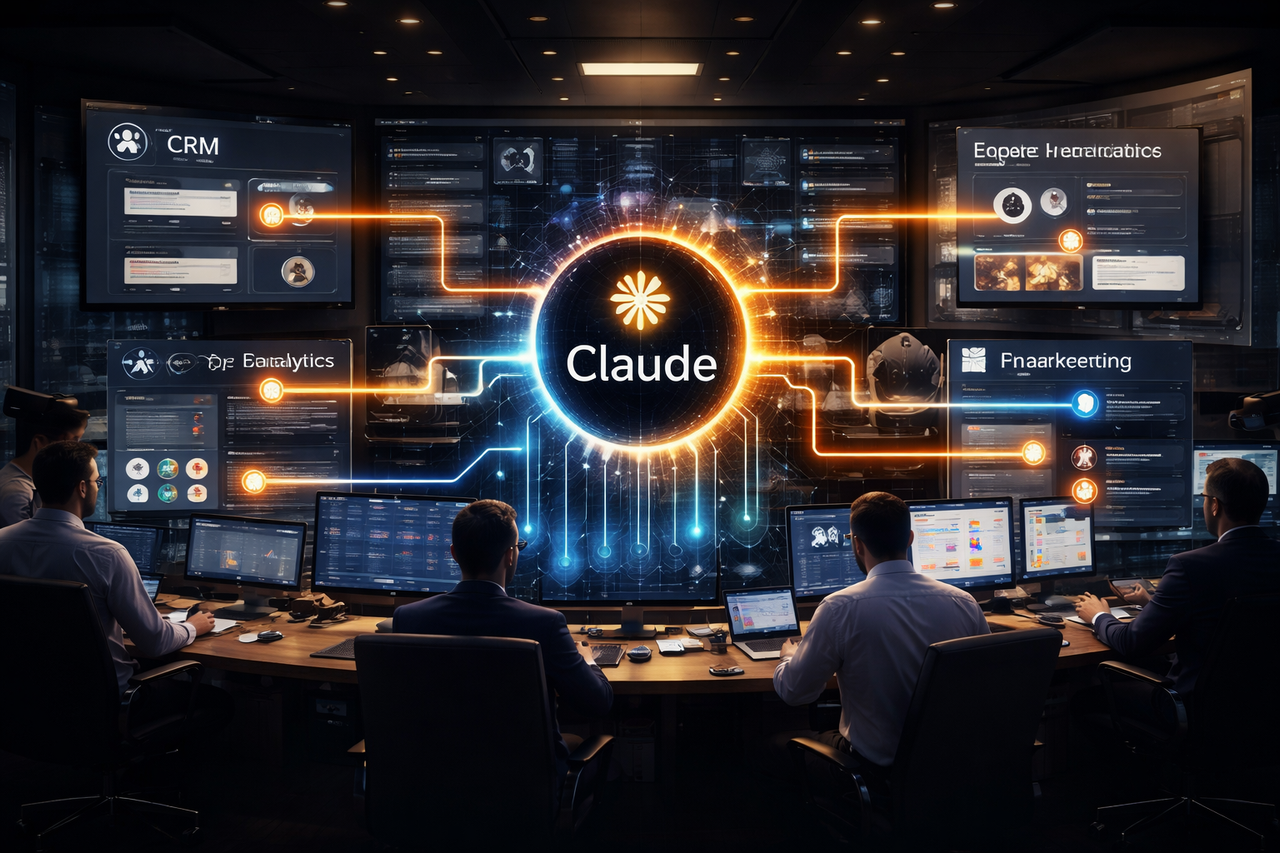
Dashboards show what happened. AI operations systems decide and act on what should happen next. This shift is redefining how companies run their day to day operations.
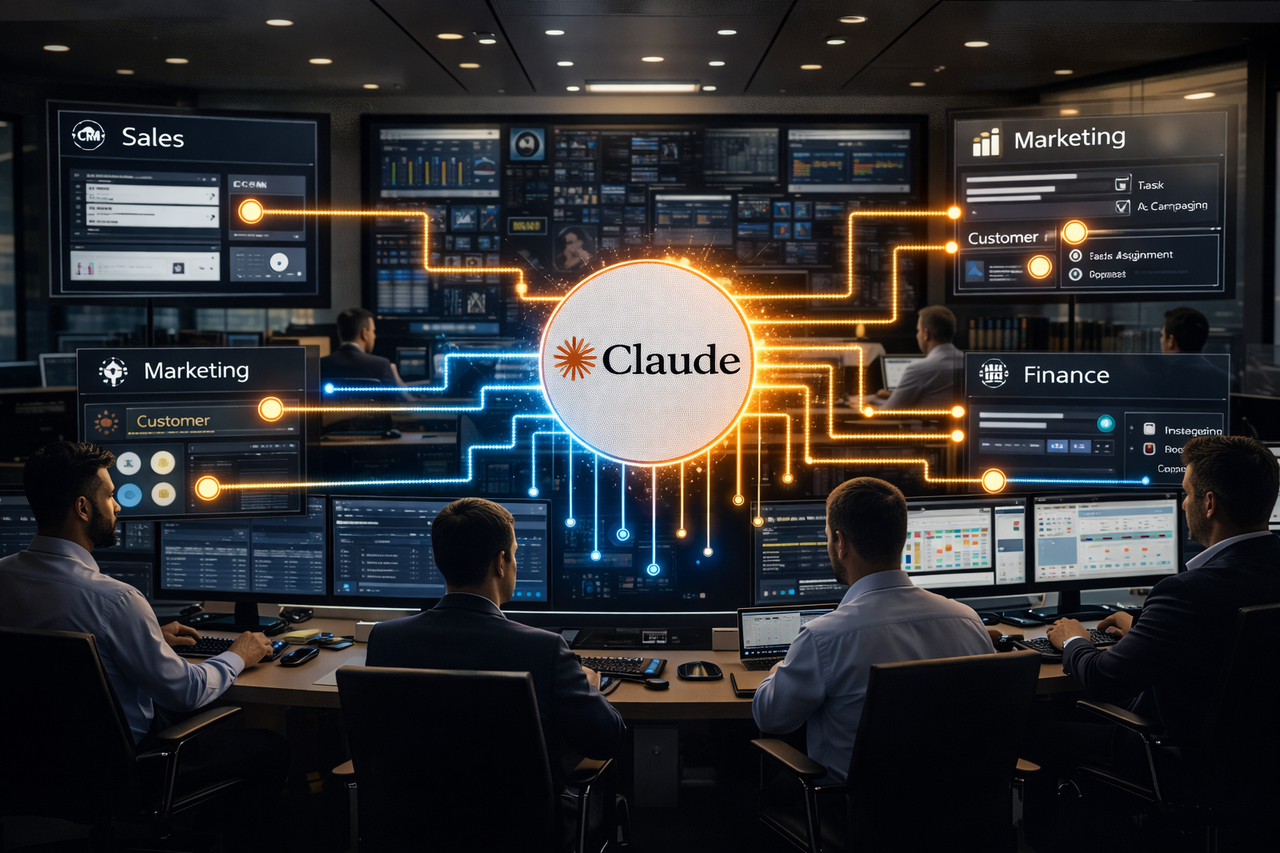
Autonomous workflows allow AI to coordinate tasks, decisions, and actions across systems. This shift moves businesses from manual processes to intelligent, self-operating workflows.
For decades, business operations have depended on people coordinating processes.
Tasks are assigned manually.
Decisions are made step by step.
Teams communicate to move work forward.
This model works.
But it does not scale efficiently.
As companies grow, complexity increases. More tools. More data. More dependencies between teams.
At some point, coordination becomes the bottleneck.
Not execution. Not strategy.
Coordination.
This is where autonomous workflows begin to change how businesses operate.
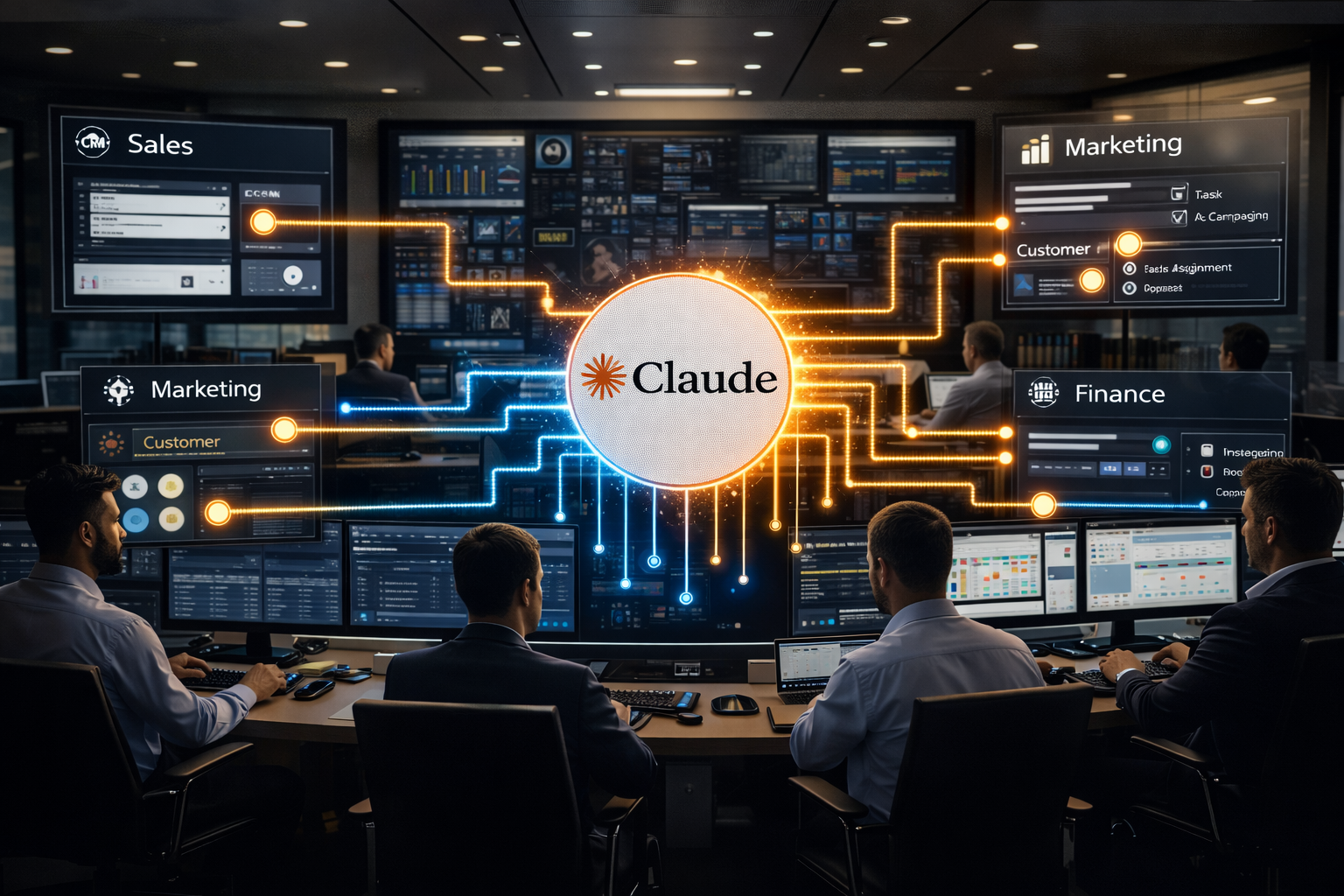
Claude powered AI runs business operations autonomously across systems.
An autonomous workflow is a system where:
• Data flows continuously across tools
• AI interprets signals and context
• Decisions are made automatically
• Actions are triggered across systems
Without requiring constant human intervention.
This does not mean removing humans.
It means reducing the need for manual coordination.
Traditional workflows are structured, but they are not autonomous.
They depend on human input at every stage.
Someone must:
Review data
Decide next steps
Trigger actions
This introduces delays.
Workflows span multiple tools.
Each step requires switching systems.
This creates friction.
Processes move as fast as people can act.
Not as fast as systems can operate.

AI workflows that run continuously without human intervention.
Many companies have already adopted automation.
But automation is not the same as autonomy.
Automation:
• Executes predefined tasks
• Follows static rules
• Requires human oversight
Autonomy:
• Interprets context
• Adapts to changing conditions
• Makes decisions dynamically
This is the difference between scripts and systems.
To enable autonomy, several components must work together.
Systems must share data in real time.
Without data flow, there is no context.
AI interprets signals.
It identifies patterns, anomalies, and opportunities.
Processes are defined but flexible.
They adapt based on conditions.
The system executes tasks across tools.
This closes the loop.
Traditional:
Sales teams manage pipelines manually.
Follow ups depend on individual effort.
Autonomous workflow:
AI monitors pipeline activity.
Detects stalled deals.
Triggers follow ups automatically.
Result:
Faster deal cycles. Higher conversion.
Traditional:
Onboarding involves multiple teams.
Tasks are coordinated manually.
Autonomous workflow:
New customer triggers onboarding flow.
Tasks are assigned automatically.
Progress is tracked across systems.
Result:
Consistent onboarding. Better experience.
Traditional:
Campaigns are reviewed periodically.
Adjustments are manual.
Autonomous workflow:
AI monitors performance in real time.
Adjusts targeting and budget.
Result:
Continuous optimization.
OpenClaw provides the infrastructure needed to move from automation to autonomy.
Connects all business systems.
Provides context for AI decisions.
Defines and orchestrates processes.
Interprets signals and makes decisions.
Executes tasks across tools.
Focus on workflows with clear patterns.
Understand how tasks connect.
Ensure data flows between tools.
Enable context based decisions.
Allow workflows to run autonomously.
Refine continuously.
SMBs can implement autonomous workflows faster.
They have:
• Fewer legacy systems
• Faster decision cycles
• Greater flexibility
This allows them to:
• Reduce operational overhead
• Scale efficiently
• Compete with larger organizations
Operations will not depend on manual coordination.
They will depend on systems that:
Monitor
Decide
Act
Autonomous workflows will become the standard.
The biggest bottleneck in modern business is not execution.
It is coordination.
Autonomous workflows remove that bottleneck.
They allow systems to manage processes continuously.
And they enable companies to operate at a new level of efficiency.
• IBM. Automation
https://www.ibm.com/topics/automation
• Microsoft. AI for Business
https://www.microsoft.com/en-us/ai
• Anthropic
https://www.anthropic.com
• Snowflake. Data Cloud
https://www.snowflake.com/en/data-cloud/
Ready to implement autonomous workflows in your business.
👉 Schedule a free discovery call
https://app.iclosed.io/e/singularagency/schedule-a-discovery-call
This article was developed with the assistance of artificial intelligence tools to support research, structure, and editorial drafting. All strategic analysis, validation, and final editorial review were conducted by the Singular Innovation team.
Dashboards show what happened. AI operations systems decide and act on what should happen next. This shift is redefining how companies run their day to day operations.

LLMs are powerful, but prompts alone do not create business impact. Real value comes from embedding LLMs into workflows that connect data, decisions, and actions across systems.
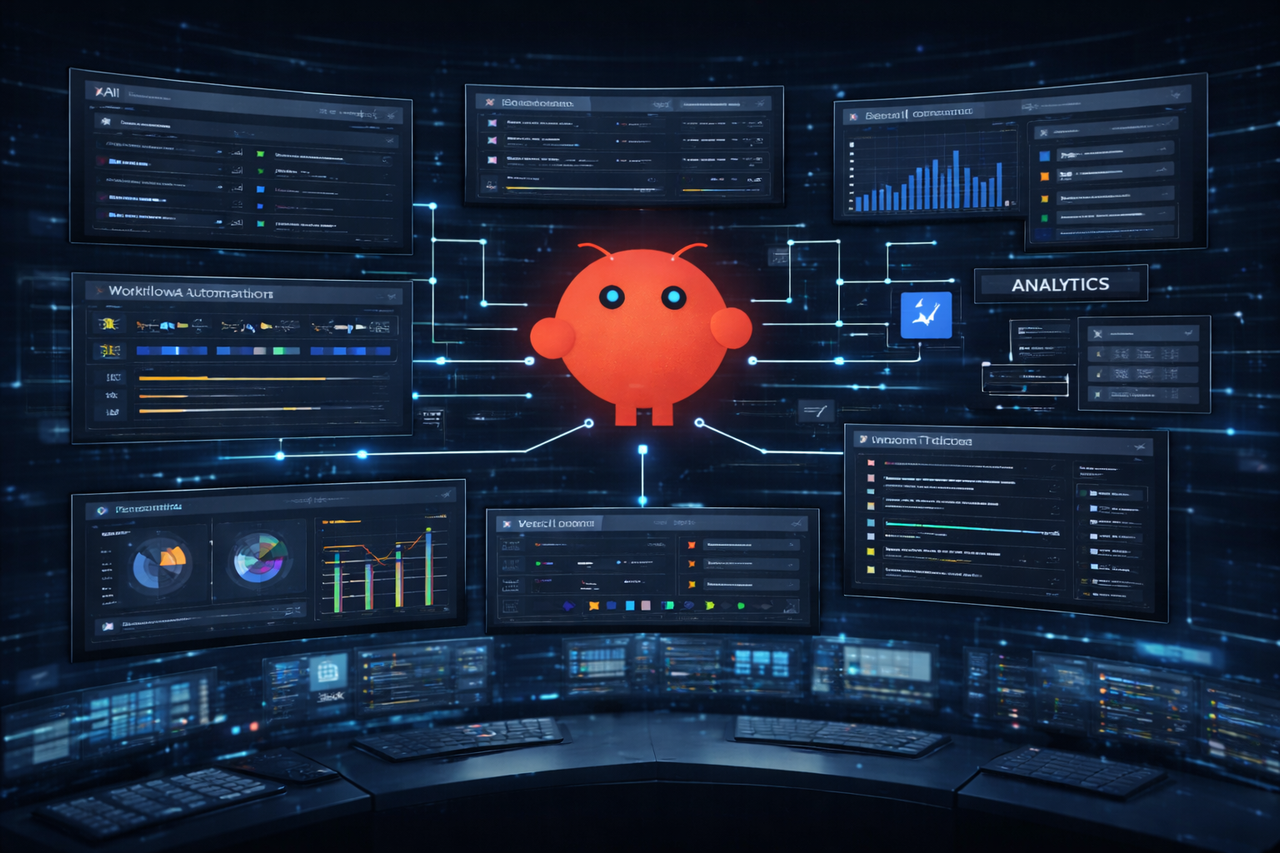
Most companies operate across disconnected tools. AI automation engines like OpenClaw unify systems, workflows, and data into one operational layer, enabling real automation, faster execution, and better decisions.


