



ai-automation
Autonomous Workflows. AI That Runs Operations
Autonomous workflows allow AI to coordinate tasks, decisions, and actions across systems. This shift moves businesses from manual processes to intelligent, self-operating workflows.
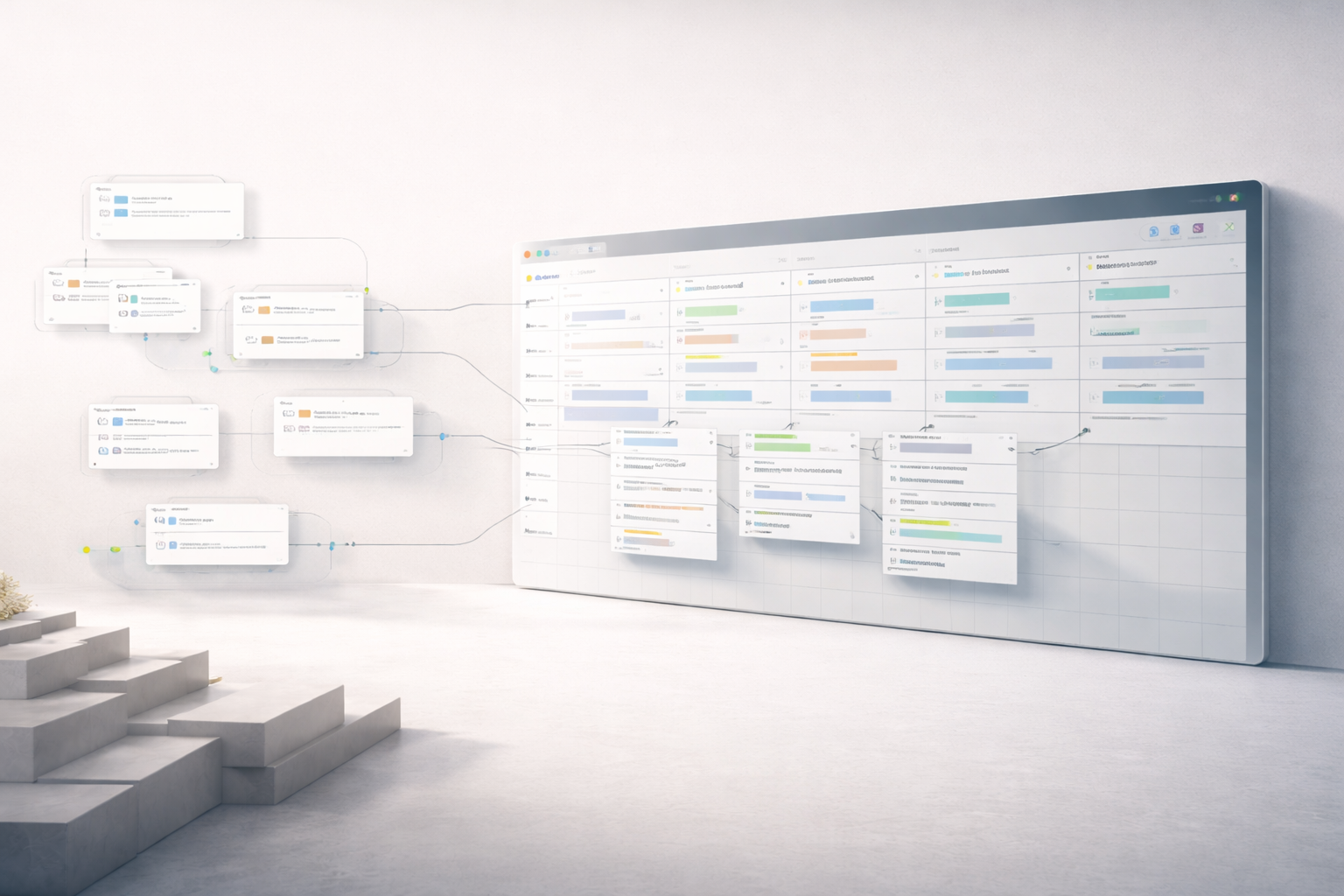
Automation alone does not create digital transformation. Airtable OMNI enables SMBs to redesign workflows, connect systems, and scale operations through a unified execution layer.
Many SMBs believe they are undergoing digital transformation because they have automated parts of their operations.
Tasks are triggered automatically. Notifications fire. Data moves between tools without human intervention.
Yet despite this activity, execution problems persist.
Work still breaks down at handoffs. Visibility is partial. Ownership is unclear. Systems feel fragile. Scaling remains difficult.
The reason is simple.
Automation is not digital transformation.
Automation optimizes tasks. Digital transformation restructures how work happens.
Automation tools are designed to answer a narrow question.
“How can this task run without manual effort?”
Digital transformation answers a broader one.
“How should this work exist inside the system?”
When automation is introduced without restructuring workflows:
This creates an illusion of progress while operational complexity increases.
Task automation focuses on isolated actions:
These automations often live independently of each other.
They succeed locally but fail globally.
System automation operates within a defined structure:
This is where digital transformation begins.
Airtable OMNI is designed for system automation, not just task execution.
For a platform-level overview of how Airtable positions itself as an operational system, see:
https://www.airtable.com/platform
Airtable OMNI is not positioned as another automation tool.
It functions as a unified operational layer where workflows, data, and automation coexist.
This difference matters because:
Automation operates inside the system, not around it.
Digital transformation fails when work is implicit.
In many SMBs:
Airtable OMNI workflows force work to become explicit.
Stages, ownership, and transitions are visible. This clarity is the foundation for reliable automation.
Most automation tools operate between tools, not across workflows.
Airtable OMNI workflows allow:
This eliminates the fragmentation that undermines transformation.
For Airtable’s official perspective on automation inside operational workflows, see:
https://www.airtable.com/product/automations
Most automation tools focus on:
They are powerful but context-light.
When workflows change, automations break.
Airtable OMNI automation lives inside the workflow itself.
This means:
Automation supports execution instead of replacing it.
The comparison is not about features.
It is about where automation lives.
With traditional tools:
With Airtable OMNI:
This difference determines whether automation scales or collapses.
SMBs operate with:
Fragmented automation increases risk.
Airtable OMNI enables SMBs to:
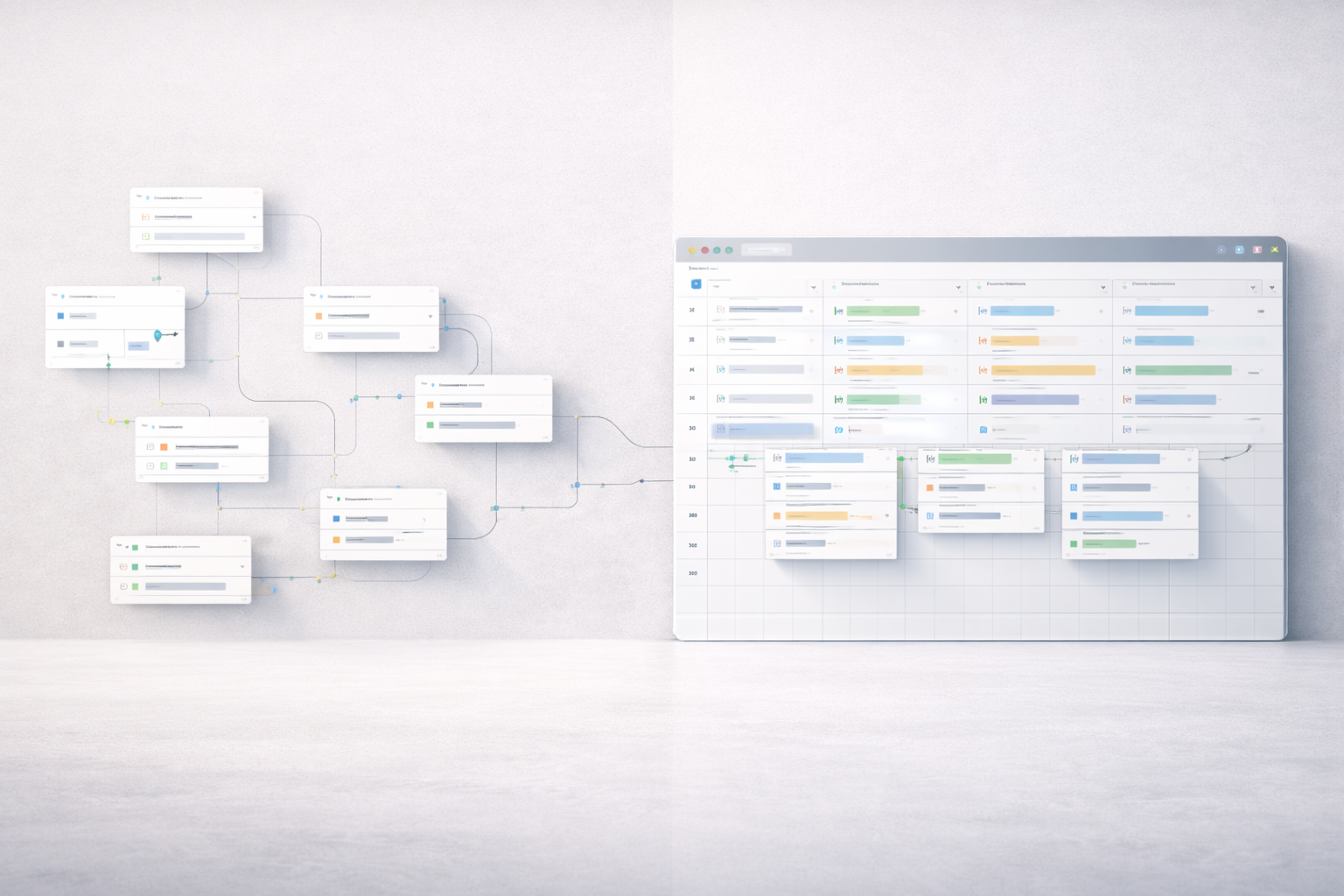
At Singular Innovation, Airtable OMNI is used to enable transformation at the system level.
The approach is consistent:
Learn more about Singular Innovation at
https://www.singular-innovation.com/
Explore operational partners at
https://www.singular-innovation.com/partners
See real systems built on Airtable OMNI at
https://www.singular-innovation.com/success-stories
Digital transformation does not fail because automation is weak.
It fails because automation is applied without restructuring how work exists.
Airtable OMNI enables real digital transformation by:
Automation optimizes tasks.
Airtable OMNI transforms operations.
If your automation efforts have increased activity but not clarity, the problem may be structural.
Schedule a 30-min discovery call to evaluate whether Airtable OMNI can support real digital transformation in your operations:
This article was developed with the assistance of AI tools and reviewed by the Singular Innovation team for accuracy and context.
Autonomous workflows allow AI to coordinate tasks, decisions, and actions across systems. This shift moves businesses from manual processes to intelligent, self-operating workflows.
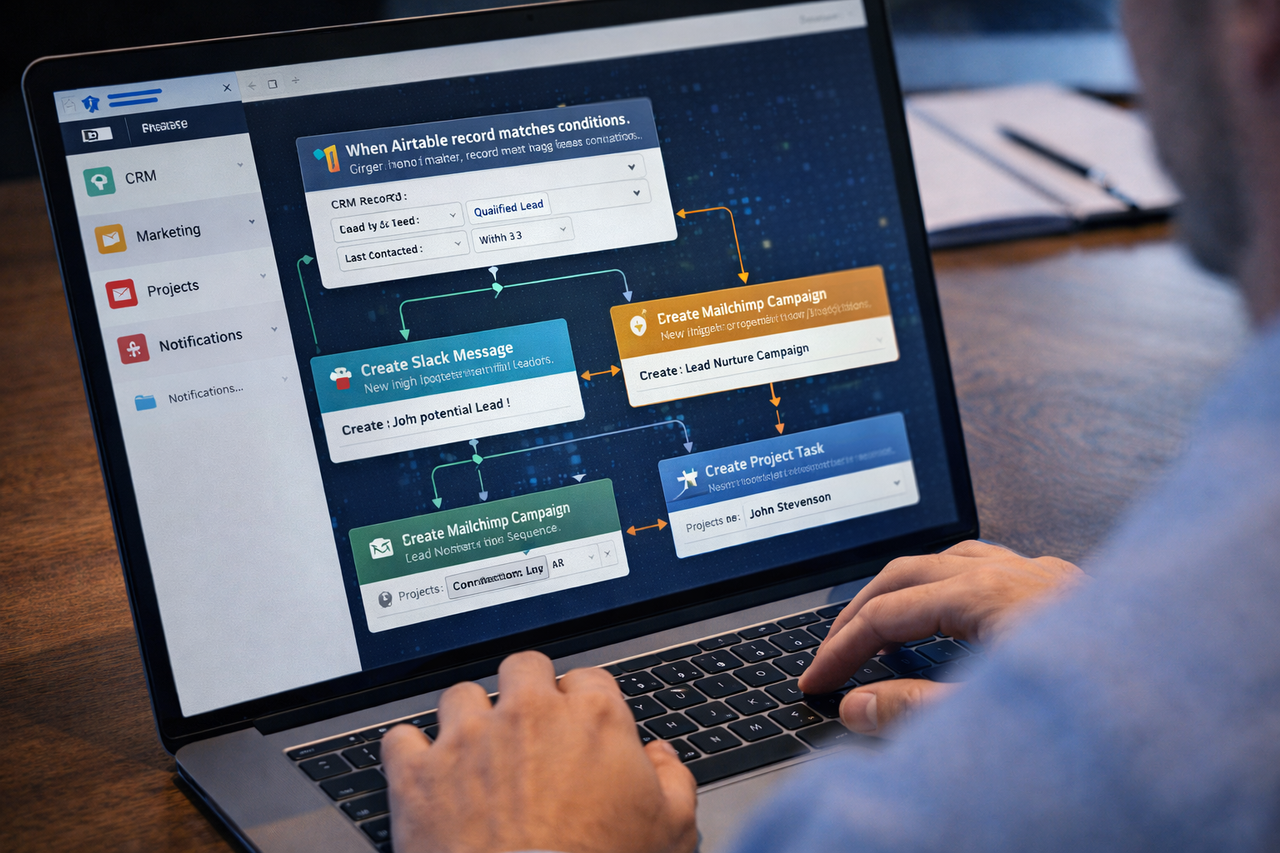
SMBs can now build AI workflows without engineering teams. No-code platforms like Airtable Omni allow companies to connect apps, automate processes, and deploy AI agents that manage operations across their digital systems.
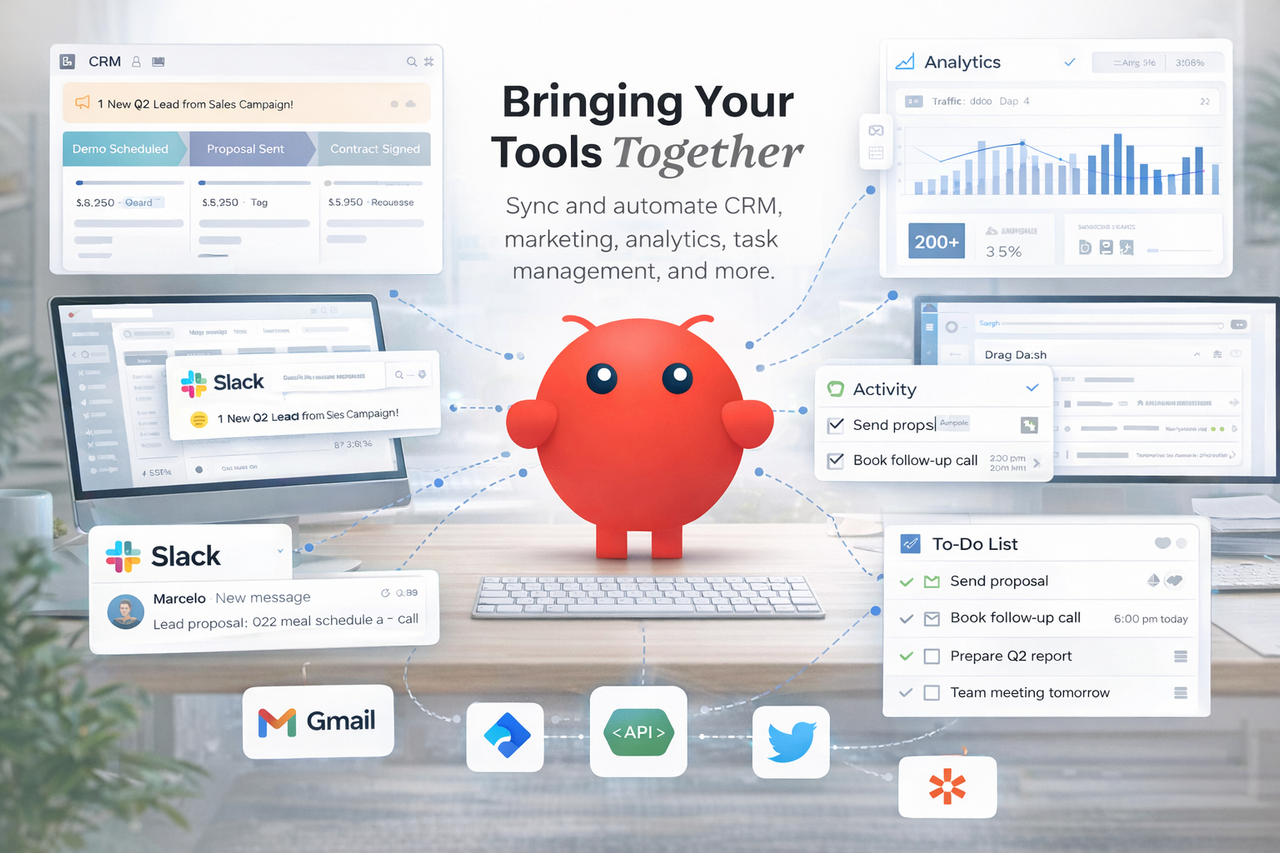
OpenClaw functions as a Second Brain and Agent OS for businesses, coordinating workflows, automating processes, and connecting operational systems into a unified AI-powered infrastructure.


