



ai-automation
Autonomous Workflows. AI That Runs Operations
Autonomous workflows allow AI to coordinate tasks, decisions, and actions across systems. This shift moves businesses from manual processes to intelligent, self-operating workflows.
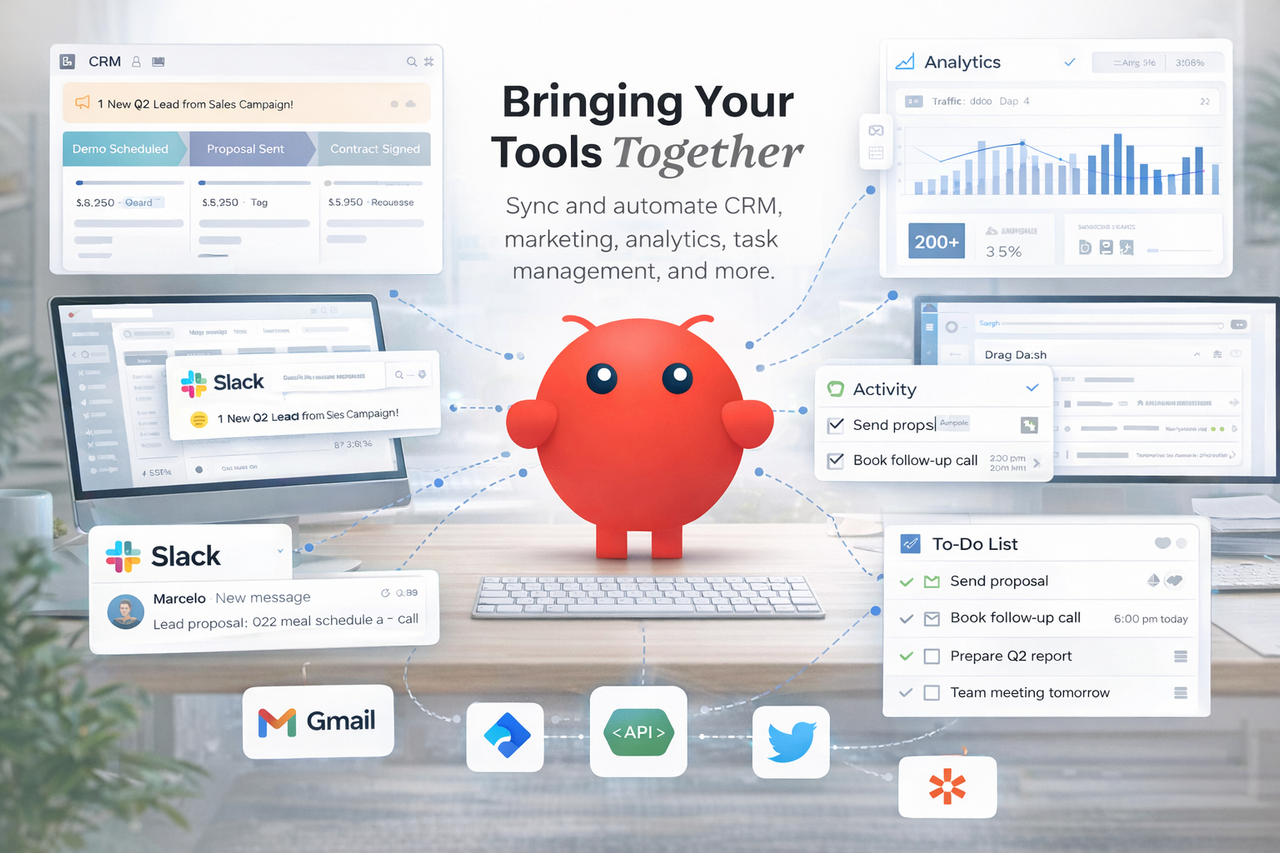
OpenClaw functions as a Second Brain and Agent OS for businesses, coordinating workflows, automating processes, and connecting operational systems into a unified AI-powered infrastructure.
Modern companies run on software.
Customer data lives in CRMs. Marketing campaigns operate in automation platforms. Analytics dashboards track performance metrics. Communication tools coordinate teams. Product infrastructure runs in cloud environments.
Yet despite the abundance of digital tools, most organizations still operate with fragmented operational systems.
Information exists across dozens of platforms, and workflows require constant manual coordination between them.
As businesses grow, this fragmentation becomes a critical operational bottleneck.
This is where AI agent operating systems like OpenClaw are emerging as a new operational layer for companies.
Instead of simply adding more tools, organizations are beginning to deploy AI-driven systems that function as a Second Brain, orchestrating workflows across the entire digital infrastructure.
OpenClaw represents this new category: a system that connects business platforms, coordinates automation, and allows AI agents to execute operational workflows across the organization.
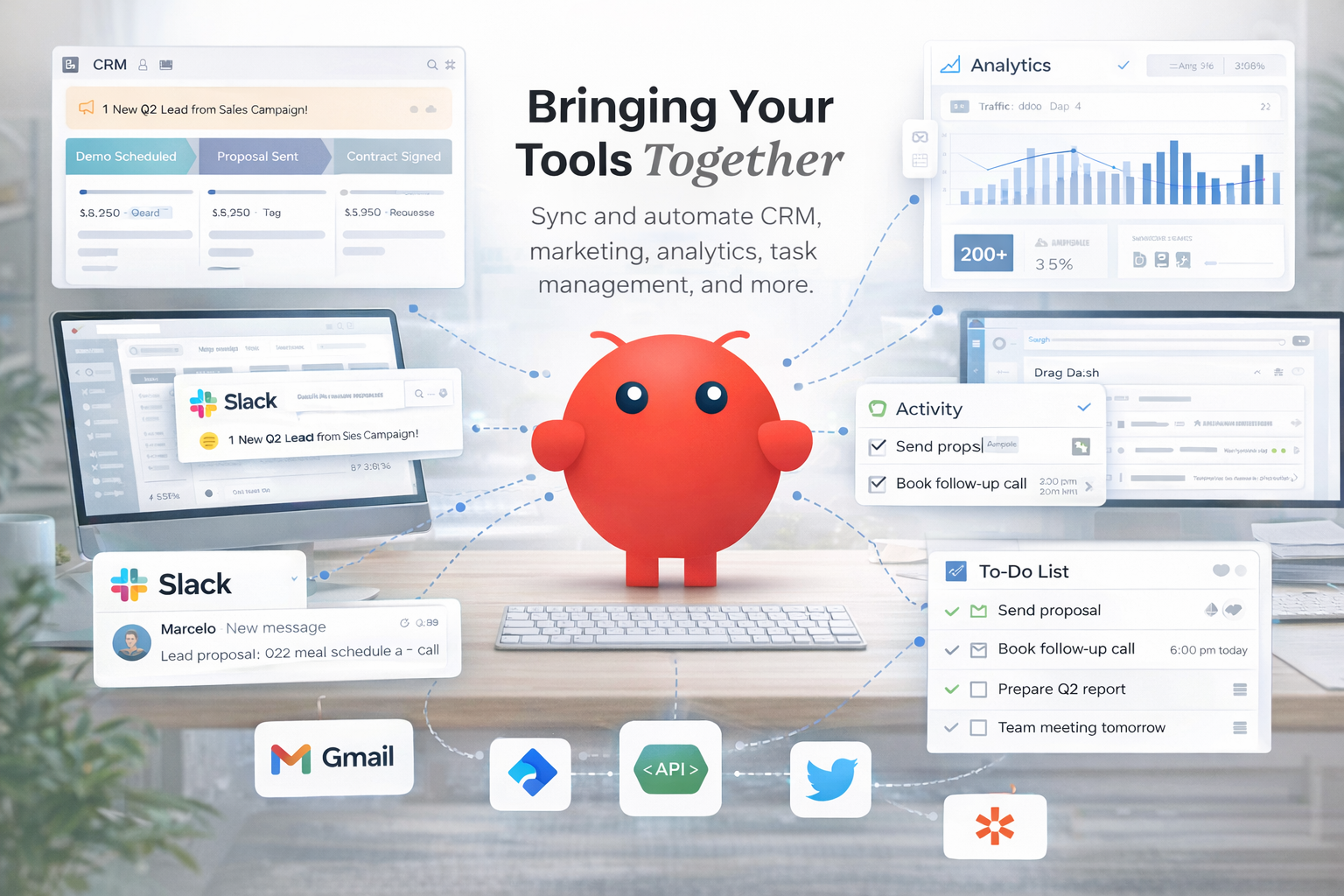
Over the last decade, companies have rapidly expanded their digital ecosystems.
A typical business today may rely on dozens of operational platforms:
CRM systems for sales
Marketing automation tools
Customer support platforms
Analytics dashboards
Project management software
Communication platforms
Cloud infrastructure
Each tool solves a specific problem.
But together they create a fragmented operational environment.
Teams constantly switch between platforms. Information must be manually transferred between systems. Important signals often remain hidden because data exists in disconnected environments.
The result is operational inefficiency.
Employees spend significant time coordinating systems instead of focusing on strategic work.
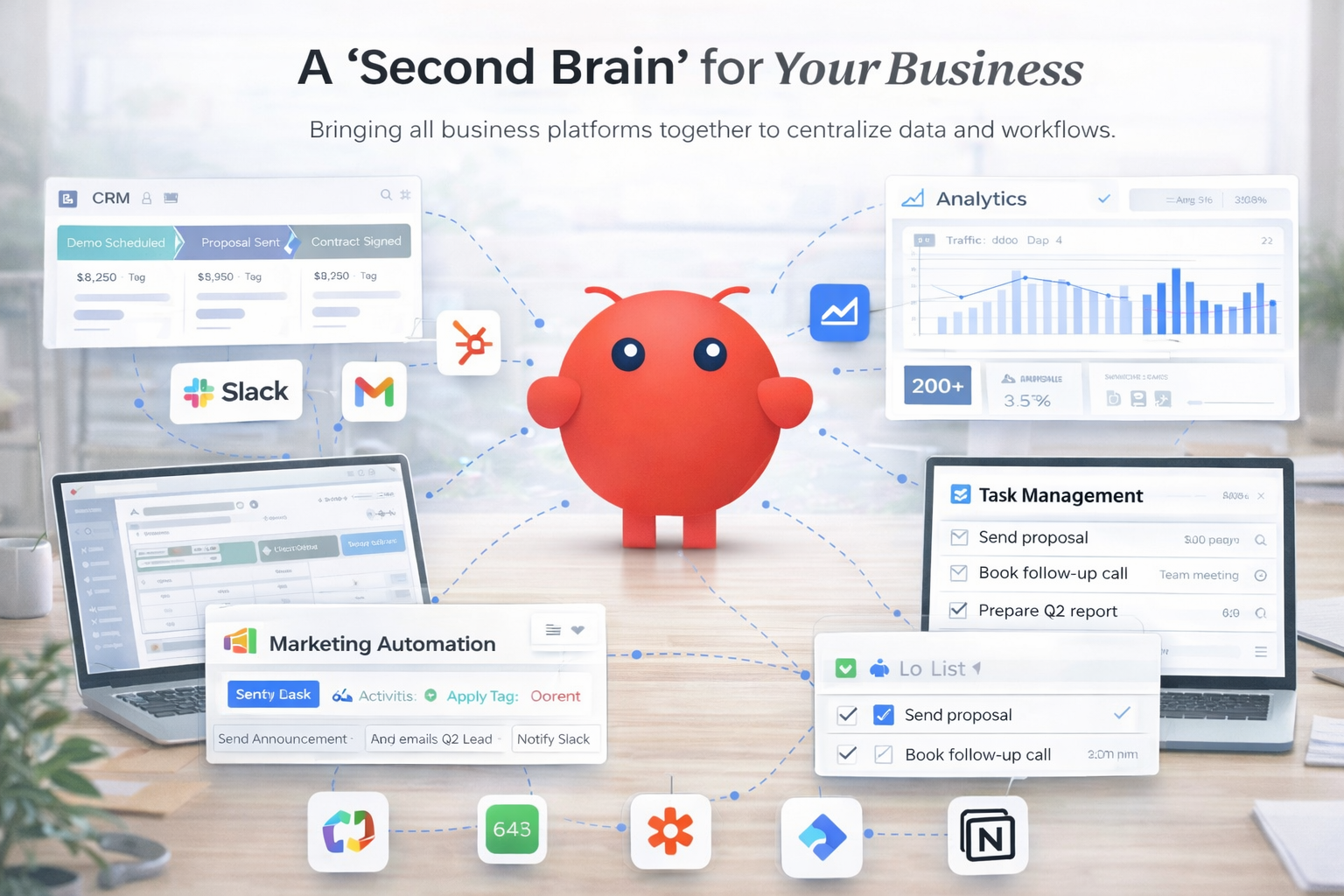
The concept of a Second Brain has gained traction in productivity systems, where individuals use digital tools to organize knowledge and information.
Organizations now require a similar capability.
But instead of organizing personal notes, companies must coordinate operational data across entire software ecosystems.
A business-level Second Brain performs several critical functions:
centralizing operational awareness
connecting information across platforms
triggering workflows based on events
coordinating tasks across systems
maintaining visibility across the organization
OpenClaw brings this concept to operational infrastructure.
It allows businesses to create an intelligent operational layer where AI agents observe, interpret, and execute workflows across the digital environment.
An Agent Operating System functions as the infrastructure that enables AI agents to perform tasks across different platforms.
Rather than replacing existing software, it sits above those systems and coordinates their interactions.
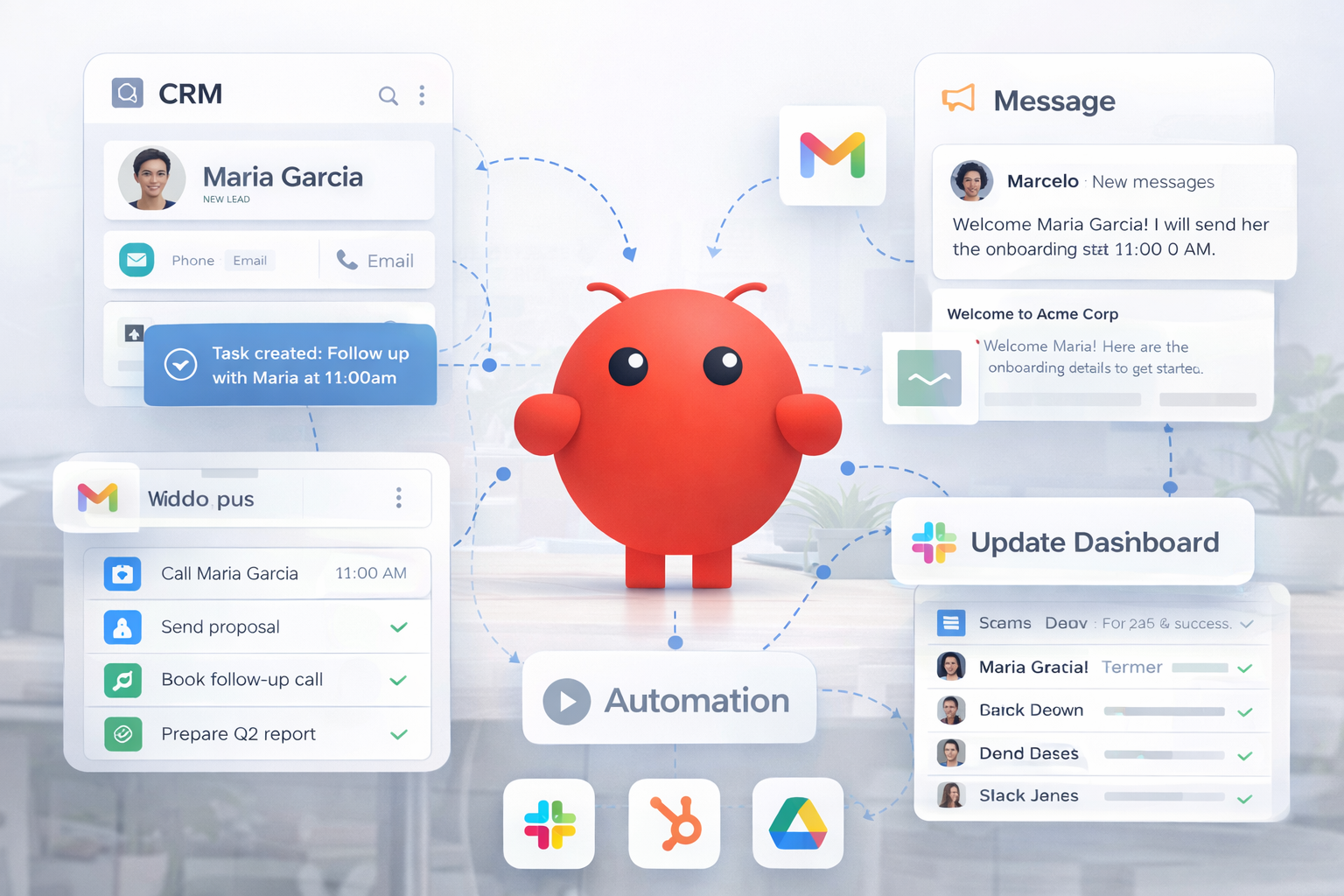
In practice, this means OpenClaw can monitor events across platforms and trigger automated workflows.
For example:
When a new customer signs up, onboarding workflows can automatically begin.
When analytics dashboards detect unusual activity, alerts can be triggered.
When a sales opportunity reaches a specific stage, follow-up tasks can be created automatically.
These processes happen without requiring manual coordination between teams.
The Agent OS acts as an operational conductor, ensuring that systems work together seamlessly.
Traditional automation tools operate based on predefined triggers.
If event A occurs, action B happens.
While this approach is effective for simple workflows, modern organizations require more flexible operational systems.
AI agents introduce an additional layer of intelligence.
They can interpret context, analyze data signals, and prioritize actions across systems.
For example, instead of simply triggering a notification, an AI agent may:
analyze customer behavior signals
prioritize high-value opportunities
coordinate tasks across multiple teams
update dashboards and operational reports
This transforms automation from a simple rule engine into an intelligent operational system.
OpenClaw acts as an operational intelligence platform that connects multiple business systems into a unified environment.
It provides several capabilities that traditional automation tools lack.
These include:
cross-platform workflow orchestration
AI agent coordination
real-time operational monitoring
system-level visibility across business tools
automated execution of operational tasks
Because OpenClaw connects with existing systems rather than replacing them, organizations can extend the value of their current software stack.
Instead of managing dozens of disconnected tools, companies gain a centralized operational layer.
Small and mid-sized businesses often face a unique challenge.
They must operate with limited technical resources while managing increasingly complex digital infrastructure.
Hiring large operational teams is often unrealistic.
AI agent operating systems provide a scalable alternative.
With systems like OpenClaw, businesses can automate many operational tasks that would otherwise require manual coordination.
Examples include:
automated customer onboarding workflows
lead qualification processes
operational reporting
cross-platform task coordination
monitoring business performance signals
By delegating operational coordination to AI systems, SMBs can scale efficiently without dramatically increasing operational overhead.
The emergence of AI agent operating systems represents a broader shift in how companies structure their digital infrastructure.
In the past, organizations built technology stacks composed of isolated tools.
In the future, operational environments will be coordinated by intelligent systems capable of managing workflows across platforms.
These systems will function as the central nervous system of digital organizations.
AI agents will monitor signals, trigger workflows, coordinate tasks, and maintain operational awareness across the entire company.
Businesses that adopt these systems early will gain a significant operational advantage.
They will move faster, reduce complexity, and respond more effectively to changes in their environments.
Businesses are no longer limited by the number of tools they use.
The real challenge lies in how effectively those tools work together.
OpenClaw represents a new approach to digital operations.
By acting as both a Second Brain and an Agent Operating System, it allows companies to coordinate workflows, automate processes, and maintain operational visibility across their software ecosystems.
Rather than replacing existing tools, it connects them into a unified operational infrastructure.
As AI continues to transform business operations, systems like OpenClaw will become essential components of modern digital organizations.
Companies that embrace this shift will build more resilient, scalable, and intelligent operational environments.
MIT Sloan Management Review
https://mitsloan.mit.edu/ideas-made-to-matter/artificial-intelligence
McKinsey Global Institute
https://www.mckinsey.com/capabilities/quantumblack/our-insights
Harvard Business Review
https://hbr.org/2018/01/artificial-intelligence-for-the-real-world
If your organization is struggling with fragmented systems and manual workflows, it may be time to rethink your operational infrastructure.
OpenClaw enables companies to connect systems, automate workflows, and coordinate operations using AI agents.
Book a free 30-minute discovery session to explore how OpenClaw can transform your operations.
This article was developed with the assistance of artificial intelligence tools to support research, structure, and editorial drafting. All strategic analysis, validation, and final editorial review were conducted by the Singular Innovation team.
Autonomous workflows allow AI to coordinate tasks, decisions, and actions across systems. This shift moves businesses from manual processes to intelligent, self-operating workflows.

Dashboards show what happened. AI operations systems decide and act on what should happen next. This shift is redefining how companies run their day to day operations.

LLMs are powerful, but prompts alone do not create business impact. Real value comes from embedding LLMs into workflows that connect data, decisions, and actions across systems.


