General
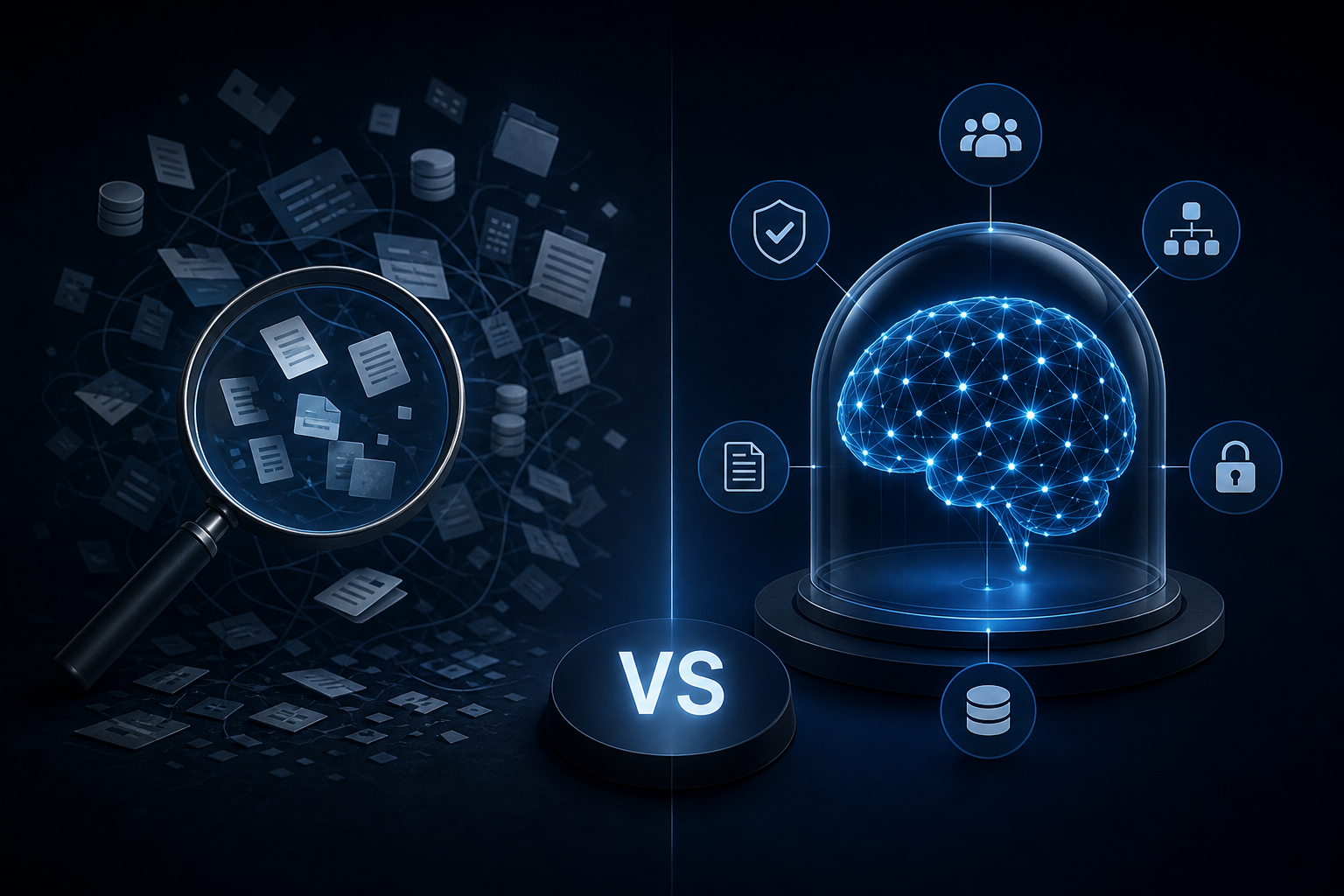
Enterprise AI Search vs. a Governed Company Brain: Key Differences
Discover how enterprise ai search differs from a governed company brain and which knowledge approach your team actually needs to act on trusted data.
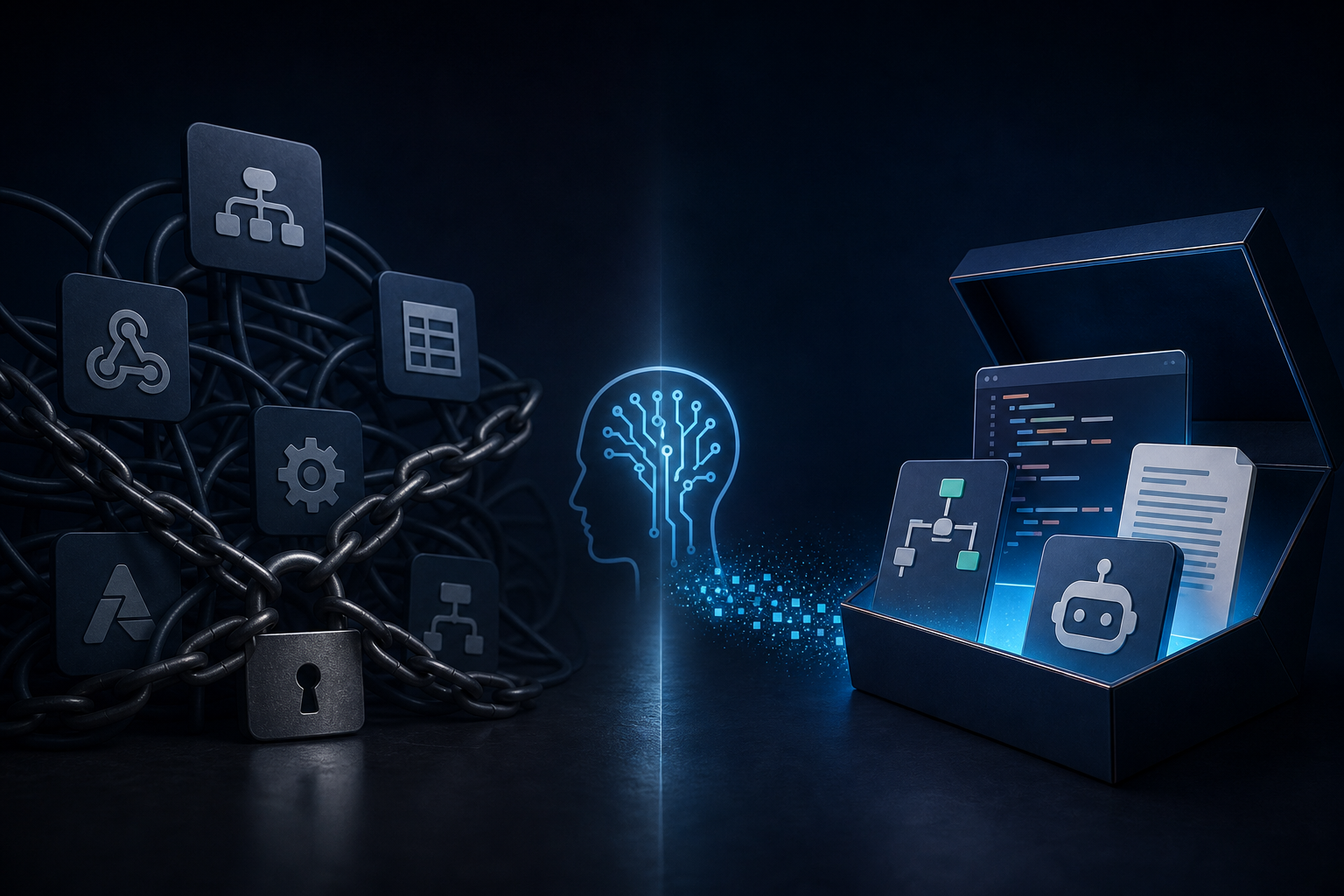
Looking for an Axe Automation alternative that gives you full IP ownership? See how Singular Innovation compares on technical depth, agents, and delivery.
If you're evaluating AI automation agencies and Axe Automation has come up in your research, you've probably started asking a sharper question somewhere along the way: when the engagement ends, who actually owns the system? That question matters more than almost anything else in a vendor comparison — and the answer varies significantly between agencies.
This article breaks down the key differences between Axe Automation and Singular Innovation, with a focus on technical depth, delivery model, and what happens to the IP once the project closes.
Axe Automation calls itself the "#1 AI Automation Agency" and says it systemizes and automates businesses for highly profitable scale, custom and done-for-you. Its own description of the work is auditing a business, organizing its operations, and installing AI automations to remove constraints.
The scale it publishes is the part worth taking seriously: 1,000+ workflows automated, 400+ clients served, and 100,000 manual hours saved. It also states that it guarantees success in its contracts, and describes an engagement as being like hiring a COO and a senior AI automation engineer at once.
Its published stack is broad. Automation platforms including Zapier, Make.com and n8n; Monday.com, HubSpot and Airtable for operations; custom scripting in JavaScript, plus RAG and RPA; and AI models including ChatGPT and Claude. That is not a no-code shop, and anyone comparing the two firms should start from what they actually publish rather than from an assumption about visual builders.
Both firms build and hand over automation. The difference is not capability, it is what each one commits to in writing.
Singular Innovation publishes a fixed first milestone: a working capability in 10 business days, and a validated proof of concept in under 45 days. Axe Automation does not publish a comparable delivery commitment; timelines are determined during scoping and vary by project.
Singular Innovation publishes an ownership policy: the client owns the roadmap, workflows, prompts, automations, interfaces and code from day one. Axe Automation does not publish an equivalent policy in its public materials. That does not mean it retains anything, and it is a fair question to ask them directly rather than assume the answer.
Axe Automation publishes proof at a scale Singular does not: 400+ clients and 100,000 hours saved are numbers Singular has nothing comparable to. If volume of delivered work is the signal you weigh most, that is a real point in their favour.
Singular Innovation is an AI transformation agency that embeds working AI systems directly into a client's existing tech stack. The output isn't a workflow diagram or a strategy document — it's a deployed, functioning system the client owns outright.
Core service components include:
That last point is where the comparison gets pointed. Most agencies — including many that claim to "ship to production" — retain IP or lock clients into ongoing maintenance retainers. Singular Innovation's model is structured around the opposite: the client walks away with everything.
When you hire an agency to build an AI system, the IP arrangement usually falls into one of three categories:
Most agencies operate under model one or two. It's not always disclosed prominently — it shows up in the contract language and in what happens when you try to modify something yourself six months later.
Singular Innovation operates under model three. All workflows, prompts, automations, code, and documentation transfer to the client. You can modify the system in-house after delivery. You can hand it to a different vendor. There's no lock-in by design.
For a founder or COO who's already been burned by an agency that delivered a deck instead of a system — or who's paying a monthly retainer just to keep a workflow alive — this distinction is significant.
Singular Innovation commits to a working first release within 10 business days. That's a scoped, functioning system — not a prototype — delivered inside two calendar weeks.
Axe Automation doesn't publish a comparable delivery commitment. Timelines are typically determined during scoping and vary by project.
Speed matters for a specific reason: the longer an automation project runs, the more it drifts from the original problem. Requirements change, team members change, and the manual process you were trying to replace evolves. A 10-business-day window forces useful constraints — it demands clear scoping upfront and delivers something real before scope creep has a chance to set in.
The 10-day commitment applies to a working first release within the defined scope, not a complete enterprise-wide transformation. But for an SMB that needs one high-value workflow automated and deployed, it's a meaningful and verifiable promise.
Singular Innovation holds Official Partner status with Airtable and FlutterFlow, Certified Partner status with Vercel, and integrates with Claude and Anthropic AI through the Claude AI Skills Library. The Skills Library provides pre-built, deployable AI workflows for real business operations — production-ready components, not demos.
Named tools in the Singular stack include OpenClaw, HyperAgent, ClawdBot, Codex, and Claude Cowork. These are purpose-built for agent deployment and workflow execution, not generic no-code connectors.
Axe Automation's publicly documented stack centers on no-code orchestration tools. That's a legitimate approach for simpler automation, but it doesn't map cleanly to complex agent deployments that require reasoning, multi-step execution, or integration with custom data infrastructure.
If your business needs agents that handle judgment-heavy operations — not just rule-based routing — the technical depth of the stack matters.
Singular Innovation frames its delivery as building a "second brain" that executes inside the business. The framing is specific: it's not a tool bolted onto your existing operations, it's a system embedded within them — one that consolidates fragmented data and deploys agents that act on it.
That framing resonates because it reflects what founders and operations leads are actually searching for. They're not looking for another SaaS subscription or a workflow template. They want something that thinks and acts on their behalf inside the business they already run.
Axe Automation doesn't offer a comparable model. The positioning is closer to "we automate your workflows" than "we build a system that operates inside your business." For some buyers, that's exactly what they need. For others, it's the gap that keeps manual work on the calendar.
| Factor | Axe Automation | Singular Innovation |
|---|---|---|
| Primary approach | No-code workflow orchestration | AI agent deployment + data consolidation |
| Delivery timeline | Project-dependent | 10 business days to working first release |
| Client IP ownership | Not a headline claim | Full ownership transfer at project close |
| Technical depth | Limited for complex agent deployments | Custom agent builds inside client stack |
| AI agent capability | Limited | Core service component |
| Data consolidation | Not documented as a service | Included as a core component |
| Entry point | Varies | Free AI readiness audit |
| Named enterprise clients | Not publicly listed | Disney Planet Love, Burger King, and others |
Axe Automation may be a better fit if:
Singular Innovation may be a better fit if:
The free AI readiness audit at Singular Innovation is a reasonable starting point if you're not sure which category your business falls into. It's designed to identify the highest-value workflow to automate first — a useful output regardless of who you ultimately work with.
When founders compare automation agencies, the conversation usually starts with capability and price. Those matter. But ownership is what determines whether you're building an asset or renting one.
An AI system you own can be modified, extended, handed off, or rebuilt. One you're renting — through a retainer, a proprietary platform, or an IP arrangement that stays with the agency — becomes a liability the moment your needs change or the relationship ends.
Agencies that make ownership a headline claim are making a specific bet: that buyers who understand the long-term implications will choose them over agencies that obscure the arrangement. Singular Innovation makes that bet explicitly. Axe Automation, based on available positioning, does not.
If you're evaluating an Axe Automation alternative and ownership is a priority, that's the clearest differentiator in this comparison.
What is the main difference between Axe Automation and Singular Innovation? Axe Automation focuses on no-code workflow orchestration, which works well for rule-based automations between tools. Singular Innovation builds and deploys AI agents inside a client's existing tech stack, consolidates data infrastructure, and transfers full ownership of everything built to the client at project close.
Does Singular Innovation transfer IP to the client? Yes. All workflows, prompts, automations, code, and documentation transfer to the client at the end of the engagement. There is no ongoing IP dependency on the agency.
How long does a Singular Innovation engagement take? Singular Innovation commits to a working first release within 10 business days. This applies to a scoped first system, not a complete enterprise-wide transformation.
Is Axe Automation capable of deploying AI agents? Yes, by their own account. Their published stack includes AI models such as ChatGPT and Claude alongside custom scripting in JavaScript, RAG and RPA, not only no-code platforms. Anyone comparing the two firms on capability should ask both directly rather than infer it from the tools listed on a homepage.
What is the entry point for working with Singular Innovation? The entry point is a free AI readiness audit, which identifies the highest-value workflow to automate first and defines success metrics before any commitment is made.
What kinds of businesses does Singular Innovation work with? The primary audience is founders, COOs, and operations leads at US-based SMBs with 10 to 200 employees that have hit the ceiling of headcount-driven growth. Named client engagements include Disney Planet Love, Burger King, Invercorp, Osmo Wallet, and others listed at singular-innovation.com/success-stories.
Why does ownership matter when choosing an AI automation agency? An AI system you own can be modified, extended, or handed to a different team without depending on the original agency. Systems built under IP retention or maintenance retainer models create ongoing costs and limit your ability to adapt as your business changes. Ownership is the difference between building an operational asset and renting one.
Axe Automation is a legitimate option for businesses with straightforward, rule-based automation needs. But if you're looking for an Axe Automation alternative that deploys real AI agents, consolidates your data infrastructure, and hands you full ownership of the system when the work is done, the comparison points clearly in one direction.
Singular Innovation builds working systems, not strategies. Everything ships in 10 business days. Everything transfers to you. That's a specific, verifiable commitment — and it's the right place to start the conversation.
Discover how enterprise ai search differs from a governed company brain and which knowledge approach your team actually needs to act on trusted data.
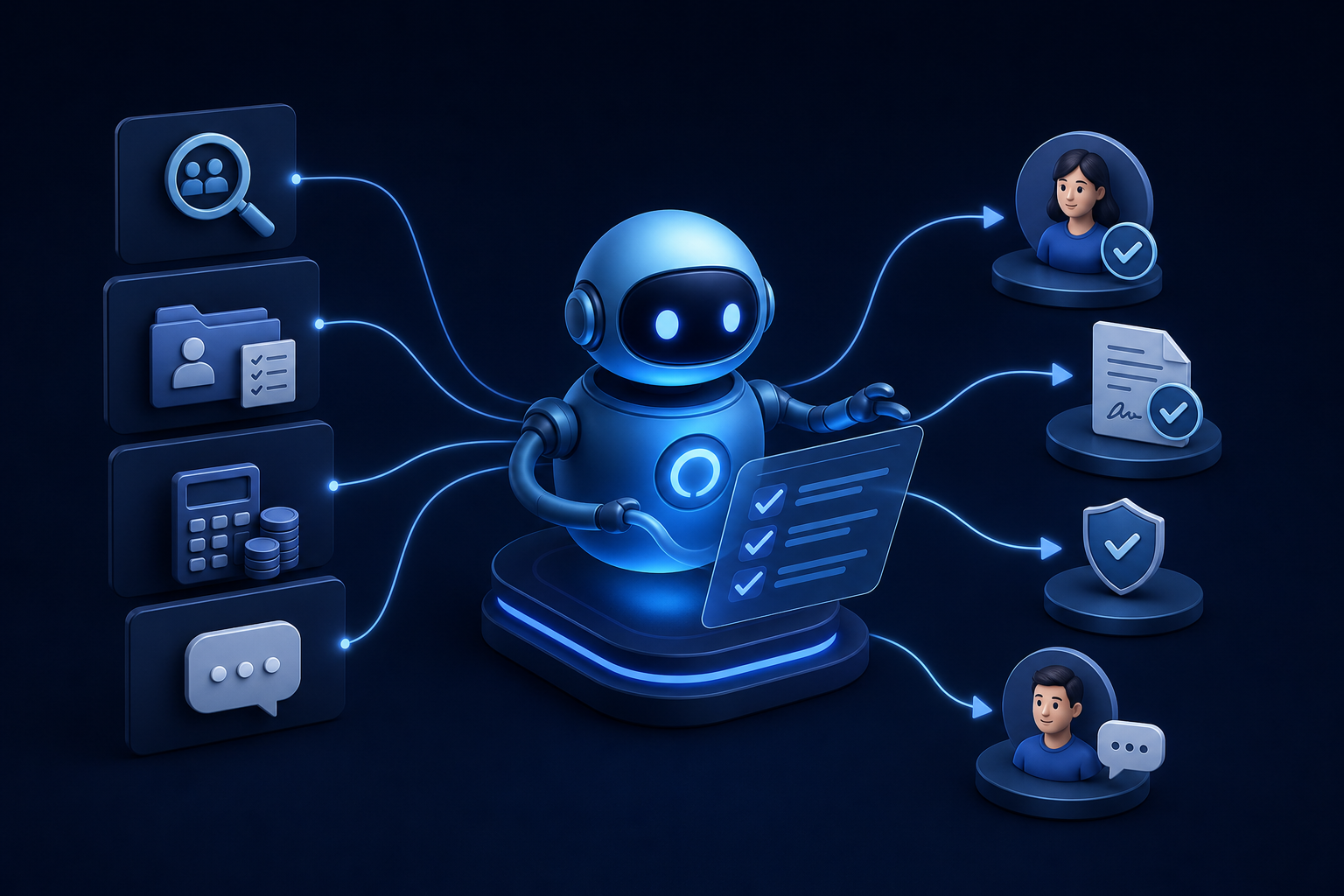
Discover how ai for hr automation handles recruiting, onboarding, payroll checks, and employee Q&A so your team can focus on work that matters.
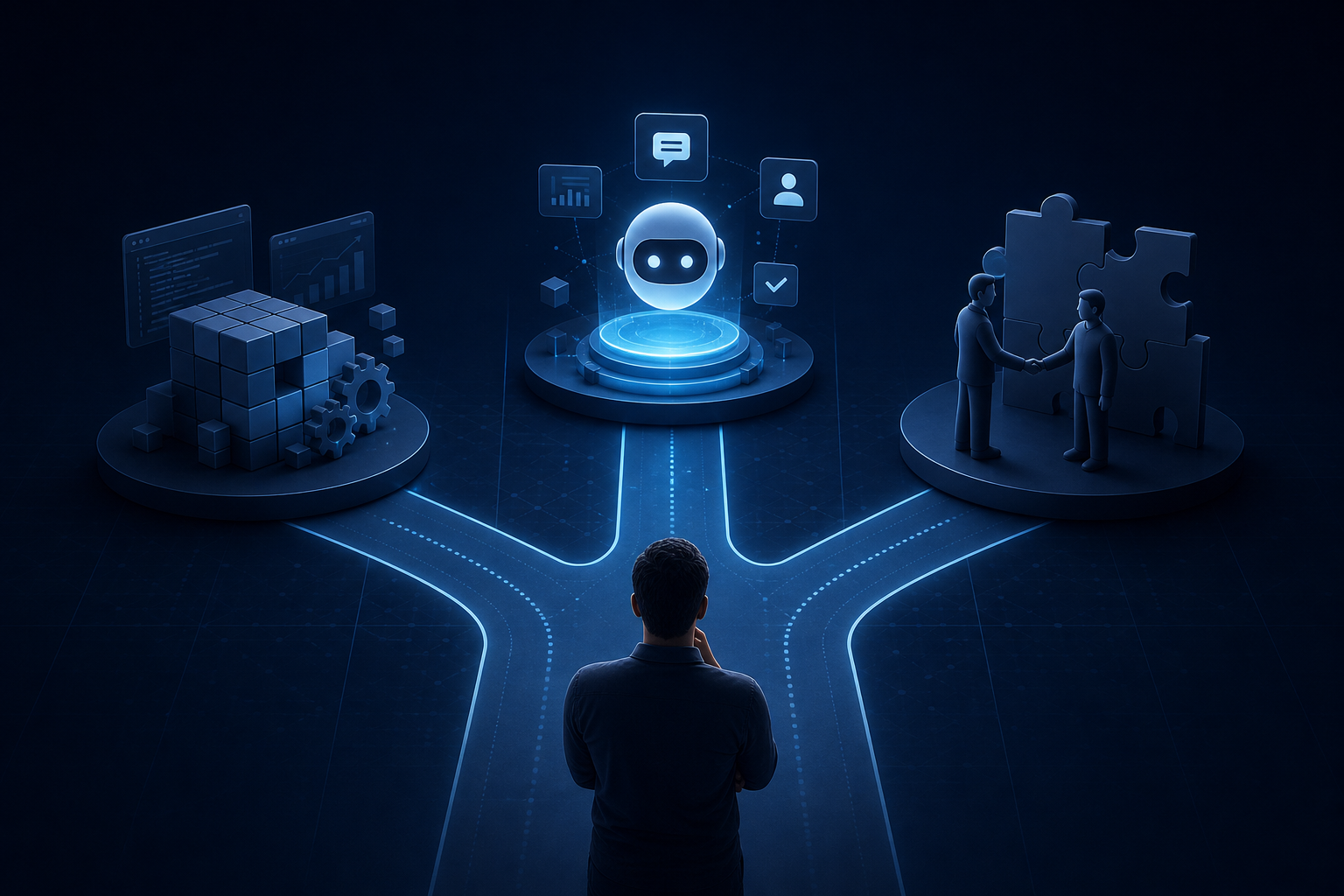
Explore custom ai agent development paths: build in-house, buy pre-built, or partner with a specialist. Find the right fit for your team today.


