


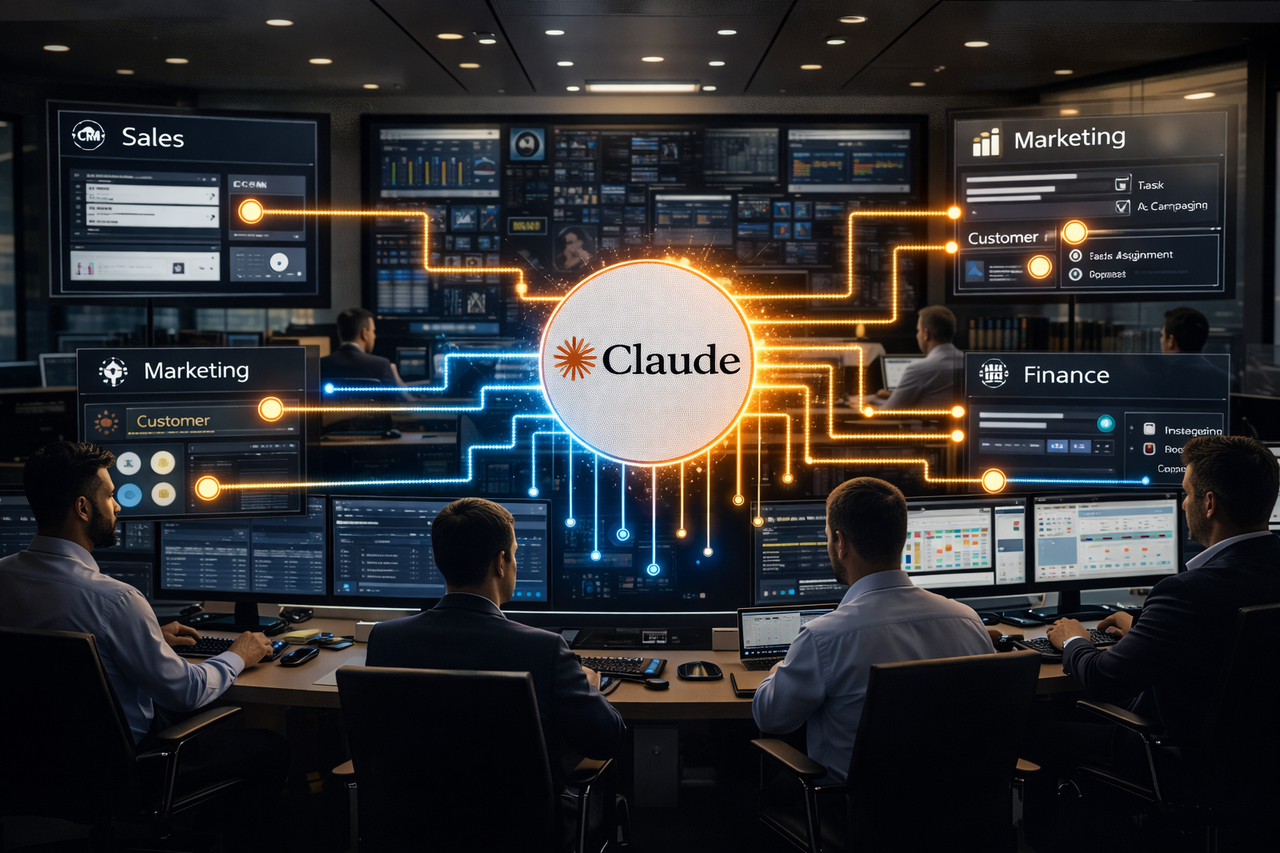
ai-automation
Autonomous Workflows. AI That Runs Operations
Autonomous workflows allow AI to coordinate tasks, decisions, and actions across systems. This shift moves businesses from manual processes to intelligent, self-operating workflows.

This article analyzes the shift of IoT from isolated devices to orchestrated systems. Using Tetral’s validation at CES 2026, it explains why interoperability, natural language control, and AI-driven orchestration now define the future of smart environments.
IoT orchestration is the ability to coordinate devices from multiple manufacturers so they communicate, respond to context, and execute actions as a unified system rather than as isolated products.
For more than a decade, the smart home industry advanced through device proliferation. Cameras, lights, thermostats, locks, and sensors multiplied rapidly, promising convenience and control.
The lived experience was different. Devices operated as isolated islands, locked into proprietary ecosystems, each requiring its own application, logic, and maintenance. Users managed complexity rather than benefiting from intelligence.
CES 2026 made clear that this era is ending. The industry narrative has shifted decisively away from celebrating connected devices toward something more valuable. Orchestration.
The realization is structural. The value of IoT does not reside in individual devices, but in how those devices work together.

IoT orchestration coordinating multiple systems across a corporate building as a unified operational environment.
CES 2026 provided a rare opportunity to observe this shift in real time.
Across multiple days of conversations, a consistent pattern emerged. Visitors were not searching for novelty. They were searching for relief from fragmentation.
The interest in Tetral did not come from curiosity alone. It came from a shared frustration voiced by consumers, integrators, construction firms, and automotive professionals. Managing multiple ecosystems had become untenable.
As conversations deepened, the dialogue moved from demonstration to application. The question changed from what does this do to how do we implement this.
Validation from engineers at large technology companies reinforced the insight. Cross-ecosystem orchestration remains an unsolved problem, even for dominant platforms.
Tetral addresses this challenge by redefining how devices interact.
Instead of forcing users to choose ecosystems, Tetral enables devices from different manufacturers to communicate directly. Motion sensors, lights, thermostats, cameras, and locks operate as coordinated components of a single system.
This is not a superficial integration layer. It requires solving protocol translation, authentication, synchronization, and real-time execution across competing standards.
At CES, this orchestration was demonstrated live across devices that historically could not interact.
A second shift is how humans interact with IoT systems.
Rather than navigating applications or memorizing commands, users express intent naturally. The system interprets context, maintains continuity, and executes coordinated actions.
Statements like “I’m leaving for work” or “It’s cold in here” are translated into multi-step system responses. Importantly, this processing can occur locally, reducing latency and addressing privacy concerns.
Natural language becomes the interface not because it is novel, but because it aligns with how people think.
Beyond individual commands, orchestration enables automation that does not require technical configuration.
Users define routines conversationally. Conditions, triggers, and outcomes are inferred rather than programmed. This lowers the barrier to sophisticated automation without sacrificing reliability.
The system adapts to context instead of enforcing rigid scripts.
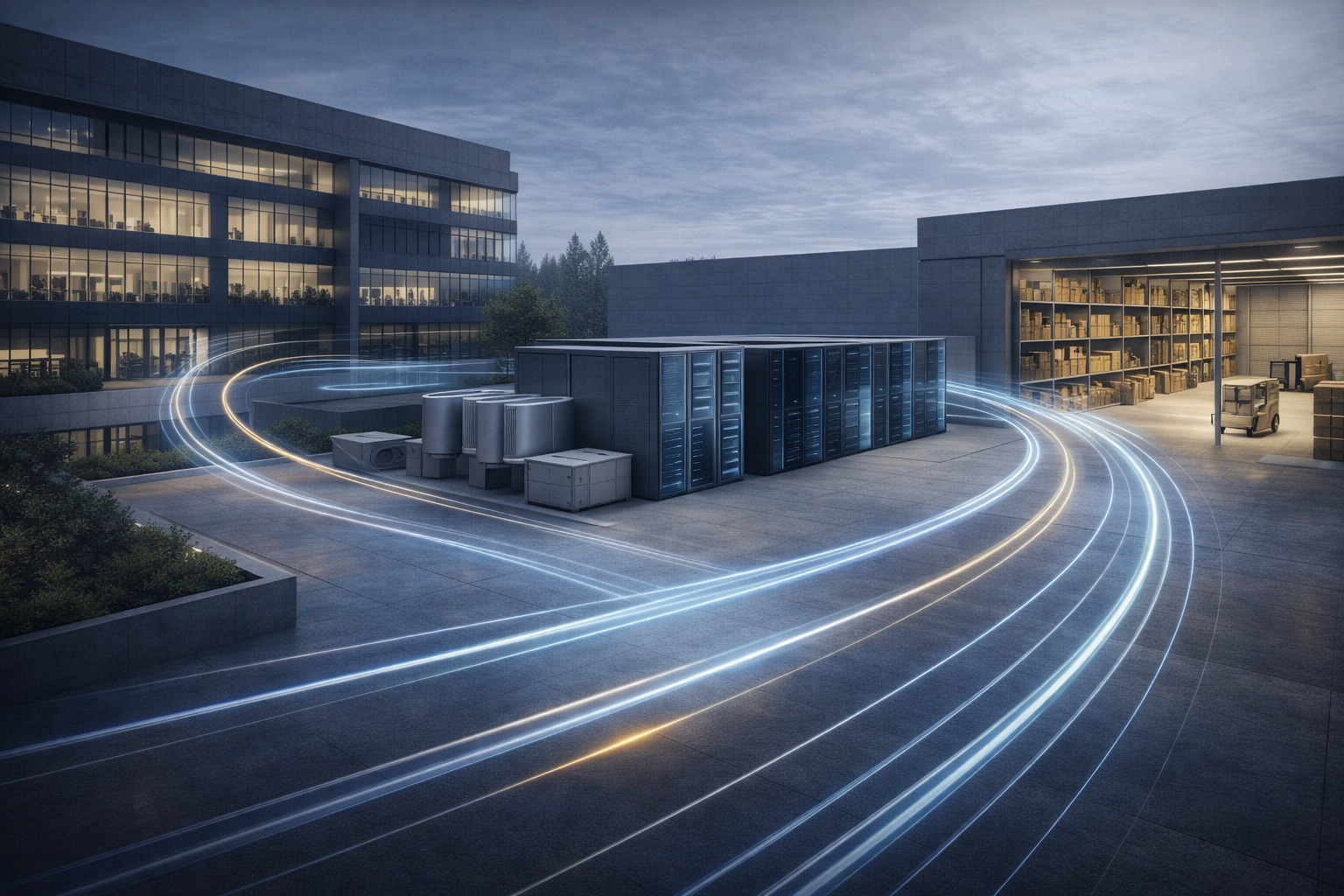
Cross-ecosystem IoT coordination enabling unified behavior across a multi-building environment.
What became clear at CES is that the value of orchestration extends beyond consumer convenience.
Automotive dealers see opportunity in vehicles that integrate seamlessly with home systems. Construction companies see differentiation in homes where devices cooperate instead of compete. Enterprises see pathways to energy optimization and operational efficiency.
In each case, orchestration becomes a strategic capability rather than a feature.
Several broader trends reinforce this shift.
Matter 1.5 formalizes interoperability across major ecosystems, reducing lock-in and accelerating standardization.
Edge AI enables intelligence to operate locally, improving responsiveness, privacy, and reliability.
Spatial intelligence introduces contextual awareness based on presence and movement rather than explicit commands.
Energy orchestration transforms homes from passive consumers into active participants in grid optimization.
Together, these signals indicate a mature IoT phase where coordination matters more than connectivity.
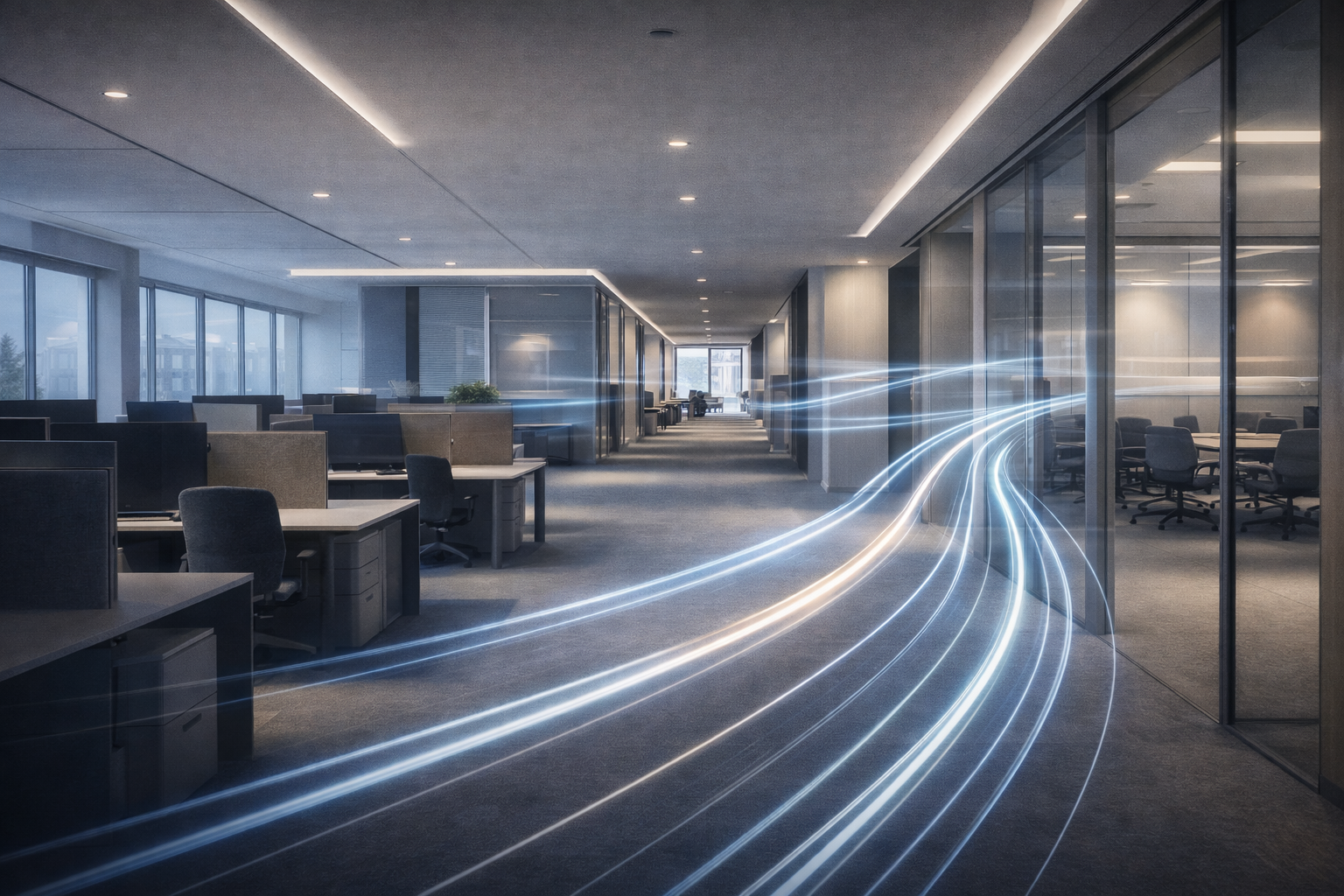
Context-aware IoT orchestration supporting everyday operations inside a corporate office environment.
CES conversations highlighted another truth. Technology alone is insufficient.
Organizations adopting orchestration need partners who understand business models, technical complexity, and market validation moments. Deployment, education, and positioning matter as much as architecture.
Transformation occurs not at handoff, but through accompaniment during critical decisions.
Despite progress, challenges remain.
Legacy devices predate standardization and require translation layers. Consumer understanding of standards remains limited. Feature parity across platforms is uneven. Complex deployments still benefit from professional guidance.
Acknowledging these constraints is essential for sustainable adoption.
CES 2026 marked a turning point in IoT evolution.
The future of smart environments is not defined by more devices, but by better coordination. Systems that understand context, interpret intent, and act coherently are replacing fragmented ecosystems.
Tetral exemplifies this shift by demonstrating that orchestration is both technically feasible and commercially validated.
The question is no longer whether IoT will mature. It is how quickly orchestration becomes the norm.
What is IoT orchestration?
IoT orchestration is the coordination of devices from different manufacturers so they operate as a unified system rather than isolated components.
Why has IoT integration been difficult historically?
Proprietary ecosystems, incompatible protocols, and lack of shared standards prevented seamless communication between devices.
How does Matter change the IoT landscape?
Matter establishes a shared interoperability standard, reducing ecosystem lock-in and simplifying cross-platform device communication.
What role does AI play in IoT orchestration?
AI interprets context, manages intent, and coordinates actions across devices, enabling adaptive rather than rule-based behavior.
Why is edge AI important for smart homes?
Edge AI reduces latency, improves privacy, and ensures systems function even when cloud connectivity is limited.
Is orchestration relevant beyond consumer smart homes?
Yes. Orchestration applies to automotive, construction, commercial buildings, and energy management systems.
What are the main risks in large-scale IoT deployments?
Legacy device compatibility, uneven feature support, consumer education gaps, and regulatory complexity remain key challenges.
As IoT systems evolve from connectivity to orchestration, the critical question becomes how devices, data, and intent are coordinated across ecosystems.
This article was developed with the assistance of AI tools and reviewed by the Singular Innovation team for accuracy and context.
Autonomous workflows allow AI to coordinate tasks, decisions, and actions across systems. This shift moves businesses from manual processes to intelligent, self-operating workflows.
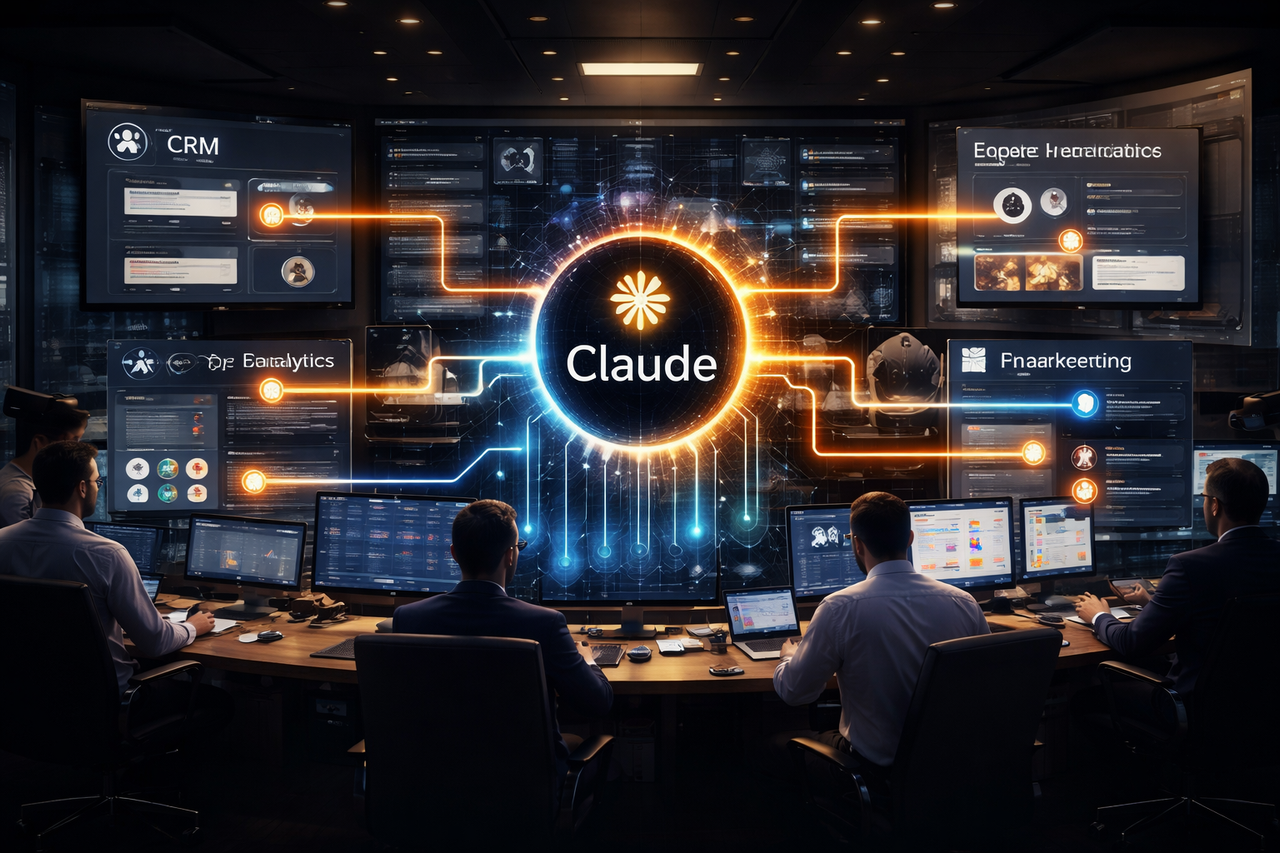
Dashboards show what happened. AI operations systems decide and act on what should happen next. This shift is redefining how companies run their day to day operations.

LLMs are powerful, but prompts alone do not create business impact. Real value comes from embedding LLMs into workflows that connect data, decisions, and actions across systems.


