



ai-automation
Autonomous Workflows. AI That Runs Operations
Autonomous workflows allow AI to coordinate tasks, decisions, and actions across systems. This shift moves businesses from manual processes to intelligent, self-operating workflows.

SMBs are adopting AI to automate workflows. reduce costs and improve decision making. This guide explains the top trends. tools. workflows and real use cases shaping AI adoption in small and mid sized businesses in 2025.
AI adoption in small and mid sized businesses has accelerated rapidly. Tools are more accessible. cost of implementation has dropped and SMBs are under pressure to automate workflows without growing headcount.
This guide explains how SMBs are adopting AI across operations. what trends matter and how small companies can implement AI with low risk.
Instead of full engineering teams. SMBs now use:
• low code tools like Make. https://www.make.com/en/help
• automation platforms like Zapier. https://zapier.com/blog/ai-automation
• Airtable Automations for structured workflows. https://support.airtable.com/docs/automations-overview
• modular AI APIs such as OpenAI. https://platform.openai.com/docs
• AI assistants like Perplexity. https://www.perplexity.ai
These tools let SMBs prototype and launch AI workflows quickly.
SMBs now automate:
• documentation
• email workflows
• customer support
• lead qualification
• data analysis
• internal knowledge management
AI enables SMBs to scale output without expanding payroll. which is a critical advantage in 2025.
Workflow automation is the fastest growing use case.
Routing tasks. extracting data and generating summaries are now daily operations for SMBs.
https://www.singular-innovation.com/blog/how-to-build-ai-workflow-from-scratch
Operational agents handle internal communication. reporting. support routing and updating systems.
https://www.singular-innovation.com/blog/ai-automation-for-smbs-2025
SMBs avoid heavy engineering by using:
• FlutterFlow
• Bubble
• Retool
• Notion AI
• ClickUp
https://www.singular-innovation.com/blog/no-code-ai-tools-2026
Support agents trained on business documentation now answer repetitive questions with accuracy.
OpenAI has documentation on building retrieval based agents.
Tools like Perplexity, help SMBs extract insights and interpret data faster.
AI helps with forecasting. CRM updates and email generation.
AI supports content creation. segmentation and competitor analysis.
AI agents answer FAQs. manage ticket routing and escalate complex issues.
Agents assist with onboarding. document delivery. scheduling and candidate screening.
Tools automate invoice extraction. reconciliation and reporting.
AI summarizes Slack messages and generates daily updates.
Slack AI reference.
AI validates incoming leads. enriches data and pushes records into CRM platforms.
Support agents trained on internal docs respond instantly.
Examples can be built with OpenAI.
AI aggregates data and creates weekly reports without manual spreadsheets.
Agents guide new hires through documentation and task lists.
• Zapier. https://zapier.com/blog/ai-automation
• Make. https://www.make.com/en/help
• Airtable Automations. https://support.airtable.com/docs/automations-overview
• OpenAI API. https://platform.openai.com/docs
• Vercel AI SDK. https://vercel.com/docs/ai
• LangChain
• Perplexity. https://www.perplexity.ai
• ClickUp
• Notion
• Slack AI.
• FlutterFlow
• Bubble
• Retool
https://www.singular-innovation.com/blog/flutter-vs-flutterflow-smb-ai-process-guide-nocode
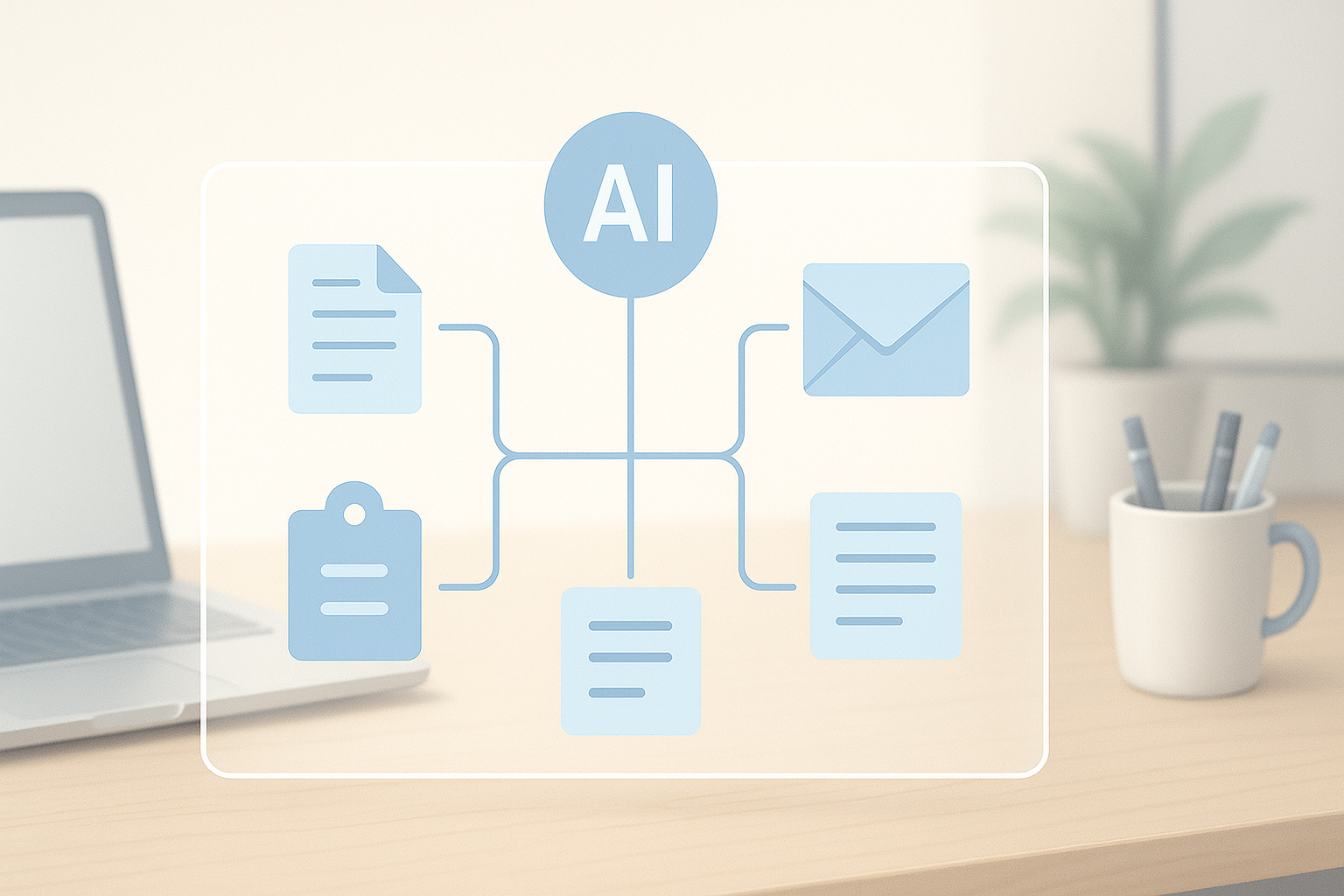
Choose one repetitive or slow task. not a whole department.
Inputs. steps. outputs.
https://www.singular-innovation.com/blog/how-to-build-ai-workflow-from-scratch
Start with Make. Zapier or Airtable. not custom engineering.
Small wins increase adoption and reduce resistance.
Agents should come after workflow clarity.
Time saved. errors reduced. cost impact. team adoption.
Large projects fail because they lack clarity.
Tools are not a strategy. workflows are.
People need clarity on how AI behaves.
Disconnected systems limit automation.
AI adoption needs tracking to justify scaling.
SMBs with AI can scale faster. reduce costs. improve margins and deliver better service.
Those who delay will face increasing operational pressure as automation becomes standard.
AI adoption is now accessible to SMBs thanks to no code tools. automation platforms and AI agents.
Starting small, testing fast and scaling gradually is the winning approach.
If your business wants support in building its first AI workflow or launching a custom AI agent. Singular Innovation can help design a low friction, high impact implementation.
See real examples of AI powered workflows in action.
This article was developed with the assistance of AI tools and reviewed by the Singular Innovation team for accuracy and context.
Autonomous workflows allow AI to coordinate tasks, decisions, and actions across systems. This shift moves businesses from manual processes to intelligent, self-operating workflows.

Dashboards show what happened. AI operations systems decide and act on what should happen next. This shift is redefining how companies run their day to day operations.

LLMs are powerful, but prompts alone do not create business impact. Real value comes from embedding LLMs into workflows that connect data, decisions, and actions across systems.


