General
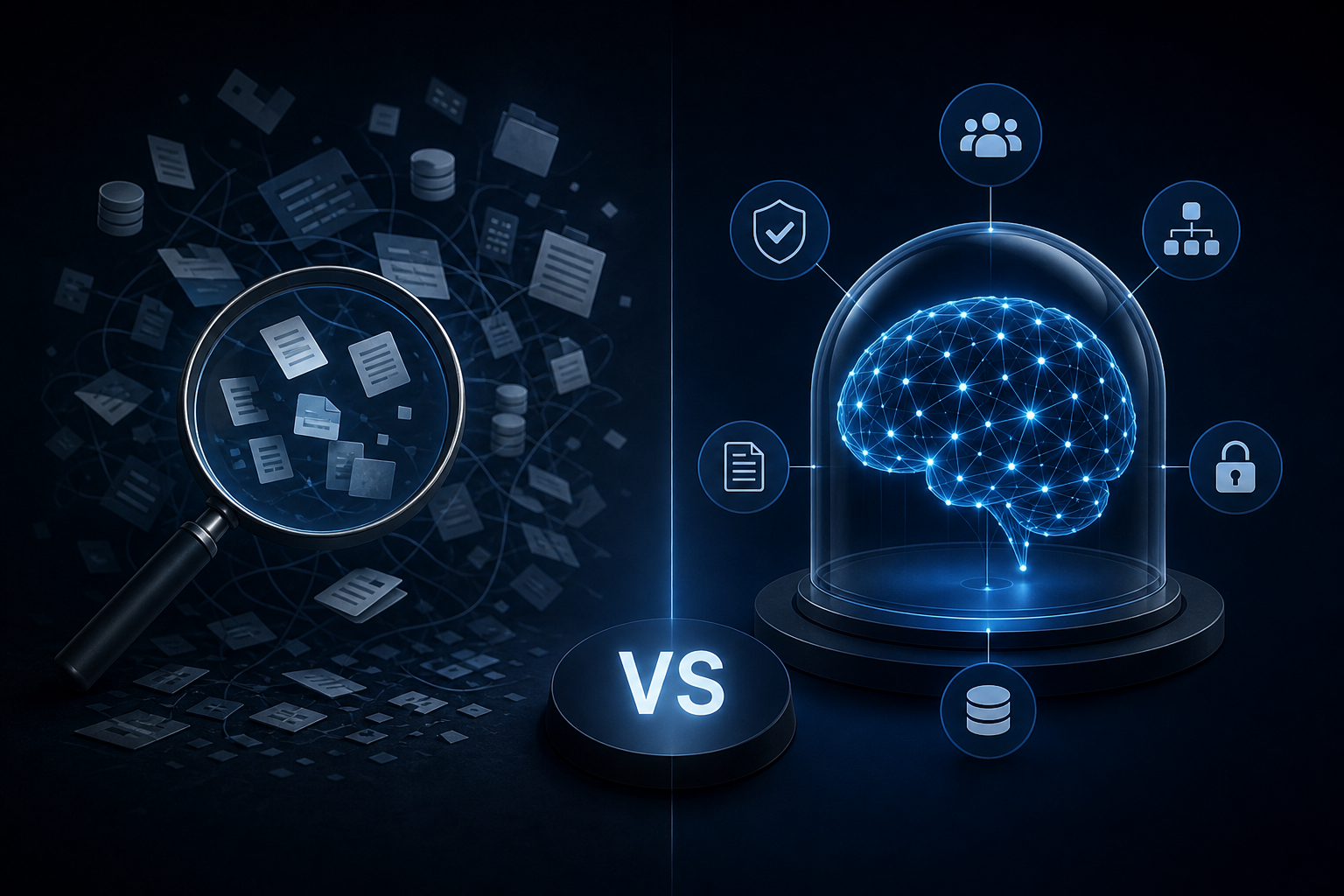
Enterprise AI Search vs. a Governed Company Brain: Key Differences
Discover how enterprise ai search differs from a governed company brain and which knowledge approach your team actually needs to act on trusted data.
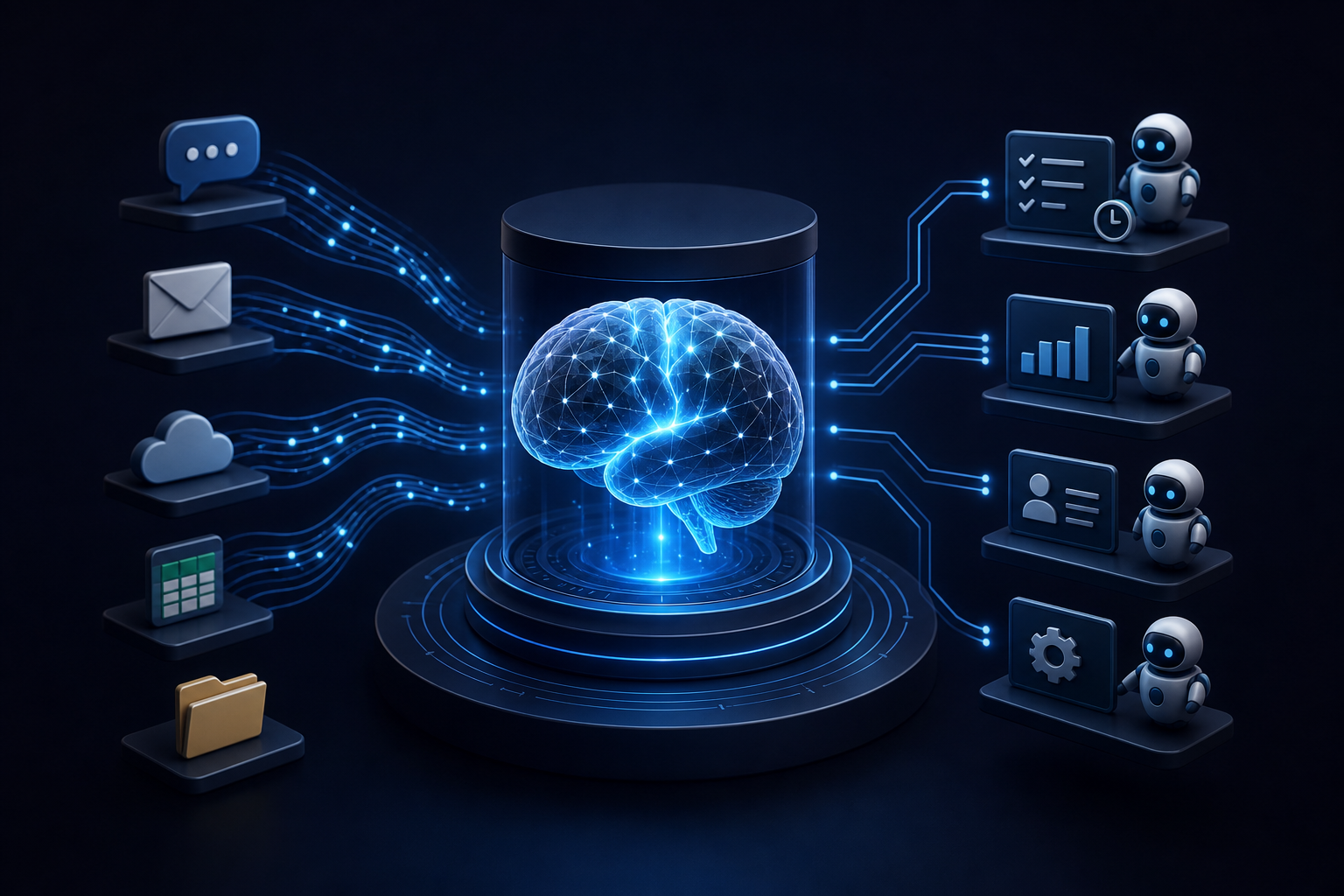
Build an AI second brain for your business using AI agents — unify scattered data, preserve institutional knowledge, and automate ops that matter.
Your operations manager just quit. She was the only person who knew where every contract lived, which clients had outstanding invoices, and what the weekly ops report was supposed to say. Now you're staring at seven different tools — Slack threads, a HubSpot pipeline, QuickBooks exports, and three Airtable bases — trying to reconstruct institutional knowledge that walked out the door with her.
That's exactly the problem an AI second brain is built to solve. Not a chatbot. Not a fancier search bar. A governed, connected layer that unifies your business data and puts AI agents to work on top of it — so the knowledge your company runs on stops living inside individual people's heads.
The phrase gets used loosely. For individuals, it usually means a personal note-taking system. For a business, it means something more structural: a unified context layer that indexes data from every tool your team already uses and makes that data accessible, queryable, and actionable.
Think of it as organizational memory with an engine attached.
A business AI second brain has two components working together. The first is the knowledge layer — a governed index that pulls from Slack, HubSpot, QuickBooks, Airtable, your CRM, your ERP, Google Sheets, and Microsoft Teams. The second is the execution layer — AI agents that do something with that knowledge on a schedule, without waiting for someone to ask.
That second part is what separates a real business second brain from a fancy search tool.
If you've been looking at AI tools over the past two years, you've probably hit one of three dead ends.
The first is enterprise software priced for companies ten times your size. Tools like Glean are built for 500-plus employee organizations — Vendr reports a median contract value of $98,890 per year across 174 purchases, with minimum user commitments common. That's not a fit for a 30-person ops team.
The second dead end is DIY automation. You can spend weeks configuring Zapier workflows, only to build something brittle that breaks the moment a field name changes — and you're the one who has to fix it.
The third is the strategy-deck agency. You pay for a discovery phase, receive a 40-slide presentation about your AI opportunity, and then nothing ships.
None of these give you a working second brain. You get either a tool you can't afford, a tool you have to build yourself, or a plan with no execution behind it.
Building one that actually works means getting four things right, in order.
Before any AI agent can do useful work, your business data has to be connected. That means pulling live data from the tools your team already uses — not migrating everything into a new platform, not buying new software licenses.
The goal is a single indexed source of truth. When an agent needs to know the status of a client account, it should be able to pull from HubSpot, cross-reference the relevant Slack thread, and check the QuickBooks invoice — without a human manually compiling that report.
This is what Singular Innovation calls the Company Brain: a governed context index with role-based permissions so the right people see the right data, and audit logs so you always know what the AI accessed and when.
A second brain that surfaces everything to everyone isn't a brain — it's a liability. Proper retrieval scope controls mean your finance team's agent sees financial data, your sales team's agent sees pipeline data, and neither sees what they shouldn't.
This isn't a nice-to-have. It's what makes the system trustworthy enough to actually use day to day.
This is where the second brain stops being passive and starts being useful. Singular's HyperAgents are deployed on top of the knowledge layer to execute recurring tasks on a defined schedule — a daily executive brief that pulls from five tools and lands in your inbox at 7 AM, a weekly dashboard auto-generated from your CRM and financial data, an inbox triage agent that categorizes and routes incoming requests before your team starts their day.
These aren't chat interfaces. You don't ask them questions. They run, produce outputs, and hand work off — on a schedule, without prompting.
Every workflow, every prompt, every automation, and every piece of documentation belongs to the client from day one. No vendor lock-in. No SaaS seat dependency. If you ever want to move on, you take everything with you.
This matters more than most people realize when they're first evaluating AI systems. A second brain you don't own is just another subscription you're dependent on.
The practical question isn't "how do I build a complete AI second brain?" It's "where do I start?"
The answer is almost always the highest-friction recurring task your team handles manually every week. For most SMBs in the $5M–$20M revenue range, that's one of three things: executive reporting, client status updates, or inbox and task triage.
A working first AI capability — one specific agent doing one specific recurring task — can be deployed in 10 business days from signed MSA. That's not an estimate; it's a scoped deliverable with a defined owner, scope, and delivery date.
Starting narrow is deliberate. A single well-built agent that runs reliably every day shows your team what AI execution actually looks like inside your environment. It also surfaces the data quality issues and permission gaps you'd otherwise discover six months into a larger project.
Trying to connect everything at once. Start with two or three tools already generating the most friction. Add more sources after the first agent is running cleanly.
Confusing a chatbot with an agent. A chatbot waits for questions. An agent executes tasks. If your "AI second brain" requires someone to log in and ask it something every morning, it's a search tool — not a second brain.
Skipping governance. Role-based permissions and audit logs aren't bureaucracy. They're what lets you trust the system. Without them, you'll spend more time verifying AI outputs than you save.
Building on a platform you don't own. If the system lives entirely inside a SaaS tool and that tool changes its pricing, deprecates a feature, or gets acquired, your second brain disappears with it. Client-owned infrastructure means the IP stays with you regardless of what any vendor does.
Treating it as a one-time project. The second brain improves as more data flows through it. Plan for iteration, not just deployment.
A few signals that your business is at the right stage:
You have recurring reporting tasks that take more than two hours per week to compile manually. You have more than one tool holding important business data and those tools don't talk to each other. A key person leaving would break a process that currently depends on their memory or manual effort. You've looked at AI tools but haven't shipped anything that actually runs in production.
If three or more of those are true, the infrastructure is already there. The gap is usually the build — not the concept.
The Free AI Readiness Audit at Singular Innovation maps your existing tools and identifies which process would produce the fastest return if automated first. It's a practical starting point before committing to a full build.
A practical engagement starts with mapping: which tools hold your most important operational data, which recurring tasks consume the most time, and where the biggest data quality gaps are.
From there, the first agent is scoped and built against your actual stack. No rip-and-replace. No new software to buy. The agent runs inside the tools you already have.
After the first agent is live and running for a few weeks, the second brain expands — more data sources, more agents, more recurring outputs. The knowledge layer gets richer as more of your operational data flows through it.
Pricing depends on scope; book a call to get a number.
The difference between a business that has an AI second brain and one that's still evaluating the idea isn't access to technology. Both have access to the same models, the same APIs, the same tools.
The difference is execution. Someone built the thing, connected the data, deployed the agents, and handed ownership to the team.
If you're running a business in the $5M–$20M range and your operations still depend on people manually compiling reports, chasing information across five tools, or holding institutional knowledge in their heads — the infrastructure for a real AI second brain is already there. It just needs to be connected and put to work.
Book your free 30-minute AI Audit at singular-innovation.com to map your tools and find where an AI agent pays off first.
What is an AI second brain for a business? An AI second brain for a business is a governed context layer that unifies data from your existing tools — Slack, HubSpot, QuickBooks, Airtable, CRMs, and others — into one indexed source of truth, with AI agents deployed on top to execute recurring tasks on a schedule without manual prompting.
How is an AI second brain different from a chatbot? A chatbot waits for a user to ask it something. An AI second brain includes agents that run on a defined schedule and push outputs — executive briefs, dashboards, triage reports — without anyone initiating a request. The execution is proactive, not reactive.
How long does it take to build a business AI second brain? A working first AI capability — one agent executing one recurring task — can be deployed in 10 business days from signed MSA when built by an experienced team against your existing stack. A full multi-agent second brain typically expands from there over subsequent weeks.
Do I need to replace my existing tools to build an AI second brain? No. A properly built business second brain connects to the tools you already use. The goal is to unify and index your existing data, not migrate it into a new platform or purchase new software licenses.
Who owns the workflows and agents after they're built? All workflows, prompts, automations, code, and documentation belong to the client from day one. No vendor lock-in, no ongoing dependency on the agency to keep the system running.
What size company benefits most from an AI second brain? Businesses with 10 to 200 employees that are scaling manually — where recurring reporting, cross-tool data retrieval, and institutional knowledge are already creating friction — tend to see the clearest return. The infrastructure is usually already in place; it just needs to be connected.
Where should a business start when building an AI second brain? Start with the highest-friction recurring task your team handles manually every week. That's usually executive reporting, client status updates, or inbox triage. Build one agent that handles that task reliably before expanding to additional workflows and data sources.
Discover how enterprise ai search differs from a governed company brain and which knowledge approach your team actually needs to act on trusted data.
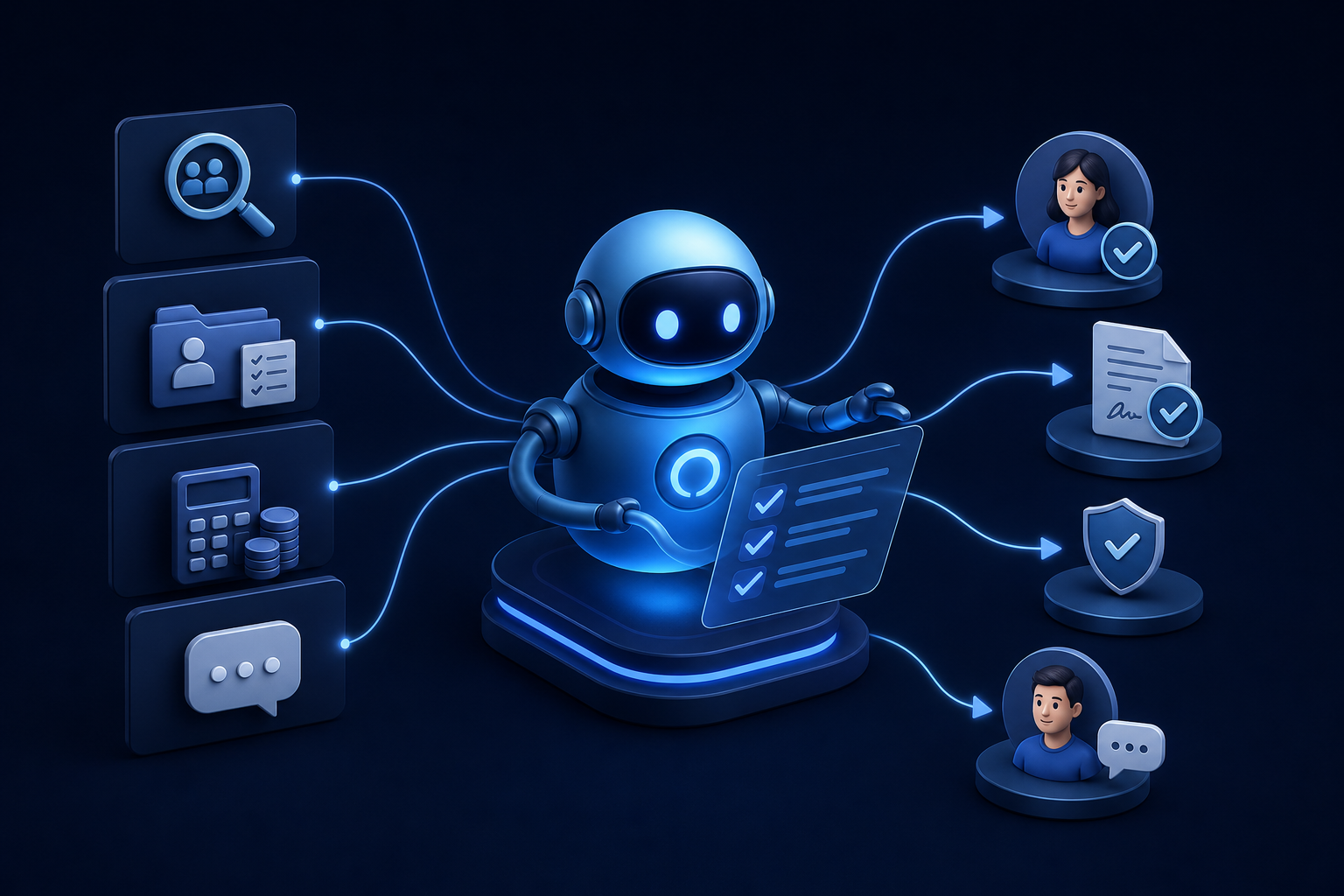
Discover how ai for hr automation handles recruiting, onboarding, payroll checks, and employee Q&A so your team can focus on work that matters.
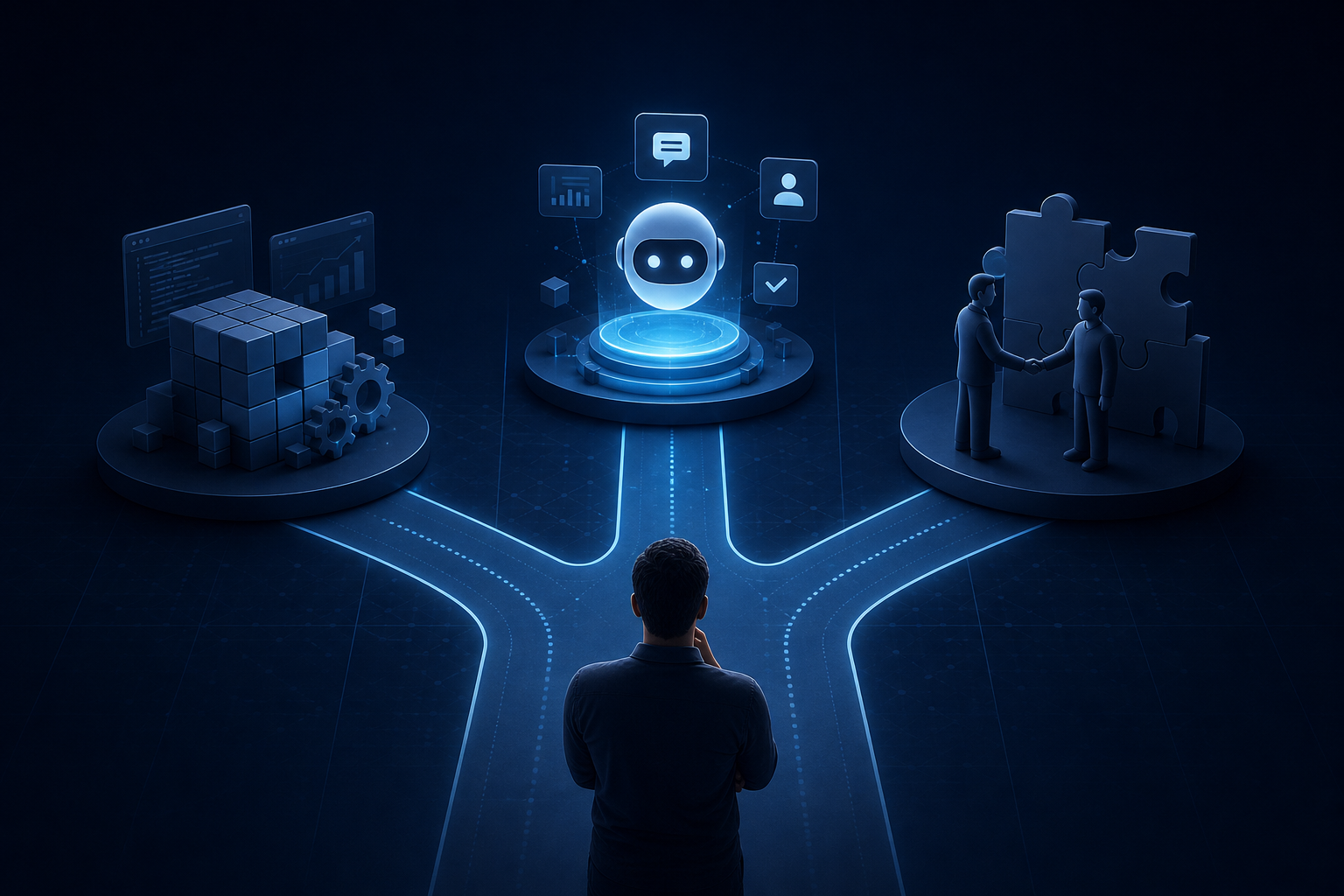
Explore custom ai agent development paths: build in-house, buy pre-built, or partner with a specialist. Find the right fit for your team today.


