General
Why Most AI Pilot Programs Fail and How Embedded AI Systems Avoid It
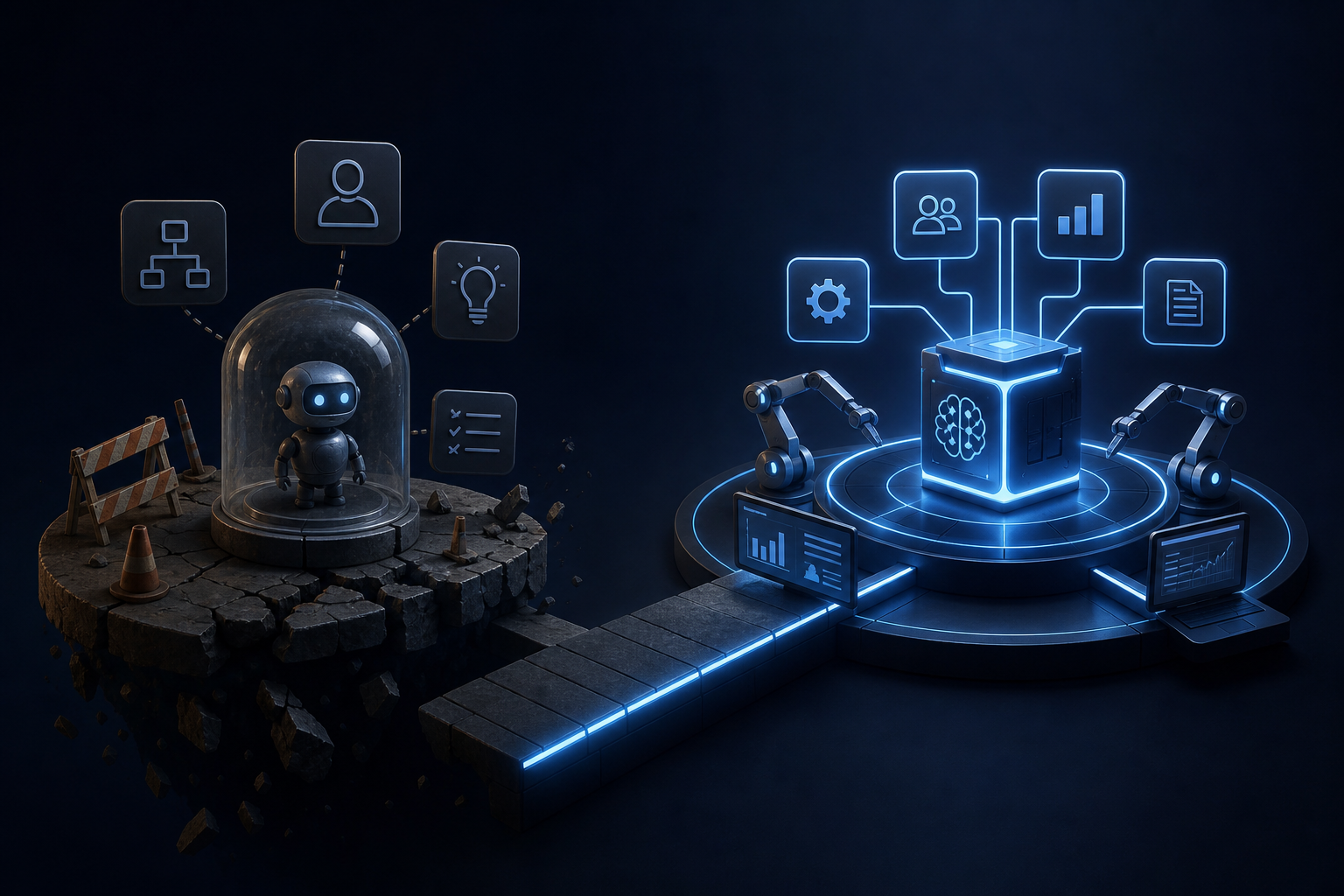
AI pilot program failure is almost always structural, not technical. Learn the four root causes and how embedded AI systems are built to avoid them.
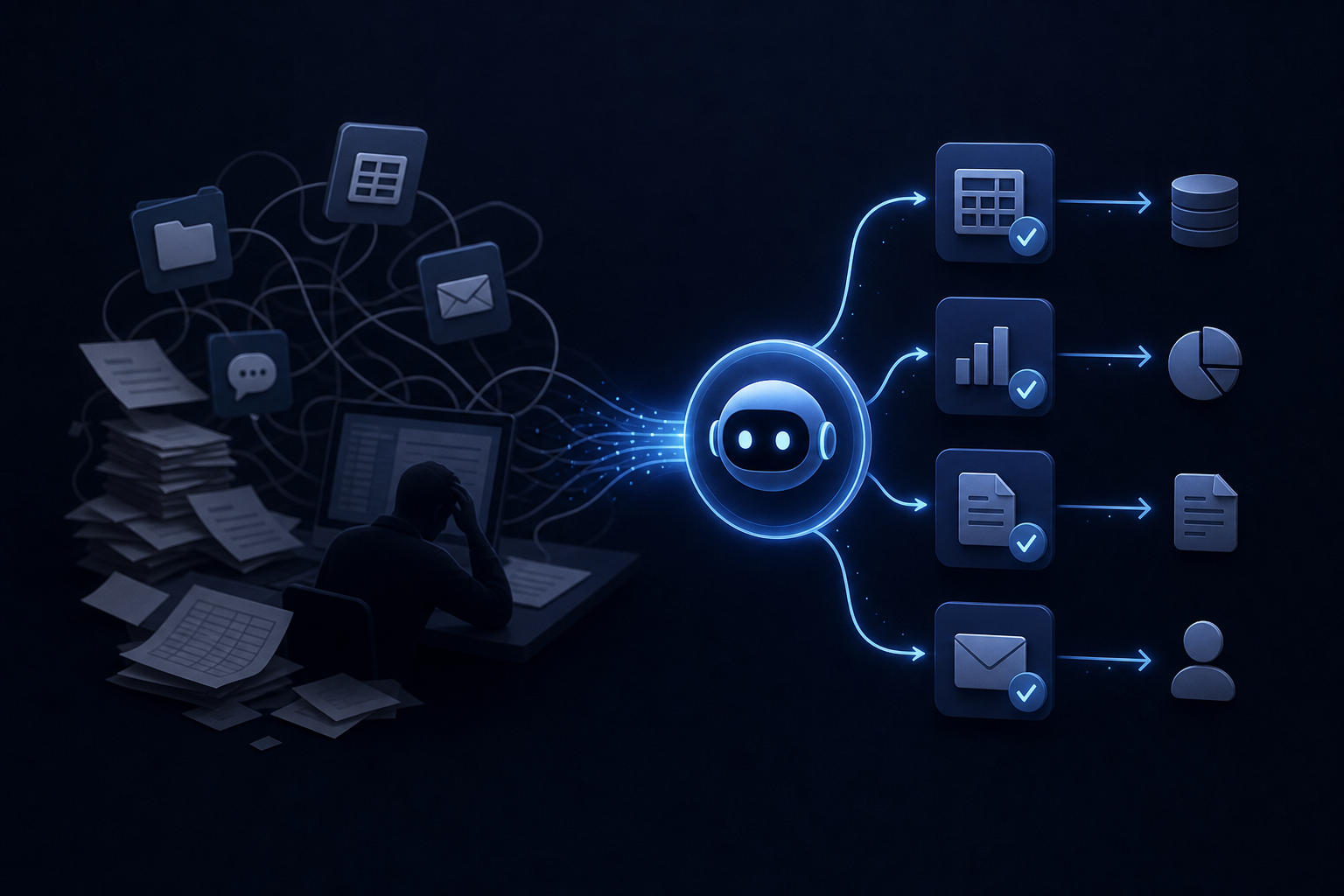
An agentic workflow lets AI agents plan and execute tasks without manual triggers. See how SMBs use them to replace repetitive process steps.
Your operations manager just left. She was the only person who knew how to pull the weekly pipeline report from HubSpot, cross-reference it against open invoices in QuickBooks, flag at-risk accounts in Slack, and get a summary to you before Monday's leadership call. That process lived in her head. Now it's gone.
That one scenario explains why so many SMB operators are asking about agentic workflows right now — not because they read a trend report, but because a manual process just broke and they need something more durable than another hire.
An agentic workflow is a sequence of tasks that an AI agent plans, executes, and adjusts on its own, without waiting for a human to trigger each step. It's the practical answer to: What if the work just got done on a schedule, without someone having to remember to do it?
Most automation tools run a fixed script. If A happens, do B. That's useful, but it's brittle — change the input slightly and the whole thing breaks.
An agentic workflow is different because the agent can reason about what needs to happen next. It reads context, decides which tools to call, handles exceptions, and produces an output, all within a defined scope. The agent isn't guessing freely; it operates inside guardrails you set. But within those guardrails, it acts.
Three things separate an agentic workflow from ordinary automation:
Goal-orientation. The agent works toward an outcome, not just a trigger. "Produce a Monday briefing that includes pipeline changes, overdue invoices, and any Slack threads flagged as urgent" is a goal. The agent figures out the steps.
Tool use. The agent can call external systems — pull data from your CRM, query a spreadsheet, write to a database, send a message — without a human in the loop for each action.
Iteration. If the first attempt produces an incomplete result, the agent can try again, rephrase a query, or escalate to a human review gate rather than failing silently.
It helps to be specific. Here's what "replacing manual steps" looks like for a company in the $5M–$20M revenue range.
Morning briefings and status reports. Someone on your team spends 45 minutes every morning pulling numbers from three different tools and writing a summary email. An agentic workflow does this overnight. By the time you open your laptop, the briefing is already in your inbox — sourced from the same tools, formatted the same way, every day.
Cross-tool data reconciliation. Sales data in HubSpot. Revenue data in QuickBooks. Project status in Airtable. Reconciling those three sources takes hours each week, and the output is already stale by the time it's shared. An agentic workflow pulls from all three, identifies discrepancies, and surfaces only the exceptions that need a human call.
Inbox triage and routing. Support emails, vendor requests, and internal escalations all land in the same place. An agent can read each message, classify it, draft a response for low-complexity items, and route high-stakes items to the right person with relevant context already attached.
Dashboard generation and reporting. Weekly dashboards that used to require a spreadsheet expert can be generated automatically, populated with live data, and distributed to the right stakeholders on a defined schedule.
None of these are exotic. They're the exact tasks that scaling SMBs are still doing by hand, and they're the first things that break when a key person leaves.
Zapier and similar tools handle rule-based automation well. Form submitted → create a record. Record changes → send a notification. That's valuable. It's also not the same as an agentic workflow.
The distinction matters for a practical reason: rule-based automation requires you to anticipate every scenario in advance. Agentic workflows handle scenarios you didn't fully anticipate, because the agent reasons about context rather than just matching a pattern.
For a growing SMB, this gap shows up fast. Your processes aren't clean. Data comes in inconsistent formats. Exceptions are common. A rule-based system fails silently on the exceptions. An agentic system handles them, flags them, or escalates them with context.
An agentic workflow is only as good as the context the agent can access. An agent that can only see one tool produces narrow, unreliable outputs. An agent with a unified view of your business — across Slack, HubSpot, QuickBooks, Airtable, and your CRM — can produce outputs that actually reflect what's happening.
This is the architectural problem most SMBs hit when they try to build agentic workflows themselves. They get one agent working in one tool, then discover that the useful work requires connecting five tools — and the connections are the hard part.
The approach that works is building a governed context layer first: a single indexed source of truth that agents can query. Then you deploy agents on top of that layer. The agents don't need to know how to talk to every tool individually. They query the context layer, and the context layer handles the data sourcing.
At Singular Innovation, this is the architecture behind the Company Brain and HyperAgents model. The Company Brain unifies data from the tools a client already uses, with role-based permissions and audit logs built in. HyperAgents run on top of that layer, executing recurring tasks — daily executive briefings, dashboard generation, cross-tool coordination — on a defined schedule. The first working capability is delivered in 10 business days from signed MSA, scoped to a specific process, with a defined owner and delivery date.
The most common concern operators raise is control. If the agent is acting on its own, how do you know what it did and why?
Good agentic workflow design includes governance at every layer:
Approved data sources. The agent only queries the tools and datasets you've explicitly authorized. It can't go looking for information outside its defined retrieval scope.
Review gates. For high-stakes outputs — a message to a client, a financial summary — the workflow can require human approval before the agent acts.
Audit logs. Every action is logged with a timestamp, the data accessed, and the output produced. You can review any step after the fact.
Role-based permissions. Different agents have different access levels. A briefing agent for the executive team sees different data than a triage agent handling customer support.
This is the difference between an AI system you can trust to run overnight and a prototype you're afraid to leave unattended.
A common objection is that building these systems takes months. That was true in 2024. It's less true now — the tooling has matured and the patterns are well understood.
A focused engagement, scoped to one high-value process, can produce a first working agentic workflow in 10 business days from signed MSA. The key word is scoped. You're not automating your entire operation in two weeks. You're picking the one process that breaks most often, costs the most time, or creates the most risk when a person is unavailable — and making that process durable.
The second and third workflows are faster, because the context layer is already built and the agent infrastructure is already in place.
The right first agentic workflow isn't always the most obvious one. A few questions that help identify it:
What breaks when a specific person is out? If the answer is "the Monday report" or "the client onboarding checklist," that's a strong candidate. The process is already well-defined; it just depends on a person to execute it.
What requires pulling data from more than two tools? Cross-tool reconciliation is exactly where agentic workflows outperform both manual work and simple automation. The more tools involved, the more value the agent adds.
What produces a recurring output on a fixed schedule? Weekly reports, daily briefings, monthly invoicing summaries. Anything that happens on a schedule and produces a consistent output is a natural fit.
What generates the most "where does this stand?" questions? If your team is constantly asking for status updates on a particular process, that process lacks a reliable output mechanism. An agentic workflow fixes that.
If you're not sure where to start, a structured assessment of your current workflows, existing tools, and team's time allocation will surface the highest-value candidates quickly. Singular Innovation offers a free AI Readiness Audit as an entry point for exactly this kind of scoping exercise.
A few patterns that lead to failed implementations:
Starting with the technology, not the process. "We want to use AI agents" is not a project. "We want to automate the weekly pipeline reconciliation that currently takes our ops team four hours" is a project. The process definition comes first.
Skipping the context layer. Building agents without a unified data layer means each agent is working with partial information. The outputs become unreliable, and the team stops trusting them quickly.
Expecting zero human involvement. The goal isn't to remove humans entirely. It's to remove humans from the steps that don't require human judgment, so they can focus on the ones that do. Review gates and escalation paths are features, not failures.
Treating it as a one-time build. Agentic workflows need maintenance. Processes change, tools get updated, edge cases appear. The infrastructure should be owned by the client — not locked inside an agency's platform — so adjustments can be made without starting over.
That last point is worth emphasizing. When you commission an agentic workflow, you should own the code, the prompts, the automations, and the documentation. If the agency that built it disappears, your workflows should still run.
If your operations still depend on specific people remembering to do specific things, agentic workflows are the practical next step. Not a strategy deck. Not a pilot with no delivery date. A working system, built inside your existing tools, that runs the process whether or not that person shows up on Monday.
Book your free 30-minute AI Audit at singular-innovation.com to identify which of your current manual processes is the strongest candidate for your first agentic workflow.
What is an agentic workflow in simple terms? An agentic workflow is a series of tasks that an AI agent plans and executes on its own, using the tools and data you authorize, without a human triggering each step. The agent works toward a defined outcome, handles exceptions, and logs every action it takes.
How is an agentic workflow different from regular automation? Standard automation follows fixed rules: if this happens, do that. An agentic workflow allows the AI to reason about context, decide which steps are needed, and handle situations that weren't fully anticipated in advance. It's more flexible and handles the messiness of real business data better than rule-based tools.
What kinds of tasks are best suited for agentic workflows? Recurring tasks that pull data from multiple tools are the strongest candidates: weekly reports, daily briefings, cross-system reconciliation, inbox triage, and dashboard generation. Any process that happens on a schedule and currently depends on a specific person to execute it is a natural fit.
How long does it take to build and deploy an agentic workflow? A scoped first capability, focused on one well-defined process, can be delivered in 10 business days from signed MSA. More complex multi-agent systems take longer, but the first workflow is intentionally narrow so you can see results quickly and build from there.
Do I need to replace my existing tools? No. The most effective implementations work inside your existing stack — connecting Slack, HubSpot, QuickBooks, Airtable, and other tools you already use. No new software licenses required, and your team doesn't need to learn a new platform.
What governance controls should an agentic workflow include? At minimum: approved data sources that define what the agent can access, review gates for high-stakes outputs, audit logs for every action, and role-based permissions that limit each agent's access to the data relevant to its function.
Who owns the agentic workflows after they're built? You should. All workflows, prompts, automations, code, and documentation should be transferred to the client at delivery. If the agency that built your workflows holds them inside a proprietary platform, you're dependent on that agency indefinitely. Ownership from day one is the standard to insist on.
AI pilot program failure is almost always structural, not technical. Learn the four root causes and how embedded AI systems are built to avoid them.
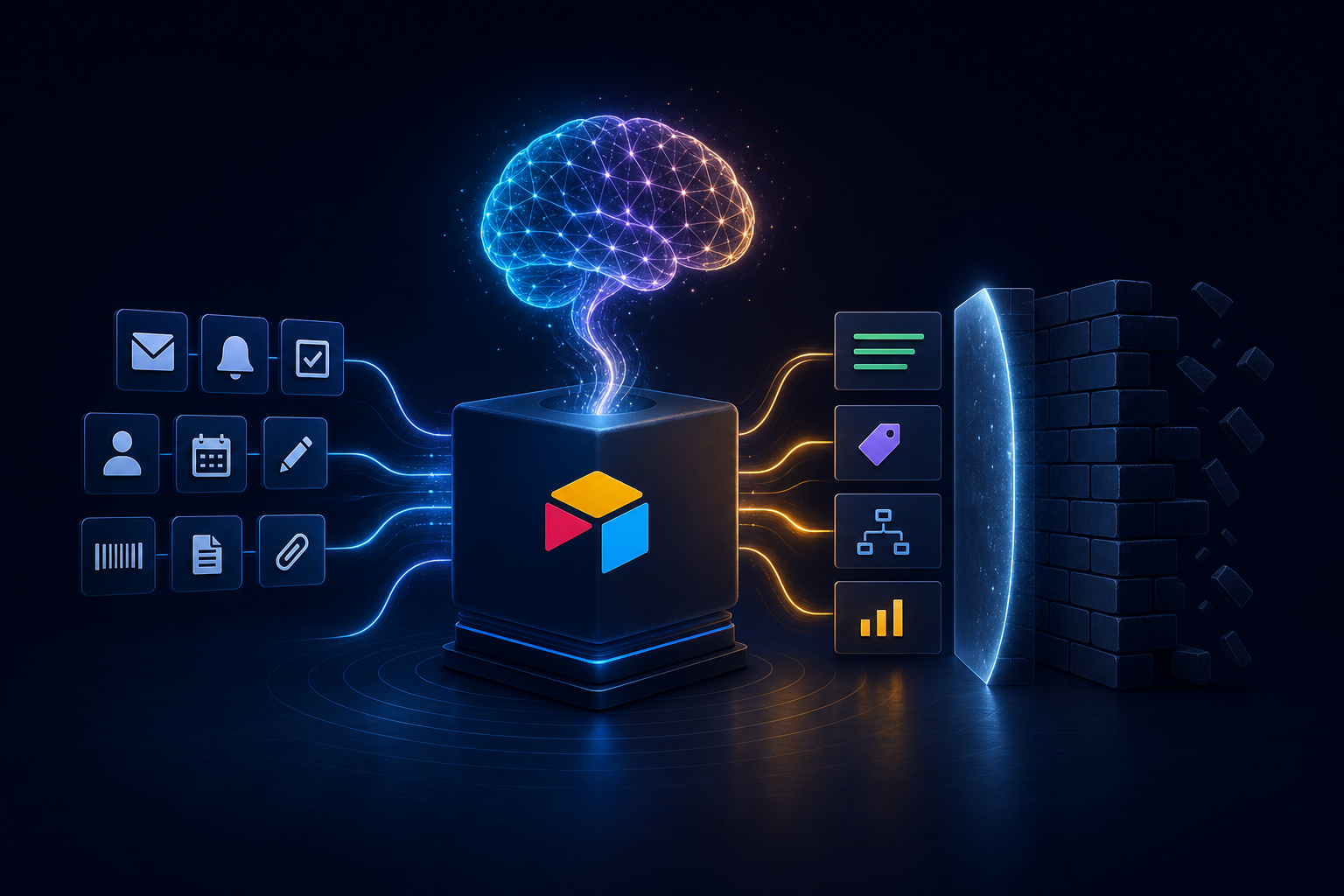
Airtable automation with AI can eliminate repetitive work — but it has real limits. Learn what's possible, where it breaks down, and how to plan around it.
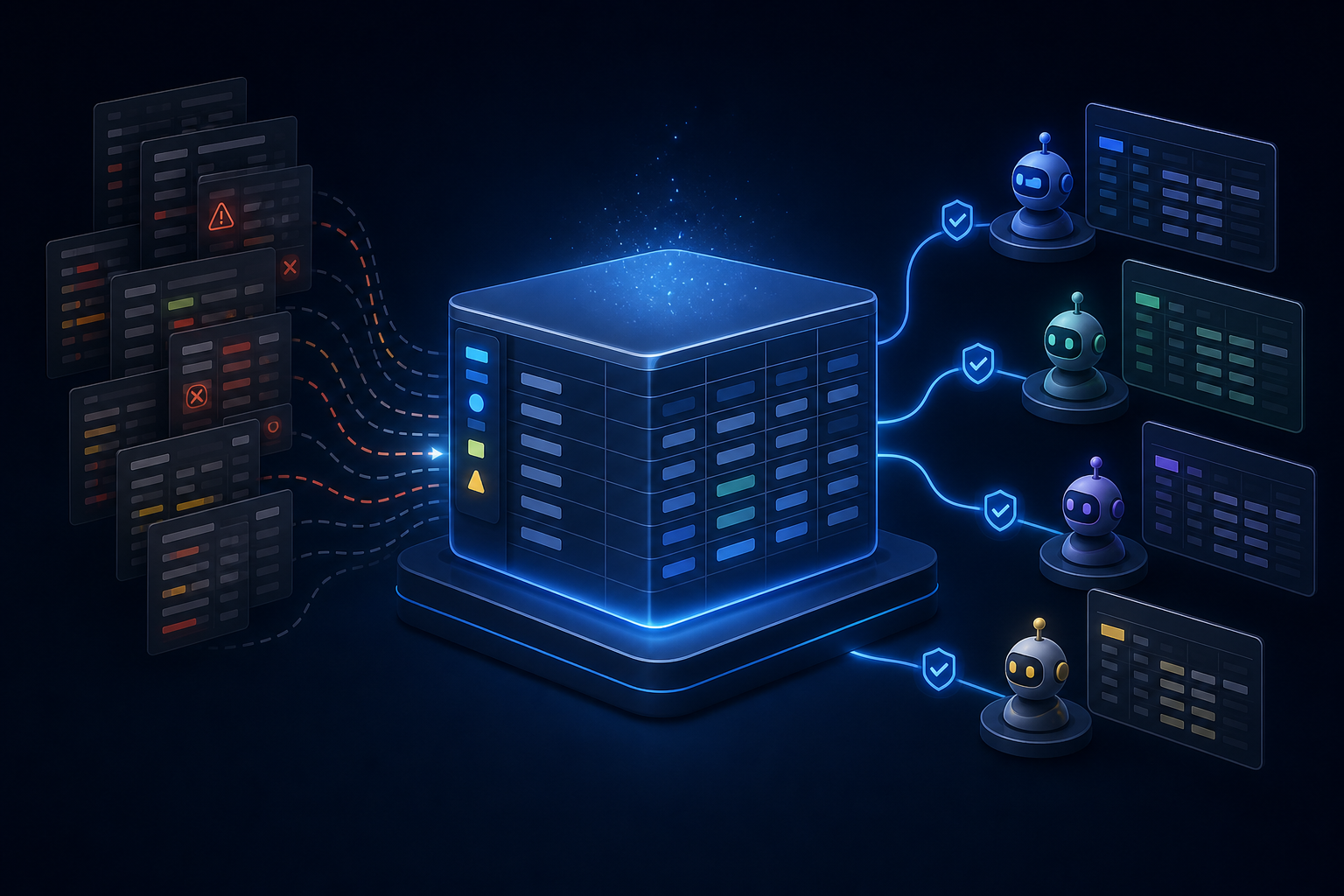
Airtable AI integration works best when your base is built for it. Learn how to structure your data so AI agents can read, reason, and act reliably.


