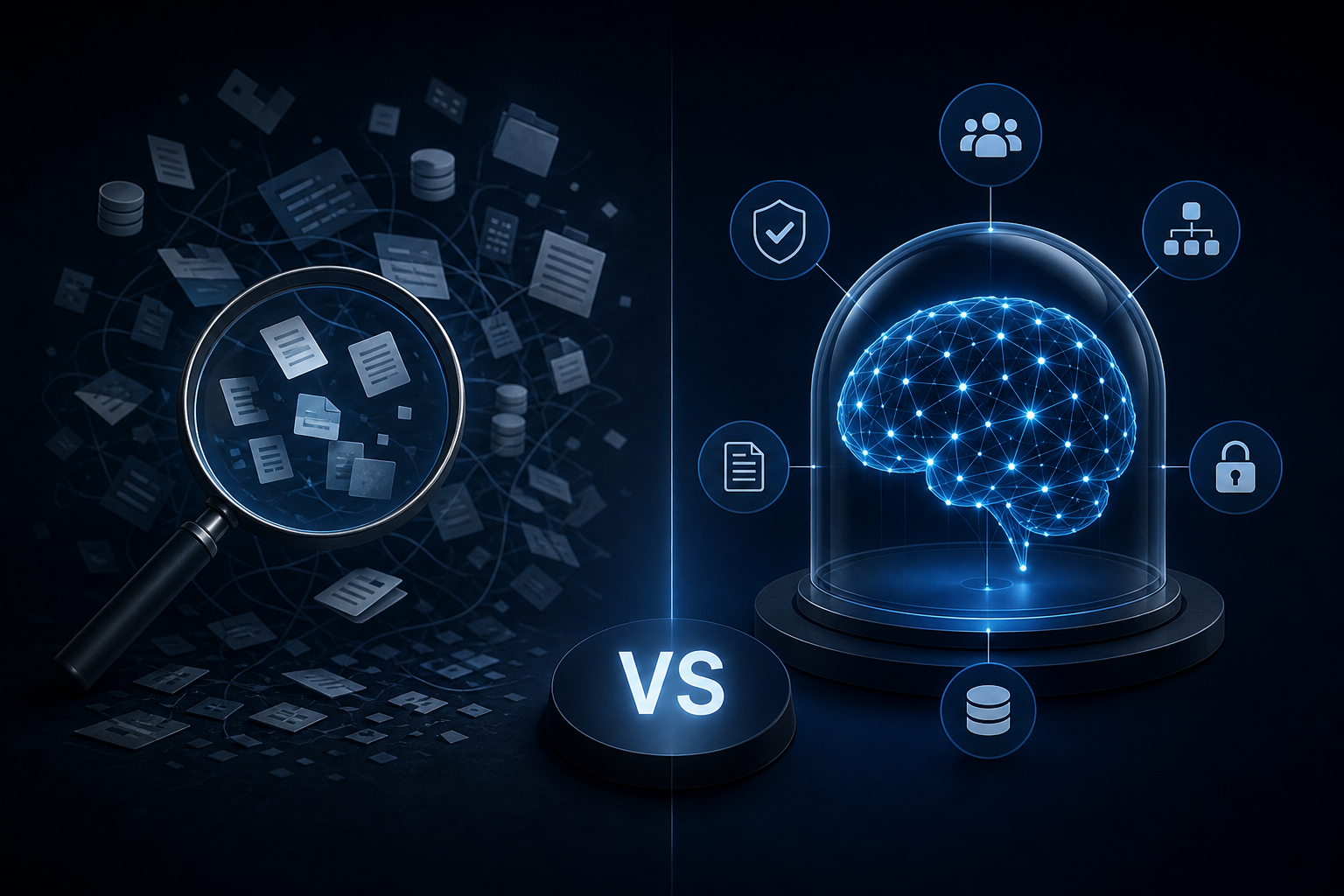
General
Enterprise AI Search vs. a Governed Company Brain: Key Differences
Discover how enterprise ai search differs from a governed company brain and which knowledge approach your team actually needs to act on trusted data.
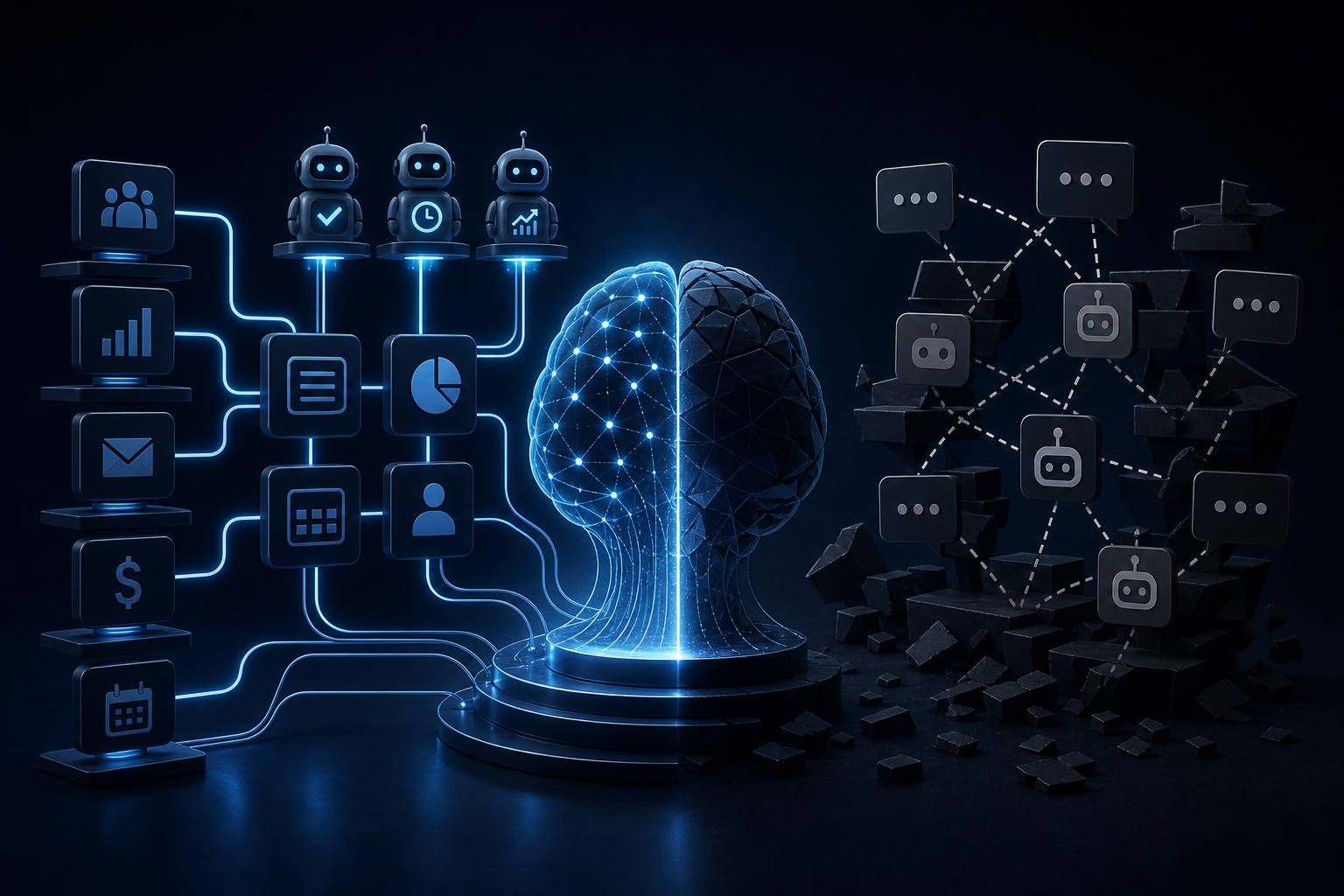
Looking for a Morningside AI alternative? See how Singular Innovation compares on speed, ownership, pricing, and what each agency actually builds.
You've been running the same operations playbook for three years. It works, mostly — but two things happened recently: a competitor started sending automated daily briefings to their leadership team, and your best ops coordinator just gave notice. Now you're evaluating AI agencies, and Morningside AI keeps coming up alongside Singular Innovation. This breakdown will help you figure out which one actually fits your situation.
If you're searching for a Morningside AI alternative, what follows is written for operators at scaling SMBs — not enterprise IT buyers, not solo founders. The questions that matter here are practical: What do you actually get? Who owns the work? How fast does something real get deployed?
It helps to understand the core deliverable before comparing anything else.
Singular Innovation builds two things that work together. The first is a Company Brain — a governed context layer that connects your existing tools, including Slack, HubSpot, QuickBooks, Airtable, CRMs, ERP systems, Google Sheets, and Microsoft Teams, into one searchable source of truth. No new software licenses. No replacing what you already use. The second is HyperAgents: custom AI workers deployed on top of that layer to handle recurring tasks on a defined schedule. Daily executive briefings, dashboard generation, inbox triage, cross-tool task coordination. These agents run whether or not you initiate them.
Morningside AI positions itself as an AI agency building custom solutions and automation systems. Their public-facing work includes chatbots, AI assistants, and automation workflows across a broad range of business sizes. They also publish educational content on AI implementation.
The structural difference matters. Singular builds a persistent intelligence layer that keeps running. Morningside's documented deliverables lean toward discrete builds — chatbots, assistants, standalone automations — rather than a unified data layer with proactive scheduled execution.
One of the most common frustrations when evaluating AI agencies is the gap between "we'll scope a roadmap" and "here is a working system."
Singular Innovation delivers a functional first AI capability within 10 business days. That's a scoped deliverable with a defined owner and a delivery date — not a prototype, not a strategy document. For a COO who has already sat through two agency pitch decks with nothing to show for it, that distinction matters.
Morningside AI does not publish a comparable delivery timeline for a first working capability. Their engagements appear to follow a more traditional discovery-to-build sequence, which is standard for custom development work but leaves the timeline open-ended at the evaluation stage.
If your trigger is a broken manual process, a departing team member, or a competitor moving faster than you are, the difference between 10 business days and an undefined timeline is a real operational gap.
This is the question most buyers forget to ask until it's too late.
With Singular Innovation, clients own all workflows, prompts, automations, code, and documentation from day one. No vendor lock-in. No SaaS dependency. If you stop working with Singular tomorrow, everything they built lives in your stack and keeps running. You are not paying a monthly license to access your own automation logic.
Morningside AI does not publish an explicit client IP ownership policy in their public materials. That doesn't mean they retain ownership — but it does mean you should ask the question directly before signing anything. For an SMB building operational infrastructure, the difference between "you own this" and "you license this" compounds over time.
Most AI agency comparisons focus on the agents themselves. The more important question is what those agents are actually reading.
Singular's Company Brain is a governed context layer. It auto-indexes and unifies data across your existing tools, applies role-based permissions and approved data sources, and includes retrieval scopes, review gates, and audit logs built into every AI worker. When a HyperAgent generates your morning executive briefing, it's pulling from a structured, permissioned, unified data source — not scraping whatever it can find.
Morningside AI does not describe an equivalent persistent data infrastructure in their public materials. Their AI solutions appear to be built on top of existing data sources on a per-project basis, rather than maintaining a governed multi-tool context layer across the organization.
For a company with data spread across six tools and three departments, this distinction determines whether your AI workers are useful or unreliable.
Singular Innovation does not list prices publicly. Engagement tiers are named Core Operations, Growth (Full Team), and Enterprise (Autonomous Org). Based on partner directory data, the minimum project size starts at $25,000, with hourly rates listed at $100–$149 on Clutch. Pricing depends on scope — the right move is to book a call and get a number tied to your actual situation.
Morningside AI publishes the same floor on Clutch: a minimum project size of $25,000+. Their hourly rate there is listed as Undisclosed, so the two firms are directly comparable on the minimum and not comparable on the rate. Neither publishes pricing on its own website.
Neither agency is a low-cost option. If your budget is under $10,000, neither is the right fit for what you're trying to build.
Singular Innovation is an official Airtable Partner, an official FlutterFlow Partner, and Vercel Certified. Named client engagements include Disney Planet Love, Burger King, Invercorp, Osmo Wallet, Globales, Ediphi, MAV AI, Travelry, Forge, and Charli Charging.
Morningside AI has a visible content presence and a YouTube channel with educational AI material. They've published case studies, though the depth of technical infrastructure detail in those case studies varies.
Partnership credentials matter in this space because they signal access to official support channels, early feature releases, and vetted implementation standards. An official Airtable Partner has a fundamentally different relationship with the platform than an agency that simply uses it.
| Factor | Singular Innovation | Morningside AI |
|---|---|---|
| Core deliverable | Company Brain + HyperAgents | Custom AI solutions, chatbots, automations |
| Persistent data layer | Yes, governed multi-tool context layer | Not documented publicly |
| Proactive task execution | Yes, scheduled recurring agents | Not documented as a standard deliverable |
| Client IP ownership | Yes, from day one | Not publicly stated |
| Time to first working capability | 10 business days | Not published |
| Minimum project size | $25,000+ | Not published |
| Official partnerships | Airtable, FlutterFlow, Vercel | Not documented |
| Target company size | SMBs, $5M–$20M revenue | Broad range |
| Free entry-point assessment | Yes, AI Readiness Audit | Not documented |
Singular Innovation is built specifically for SMBs in the $5M–$20M revenue range with 10 to 200 employees. If your operations are held together with Airtable, Slack, and a handful of spreadsheets — and you need AI workers that run on a schedule without someone prompting them each morning — that's exactly the gap Singular was designed to fill. You can start with a free AI Readiness Audit to understand where your stack is ready and where it needs work before any money changes hands.
Morningside AI may be a reasonable fit if you're looking for a more traditional custom AI build — particularly if your primary need is a chatbot, a single-purpose assistant, or a standalone automation rather than a persistent organizational intelligence layer.
The honest answer: if you're an operations leader who has already received strategy decks from other agencies and wants a working system delivered in two weeks with full ownership of the output, Singular Innovation is the more direct path. The AI transformation agency for SMBs model Singular uses is purpose-built for exactly that buyer.
If you're still early in your evaluation and want to understand what AI can realistically do inside your current stack, the free AI Readiness Audit at singular-innovation.com is a low-commitment starting point. It surfaces what's actually automatable before you commit to any scope.
If this comparison has you thinking about what your own operations could look like with a Company Brain and scheduled AI workers running inside your existing stack, the next step is a 20-minute conversation. Book your free AI Audit at singular-innovation.com and get a clear picture of where to start.
What is the main difference between Singular Innovation and Morningside AI?
Singular Innovation builds a governed multi-tool data layer called the Company Brain and deploys HyperAgents that execute recurring tasks on a defined schedule. Morningside AI builds custom AI solutions including chatbots and automations, but does not publicly describe an equivalent persistent intelligence layer or proactive scheduled execution model.
Is Singular Innovation a good Morningside AI alternative for a small business?
If your business has between $5M and $20M in annual revenue and 10 to 200 employees, Singular Innovation is designed specifically for that profile. It connects your existing tools without requiring new software licenses and delivers a working first capability within 10 business days.
Who owns the AI workflows after the engagement ends?
With Singular Innovation, you own all workflows, prompts, automations, code, and documentation from day one. There is no SaaS dependency and no vendor lock-in. Morningside AI does not publish an equivalent ownership policy in their public materials.
How fast can Singular Innovation deploy something working?
Singular delivers a functional first AI capability within 10 business days — a scoped deliverable with a defined owner and delivery date, not a prototype or a roadmap.
What does Singular Innovation's Company Brain actually connect?
The Company Brain indexes and unifies data from Slack, HubSpot, QuickBooks, Airtable, CRMs, ERP systems, Google Sheets, and Microsoft Teams. It applies role-based permissions, retrieval scopes, review gates, and audit logs across all connected sources.
What is the minimum budget to work with Singular Innovation?
Based on partner directory data, the minimum project size starts at $25,000, with hourly rates listed at $100–$149 on Clutch. Pricing depends on scope — book a strategy call to get a number tied to your actual situation.
Does Singular Innovation offer a way to evaluate fit before committing to a full engagement?
Yes. Singular offers a free AI Readiness Audit as an entry-point assessment. It identifies where your current stack is ready for AI deployment and what gaps exist before any project scope is defined.
Discover how enterprise ai search differs from a governed company brain and which knowledge approach your team actually needs to act on trusted data.
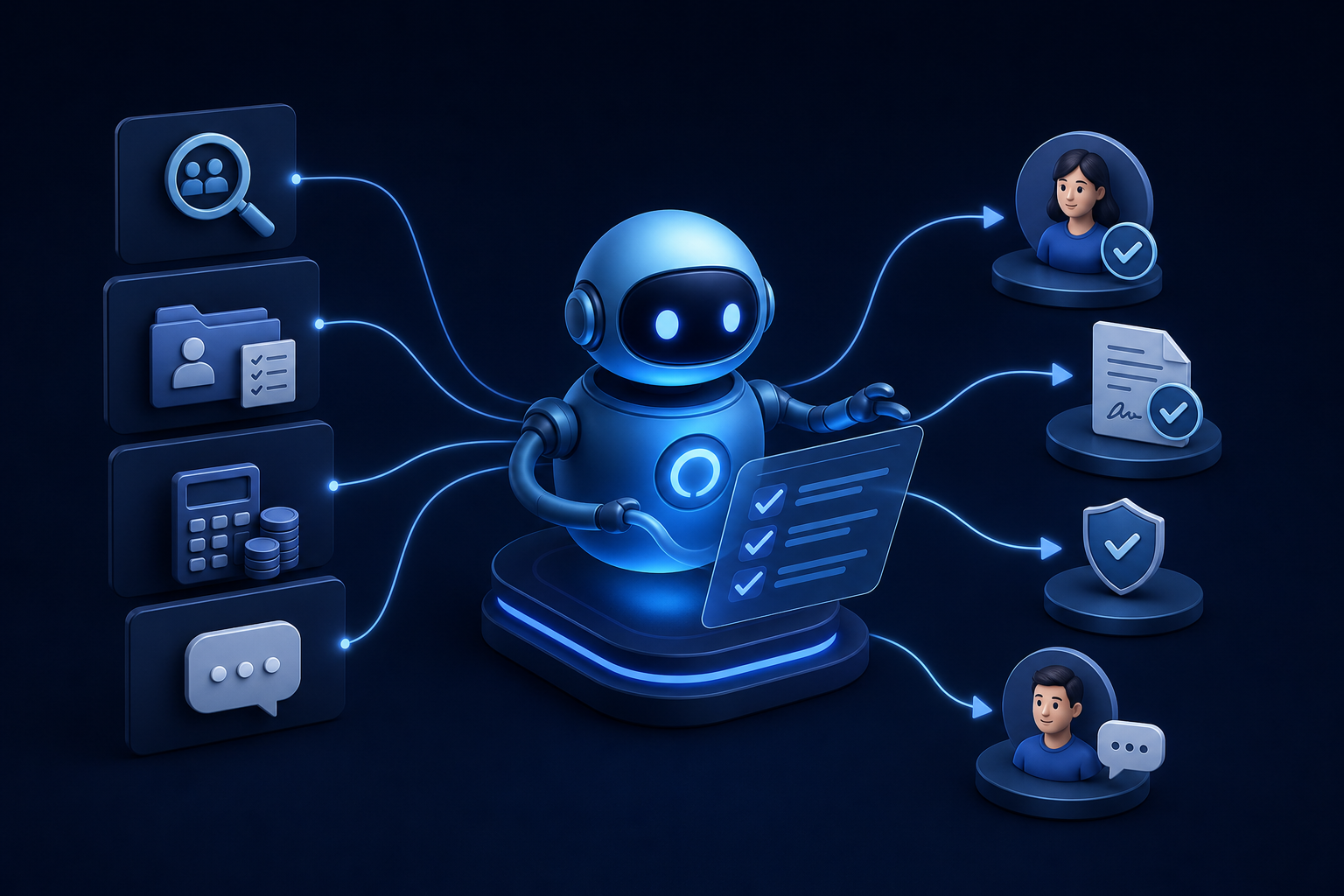
Discover how ai for hr automation handles recruiting, onboarding, payroll checks, and employee Q&A so your team can focus on work that matters.
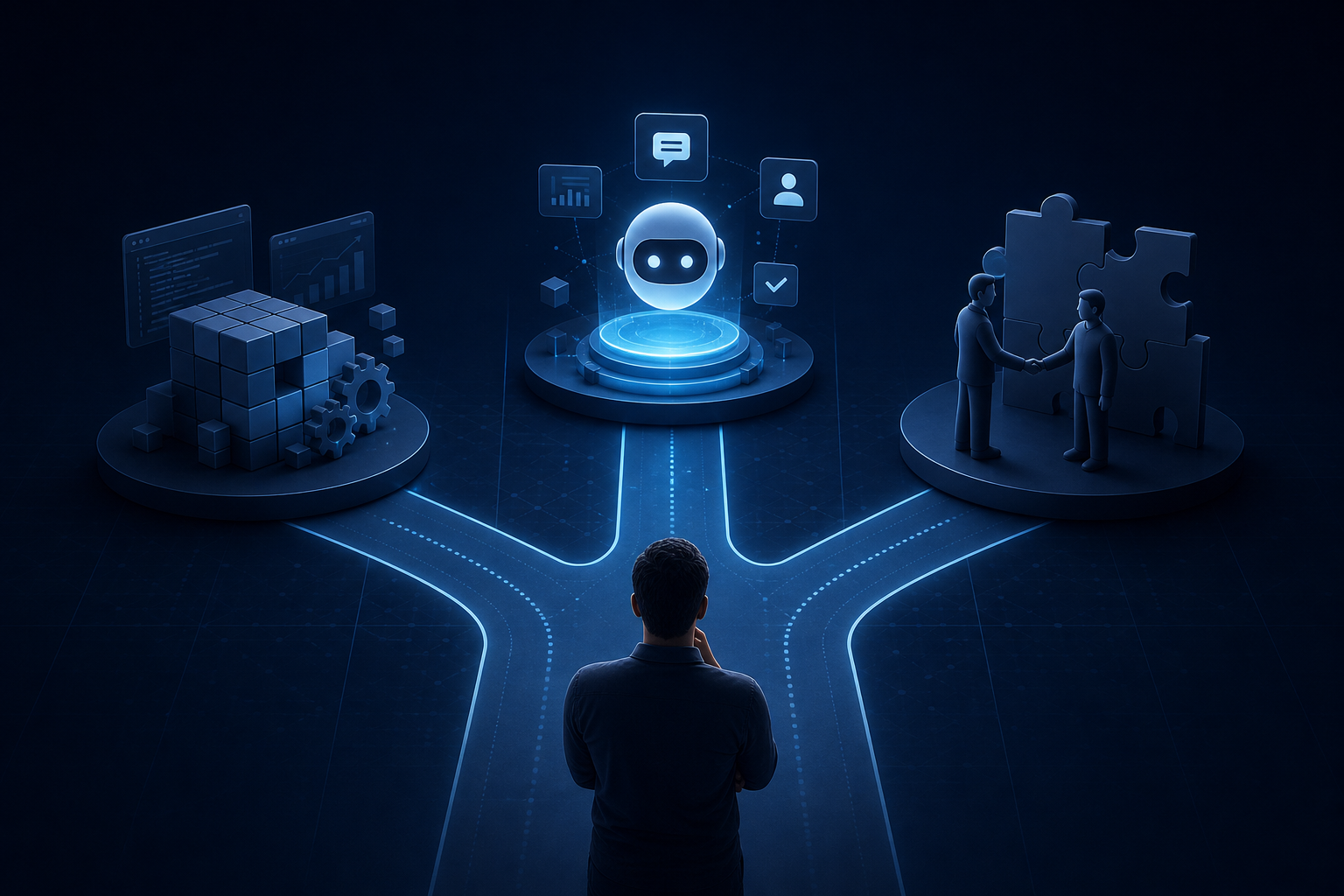
Explore custom ai agent development paths: build in-house, buy pre-built, or partner with a specialist. Find the right fit for your team today.


