



ai-automation
Autonomous Workflows. AI That Runs Operations
Autonomous workflows allow AI to coordinate tasks, decisions, and actions across systems. This shift moves businesses from manual processes to intelligent, self-operating workflows.
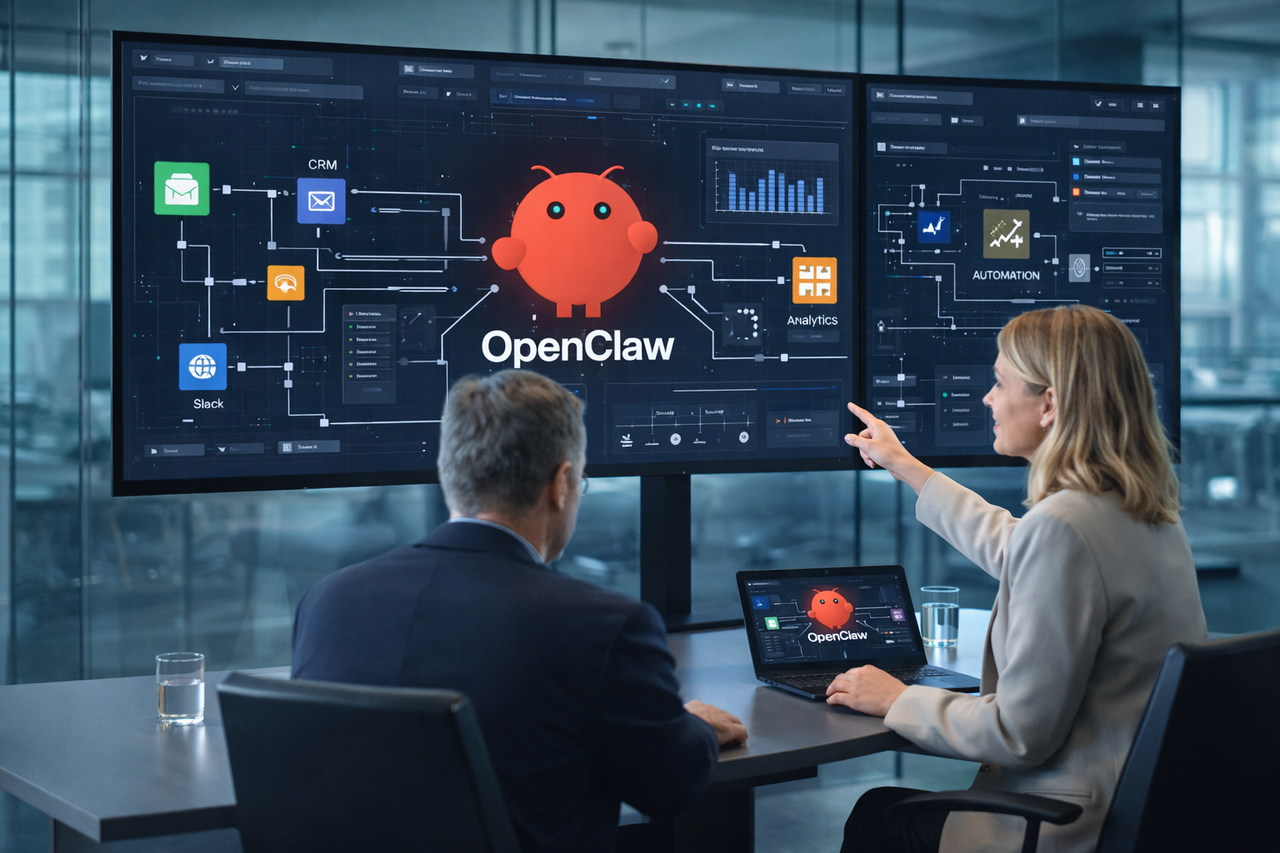
OpenClaw functions as an AI-powered second brain that connects business tools, automates workflows, and helps organizations operate with speed and clarity across their entire digital stack.
Modern companies run on software. CRM platforms manage customers. Messaging tools coordinate teams. Marketing platforms drive growth. Analytics dashboards measure performance.
Yet despite the explosion of business tools, most organizations operate in fragmented digital environments.
Information is scattered across platforms. Decisions require navigating multiple dashboards. Teams spend significant time coordinating tasks between systems.
This fragmentation creates operational friction that slows companies down.
The next evolution of digital infrastructure is emerging to solve this problem. Instead of adding more tools, organizations are beginning to deploy AI-powered operational layers that unify systems and automate workflows.
OpenClaw represents this new category of technology. It functions as a second brain for your business, connecting tools, coordinating workflows, and enabling AI agents to support daily operations.
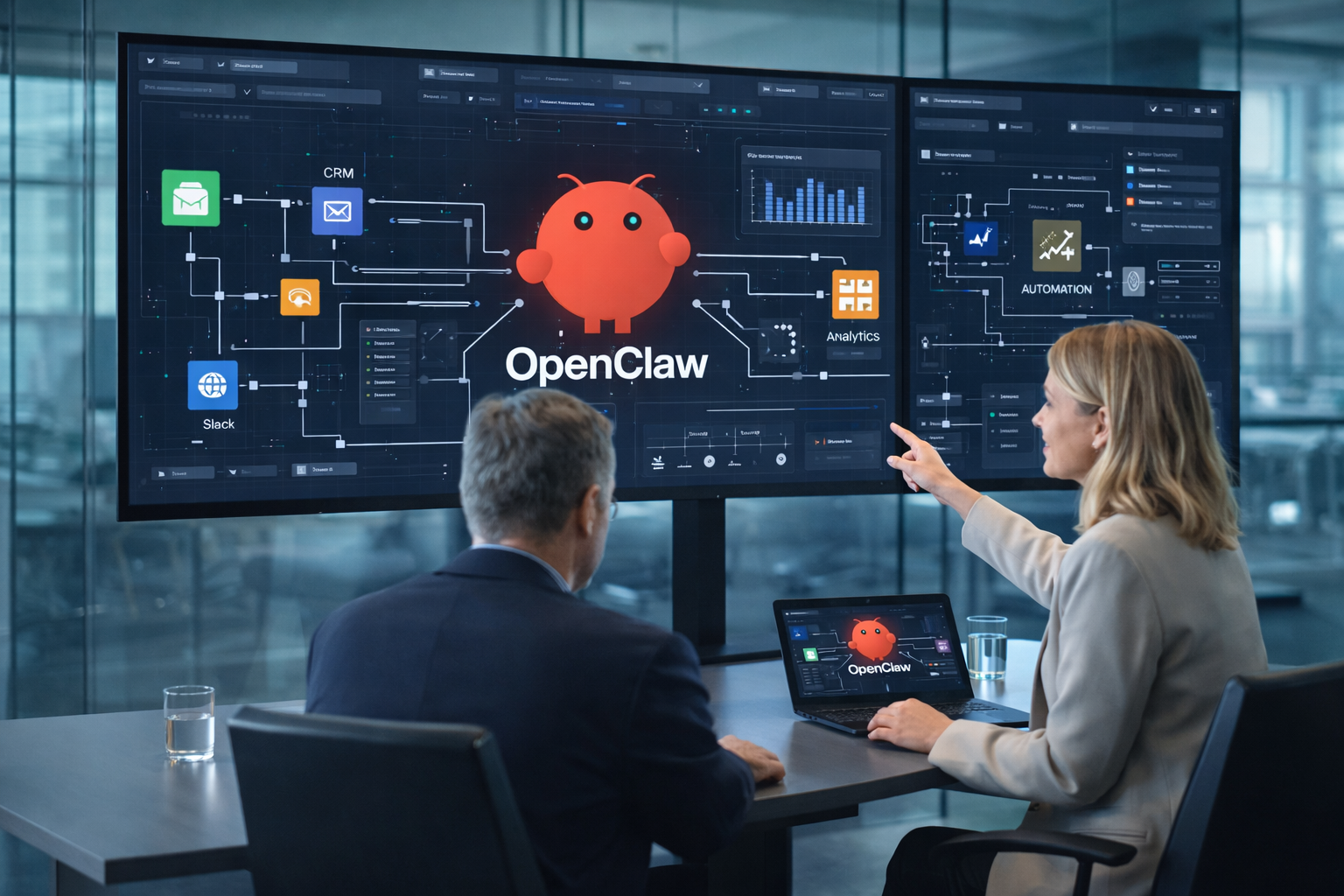
Most organizations today operate within a complex digital ecosystem.
A typical company may use:
CRM systems for sales management
Messaging platforms for communication
Marketing tools for campaigns
Analytics dashboards for reporting
Project management software for operations
Document systems for collaboration
Each platform performs its role well individually. But the connections between them are often weak.
As a result, teams frequently perform manual tasks such as:
copying information between systems
triggering processes across platforms
monitoring dashboards for operational events
coordinating workflows between departments
Over time, this creates operational inefficiencies that compound as organizations grow.
The challenge is not a lack of software. It is the absence of an intelligent system capable of coordinating the entire digital environment.
The concept of a second brain originates from knowledge management systems designed to help individuals organize and retrieve information efficiently.
In the business context, the idea evolves into something more powerful.
A business second brain is an AI-powered operational layer that:
collects information from multiple systems
interprets operational signals
coordinates workflows between tools
assists teams in making decisions
automates repetitive operational processes
Instead of employees constantly navigating between platforms, the system monitors events and executes workflows automatically.
This allows organizations to move from manual coordination to intelligent orchestration.
OpenClaw is designed to operate precisely in this role.
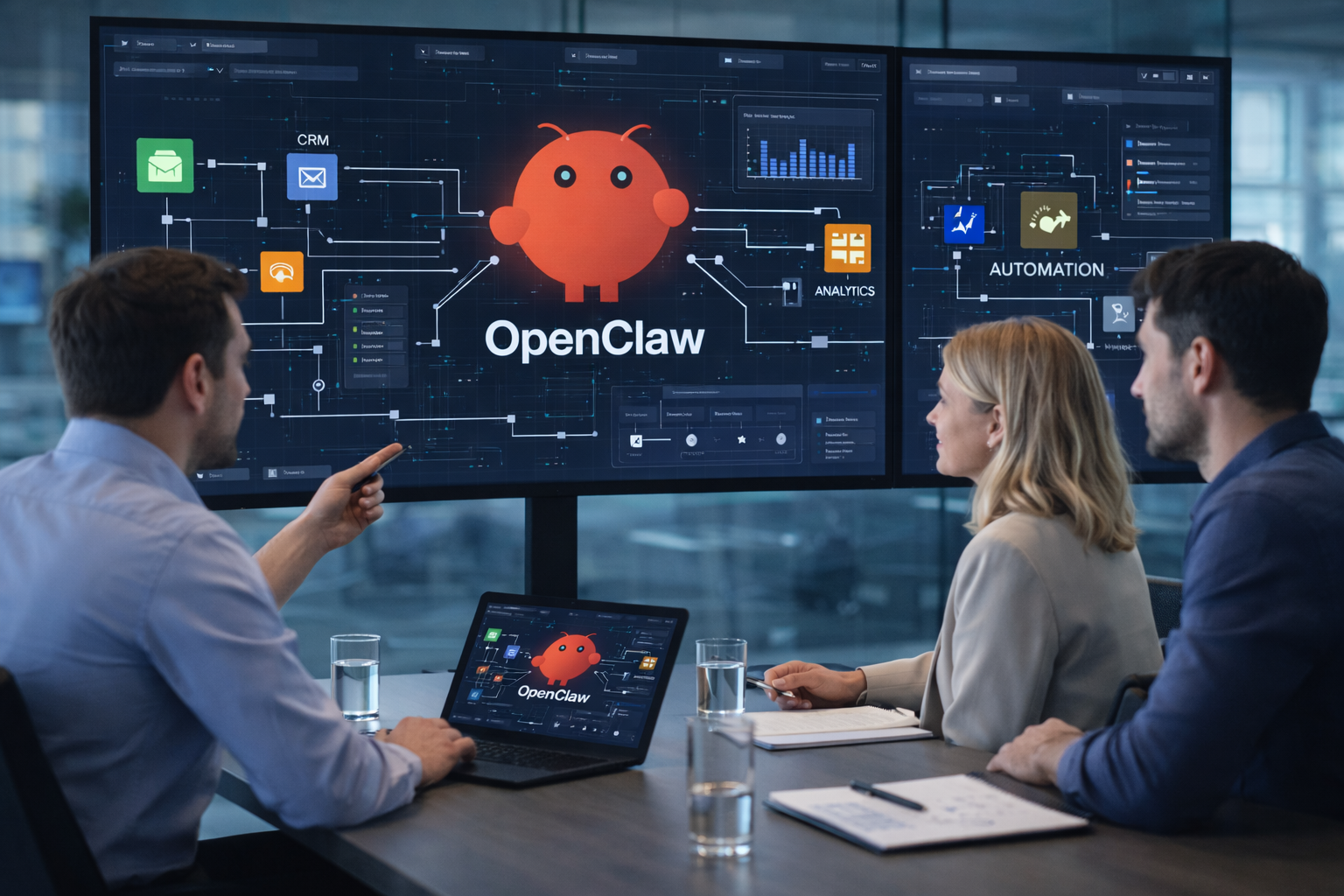
OpenClaw integrates with the existing digital stack of a company and acts as a coordination layer between platforms.
Rather than replacing tools, it enhances how they work together.
The system connects with platforms such as:
CRM systems
communication platforms
automation tools
analytics systems
project management platforms
data infrastructure
Once connected, OpenClaw can deploy AI agents that monitor operational signals across systems.
These agents can perform actions such as:
triggering workflows
coordinating tasks across teams
generating operational insights
organizing information flows
supporting decision-making processes
By operating across the entire digital ecosystem, OpenClaw becomes a central intelligence layer for business operations.
One of the most powerful aspects of OpenClaw is its use of AI agents.
These agents function as autonomous operational assistants capable of executing specific tasks within business workflows.
For example, an AI agent could:
monitor new customer activity
trigger onboarding workflows
notify relevant team members
update CRM data
generate performance summaries
The key difference from traditional automation is that AI agents can interpret context rather than simply follow rigid rules.
They can analyze incoming information, prioritize actions, and coordinate tasks across multiple systems simultaneously.
This creates operational environments where work flows naturally between platforms without requiring constant human intervention.
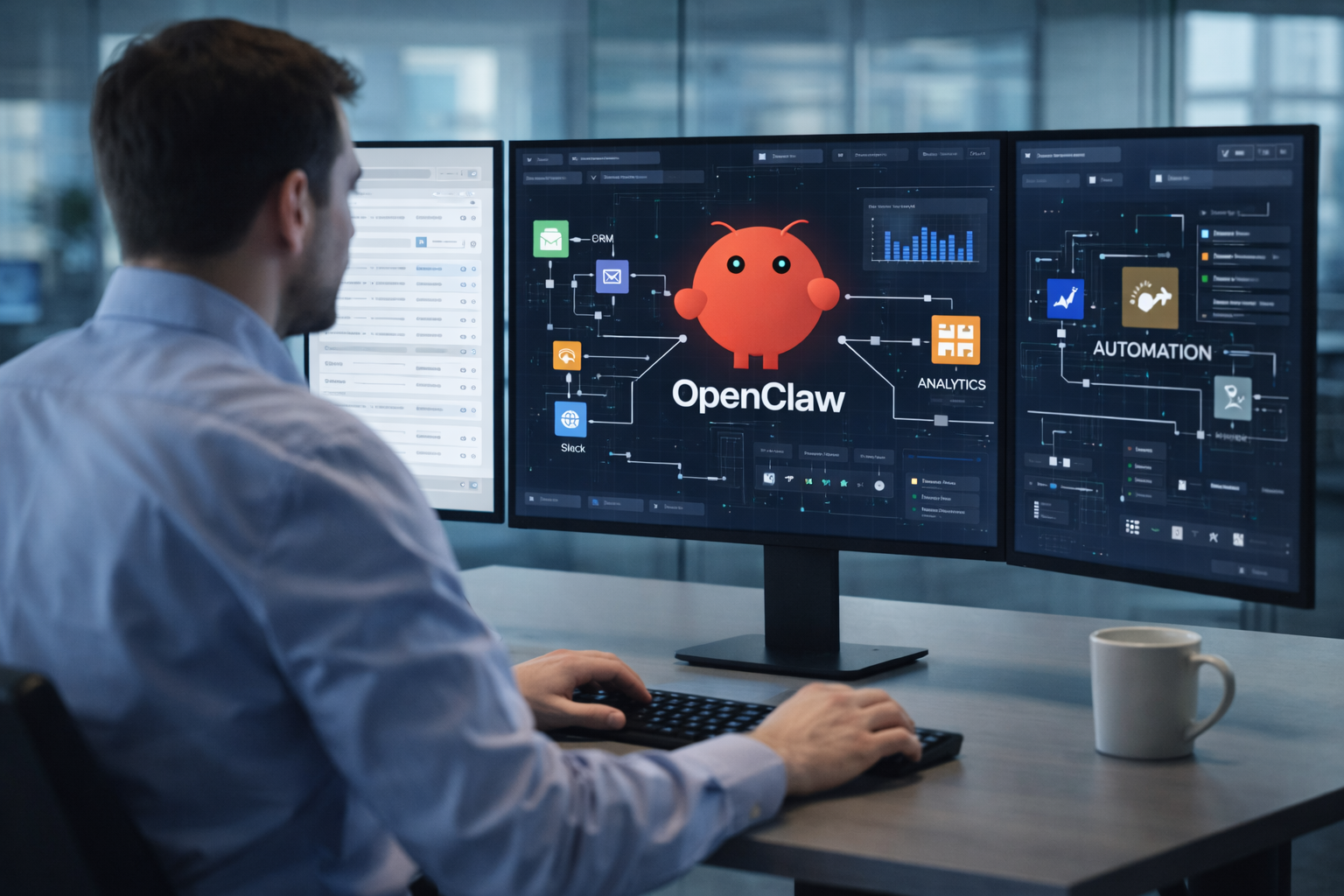
Most companies today operate with what can be described as a tool stack.
A collection of independent platforms used for different functions.
The future belongs to organizations that build operational systems.
Instead of isolated tools, they deploy integrated environments where data, workflows, and decision-making processes operate within a coordinated infrastructure.
OpenClaw supports this transformation by acting as the orchestration layer between systems.
It enables companies to move from fragmented software ecosystems to connected operational intelligence.
When tools begin working together seamlessly, organizations unlock new levels of productivity and clarity.
Organizations that implement operational AI layers gain several advantages.
When information flows automatically between systems, teams gain faster access to operational insights.
Automated workflows eliminate manual coordination tasks.
AI agents allow companies to expand operations without increasing operational complexity.
Centralized operational intelligence provides clearer insights into how systems and teams perform.
These advantages allow companies to operate more efficiently while focusing human effort on strategic initiatives.
The growing complexity of modern software ecosystems is forcing organizations to rethink how their digital infrastructure operates.
Adding more tools is no longer the solution.
The future of business operations lies in intelligent orchestration.
Systems that connect tools, automate workflows, and support decision-making across the entire organization.
OpenClaw represents this shift toward AI-powered operational intelligence.
By acting as a second brain for the business, it transforms fragmented digital environments into coordinated systems capable of supporting faster, smarter, and more scalable operations.
Companies that adopt these operational layers early will gain a meaningful advantage as the role of AI in business infrastructure continues to expand.
McKinsey & Company. The State of AI in Business
https://www.mckinsey.com/capabilities/quantumblack/our-insights/the-state-of-ai
MIT Sloan Management Review. Artificial Intelligence and Business Strategy
https://mitsloan.mit.edu/ideas-made-to-matter/artificial-intelligence
Harvard Business Review. Competing in the Age of AI
https://hbr.org/2018/01/competing-in-the-age-of-ai
If your company is navigating an increasingly complex digital tool ecosystem, the next step is not adding more software.
It is building the intelligence layer that connects everything.
Explore how OpenClaw can help your organization create a unified operational system powered by AI agents and automated workflows.
Schedule a strategy conversation with our team.
This article was developed with the assistance of artificial intelligence tools to support research, structure, and editorial drafting. All strategic analysis, validation, and final editorial review were conducted by the Singular Innovation team.
Autonomous workflows allow AI to coordinate tasks, decisions, and actions across systems. This shift moves businesses from manual processes to intelligent, self-operating workflows.

Dashboards show what happened. AI operations systems decide and act on what should happen next. This shift is redefining how companies run their day to day operations.

LLMs are powerful, but prompts alone do not create business impact. Real value comes from embedding LLMs into workflows that connect data, decisions, and actions across systems.


