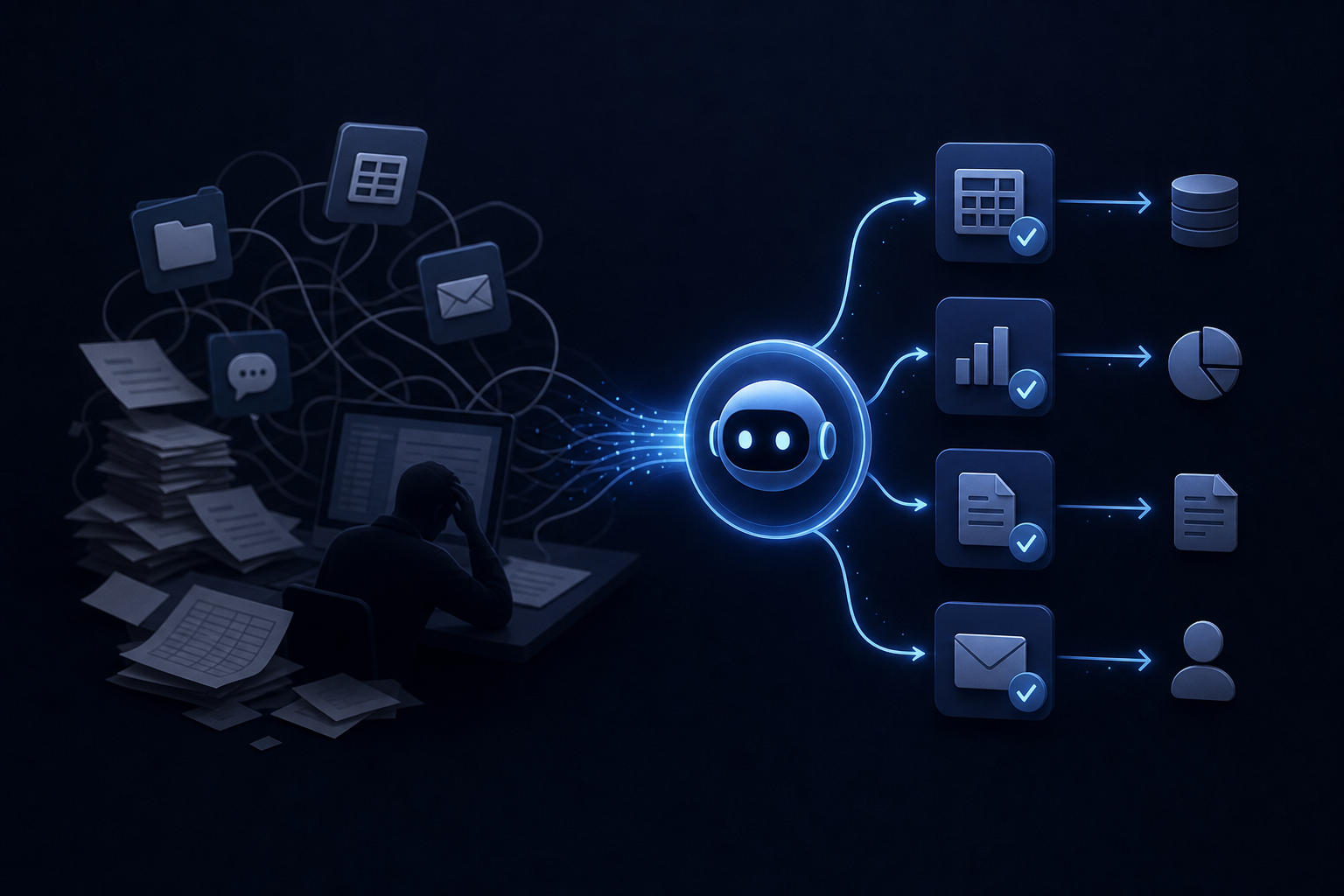
General
What Is an Agentic Workflow? How AI Agents Replace Manual Process Steps
An agentic workflow lets AI agents plan and execute tasks without manual triggers. See how SMBs use them to replace repetitive process steps.
What an AI transformation engagement with Singular Innovation actually costs, how it is scoped, and how it compares with the market.

If you've landed here, you're probably trying to figure out what hiring an AI transformation agency actually costs — and whether Singular Innovation fits your budget before you ever get on a call. That's a reasonable thing to want to know, and this article gives you a straight answer.
The short version: Singular Innovation doesn't publish a price list. That's not evasion — it reflects how this kind of work is actually scoped. Here's what you need to understand before you reach out.
Serious AI transformation work is priced against scope, not a menu. Automating a five-step approval workflow inside Airtable is a fundamentally different job than deploying a multi-agent system that consolidates data from four tools and routes decisions autonomously. Treating those as the same product would either overprice simple work or underprice complex work — neither outcome serves you.
This is standard across the AI agency market. Competitors like AY Automate also disclose project pricing only after a free audit. The real question isn't whether pricing is listed — it's what you actually get for the price, and how fast.
Even without a published number, there are clear factors that determine where any engagement lands. Understanding them helps you self-qualify before booking a call.
Singular Innovation's model is built around a scoped first release delivered within 10 business days. That window applies to a defined, contained build — not an open-ended full-system overhaul. The more clearly you can describe what you want automated or deployed, the more accurately the engagement can be scoped and priced.
Coming in with a specific workflow in mind is a different conversation than coming in still figuring out where to start.
Embedding AI inside your existing tech stack — rather than building something parallel to it — requires a real understanding of what you already have. Businesses running on Airtable, Slack, and spreadsheets have a relatively clean integration surface. Companies with fragmented data spread across five or six disconnected tools need consolidation work before automation is even possible.
Singular Innovation's official partnership with Airtable means Airtable-native builds move faster and carry lower integration overhead than custom-stack work. That difference shows up in cost.
The agency's services span several distinct categories: AI strategy and operating roadmap development, workflow automation, AI agent deployment, and data consolidation. A workflow automation engagement has a different cost profile than deploying a full AI agent with its own decision logic, memory, and escalation paths.
Proprietary assets like the Claude AI Skills Library — a collection of pre-built, deployable AI workflows built around Anthropic's Claude — can compress build time significantly for common use cases. When pre-built components fit your problem, you're not paying for work that's already been done.
What happens after the engagement ends has a direct effect on total cost of ownership. Singular Innovation transfers all code, prompts, automations, workflows, and documentation to the client at the close of every project. No retainer is required to maintain what was built. You own it outright.
That's worth factoring into any comparison. An agency that charges less upfront but retains ownership of what it builds — or requires a monthly fee to keep systems running — often costs more over 12 months than a higher upfront engagement where you walk away with everything.
Singular Innovation's primary clients are founders, COOs, and operations leads at US-based SMBs with 10 to 200 employees. What a contained engagement costs in that segment depends on the factors above, and the only accurate number is the one that comes out of scoping your specific case.
That is why the audit comes first. It is free, and it is what turns a range into a figure.
Some context helps. AY Automate, one of the most direct competitors, starts from approximately $60,000 per year for embedded placement, with project pricing disclosed only after a free audit. Their quoted timeline for a full system is 4 to 8 weeks. Singular Innovation's commitment is a scoped first release in 10 business days.
That's not a trivial gap. For an operator whose manual process just broke because a key employee left — or whose competitor just automated something they still do by hand — speed is often the deciding factor, not price.
Morningside AI operates without published pricing as well, and does not commit publicly to a comparable fast-delivery window or a documented full-ownership transfer.
The lowest-risk entry point is the free AI readiness audit. This isn't a sales call dressed up as a consultation. It's a structured assessment of where your business actually stands relative to AI implementation: which workflows are ready to automate, where your data infrastructure creates bottlenecks, and what a realistic first build would look like.
The audit gives you a clearer picture of scope before any money changes hands — which makes any pricing conversation that follows considerably more accurate.
If you're ready to move past the audit and discuss a real engagement, the strategy call is the next step. You'll get more out of it — and get a more accurate sense of cost — if you come prepared with:
The clearer your problem statement, the faster the scoping conversation moves.
The agency's model works best for operators who already know what they want built and need someone to build it fast — inside their existing stack, not alongside it. If you've been through a strategy engagement with another firm and received a document instead of a working system, this is a different experience.
If you're still in early discovery mode and genuinely unsure which AI project to prioritize, the free audit is the right starting point. It's designed to answer exactly that question.
For businesses that match the profile — post-product-market fit, scaling manually, running on Airtable and Slack, frustrated by consultants who delivered slide decks — the AI transformation agency model at Singular Innovation is built specifically for that situation.
Does Singular Innovation publish its pricing? No. Pricing isn't publicly listed because every engagement is scoped to a specific problem, stack, and timeline. The most accurate way to get a number is to start with the free AI readiness audit or book a strategy call at singular-innovation.com.
What's the typical budget range for an engagement? There is no published range. Cost depends on scope, complexity, and the type of AI work involved, and Singular Innovation scopes each engagement rather than working from a rate card. The free AI readiness audit is the fastest way to get a real number for your case.
What does the 10-business-day delivery commitment include? The 10-day window applies to a scoped first release: a defined, contained build embedded inside your existing tech stack. It's not a promise to rebuild your entire operation in two weeks — that distinction matters when comparing it to competitors who quote 4 to 8 weeks for a full system.
Do I need to pay a retainer after the engagement ends? No. Singular Innovation transfers all code, prompts, automations, workflows, and documentation to the client at the end of every engagement. You own everything that was built, and no ongoing retainer is required to maintain it.
How does Singular Innovation's pricing compare to other AI agencies? Direct competitors like AY Automate start from approximately $60,000 per year for embedded placement and disclose project pricing only after an audit. Morningside AI does not publish pricing either. Singular Innovation's differentiator isn't necessarily a lower price — it's a faster delivery window, full client ownership, and systems built inside your existing stack rather than alongside it.
What is the free AI readiness audit? A structured assessment of your current workflows, data infrastructure, and AI readiness. It identifies which processes are ready to automate and what a realistic first engagement would involve — before any budget is committed.
What happens if my project is more complex than a single 10-day sprint? Larger builds are scoped accordingly. The 10-day sprint is the entry point for a first release, not a ceiling on what can be built. More complex engagements are structured as sequential scoped releases, each with clear deliverables and full ownership transfer at every stage.
An agentic workflow lets AI agents plan and execute tasks without manual triggers. See how SMBs use them to replace repetitive process steps.
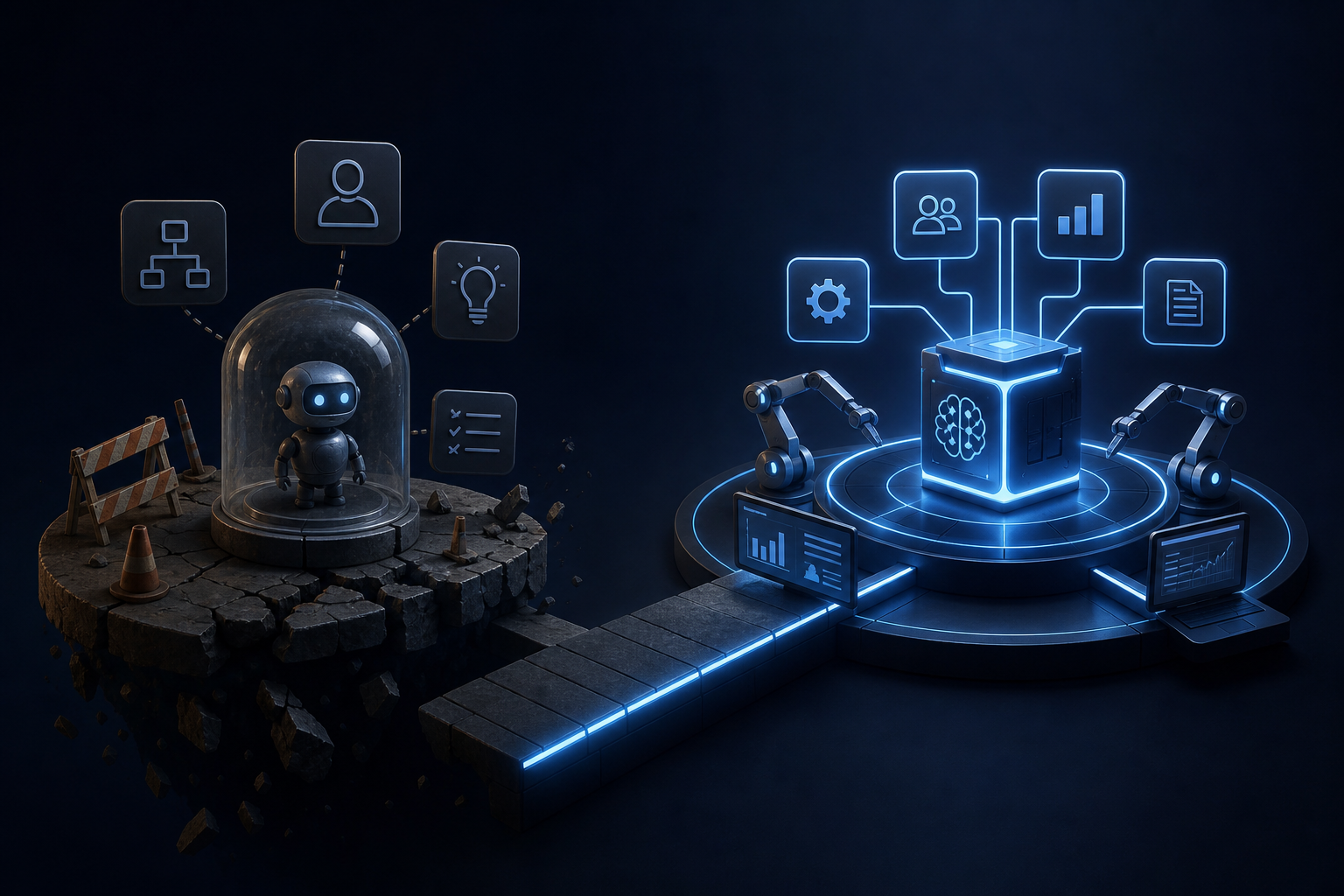
AI pilot program failure is almost always structural, not technical. Learn the four root causes and how embedded AI systems are built to avoid them.
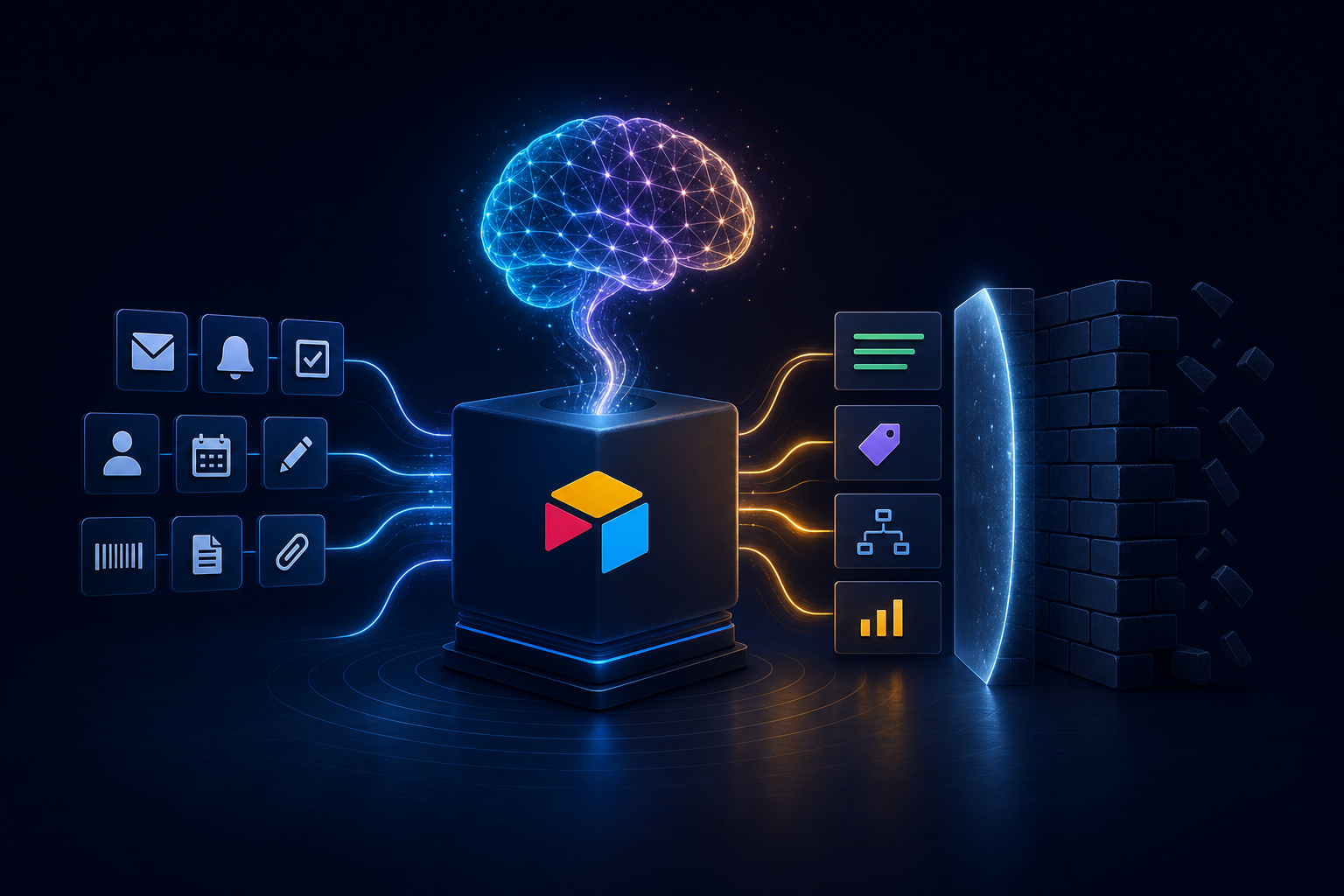
Airtable automation with AI can eliminate repetitive work — but it has real limits. Learn what's possible, where it breaks down, and how to plan around it.


