General
What Is an Agentic Workflow? How AI Agents Replace Manual Process Steps
An agentic workflow lets AI agents plan and execute tasks without manual triggers. See how SMBs use them to replace repetitive process steps.

AI transformation cost is rarely published openly. Here's a clear breakdown of every pricing model, hidden cost, and realistic SMB budget for 2026.
If you've been pricing out AI transformation, you've probably noticed that almost no one publishes real numbers. Vendors talk about "custom pricing" and "tailored engagements," which makes it nearly impossible to budget or compare options. The AI transformation cost question is one of the most common things founders and operators ask before committing — and the honest answer is that it depends heavily on what you're actually buying.
This article breaks down the real cost categories, what drives prices up or down, how different delivery models compare, and what a reasonable budget looks like for an SMB in 2026.
Two companies can spend wildly different amounts on AI and end up with completely different things. One buys a seat-based SaaS tool and calls it "AI transformation." Another hires an agency to build custom workflows, connect their existing tools, and deliver something they actually own. The outcomes aren't comparable — and neither are the costs.
The main variables that drive AI implementation cost:
Understanding these variables before you get a quote will save you from comparing apples to tractors.
The cheapest entry point on paper. Platforms like Coworker AI charge around $29.99 per user per month. Microsoft Copilot Studio runs $200 per month for 25,000 credits, with additional costs for autonomous agent runs. Per-seat AI assistants in this tier are commonly priced in the tens of dollars per person per month, which scales quickly once your team grows past a handful of users.
The catch: seat-based pricing looks affordable at five users and gets expensive fast at 30. A 30-person team on a per-seat plan is paying thirty times whatever the seat costs, every month, for a tool where everything you build stays inside the vendor's platform. Stop paying, and you lose access to all of it.
Glean does not publish pricing at all, and sells through a demo and a sales conversation. Enterprise search tools in this tier are also commonly sold with a seat minimum, which means the floor is set before you have built anything.
These tools also require your team to configure, maintain, and iterate on them — internal time with a real cost that rarely shows up in the subscription price.
Zapier and similar platforms let you build workflows yourself. Zapier connects 9,000-plus apps and handles straightforward trigger-action logic well. The cost is lower upfront, but so is the ceiling.
The problem most SMBs run into: Zapier is an automation logic platform, not a governed knowledge layer. You can move data between tools, but you can't build a searchable source of truth or deploy AI workers that proactively generate executive briefings or dashboards. The workflows you build also aren't portable in any meaningful sense — prompts and logic are locked inside the platform.
DIY works for simple, stable processes. It breaks down when you need AI reasoning, cross-tool context, or recurring intelligence outputs.
Some companies try to hire their way to AI capability. A mid-level AI engineer in the US costs $150,000 to $200,000 per year in salary alone, before benefits, onboarding time, and the months it takes to build anything production-ready. Add a data engineer to handle the integration layer and you're looking at a similar cost again.
For a company with 20 to 50 employees and $3M to $10M in revenue, this path is rarely viable. You'd spend six to twelve months and $300,000 or more before seeing a working system — and if that person leaves, the institutional knowledge walks out with them.
This is where the numbers get more specific. AI transformation agencies build custom systems inside your existing stack, typically on a project basis.
Very few agencies in this space publish rates at all. Uvik Software is one that does: 55 to 99 US dollars per hour by role, with engagements from 25,000 US dollars. Treat that as one published data point rather than a market rate, because almost everyone else, Singular included, scopes cost per engagement. What you get for the investment is a scoped, built, and delivered system that you own outright — the code, the prompts, the workflows, the documentation.
Total cost depends on scope. A focused first capability — one AI worker, one data connection, one recurring output — is a very different project from a full Company Brain deployment connecting Slack, HubSpot, QuickBooks, and Airtable with multiple HyperAgents running daily. Most agencies don't publish flat pricing because the scope drives the number. You'll need a real proposal to get a real figure.
One cost most buyers don't factor in: the cost of not owning what you build.
With SaaS platforms, everything you configure — your workflows, your prompts, your agent logic — lives inside the vendor's system. If pricing changes, if the platform pivots, or if you want to move to a different model, you start from scratch. That's not just a switching cost; it's a compounding risk that grows the more you build inside someone else's walls.
With an agency engagement where client ownership is a core part of the delivery model, you receive all code, prompts, automations, and documentation from day one. That's an asset on your balance sheet, not a recurring liability.
It's worth asking any vendor you evaluate: what happens to everything we've built if we stop paying?
Connecting AI to your real data is harder than demos suggest. If your HubSpot contacts don't match your QuickBooks customers, or your Airtable bases were built by three different people with three different schemas, the integration layer takes real work. Agencies that scope this properly will charge for it. Ones that don't will surprise you later.
Role-based permissions, audit logs, approved data source controls, and review gates aren't optional in most business environments — they're required for anything touching customer data, financial records, or HR information. Building governance into AI workers from day one costs more upfront and saves you from a much more expensive problem later.
Your team has to use the system for it to generate value. If the AI worker generates a daily executive briefing that nobody reads, or a dashboard that nobody trusts, the investment doesn't pay off. Time for training, iteration, and adoption is part of the real cost.
AI models update. APIs change. Business processes evolve. A system built in September 2026 will need maintenance by March 2027. Understand whether maintenance is included in your engagement, what it costs separately, or whether you're expected to handle it yourself.
Here's a rough framework based on what's publicly verifiable:
Seat-based SaaS only (10–30 users) $3,600 to $36,000 per year, depending on platform and headcount. No custom build, no ownership, limited AI reasoning capability.
DIY automation (Zapier or similar) $600 to $3,000 per year in platform fees, plus significant internal time. Works for simple workflows; doesn't scale to AI-native operations.
Agency engagement (first working AI capability) Scoped per engagement. Almost no agency in this category publishes a rate card, so the honest answer is that the number comes out of scoping. A scoped first capability — one AI worker, one data layer, one recurring output — typically falls in this range. Broader deployments connecting multiple tools with multiple AI workers will cost more.
Internal hire $150,000 to $300,000 per year for a small AI/data team, with a six-to-twelve month runway before anything is production-ready.
For most SMBs in the 10 to 150 employee range, the agency engagement model offers the best ratio of time-to-value to total cost — particularly when the engagement is scoped tightly and delivers a working system in weeks rather than months.
One of the more significant shifts in 2026 is the emergence of agencies that scope AI engagements to deliver a working first capability in 10 business days. That's not a full enterprise deployment — it's a defined, scoped, owned AI worker doing one real job inside your existing stack.
The financial logic is different from a six-month consulting engagement. Instead of committing $150,000 to a strategy document and a roadmap, you commit to a scoped project with a defined owner, a delivery date, and a working output. If it works, you expand. If it doesn't, you've learned something concrete for a fraction of the cost.
Singular Innovation structures engagements this way — a first working AI capability in 10 business days, built inside your current tools, with full ownership transferred on delivery. The entry point is a free AI Readiness Audit that maps your existing tools and identifies where an AI system produces the earliest return. It's a no-commitment way to get a real answer to the cost question before you sign anything.
When you get a proposal, these are the questions worth asking:
What exactly will be delivered? A working system, or a strategy document? Who owns it?
What does the timeline look like? Weeks or months? What are the milestones?
What happens to the assets if we stop working together? Do we own the code and prompts, or do they stay in your platform?
What's included in the price? Integration work, governance setup, documentation, training?
What does ongoing maintenance cost? Is it included, hourly, or a separate retainer?
What's the minimum viable scope? Can we start with one AI worker and expand, or is the minimum commitment a full deployment?
Good answers to these questions will tell you more about real cost than any published pricing page.
What is a realistic starting budget for AI implementation at an SMB in 2026? Most agencies scope this per engagement rather than publishing a price. Uvik Software is a rare exception and publishes 55 to 99 US dollars per hour with engagements from 25,000 US dollars, which is a useful reference point even though it is one firm. Seat-based SaaS alternatives start lower but scale quickly with headcount and don't deliver custom-built, owned systems.
Why don't most AI agencies publish their prices? Most agency engagements are scoped to the client's specific tools, data complexity, and desired outputs. A single AI worker connecting two tools is a very different project from a full Company Brain deployment across five systems with multiple HyperAgents. Flat pricing would either overcharge simple projects or underprice complex ones.
Is it cheaper to build AI capability in-house than to hire an agency? Rarely, for SMBs. A mid-level AI engineer costs $150,000 to $200,000 per year in salary alone, and most internal builds take six to twelve months before delivering a production-ready system. An agency engagement with a defined scope and a 10-day delivery window typically offers better time-to-value for companies without an existing AI team.
What does "client ownership" mean in an AI implementation context? It means the code, prompts, workflows, automations, and documentation built during the engagement are transferred to you on delivery. You're not renting access to a vendor's platform — you own the assets outright. This matters because it eliminates vendor lock-in and means the system keeps working even if you change providers.
How do seat-based AI platforms compare in total cost to agency engagements? At small team sizes, SaaS platforms look cheaper. At 20 to 30 users, per-seat platforms in this category run into tens of thousands a year — recurring, with no ownership. A one-time agency engagement that delivers an owned system may have a lower total cost over two to three years, especially when you factor in portability and the absence of ongoing seat fees.
What hidden costs should I budget for in an AI implementation? Integration complexity (especially if your data is inconsistent across tools), governance setup (permissions, audit logs, review gates), change management and team adoption time, and ongoing maintenance as models and APIs evolve. These are real costs that don't always appear in initial quotes.
What's the fastest way to get a real cost estimate for my business? The most direct path is a structured AI readiness assessment that maps your current tools and identifies where an AI system produces the earliest return. This gives you a scoped starting point rather than a generic quote. Singular Innovation offers a free AI Readiness Audit at singular-innovation.com that does exactly this — no commitment required.
AI transformation cost is a real question with a real range of answers. The honest version: SaaS tools start cheap and get expensive fast, internal hires are rarely viable for SMBs, and agency engagements with tight scopes and clear ownership terms often deliver the best ratio of investment to working capability.
The worst way to approach this is to ask "how much does AI cost?" without a scoped project in mind. The best way is to identify one high-value, recurring task that currently takes manual effort — a daily report, a triage workflow, a cross-tool data pull — and scope a first AI capability around that.
If you're not sure where to start, the free AI Readiness Audit at singular-innovation.com is designed to answer exactly that question before you spend anything.
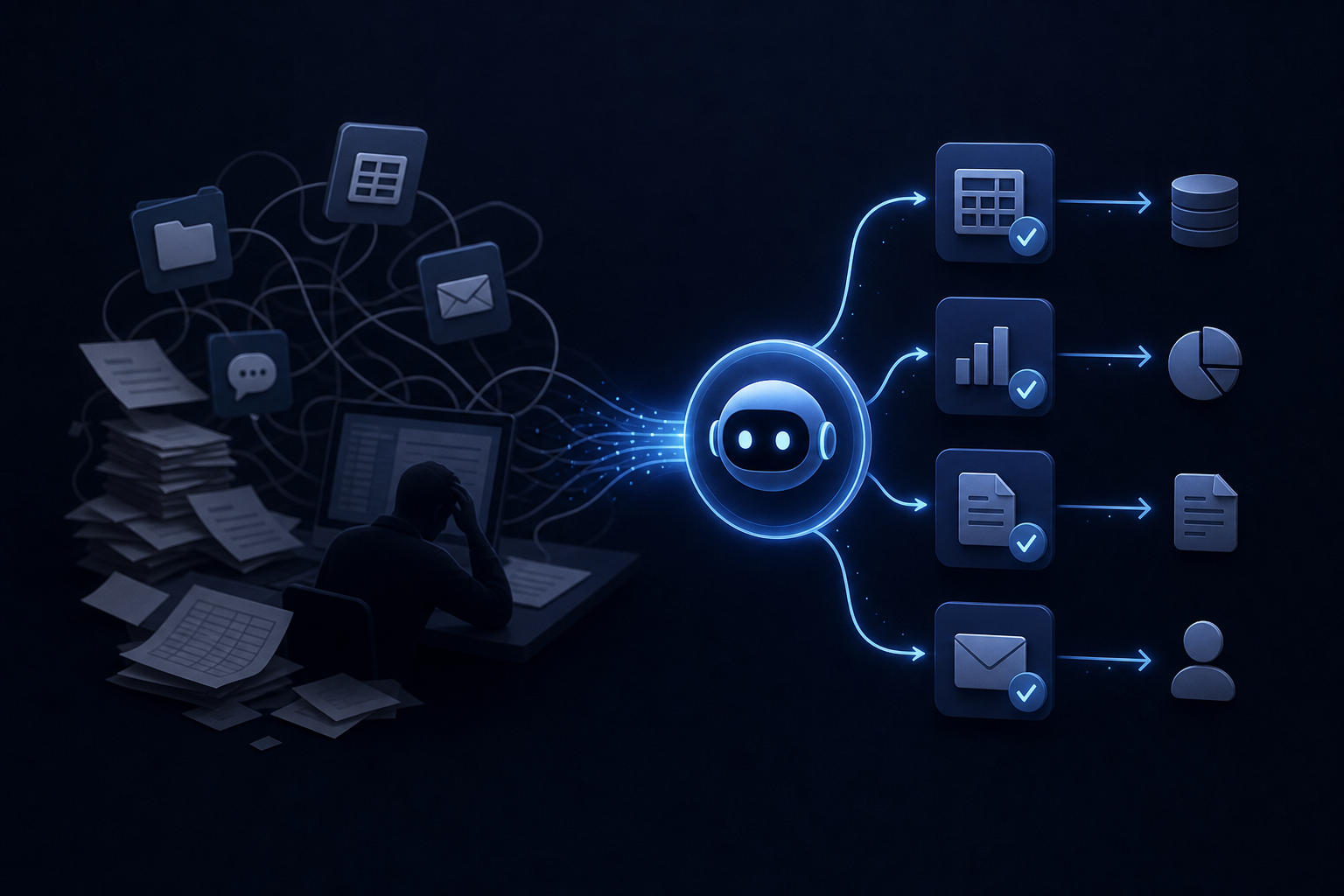
An agentic workflow lets AI agents plan and execute tasks without manual triggers. See how SMBs use them to replace repetitive process steps.
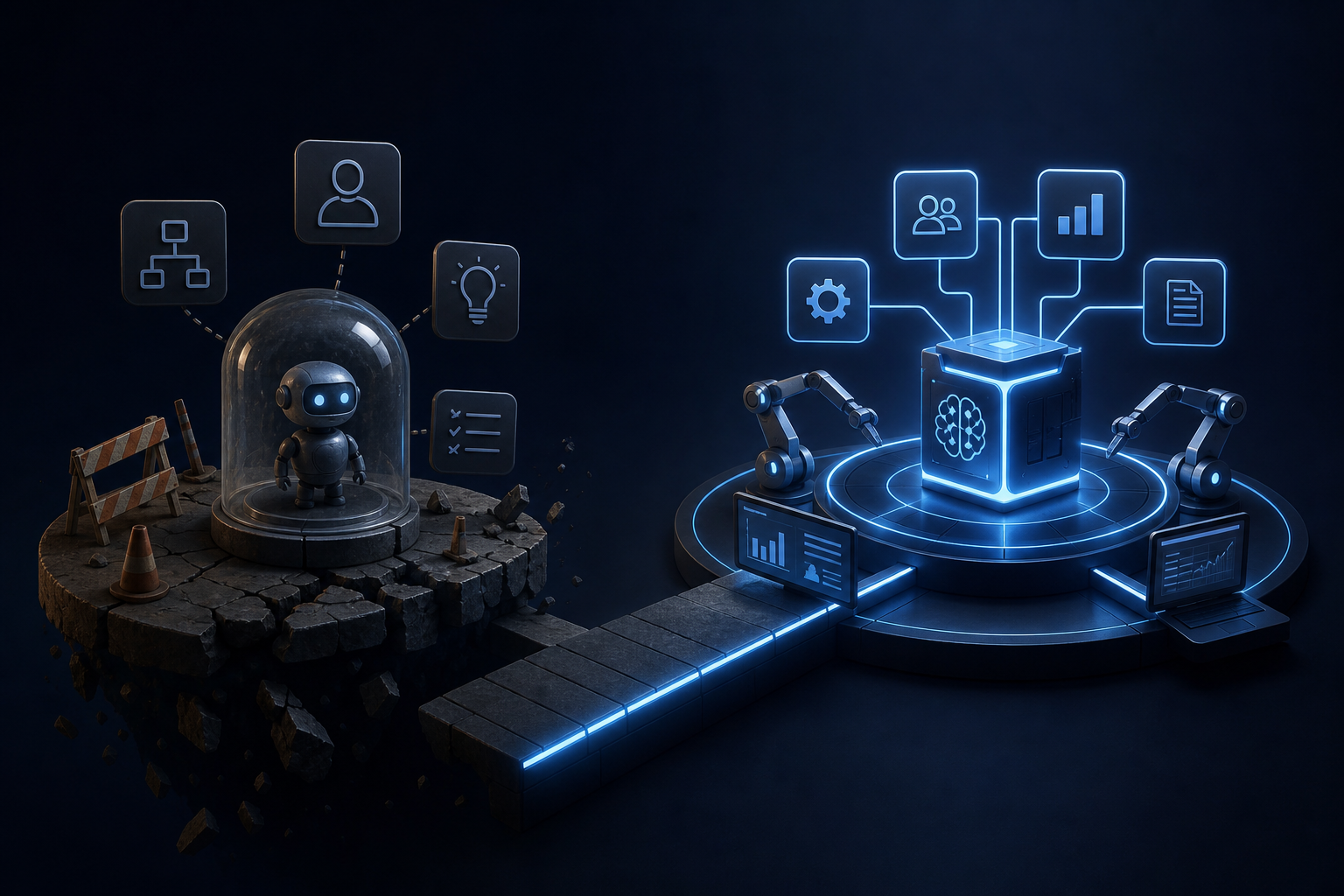
AI pilot program failure is almost always structural, not technical. Learn the four root causes and how embedded AI systems are built to avoid them.
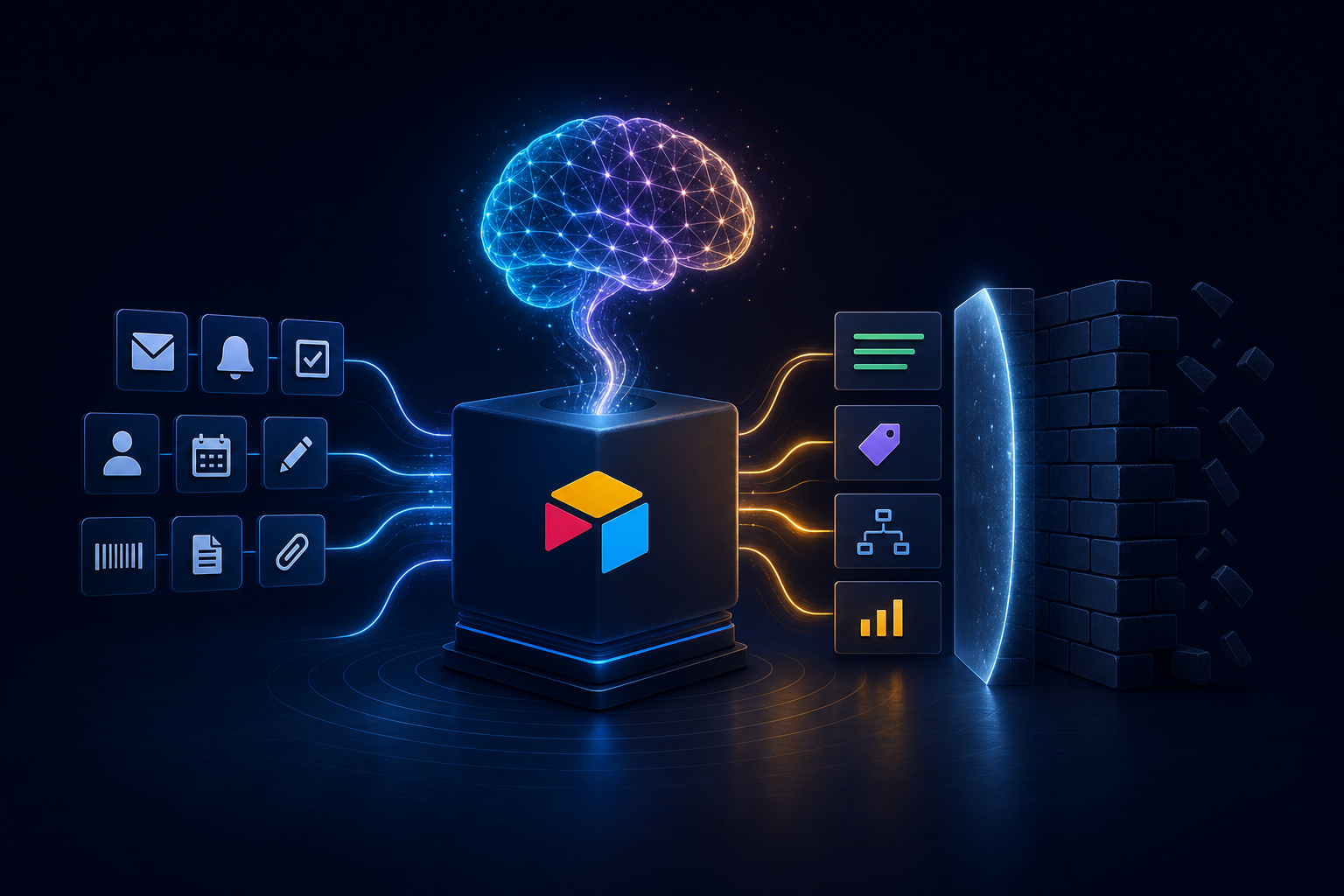
Airtable automation with AI can eliminate repetitive work — but it has real limits. Learn what's possible, where it breaks down, and how to plan around it.


