



ai-automation
Autonomous Workflows. AI That Runs Operations
Autonomous workflows allow AI to coordinate tasks, decisions, and actions across systems. This shift moves businesses from manual processes to intelligent, self-operating workflows.

Software teams in 2026 must operate as business strategists, not just code writers. Architecture and API decisions define long-term scalability and monetization flexibility. Strategy-first development reduces rework and increases competitive advantage.

Strategic alignment between engineering and leadership defines scalable architecture decisions.
Software development is no longer a technical execution function. It is a strategic capability that directly determines business viability.
For decades, organizations separated responsibilities cleanly. Business leaders defined strategy. Product managers translated strategy into requirements. Engineers implemented code. That division created clarity, but it also created misalignment.
In 2026, that separation is structurally inefficient.
Markets move faster. Distribution channels evolve quickly. Technology stacks compound constraints over time. Strategic mistakes made during architecture selection or API design can lock an organization into years of reduced optionality.
The teams outperforming competitors today operate differently. Developers, architects, and technical leads are not just implementers. They are business strategists embedded inside the execution engine.
This is not about turning engineers into MBAs. It is about recognizing that technical decisions are business decisions.
Code-first thinking is a development approach where implementation begins before strategic alignment is fully established.
It typically follows this pattern:
Requirements are drafted at a high level.
Development begins immediately.
Architecture and API contracts evolve during implementation.
Integration exposes inconsistencies.
Rework follows.
This model feels fast at the beginning. It creates visible momentum. Commits increase. Features appear.
However, the structural cost is high.
The IBM Systems Sciences Institute has long documented that defects discovered after implementation are significantly more expensive to fix than those caught during design, often several multiples higher depending on lifecycle stage. This principle is widely cited in software engineering economics and remains valid in modern agile environments.
When architecture evolves reactively instead of intentionally:
Backend and frontend teams interpret contracts differently.
Data models become inconsistent.
Scalability assumptions remain untested.
Technical debt accumulates invisibly.
The organization pays later for decisions made without strategic framing.
In 2026, that cost is magnified because platform decisions compound. Once a user base grows, architectural pivots become economically painful.
The macro shift in 2026 is this. Software architecture is no longer a technical blueprint. It is the operating model of the business.
Consider a multi-sided platform business. Its success depends on:
Matching supply and demand.
Enabling trust between participants.
Creating monetization without destroying value.
Scaling interactions efficiently.
These are not purely business concerns. They are architectural constraints.
The Platform Business Model Canvas provides a structured way to think about these constraints. It expands on the original Business Model Canvas framework developed by Alexander Osterwalder and Yves Pigneur, widely adopted in strategic planning and innovation management contexts.
The Business Model Canvas is documented extensively in academic and practitioner literature and remains a foundational tool in strategy design. Reference: Strategyzer. Business Model Canvas. https://www.strategyzer.com/library/business-model-canvas
The Platform Canvas extends that thinking to ecosystems, network effects, and interaction design.
When software teams use such frameworks before coding, they clarify:
Who the participant groups are.
How value flows between them.
What incentives drive adoption.
How monetization aligns with long-term retention.
This framing changes architecture decisions. Data models reflect participant roles. APIs reflect interaction logic. Scalability planning reflects network growth assumptions.
Without strategic framing, architecture becomes reactive.
When a software team thinks strategically first, the architecture reflects business intent from the beginning.
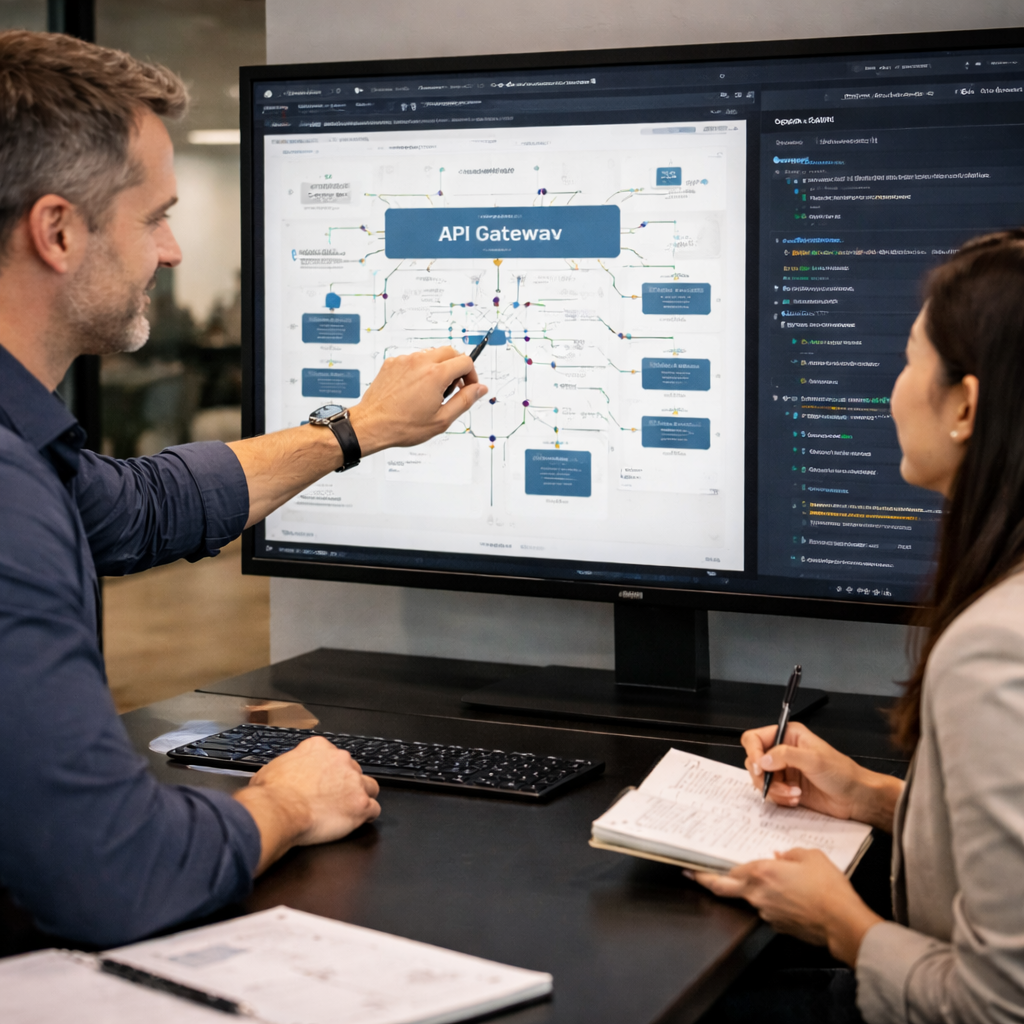
API design is a strategic decision, not just a technical implementation detail.
APIs define how systems communicate. They also define how partners integrate, how ecosystems expand, and how revenue channels open.
Organizations such as PayPal publicly described their API-first transformation strategy, emphasizing that APIs are treated as products with lifecycle management and governance standards. This shift improved reuse, consistency, and time-to-market for future initiatives.
Reference: PayPal Engineering Blog. API-first transformation case discussions. https://medium.com/paypal-engineering
When APIs are designed strategically:
Contracts are defined before implementation.
Parallel development becomes possible.
Reuse increases across initiatives.
Integration risk decreases.
If monetization depends on subscription tiers, the data model must support entitlements, segmentation, and billing orchestration.
If growth depends on network effects, the system must track relationship graphs, referrals, and engagement loops.
These are not post-launch concerns. They are core schema decisions.
If a company plans aggressive geographic expansion, infrastructure decisions must support localization, compliance, and regional latency.
If the model depends on B2B partnerships, APIs must be robust, documented, and version-controlled from day one.
Strategy-first thinking prevents expensive retrofits.
For SMB founders and startup executives, embedding strategic thinking into engineering workflows produces measurable operational changes.
When contracts and architecture are defined collaboratively before coding, integration surprises decrease.
Frontend and backend teams build against shared definitions. QA validates against agreed specifications. Product leaders avoid last-minute redesign cycles.
Engineers understand why a feature matters. Product leaders understand technical constraints. Business leaders understand architectural trade-offs.
This reduces adversarial dynamics where business pushes for speed and engineering pushes for stability.
When teams understand customer lifetime value, acquisition costs, and retention metrics, feature prioritization shifts.
Instead of shipping features based on internal enthusiasm, teams prioritize capabilities that:
Reduce churn.
Improve onboarding time to value.
Increase monetization efficiency.
Strengthen defensibility.
Velocity alone is insufficient.
Strategic teams track:
Retention cohorts.
Conversion rates.
API adoption.
Partner integration success.
Infrastructure cost per active user.
These metrics connect architecture to financial performance.

Network effects require deliberate architectural and business alignment from day one.
Consider a smart home platform evaluating expansion.
The executive team faced several decisions:
Subscription versus freemium monetization.
Hardware integration strategy.
Global versus regional focus.
Partnership model versus direct distribution.
Without strategic alignment, engineering might build:
Device-specific integrations without ecosystem thinking.
Monetization layers bolted on after launch.
Region-specific configurations without compliance foresight.
Instead, by mapping the business model explicitly, the team identified:
Consumer and producer segments.
Required interaction mechanisms.
Trust and certification requirements.
Monetization trade-offs.
Network growth triggers.
This strategic clarity led to prioritizing interoperability standards, partner APIs, and flexible monetization architecture.
The engineering roadmap reflected business intent from the beginning.
Embedding strategic thinking in software teams is not costless.
Design-first approaches require structured alignment sessions. Stakeholders must engage early.
However, research in software lifecycle economics consistently demonstrates that early defect prevention reduces downstream correction cost. The trade-off favors upfront investment when complexity is high.
Engineers trained in pure execution models may resist business discussions. Business leaders may undervalue architectural constraints.
Leadership must normalize cross-domain fluency.
Strategic alignment should not become analysis paralysis. Contracts must be sufficient, not exhaustive. Iteration remains necessary.
The objective is clarity, not rigidity.
The trajectory is clear.
AI-assisted development accelerates implementation speed. Low-code and visual tools reduce friction. Competitive cycles compress.
As execution speed increases, the relative importance of correct strategic decisions increases.
In fast-moving markets:
Architecture decisions lock in faster.
Distribution models determine survivability.
Network effects create winner-take-most dynamics.
Software teams that operate purely as code producers will be outrun by teams that operate as embedded strategy units.
Strategic literacy inside engineering will become a core competency.
Because technical decisions define scalability, monetization flexibility, and integration capabilities. Without business context, engineers may optimize locally while constraining global outcomes.
It may extend the planning phase slightly, but it reduces downstream rework. Over full lifecycle duration, it typically accelerates time-to-market for complex systems.
It clarifies value propositions, customer segments, revenue streams, and cost structures. This context informs API design, data models, and architectural decisions.
Yes. SMBs benefit disproportionately because they cannot afford large-scale rework. Early alignment reduces financial and operational risk.
Strategy evolves. The goal is not immutability but clarity. When assumptions are explicit, adjustments are deliberate rather than reactive.
In 2026, software teams are not implementation units. They are strategic instruments.
Architecture defines business optionality. APIs define ecosystem potential. Data models define monetization flexibility.
Organizations that embed strategic thinking inside engineering reduce rework, increase alignment, and build systems that scale with intent rather than accident.
The competitive advantage does not come from writing code faster. It comes from writing the right code in alignment with a durable strategy.
Your software team is not just your execution engine. It is your strategy engine.
If your organization is reassessing how engineering decisions align with business outcomes, schedule a 30-minute free strategic discovery call to evaluate your current development model and architectural alignment.
Book here:
https://app.iclosed.io/e/singularagency/schedule-a-discovery-call
AI tools assisted in drafting and structural refinement. Strategic interpretation and analytical framing were reviewed for executive clarity and accuracy.
Autonomous workflows allow AI to coordinate tasks, decisions, and actions across systems. This shift moves businesses from manual processes to intelligent, self-operating workflows.

Dashboards show what happened. AI operations systems decide and act on what should happen next. This shift is redefining how companies run their day to day operations.

Most companies operate across disconnected tools. AI automation engines like OpenClaw unify systems, workflows, and data into one operational layer, enabling real automation, faster execution, and better decisions.


