



General
What Is an Agentic Workflow? How AI Agents Replace Manual Process Steps
An agentic workflow lets AI agents plan and execute tasks without manual triggers. See how SMBs use them to replace repetitive process steps.

In modern software development, velocity has become a misleading success metric. Rigid agency models optimized for constant speed often force teams to burn capital when business reality requires validation, fundraising, or strategic pauses. A flexible agency model enables organizations to scale development velocity up or down without losing continuity, knowledge, or momentum, turning speed into a strategic asset rather than a fixed cost.
In the high-stakes arena of digital transformation, velocity has become a vanity metric. Startups and enterprise innovation labs obsess over sprint charts, burn rates, and feature throughput. The traditional agency model has evolved to serve this obsession, offering rigid contracts designed to keep development engines running at full speed regardless of road conditions.
The problem emerges when reality intervenes.
At Singular Innovation, we repeatedly observe a structural failure created by the flexible agency model being absent from most vendor relationships. Clients are contractually locked into high-burn development velocity even when their business context requires a strategic pause. User testing, fundraising, regulatory review, or market reassessment often demand time, not more features.
This is the Velocity Trap. Teams either keep building what may not be needed or sever the relationship entirely. Both outcomes destroy value.
True agility is not about moving fast at all costs. It is about changing speed deliberately without losing control.

A strategic pause does not mean stopping. It means preserving continuity while preparing to scale at the right moment.
Traditional agencies operate on incentive models tied to hours billed or scope delivered. Whether through Time and Materials or fixed bids, revenue depends on continuous utilization. This creates pressure to keep teams fully allocated even when the client no longer needs maximum output.
This rigidity is widely documented in agile procurement research from McKinsey, which highlights how inflexible vendor structures increase total cost of ownership through stop-start inefficiencies.
https://www.mckinsey.com/capabilities/operations/our-insights
The typical innovation lifecycle illustrates the flaw clearly:
The Sprint: Rapid development to launch an MVP development phase.
The Wall: Real-world usage exposes gaps, risks, and misalignment.
The Gap: Time is needed for feedback, validation, and decision-making.
In rigid contracts, the Gap becomes a crisis. Clients must choose between burning runway on unnecessary development or terminating the engagement. Termination destroys continuity, institutional knowledge, and increases future restart costs.

A strategic pause does not mean stopping. It means preserving continuity while preparing to scale at the right moment.
At Singular, we design partnerships to behave like transmission systems, not factories. Development velocity should shift smoothly based on business conditions.
Our subscription-based engagement model is designed to align not only with business objectives but also with business situations.
https://singular-design.webflow.io/
When speed matters, we scale up. When validation or fundraising takes priority, we scale down without breaking the relationship. This elastic capacity ensures clients never pay for velocity they cannot use and never lose the team that understands their product.
Unlike flat retainers, our engagement model mirrors the natural rhythm of product development.
High Velocity: Focused execution to ship the MVP.
Strategic Pause: Reduced capacity for testing, feedback, and planning.
Scale Up: Rapid re-acceleration once direction is validated.
This model underpins many of our real-world case studies, where continuity is preserved without forcing unnecessary spend.
https://singular-design.webflow.io/
A fintech client completed a three-month sprint to launch their MVP. Immediately after launch, the business reality shifted. They needed onboarding, investor demos, and validation data. Not new features.
Under a rigid contract, they would have wasted capital or fired the team that built their core IP.
Instead, they transitioned to a low-velocity subscription tier. This allowed them to retain the core engineers, maintain continuity for bug fixes and demos, and preserve runway during fundraising.
After two sprints, they scaled back to high velocity seamlessly. No re-onboarding. No knowledge loss. No friction.
This level of flexibility requires a relational mindset. Transactional models protect short-term margins. Relational models optimize for long-term outcomes.
This philosophy closely reflects the principles of the Agile Manifesto, which prioritizes customer collaboration over contract negotiation.
https://agilemanifesto.org/
Few agencies embed this principle into their billing structure. Singular does.

Rigid development velocity locks teams into waste, while operational flexibility allows capacity to adjust to real business conditions.
Research published by Harvard Business Review on team familiarity shows that stable teams outperform fragmented ones due to shared context and communication patterns.
https://hbr.org/
Breaking teams introduces a restart tax:
Context switching delays productivity.
Tacit architectural knowledge is lost.
Morale and accountability degrade.
By maintaining embedded development teams through flexible subscription tiers, this tax is eliminated. Teams stay warm, context is preserved, and acceleration is immediate when needed.
In volatile markets, adaptability is the only durable advantage. Your development partner should not anchor you to a fixed pace. They should adjust with you.
At Singular, we built our model around this belief. Whether navigating product-market fit or managing enterprise budget cycles, organizations need partners that move at the right speed, not just the fastest one.
If your development velocity feels expensive, inflexible, or misaligned with business reality, rigidity may be the real constraint.
Schedule a discovery call to assess whether a flexible engagement model can help you scale speed, pause strategically, and preserve momentum without burning capital.
This article was developed with the assistance of AI tools and reviewed by the Singular Innovation team for accuracy and context.
An agentic workflow lets AI agents plan and execute tasks without manual triggers. See how SMBs use them to replace repetitive process steps.
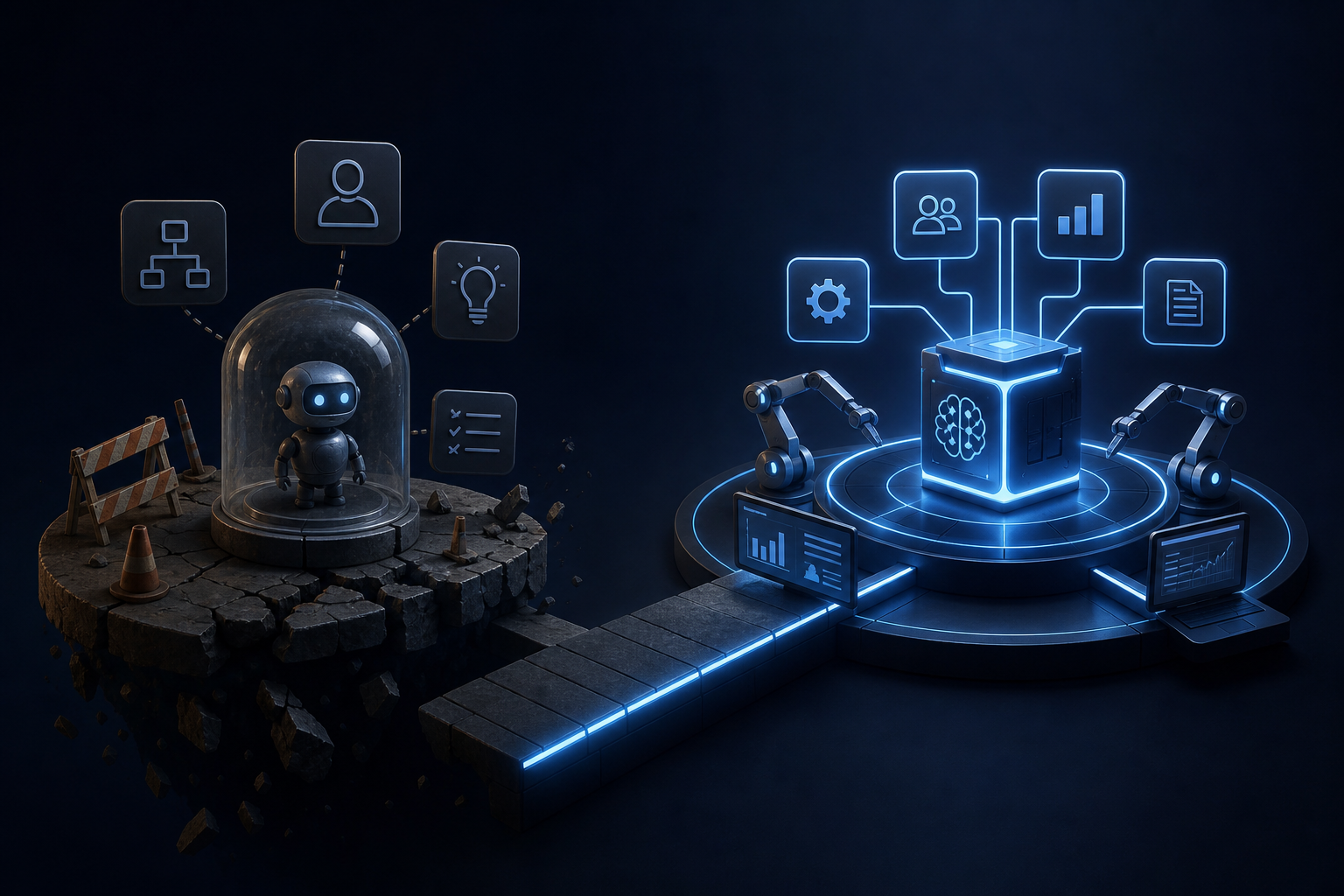
AI pilot program failure is almost always structural, not technical. Learn the four root causes and how embedded AI systems are built to avoid them.
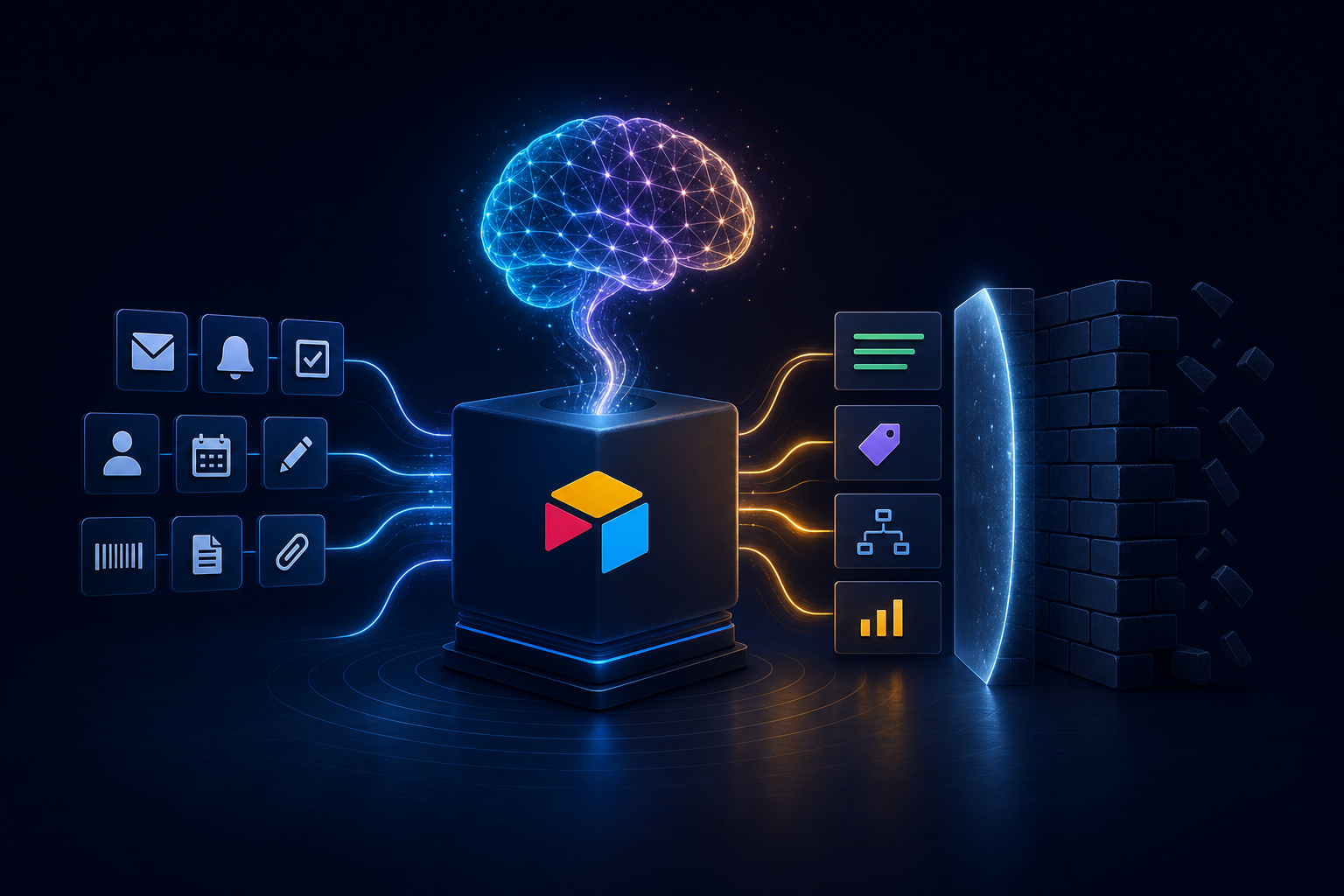
Airtable automation with AI can eliminate repetitive work — but it has real limits. Learn what's possible, where it breaks down, and how to plan around it.


