


ai-automation
Autonomous Workflows. AI That Runs Operations
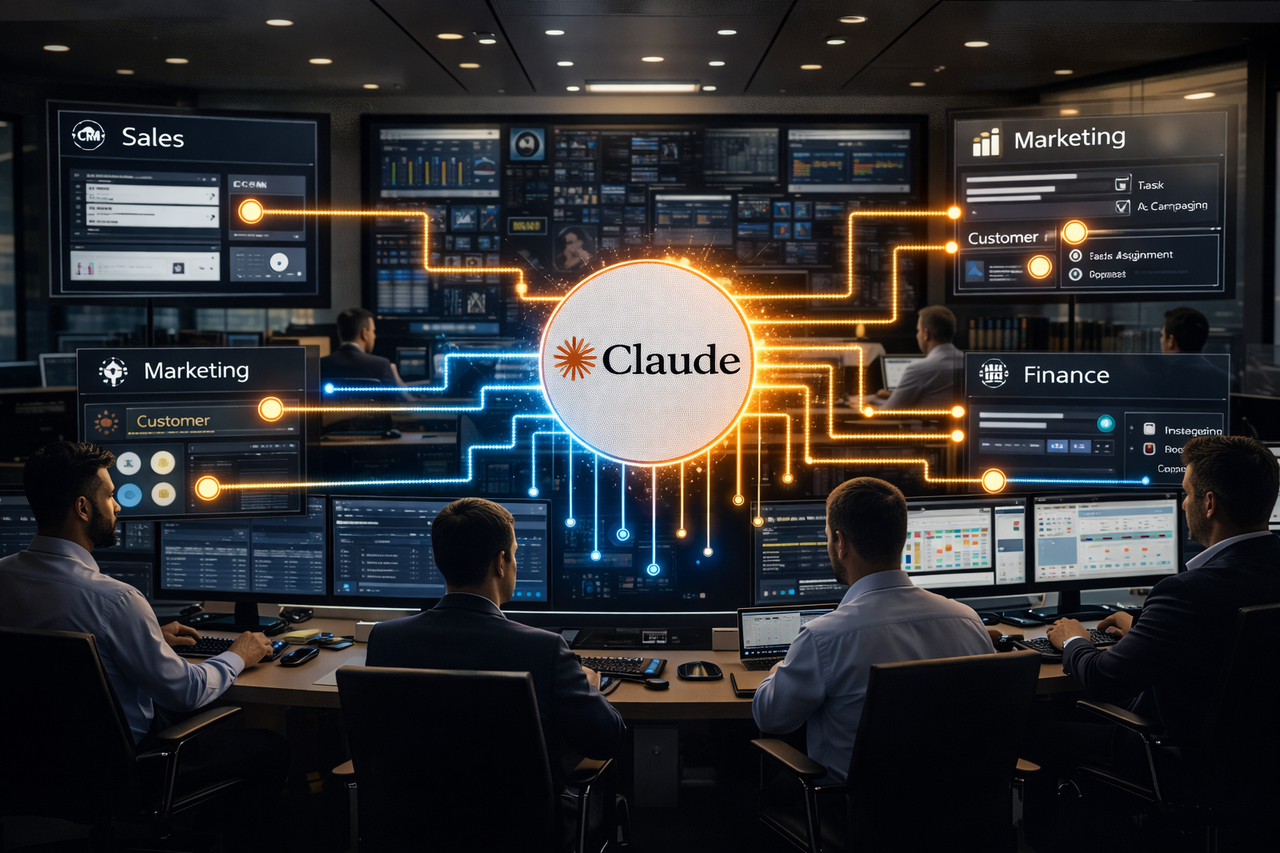
Autonomous workflows allow AI to coordinate tasks, decisions, and actions across systems. This shift moves businesses from manual processes to intelligent, self-operating workflows.
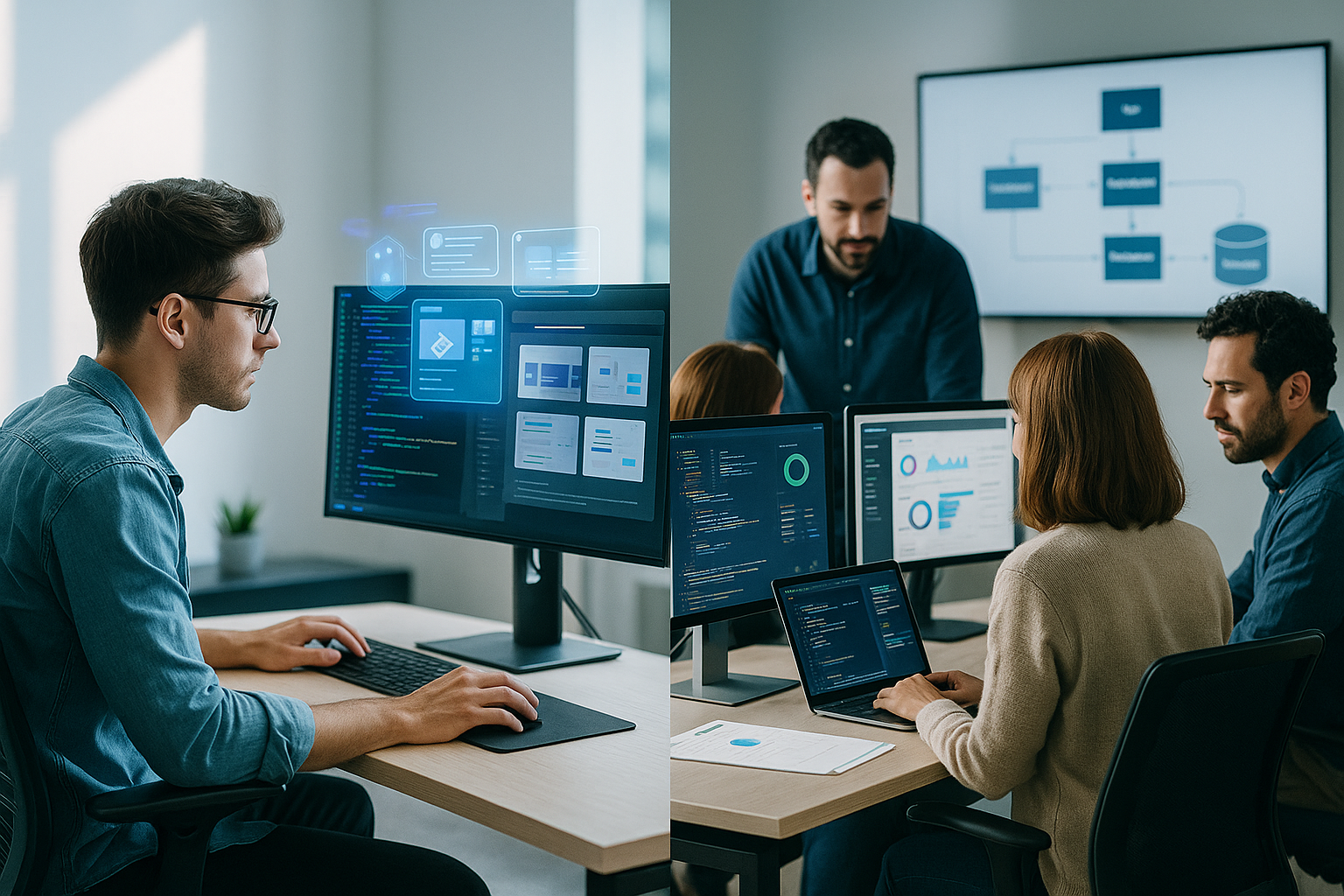
Vibe coding and software developer agencies represent two paths to building digital solutions. One empowers agility and experimentation; the other brings scalability and expertise. This article explores how both can coexist to drive sustainable growt
The world of software development is changing fast. Artificial Intelligence (AI), no-code tools, and automation are rewriting the rules of how businesses build digital products.
Among these changes, a new concept has emerged — vibe coding — a term introduced by Andrej Karpathy, co-founder of OpenAI, to describe a more intuitive and AI-assisted way of programming.
At the same time, software developer agencies remain essential for projects that require deep expertise, scalability, and long-term technical supervision.
The question is not which approach is better, but rather: which one fits your company’s current stage of growth?
Vibe coding is a modern approach where developers (or even non-developers) describe what they want in plain language — and AI tools like GPT, Claude, or Cursor generate functional code.
It’s a shift from “writing” code to “guiding” AI to build it. The focus moves from syntax to creativity, user experience, and speed.
Vibe coding thrives in early-stage environments — startups, small teams, or independent creators — where the goal is to test ideas quickly, validate markets, and move fast without long development cycles.
A software developer agency provides structured, professional development services through experienced engineers, designers, and project managers.
Agencies are ideal when your business moves from “testing” to “scaling.” They ensure reliability, security, and maintainability — elements often overlooked during rapid prototyping.
While vibe coding accelerates creation, agencies ensure sustainability. Both serve different but complementary roles in a company’s digital evolution.
Here’s a breakdown of vibe coding vs. developer agencies, not as competitors, but as partners in growth.
| Aspect | Vibe Coding | Software Developer Agency |
|---|---|---|
| Speed | Extremely fast for prototyping and testing ideas. | Slower due to process and QA, but stable and scalable. |
| Cost | Low initial cost (AI + no-code tools). | Higher investment due to professional teams. |
| Technical Expertise | Minimal technical knowledge required. | Deep technical, UX, and infrastructure expertise. |
| Scalability | Best for MVPs and small apps. | Ideal for enterprise-grade systems and multi-user apps. |
| Flexibility | High flexibility for experimentation. | Structured workflows ensure reliability and documentation. |
| Maintenance | Manual updates; depends on user ability. | Continuous maintenance and improvement from experts. |
| AI Integration | Core principle (AI-assisted development). | Strategic use of AI in automation, testing, or analytics. |
| Best Use Case | Idea validation, early-stage products. | Scaling, optimization, and complex integrations. |
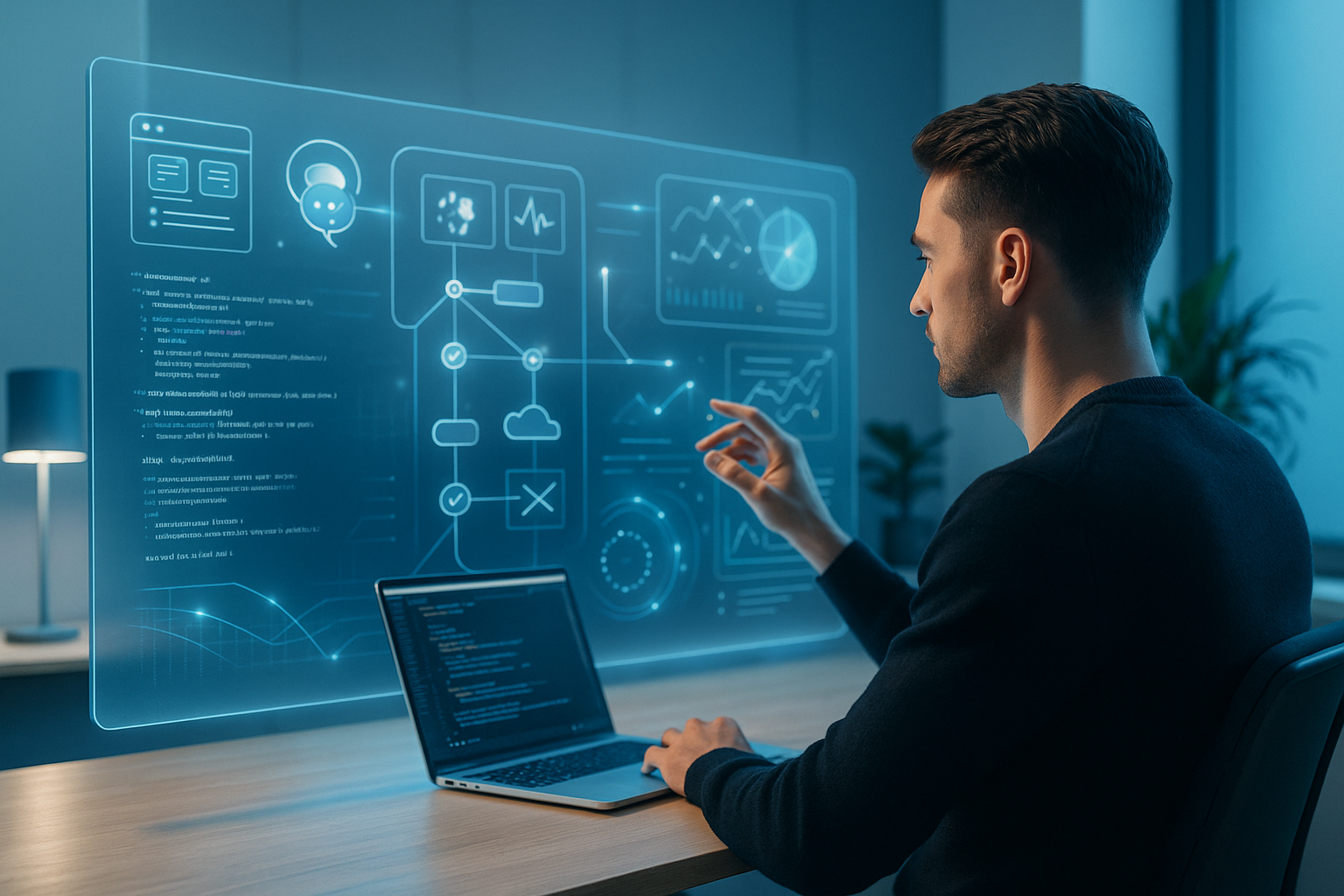
At Singular Innovation, we view vibe coding as a revolution in creativity and accessibility.
Using platforms like Cursor, GPT-4, Replit, and Vercel v0, businesses can now ideate, prototype, and deploy with unprecedented speed.
This approach works best when:
A marketing startup wants to test a campaign automation app.
Using vibe coding, they describe the desired features to GPT-based tools and generate a working prototype within days — no large technical team required.
This stage is about learning, adapting, and building momentum — not perfection.

Once your product gains traction, users, or investment, the needs change.
Suddenly, you require security, performance, and scalability — the hallmarks of a software agency.
A professional agency ensures that your fast prototype transforms into a robust, compliant, and long-term asset.
At this point, the challenges include:
After validating its prototype through vibe coding, the same startup partners with a software agency to:
The result? A scalable, production-ready application that maintains startup agility but meets enterprise standards.
The best question isn’t “Which one is better?”
It’s “When should I use each?”
Vibe coding and software agencies are not competitors — they’re complements in a smart digital strategy.
Combining both allows businesses to move fast early and build reliably later — aligning perfectly with agile, AI-assisted growth models like those we implement at Singular Innovation.
Many startups fall into one of two traps:
The key is recognizing when your priorities shift:
From “building quickly” to “building sustainably.”
This transition marks the moment when expert collaboration becomes not a cost — but a multiplier of growth.
At Singular Innovation, we merge the agility of vibe coding with the depth of professional software development.
Our team integrates AI-driven prototyping and agency-level architecture, creating a hybrid framework that accelerates innovation without compromising quality.
We use:
This model empowers clients to scale their ideas from MVP to enterprise solutions with the same partner — eliminating handoff friction between early experimentation and professional delivery.
The businesses that win are those that combine speed, innovation, and reliability.
That’s why forward-thinking SMBs and startups don’t choose between vibe coding and developer agencies — they integrate both.
At Singular, we call this Agile Intelligence: the balance between human creativity and AI precision, delivered through strategic collaboration.
The future of digital development is hybrid.
Vibe coding democratizes creation, while agencies professionalize scale.
When used together, they create a sustainable, AI-powered ecosystem for innovation.
If you’re an SMB or startup looking to combine agility with expertise, it’s not a matter of “which is best.”
It’s about choosing when to evolve and who to partner with to make that evolution sustainable.
Ready to take your next step?
Join our AI-Driven Development Webinar and see how Singular Innovation combines vibe coding and expert software architecture to help startups grow faster and smarter.
👉 Schedule a 30 min free call or explore our AI Development Solutions.
This article was developed with the assistance of AI tools and reviewed by the Singular Innovation team for accuracy and context.
Autonomous workflows allow AI to coordinate tasks, decisions, and actions across systems. This shift moves businesses from manual processes to intelligent, self-operating workflows.
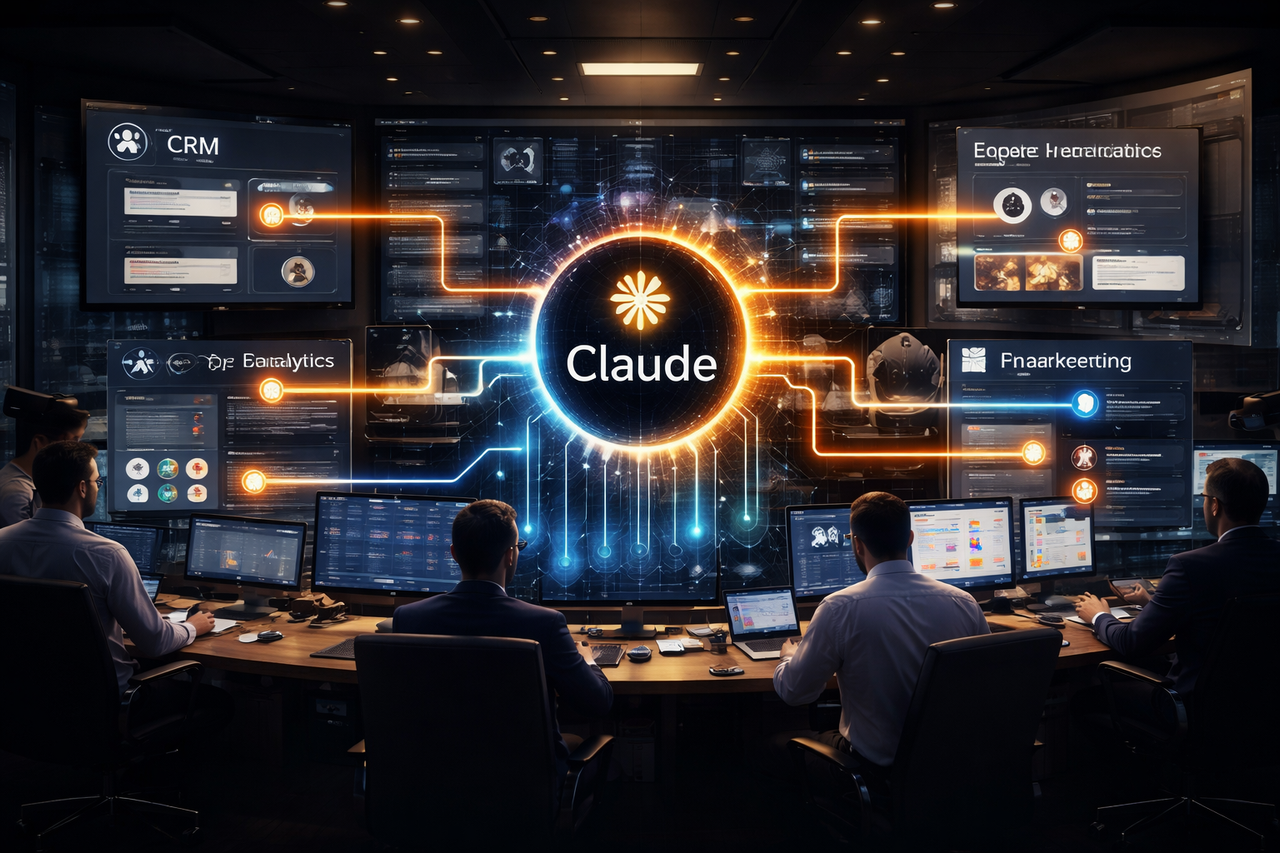
Dashboards show what happened. AI operations systems decide and act on what should happen next. This shift is redefining how companies run their day to day operations.

LLMs are powerful, but prompts alone do not create business impact. Real value comes from embedding LLMs into workflows that connect data, decisions, and actions across systems.


