General
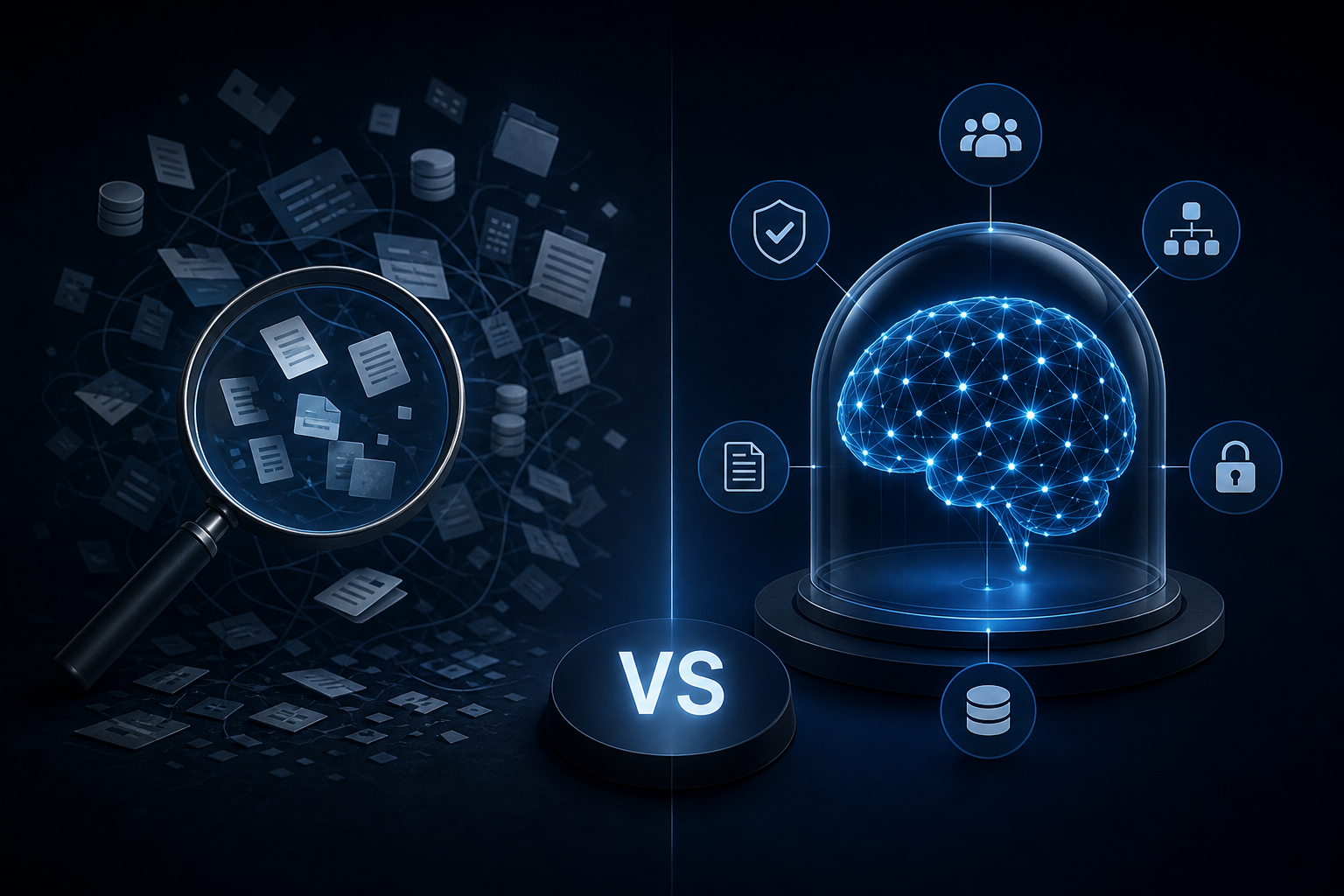
Enterprise AI Search vs. a Governed Company Brain: Key Differences
Discover how enterprise ai search differs from a governed company brain and which knowledge approach your team actually needs to act on trusted data.
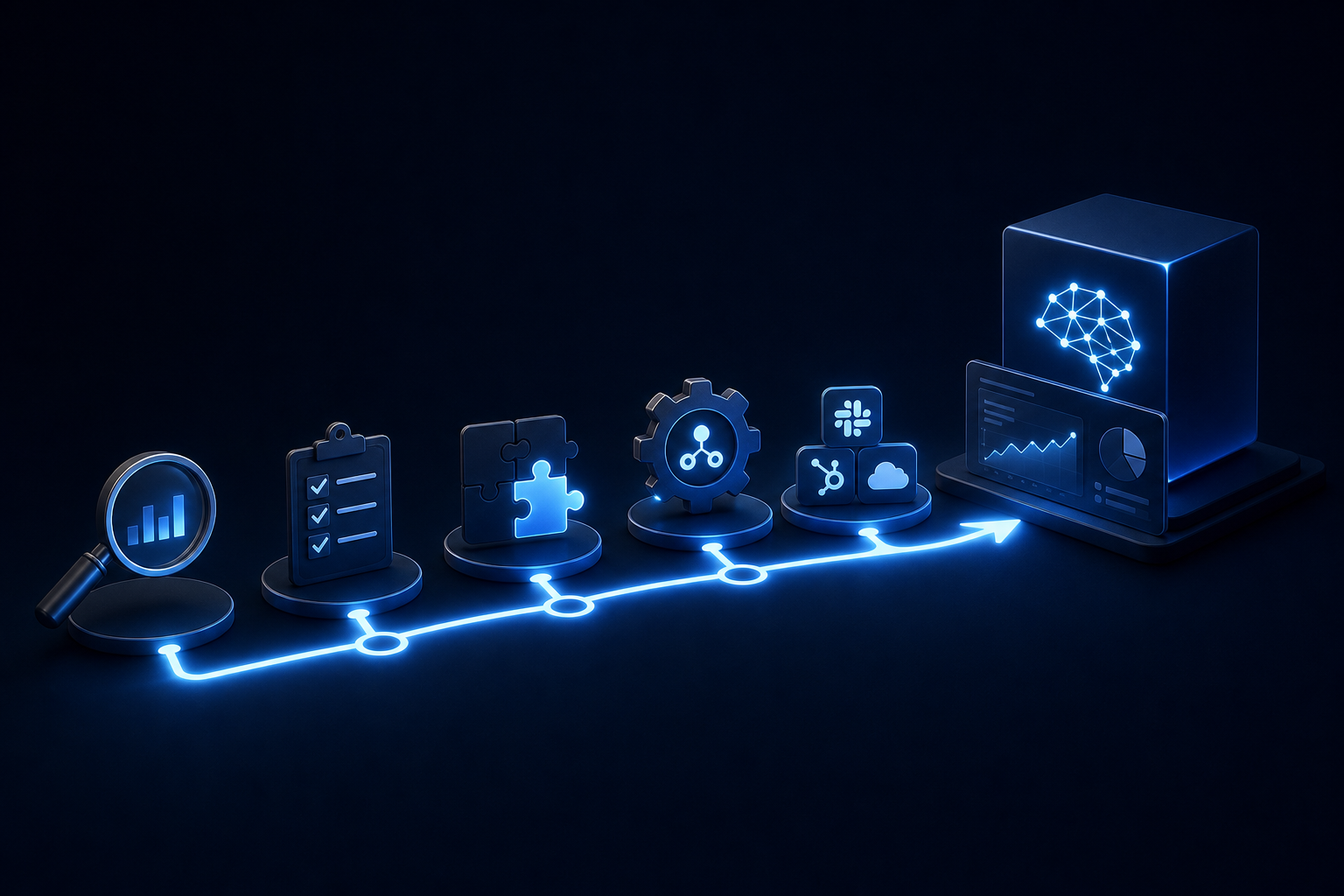
Hire an AI agency and know exactly what to expect — from the pre-work audit through a live system in week two and beyond.
You finally decide to hire an AI agency. A competitor automated their weekly reporting, your ops lead just quit and took three critical manual processes with them, and you're done waiting. The problem is that every agency you talk to shows up with a slide deck, a discovery framework, and a 90-day roadmap that somehow never produces anything you can actually run.
This is a plain-language guide to what a real engagement looks like when you hire an AI agency — week by week, from the first call to a working system inside your existing tools.
A good agency doesn't start building until it understands what you already have. That means a structured review of your current tool stack, your data sources, and the workflows that eat the most time.
At Singular Innovation, this is a free AI Readiness Audit. It maps what you're running, where your data lives, and where an AI system would pay off first. You walk away with a prioritized list of opportunities before any money changes hands.
What to expect from this stage at any agency:
If an agency skips this and jumps straight to a proposal, that's a warning sign. They're scoping based on assumptions, not your actual stack.
Once scope is aligned, week one is about getting into the specifics. This isn't a kickoff call where someone takes notes — it's active technical discovery.
The agency should be reading your Slack channels, reviewing your Airtable bases, pulling sample data from your CRM, and mapping how information actually moves through your business. Not how you think it moves. How it actually moves.
By the end of week one, you should have:
This is also when governance gets defined. Role-based permissions, approved data sources, retrieval scopes, and audit log requirements should be settled in week one — not bolted on later. If the agency treats governance as an afterthought, the system you receive will have gaps that create real risk as it scales.
This is where most agencies fail the test. Week two should produce something that actually runs — not a prototype, not a mockup, not a staging environment demo.
A scoped first capability might be a daily executive briefing that pulls from Slack, HubSpot, and your CRM and lands in your inbox every morning before 8 AM. It might be an automated reporting workflow that generates a dashboard from QuickBooks and Airtable without anyone touching a spreadsheet. It might be inbox triage that categorizes and routes incoming requests based on rules you define.
The specific deliverable depends on what you agreed in week one. The point is that it runs on a schedule and works inside tools you already own. No new software licenses. No new logins. No replacing the systems your team already knows.
Singular's 10 business day delivery commitment is exactly this: a working first AI capability with a defined owner, scope, and delivery date. It's not a full system deployment — any agency promising complete multi-agent infrastructure in two weeks is overselling. A scoped, working first capability in 10 business days is the right bar.
This matters more than most buyers realize. When the first capability is delivered, everything built belongs to you — workflows, prompts, automations, code, documentation. All of it, from day one.
That's not standard practice. Many agencies deliver code only they can maintain, or lock you into a SaaS platform where you pay monthly and own nothing. Full client ownership from the start eliminates that dependency entirely.
With one working capability running, the next phase is connecting more of your stack and deploying additional AI workers.
This is where a governed context layer becomes the foundation. Rather than building isolated automations that break when data changes, the right approach is a unified intelligence layer that indexes your tools into one searchable source of truth — the operating system your AI workers run on top of.
As more data sources connect, the AI workers get more useful. A HyperAgent generating your weekly operations report becomes significantly more accurate when it can pull from Slack, HubSpot, QuickBooks, and your project management tool simultaneously rather than from any single source.
By the end of week four, a well-run engagement typically has:
The team is no longer manually assembling reports or hunting across tools for context. That work is happening automatically, on schedule, without anyone initiating it.
The first month delivers the foundation. Month two is about tuning what's running and expanding to the next highest-value workflows.
This phase looks different for every company. A 40-person operations team might add task coordination across departments. A founder might add a weekly competitive intelligence brief. A COO might add automated pipeline reporting that replaces a standing Monday meeting.
What shouldn't change is ownership. Every new workflow, prompt, and automation you add should still belong to you — transferable to a new ops hire, a different agency, or an internal developer without starting over.
A few signals tell you whether the engagement is on track:
The system runs without prompting. If your team is still manually triggering AI outputs, the recurring task architecture wasn't built correctly. Scheduled execution means the work happens whether or not anyone remembers to ask.
Outputs are accurate enough to act on. Early outputs often need tuning. By week six or seven, the briefings, reports, and dashboards should be reliable enough that your team trusts them without cross-checking the source data every time.
Your team owns it. By the end of month two, someone on your team should be able to explain how each workflow runs, modify a prompt, and add a new data source without calling the agency. If you still need the agency to make every change, the handoff was incomplete.
Most AI agency engagements fail for one of three reasons.
The agency builds for the demo, not for daily use. A system that impresses in a presentation but requires manual babysitting to run is not a working system.
The agency delivers a strategy instead of a build. You don't need another framework document. You need something that executes on a schedule and saves your team real hours.
The agency retains ownership. If you can't access, modify, or transfer your own workflows, you're renting infrastructure rather than building it — and that dependency compounds over time.
The week-by-week structure described here is what a real engagement looks like when the agency is building for you, not for themselves.
When comparing options, these are the questions that separate agencies that deliver from those that present:
If an agency can't answer these with specifics, they're selling a process, not a product.
Pricing depends on scope — book a call to get a number that reflects your actual situation. If you want to understand what your stack looks like before committing to anything, the free AI Readiness Audit at Singular Innovation is the right place to start.
How long does it take to see a working output when you hire an AI agency? A scoped first capability — a daily executive briefing, an automated reporting workflow — should be running within 10 business days of a defined scope and start date. Full system deployments covering multiple AI workers and data sources typically take four to eight weeks depending on the complexity of your stack.
Do I need to replace my existing tools to work with an AI agency? No. A well-structured engagement connects the tools you already use — Slack, HubSpot, QuickBooks, Airtable, CRMs — without requiring new software licenses or replacing existing systems. The AI layer runs on top of what you have.
Who owns the workflows and automations after the engagement ends? You should own everything: workflows, prompts, automations, code, and documentation. Ownership should begin on day one, not at the end of a contract. If an agency retains ownership or requires ongoing access to run your system, that's a dependency worth avoiding.
What is a reasonable budget for an AI agency engagement? Pricing depends on scope. Book a strategy call to get a number that reflects your actual situation.
What is a Company Brain and why does it matter? A Company Brain is a governed context layer that indexes and unifies data from your existing tools into one searchable source of truth. It's the foundation that AI workers run on top of. Without it, automations operate in silos and break when data changes. With it, every AI worker has accurate, role-appropriate context regardless of which tool the data originally lived in.
What are HyperAgents and how are they different from Zapier automations? HyperAgents are custom AI workers that execute recurring tasks on a defined schedule — generating daily executive briefings, producing dashboards, coordinating tasks across tools. They run proactively without anyone initiating them. Zapier automations are trigger-based and hand the configuration work back to your team. The key difference is that an agency builds and deploys HyperAgents for you; Zapier doesn't.
How do I know if my company is ready to hire an AI agency? The clearest signals are recurring workflows that eat significant team hours, data spread across disconnected tools, and manual reporting processes that run on a schedule. If your team spends meaningful time each week assembling information that already exists somewhere in your stack, you're ready. A free AI Readiness Audit is a practical way to confirm this before committing to a full engagement.
Ready to see what your stack could do with a working AI system inside it? Book your free 20-minute AI Audit at singular-innovation.com and walk away with a clear picture of where to start.
Discover how enterprise ai search differs from a governed company brain and which knowledge approach your team actually needs to act on trusted data.
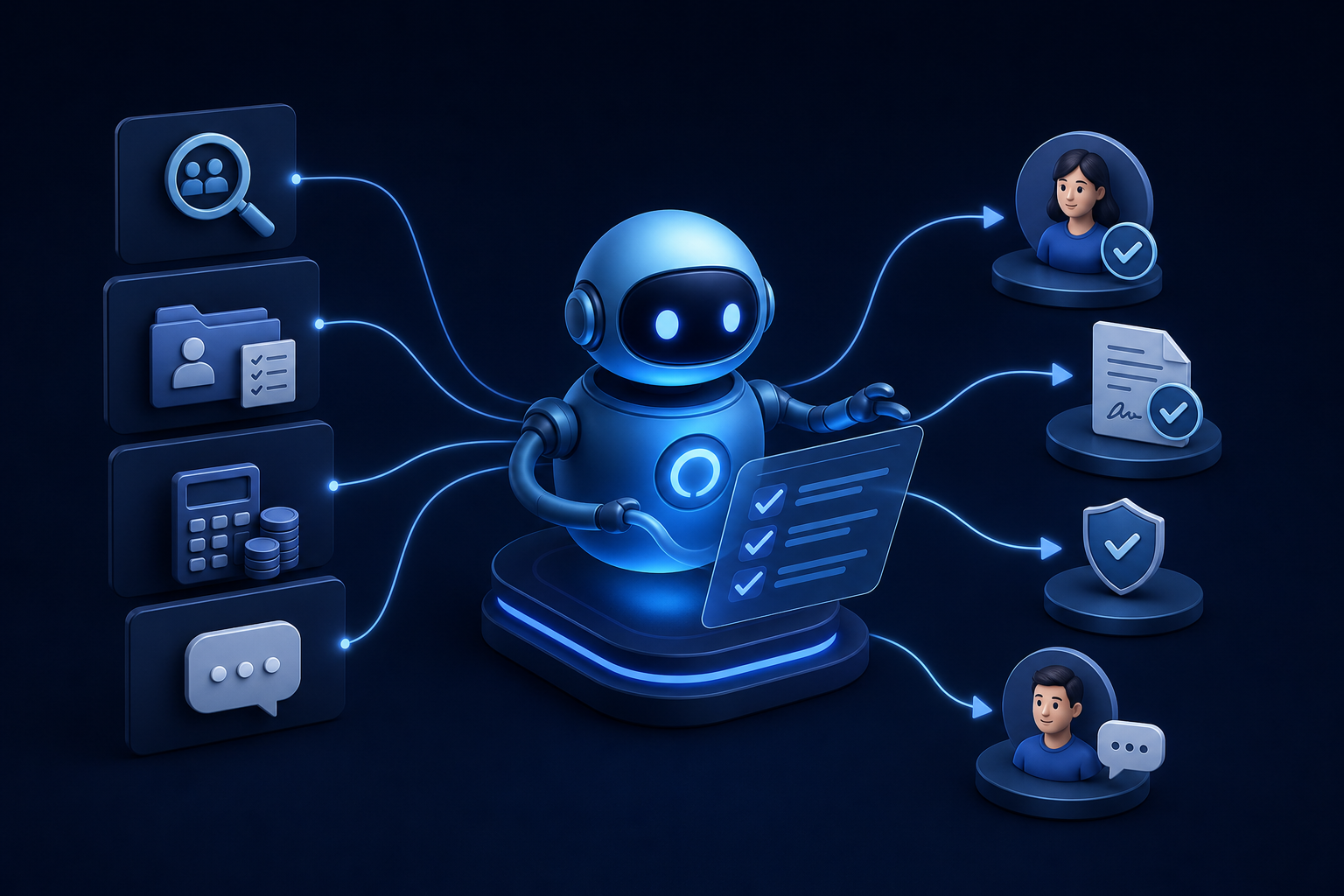
Discover how ai for hr automation handles recruiting, onboarding, payroll checks, and employee Q&A so your team can focus on work that matters.
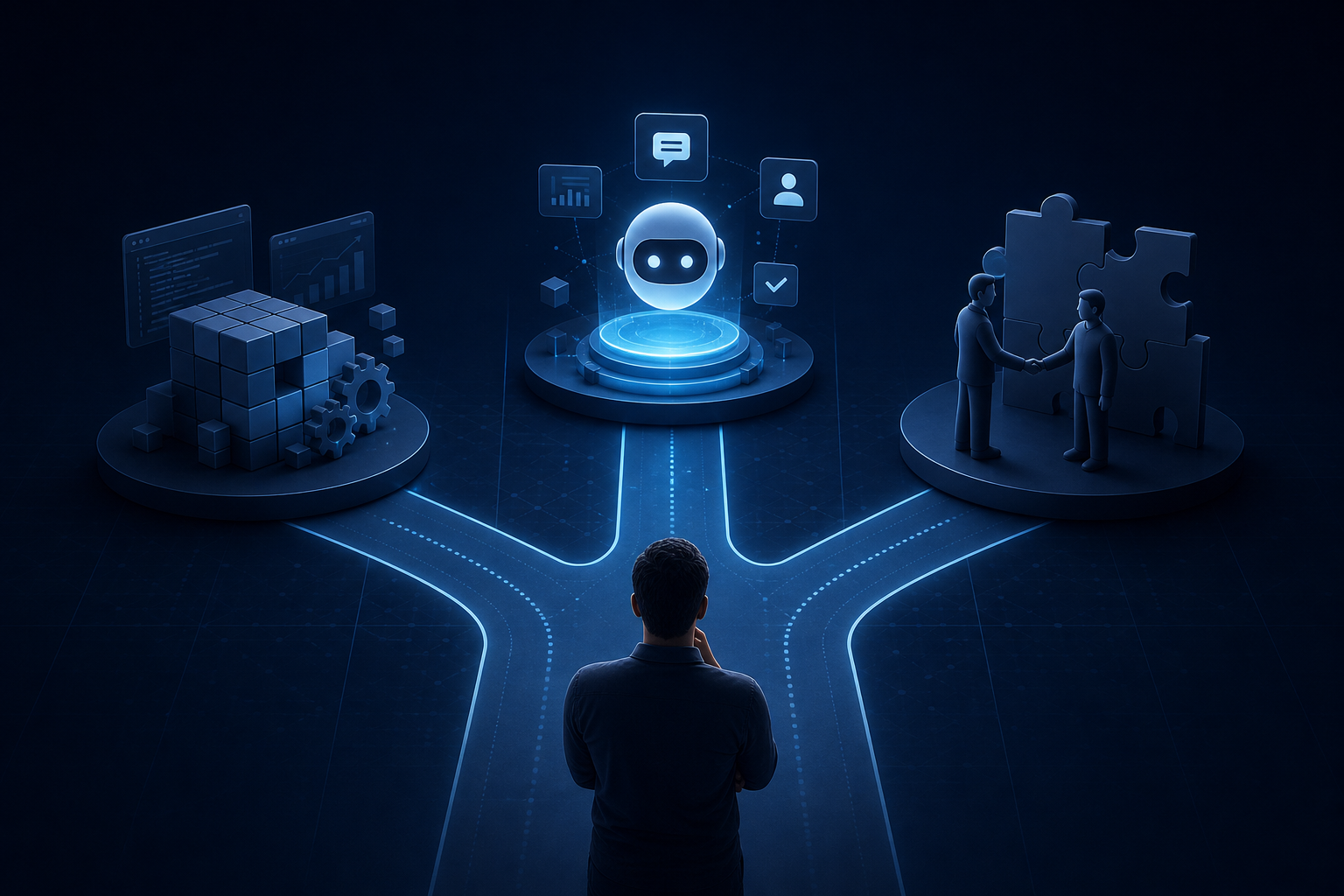
Explore custom ai agent development paths: build in-house, buy pre-built, or partner with a specialist. Find the right fit for your team today.


