



ai-automation
Autonomous Workflows. AI That Runs Operations
Autonomous workflows allow AI to coordinate tasks, decisions, and actions across systems. This shift moves businesses from manual processes to intelligent, self-operating workflows.

Discover how SMEs can overcome AI adoption challenges through data readiness, clear guardrails, team training, and real use cases. Includes insights, stats, and a case study from Pioneering Collective to turn AI strategy into measurable impact.
AI adoption isn’t about chasing the latest tool. It’s about making your workflows smarter, safer, and faster — so people actually use it and leaders see measurable results.
This guide breaks down six practical steps to help small and medium-sized enterprises (SMEs) adopt AI successfully: from cleaning data and setting guardrails to upskilling your team and tracking ROI.
AI is everywhere — in productivity tools, customer support, and analytics dashboards — yet turning pilot projects into measurable business value often feels harder than it should.
The problem isn’t enthusiasm — it’s execution. Many organizations start with promise but get stuck translating early demos into everyday results. The gap between what AI can do and what teams actually use is where most adoption efforts stall.
When AI adoption works, it’s obvious:
✅ Costs drop because repetitive work disappears.
✅ Cycles shorten because decisions move faster.
✅ Users — both employees and customers — are happier because tools feel smarter and more human.
But if no one uses it, it isn’t useful.
That’s why every successful adoption story starts not with algorithms, but with trust, simplicity, and clear wins that people can feel in their day-to-day work.
| Industry | Adoption Rate | Growth YoY |
|---|---|---|
| Finance | 85% | +18% |
| Healthcare | 78% | +24% |
| Manufacturing | 72% | +31% |
| Transportation | 68% | +37% |
| Retail | 65% | +29% |
Sources: McKinsey Global Institute – “The State of AI in 2024”; Gartner Research – “AI Adoption Trends 2024”; PwC Global AI Study – “Sizing the Prize: What’s the Real Value of AI for Your Business?”
These numbers show a clear trend — AI isn’t a future concept; it’s a present reality. Adoption rates are rising across industries, and the biggest gains are coming from companies that focus on practical integration, user trust, and measurable outcomes.
Despite the progress, many Americans remain uneasy about where AI is heading.
Recent surveys show that 36% of Americans feel worried AI could one day pose serious risks to humanity. Among those more familiar with the technology, that concern jumps to 49%.
This tension reveals something important: AI adoption isn’t just a technical journey — it’s an emotional one.
People don’t resist automation; they resist uncertainty.
When organizations explain how AI is used, set clear guardrails, and show tangible benefits, skepticism turns into support.
The takeaway is simple:
People don’t fear what they understand — they fear what feels invisible.
The best AI adoption strategies make AI visible, explainable, and accountable.
Many small and medium-sized enterprises (SMEs) share the same hurdles when trying to bring AI into daily operations. The good news? Each one has a practical fix.
People don’t adopt what they don’t understand. When employees aren’t given proper onboarding or role-based training, AI stays theoretical — something “IT is testing,” not something they use.
Start by building short, contextual playbooks: how AI supports their job, not the company in general. Pair this with hands-on sessions and ongoing Q&A channels. Confidence drives usage, and usage drives results.
It’s natural for employees to feel uneasy about new tools — especially if they worry about being replaced or overwhelmed. Resistance isn’t about technology; it’s about trust.
Leaders should focus on transparent communication: explain the “why,” show early wins, and invite team input on where AI fits best. When employees see AI as a co-pilot rather than a threat, resistance turns into curiosity.
Even the best model fails if the interface frustrates users. Clunky dashboards, confusing prompts, and poor response times kill momentum.
Focus on ease of use and familiarity. Integrate AI features into tools your team already uses — CRM, chat, spreadsheets — and simplify interfaces. A frictionless user experience makes adoption feel natural, not forced.
When teams aren’t sure what AI is doing or why it matters, enthusiasm fades fast. Silence breeds confusion; communication builds clarity.
Keep people informed about your AI roadmap: what’s being tested, where guardrails are in place, and what success looks like. Use internal demos, town halls, and short wins to make AI visible — not mysterious. Awareness drives adoption.
One-size-fits-all rarely works in AI. A rigid “toolkit” might look efficient on paper, but every department has different needs and workflows.
Instead, build customizable frameworks. Give teams the freedom to adapt AI capabilities — prompts, templates, or connectors — to their daily operations. This user-centric flexibility ensures AI feels like an assistant, not another rulebook.
When employees see AI improving their specific challenges, adoption moves from “optional” to “obvious.”
Overcoming adoption barriers doesn’t require reinventing the wheel — it requires a structured, step-by-step approach.
The good news: you don’t need a massive AI lab or a team of data scientists to make real progress.
Below is a practical framework used by growing SMEs to move from pilot projects to everyday, measurable impact with AI.
Before you can trust AI, you need to trust your data. Start by cleaning inputs, documenting lineage, and mapping access by role.
If internal data is thin, supplement with curated external sources — but keep strict quality checks in place.
Why it matters: Poor data equals poor decisions. Strong data equals reliable AI.
Move from stuck to unstoppable with smart governance.
Set clear policies on where AI can be used, who approves models, and how risk is managed. Guardrails don’t slow innovation — they make it safe to scale.
Pro tip: Keep oversight lightweight and transparent. The more visible your checks, the more users will trust the system.
Integration decides whether AI becomes a pilot or part of daily work.
Map your current architecture, identify where outputs should land, and use tools with native connectors for CRM, ERP, or HR platforms.
Why it matters: Seamless integration means faster rollout, cleaner data flow, and happier users.
Technology doesn’t adopt itself. People do.
Upskill employees with role-based training and give managers clear playbooks to connect AI to their goals. Encourage safe experimentation — not perfection.
Remember: Confidence builds adoption faster than pressure ever could.
Pick use cases that solve visible pain points and deliver fast results.
Whether it’s drafting sales emails, automating reports, or summarizing customer feedback, early wins build momentum.
Example: A 70% faster reporting cycle shows immediate value — and earns leadership buy-in for scaling.
What gets measured gets improved.
Track the metrics that matter: accuracy, time saved, revenue impact, or customer satisfaction. Run small pilots tied to KPIs, share wins publicly, and model the cost of inaction.
Pro tip: The clearer your proof of value, the easier it is to secure buy-in for the next phase.
Once these six steps are in motion, AI adoption stops being a technical project and becomes a competitive edge. You’ll move faster, reduce errors, and empower teams to focus on higher-value work.
When we partnered with Pioneering Collective, their challenge was familiar: too many disconnected workflows and not enough time for strategic work.
We started with small, targeted use cases — automating content summaries, client prep reports, and performance insights. Within weeks, teams were saving hours per week, and AI became part of daily operations rather than a distant experiment.
What made it work wasn’t just technology — it was structure:
✅ Clear data guardrails
✅ Real training for each role
✅ Simple tools integrated into existing systems
✅ Fast feedback loops that refined results
Today, AI supports their content, workflow, and client delivery — proof that measured adoption creates sustainable results.
AI adoption doesn’t have to be overwhelming — it has to be intentional.
With the right foundation, guardrails, and upskilling, small and medium-sized enterprises can achieve real ROI without losing human touch.
At Singular, we help teams move from curiosity to capability.
Our consultants specialize in guiding SMEs through the full AI adoption lifecycle — from identifying the right use cases to integrating tools and measuring impact.
👉 Book a free 30-minute consultation to explore your use cases and build a clear roadmap for adoption that actually sticks.
Let’s turn your AI strategy into measurable success.
This article was developed with the assistance of AI tools and reviewed by the Singular Innovation team for accuracy and context.
Autonomous workflows allow AI to coordinate tasks, decisions, and actions across systems. This shift moves businesses from manual processes to intelligent, self-operating workflows.

Dashboards show what happened. AI operations systems decide and act on what should happen next. This shift is redefining how companies run their day to day operations.
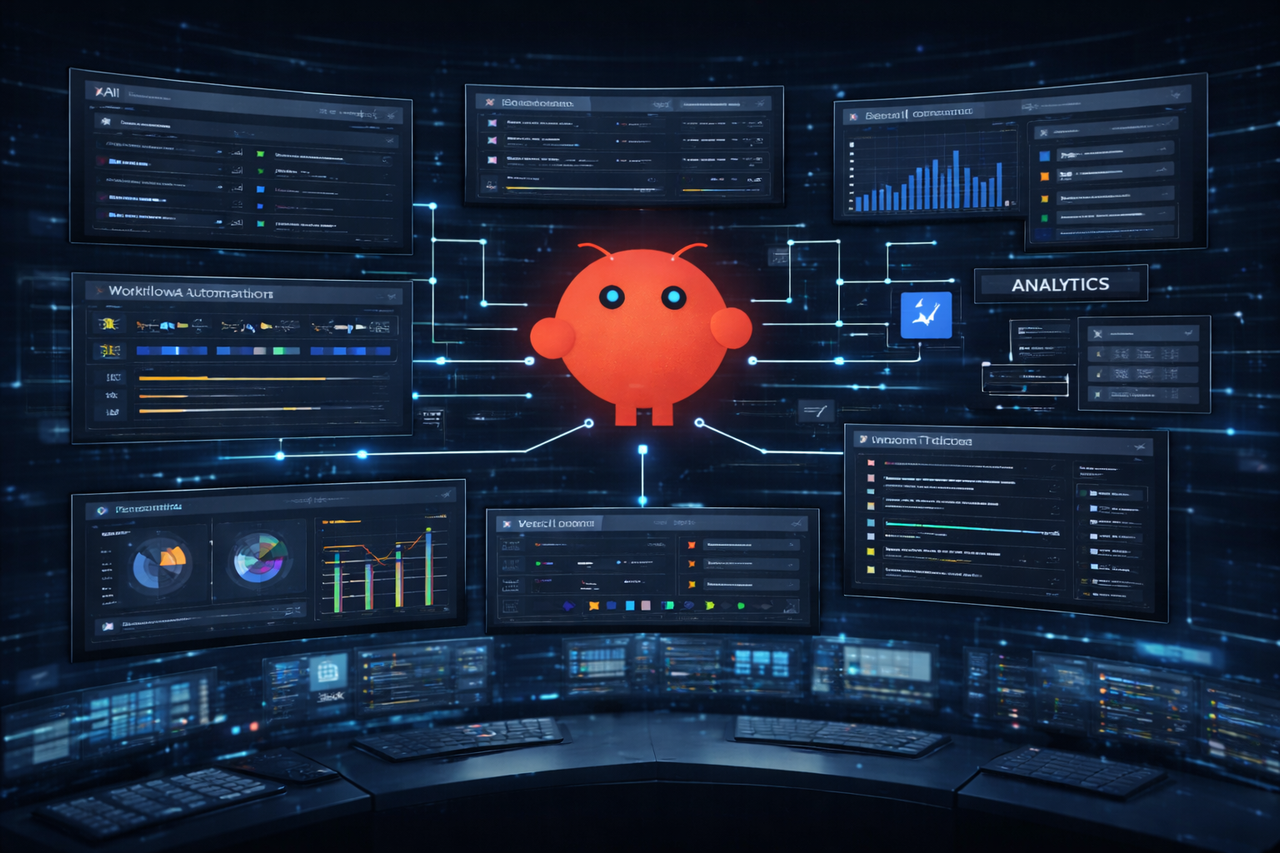
Most companies operate across disconnected tools. AI automation engines like OpenClaw unify systems, workflows, and data into one operational layer, enabling real automation, faster execution, and better decisions.


