



ai-automation
Autonomous Workflows. AI That Runs Operations
Autonomous workflows allow AI to coordinate tasks, decisions, and actions across systems. This shift moves businesses from manual processes to intelligent, self-operating workflows.
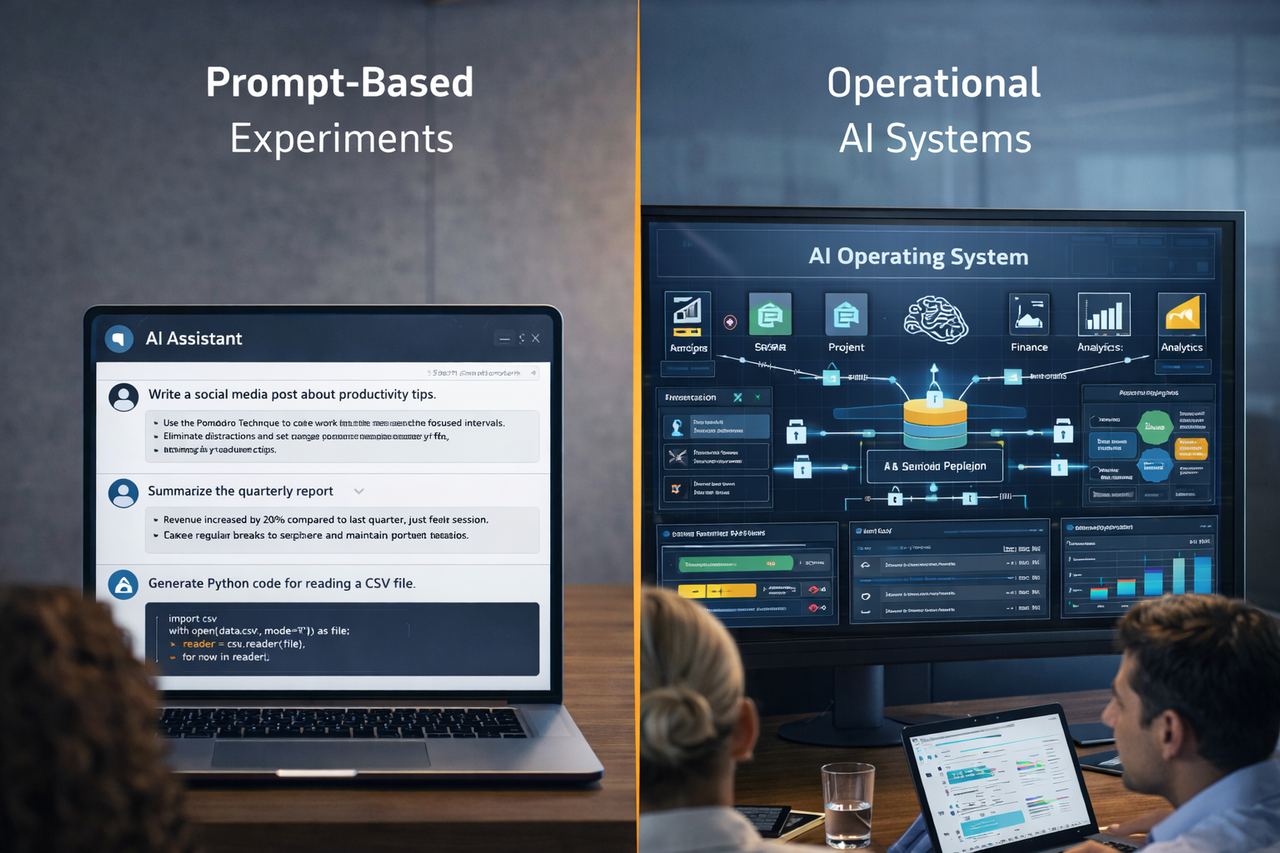
An AI operating system for business connects apps, data, and workflows into a unified operational layer. SMBs are using platforms like Airtable Omni to build intelligent systems that automate decisions and coordinate operations across their digital stack.
For decades, businesses have relied on software tools that operate independently.
A CRM manages sales activity. Accounting platforms track financial records. Project management tools coordinate teams. Marketing software handles campaigns. Each system performs its function, but they rarely operate as a unified operational environment.
This fragmented architecture creates a hidden operational cost.
Teams spend significant time switching between tools, reconciling data across platforms, and manually coordinating workflows that software systems cannot manage on their own.
Artificial intelligence is now forcing companies to rethink this model.
Instead of adding AI features to individual tools, a new architectural concept is emerging. Organizations are beginning to build AI-augmented operating systems for business.
In this model, AI acts as a coordination layer that connects applications, data sources, and workflows into a unified operational environment.
Rather than relying on disconnected tools, companies can design systems where operational intelligence flows across their entire digital infrastructure.
For small and mid-market businesses, this shift may be particularly powerful. Modern platforms and no-code infrastructure now make it possible for SMBs to build operational systems that previously required enterprise-level engineering teams.
The result is a new generation of companies running on AI-powered digital operating systems.
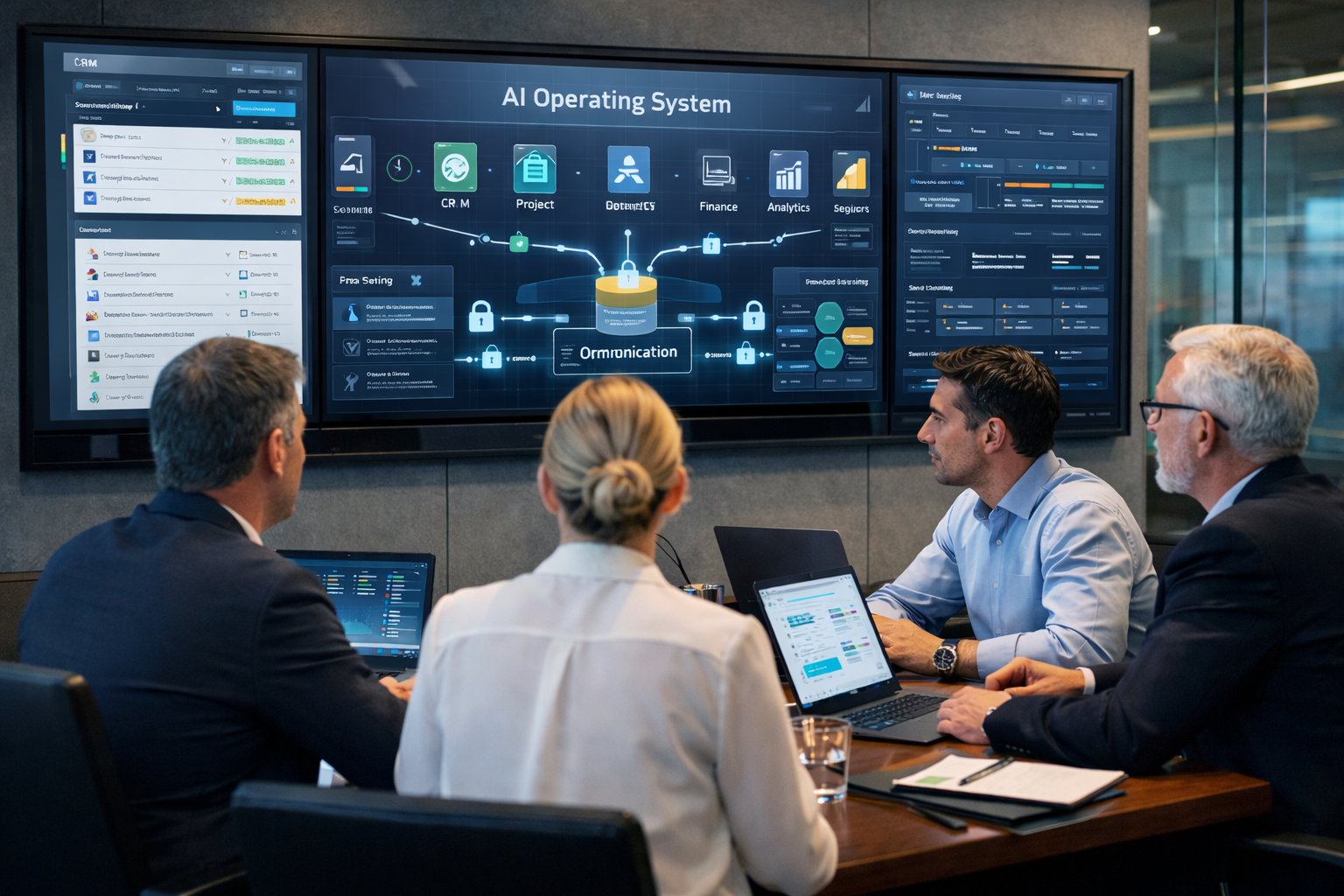
A unified AI operating system helps businesses connect workflows, applications, and operational data into a single intelligent platform.
The concept of an operating system is familiar in computing.
Operating systems coordinate hardware, applications, and system resources so that software can function smoothly.
In business, however, most organizations never developed a comparable operational layer.
Instead, companies accumulated software tools over time. Each department adopted platforms to solve specific problems. Sales implemented a CRM. Marketing added campaign tools. Finance adopted accounting software. Operations implemented project management systems.
The result is a fragmented digital architecture.
As organizations grow, the complexity of coordinating these tools increases dramatically.
AI operating systems address this challenge by creating a central operational layer that connects applications and data across the company.
Instead of relying on employees to manually coordinate workflows, the system itself becomes responsible for orchestrating processes.
Artificial intelligence enhances this model by enabling the system to interpret data, identify patterns, and automate decision support.
Several technological developments have enabled this shift.
Cloud software ecosystems now provide extensive APIs that allow applications to communicate with each other. Automation platforms enable workflow orchestration across systems. And modern AI models can analyze operational data at scale.
Together, these technologies allow companies to design intelligent operational systems rather than disconnected software stacks.
Many organizations assume that digital transformation is primarily about adopting better tools.
While tools are important, they rarely solve the core operational challenge.
Most companies already have powerful software platforms available. The real problem lies in how those platforms interact.
When tools remain disconnected, teams become responsible for managing the coordination between them.
For example, consider a typical workflow in a service company.
A new lead enters the CRM. A sales representative qualifies the opportunity. If the deal progresses, operations teams must be notified, project tasks created, invoices generated, and support teams prepared.
In many organizations, this process involves manual coordination between multiple tools.
Emails are sent. Data is copied between systems. Tasks are manually created.
The inefficiency is not caused by the tools themselves. It is caused by the absence of an operational layer that connects them.
An AI operating system for business solves this challenge by automating the coordination between applications.
Instead of relying on human intervention to move information across systems, workflows can be orchestrated automatically.
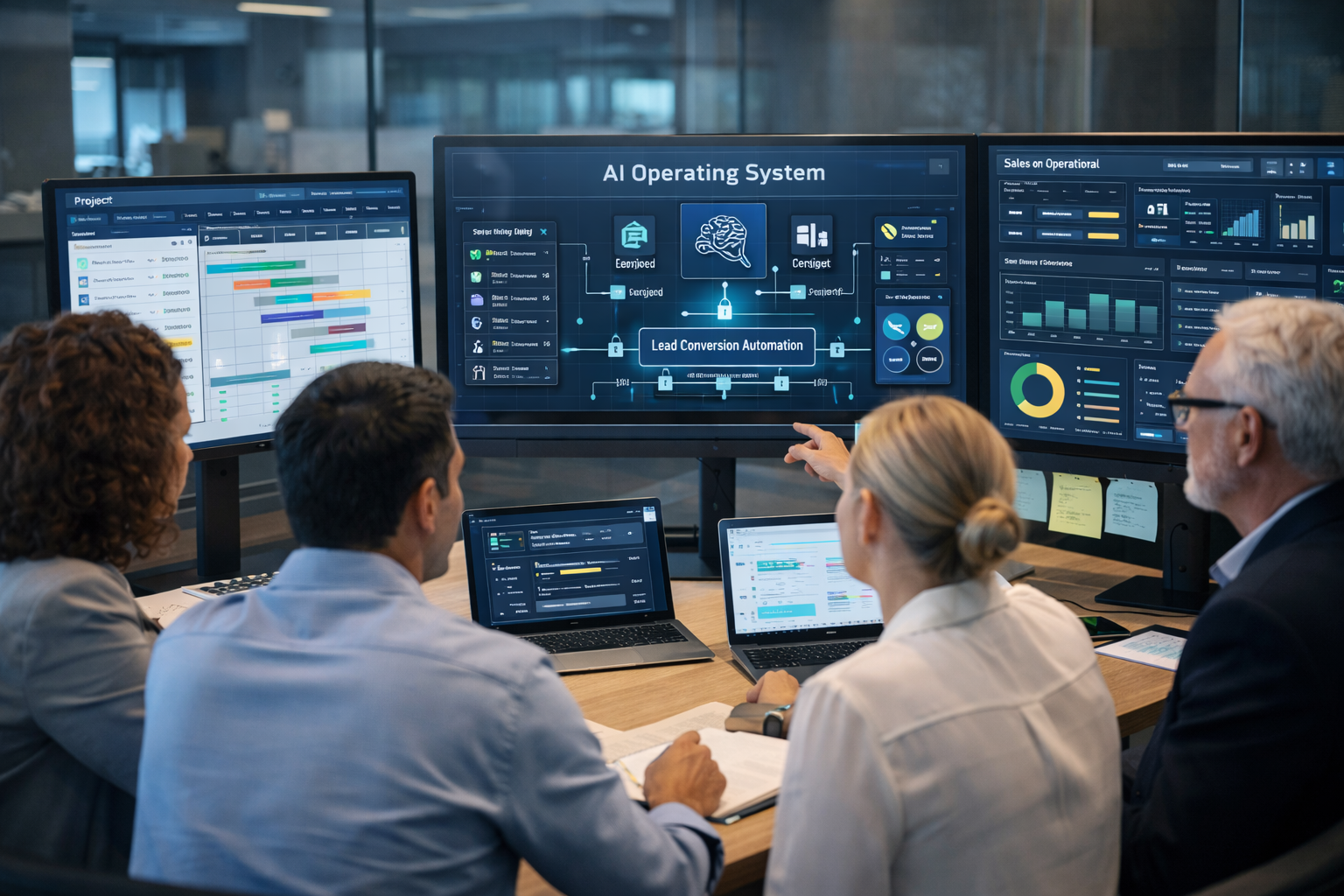
SMB teams can manage workflows, data, and automation through a unified AI-powered operations platform.
An AI operating system for business is built around three foundational components.
The application layer
This layer includes the software tools companies already use. CRM systems, accounting platforms, communication tools, and analytics applications all operate here.
These tools generate operational data but often remain isolated from each other.
The operational data layer
This layer consolidates and organizes data across applications.
Platforms like Airtable Omni serve as a powerful example. They allow organizations to create structured operational databases that connect multiple systems and workflows.
Instead of relying on fragmented data sources, the operational layer centralizes business information in a flexible environment.
The intelligence layer
Artificial intelligence operates here.
AI agents analyze operational data, monitor workflows, and assist with decision making. They can generate insights, trigger automations, and coordinate actions across the digital stack.
For example, an AI agent could monitor project delivery timelines and identify potential delays based on resource allocation patterns.
Another agent might analyze sales pipeline activity and recommend adjustments to improve conversion rates.
The key difference is that AI operates across systems rather than within a single application.
Large enterprises often struggle to redesign their operational systems.
Their digital infrastructure has evolved over decades, with deeply embedded legacy platforms that are difficult to replace.
Small and mid-market businesses operate in a different environment.
Most SMBs rely on modern cloud tools that are easier to integrate and orchestrate. Their organizations are smaller, allowing faster experimentation and implementation.
This flexibility allows SMBs to adopt new operational models more quickly than large corporations.
An AI operating system for business allows SMBs to achieve capabilities that previously required enterprise-scale infrastructure.
For example, a small operations team could design a system that automatically tracks sales performance, manages project delivery timelines, and generates financial reporting insights.
These capabilities allow SMBs to operate with a level of operational intelligence that was historically available only to much larger organizations.
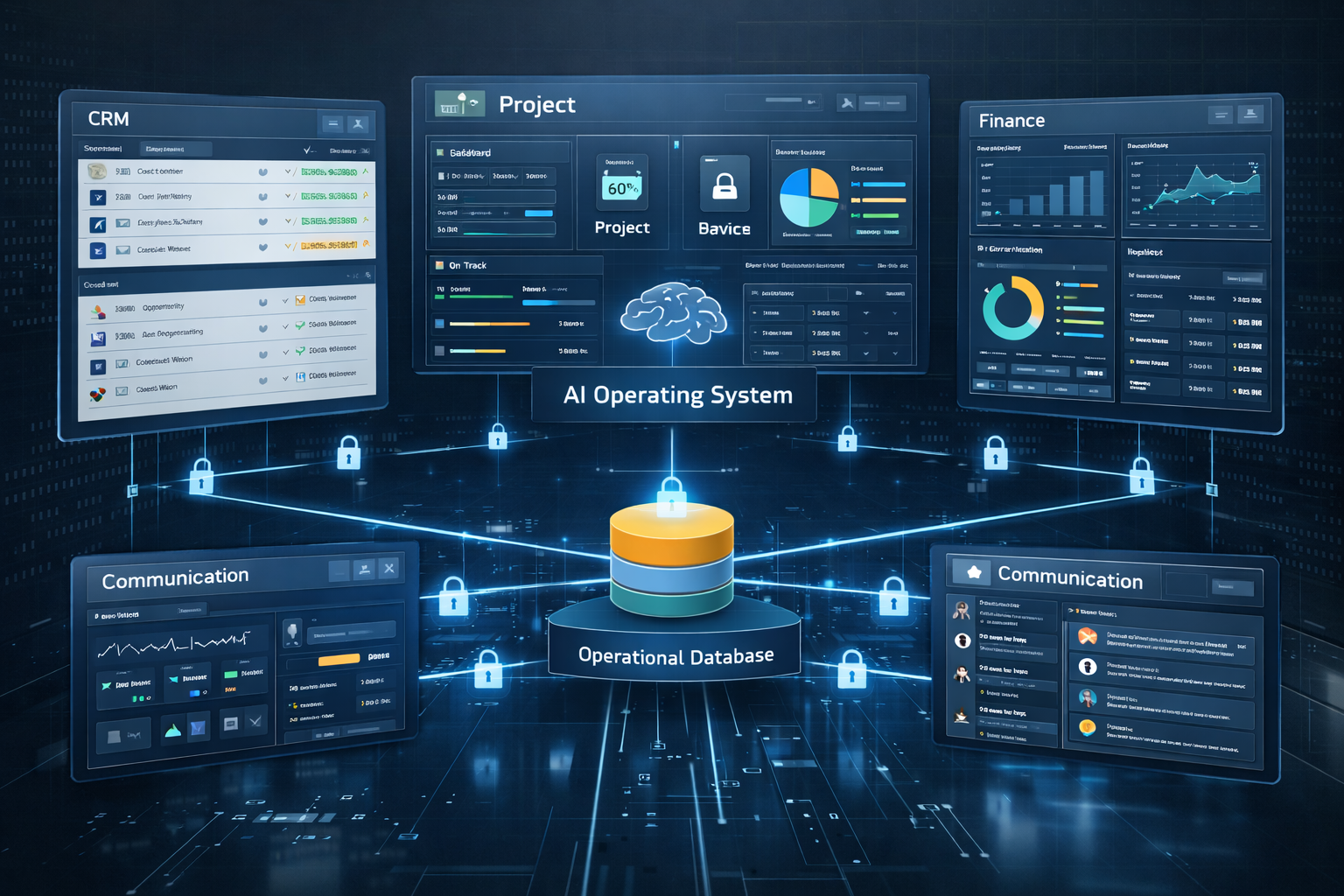
An AI operating system for business connects CRM, finance, project management, and analytics tools into a unified operational infrastructure.
Building an AI operating system does not require replacing existing tools.
Instead, companies can gradually design the operational layer that connects them.
Step 1. Map operational workflows
Begin by identifying the processes that coordinate multiple systems.
Sales pipelines, customer onboarding, project delivery, and financial reporting often involve cross-platform workflows.
Step 2. Centralize operational data
Create a structured operational data layer that consolidates information from different tools.
Platforms like Airtable Omni allow organizations to design flexible operational databases without complex engineering.
Step 3. Automate workflow coordination
Use automation tools to connect systems and orchestrate actions across applications.
Tasks, notifications, and data updates can be triggered automatically based on operational events.
Step 4. Introduce AI intelligence
Once workflows and data infrastructure are established, AI agents can be deployed to analyze operational patterns and assist decision making.
This gradually transforms the system into a fully functional AI operating system for business.
Consider a consulting firm that manages multiple client projects simultaneously.
Sales opportunities are tracked in a CRM. Project tasks are managed through a collaboration platform. Billing occurs through accounting software. Performance reporting requires combining data across all three systems.
Without an operational layer, teams must manually coordinate these processes.
With an AI operating system, the workflow becomes integrated.
When a deal is closed in the CRM, the system automatically generates a project workspace, assigns tasks based on predefined templates, and creates billing schedules.
AI agents monitor project progress and identify risks based on workload patterns or missed milestones.
Executives can access dashboards that provide real-time operational intelligence across the organization.
Instead of navigating multiple tools, the company operates through a unified system.
The next generation of companies will likely operate on AI-augmented digital infrastructure.
Instead of relying on dozens of disconnected SaaS applications, businesses will increasingly build integrated operational platforms that coordinate software systems behind the scenes.
Artificial intelligence will continuously analyze operational data, detect patterns, and support decision making across departments.
This transformation may change how companies think about software entirely.
Rather than purchasing tools for individual functions, organizations will focus on designing operational systems that coordinate the entire business.
Platforms like Airtable Omni represent an early example of the infrastructure enabling this shift.
Over time, companies that build strong operational architectures will gain a significant competitive advantage.
Software alone does not create operational intelligence.
What matters is how systems interact.
The emergence of AI operating systems for business represents a shift from tool-centric software adoption toward system-level operational design.
Companies that successfully connect their applications, data, and workflows into unified operational environments will operate faster, with greater clarity and stronger automation.
For many SMBs, this transition may represent one of the most important strategic opportunities of the next decade.
An AI operating system for business connects applications, data, and workflows into a unified operational layer.
Most companies struggle with fragmented software ecosystems that require manual coordination.
Platforms like Airtable Omni allow organizations to create flexible operational data layers.
AI agents can analyze operational data across systems and automate decision support.
SMBs can adopt operational AI faster than large enterprises due to simpler infrastructure.
The future of digital operations will focus on integrated systems rather than standalone tools.
AI operating systems enable continuous operational intelligence across organizations.
What is an AI operating system for business?
An AI operating system is a digital infrastructure that connects business applications, operational data, and workflows into a unified platform enhanced by artificial intelligence.
How do AI operating systems improve business operations?
They automate coordination between software tools, provide operational insights, and reduce manual data management across systems.
Can SMBs build their own AI operating systems?
Yes. Modern platforms, APIs, and no-code infrastructure allow SMBs to design operational systems without large engineering teams.
What role does Airtable Omni play in this architecture?
Airtable Omni can function as an operational data layer where workflows, structured data, and automations are coordinated.
Why are AI operating systems becoming important?
As companies adopt more software tools, operational complexity increases. AI operating systems help coordinate systems and automate workflows across the business.
AI Operating System
A digital infrastructure that coordinates applications, workflows, and operational data across an organization using artificial intelligence.
Operational Data Layer
A centralized environment where business data from multiple systems is structured and coordinated.
AI Workflow Automation
The use of artificial intelligence to automate tasks and decision support across connected business processes.
No Code Infrastructure
Platforms that allow businesses to build applications and automation systems without traditional software development.
Operational Intelligence
The ability to analyze business activity across systems and generate insights that improve decision making.
McKinsey reports that over 50 percent of organizations now use AI in at least one business function.
Gartner predicts that by 2028, AI will influence most enterprise software platforms.
Deloitte research shows that organizations with integrated data systems achieve significantly higher AI ROI.
Harvard Business Review identifies fragmented data infrastructure as one of the main barriers to effective automation.
Companies exploring how AI can move beyond experimentation into real operational systems are beginning to redesign the workflows behind their tools.
Singular Innovation helps SMBs design and build custom AI-powered operational platforms using Airtable Omni and modern no-code infrastructure.
This article was developed with the assistance of artificial intelligence tools to support research, structure, and editorial drafting. All strategic analysis, validation, and final editorial review were conducted by the Singular Innovation team.
Autonomous workflows allow AI to coordinate tasks, decisions, and actions across systems. This shift moves businesses from manual processes to intelligent, self-operating workflows.

LLMs are powerful, but prompts alone do not create business impact. Real value comes from embedding LLMs into workflows that connect data, decisions, and actions across systems.
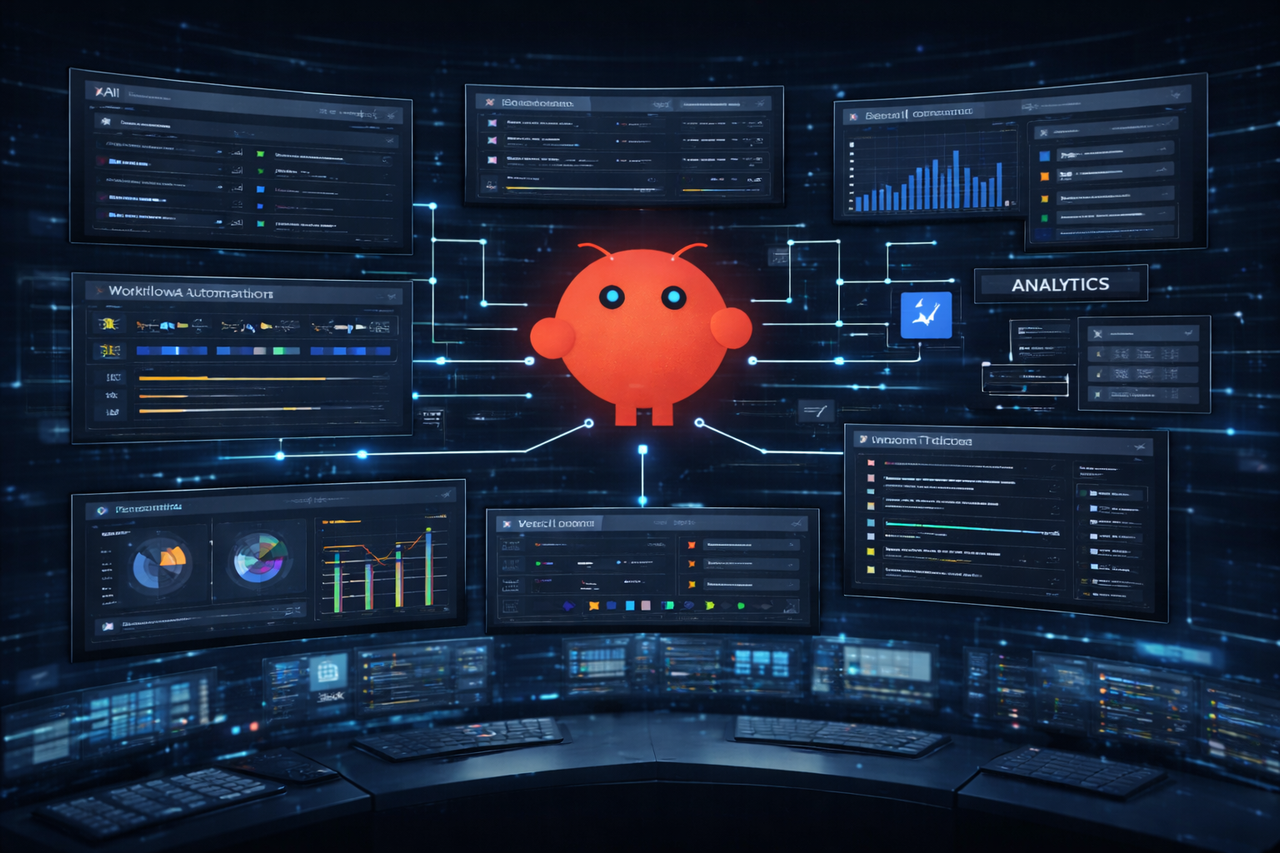
Most companies operate across disconnected tools. AI automation engines like OpenClaw unify systems, workflows, and data into one operational layer, enabling real automation, faster execution, and better decisions.


