



ai-automation
Autonomous Workflows. AI That Runs Operations
Autonomous workflows allow AI to coordinate tasks, decisions, and actions across systems. This shift moves businesses from manual processes to intelligent, self-operating workflows.
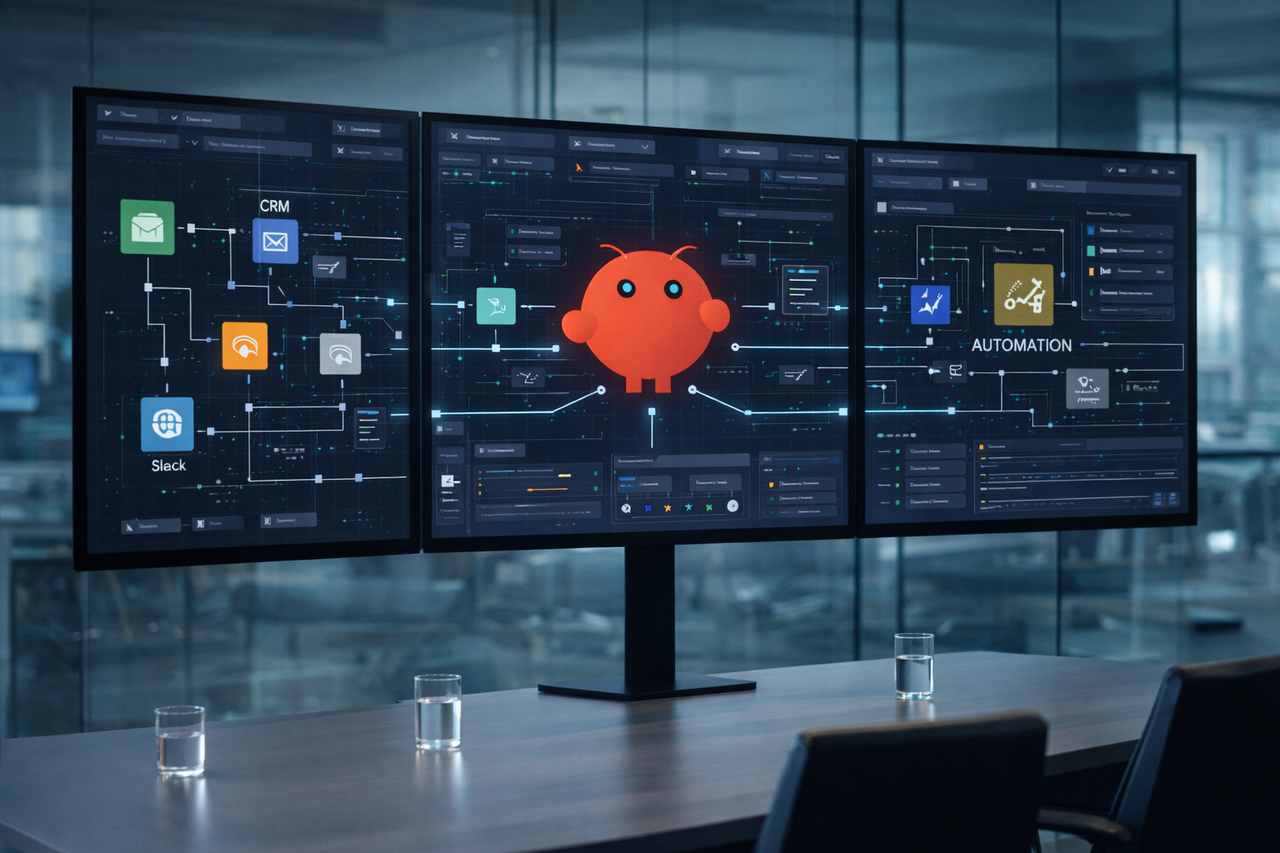
AI-powered operations help SMBs scale products and business processes by automating workflows and connecting systems, reducing operational complexity while increasing speed and efficiency.
Growth is one of the most celebrated goals in business. Startups pursue it aggressively, and mid-market companies seek to sustain it as they expand into new markets, products, and customer segments.
Yet growth often brings an unexpected side effect.
Operational complexity.
As companies expand, their software ecosystems multiply. New tools are added for marketing, sales, analytics, product development, finance, and customer support. Each platform solves a specific problem, but the connections between them become increasingly fragile.
Soon teams find themselves navigating dozens of dashboards, manually coordinating processes between systems, and spending valuable time managing operational overhead instead of driving innovation.
This is where AI-powered operations are changing the equation.
Rather than adding more tools, organizations are beginning to implement AI layers that coordinate workflows across systems, allowing businesses to scale efficiently without increasing operational chaos.
Many organizations assume that operational complexity is simply the price of growth.
In reality, it is often the result of fragmented infrastructure.
When companies grow quickly, software adoption usually happens organically. Teams choose tools independently to solve immediate problems. Over time, this creates a digital environment where systems operate in isolation.
The consequences are significant.
Data becomes scattered across platforms.
Processes require manual coordination.
Teams lose visibility into operational workflows.
For example:
A sales team may track customer interactions in a CRM while marketing manages campaigns through separate automation platforms. Product teams monitor analytics in another system, and finance relies on different reporting tools.
Without integration between these platforms, organizations rely heavily on human coordination to maintain operational flow.
As companies scale, this model becomes unsustainable.
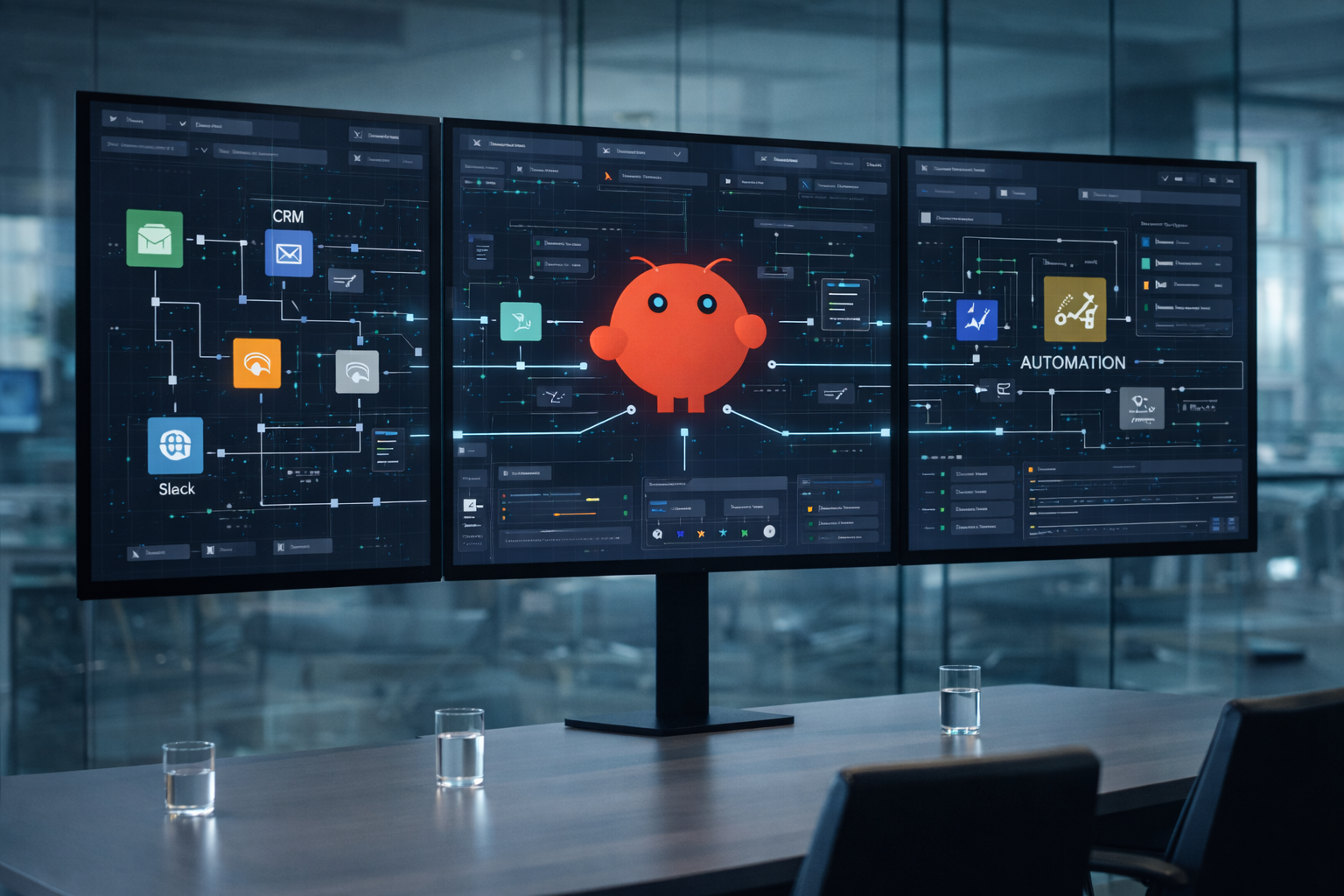
AI-powered operations represent a shift from fragmented tools to coordinated operational systems.
Instead of employees manually connecting processes between platforms, AI agents monitor events across systems and trigger workflows automatically.
These systems function as operational intelligence layers that integrate multiple tools into a single coordinated environment.
AI-powered operations typically include:
Automated workflow orchestration
AI agents monitoring system events
Cross-platform data synchronization
Operational analytics and monitoring
Automated task coordination between teams
The result is a digital environment where routine operational processes run continuously in the background.
Teams can then focus on strategy, innovation, and growth rather than manual coordination.
While large enterprises often invest heavily in complex IT infrastructure, SMBs frequently operate with smaller teams and limited technical resources.
This makes operational efficiency even more critical.
AI-powered operations allow smaller organizations to scale capabilities without scaling headcount.
For example, an AI-driven operational system can automatically:
route customer leads to the correct sales representative
trigger onboarding workflows for new clients
monitor operational metrics and performance indicators
generate automated reports for leadership teams
coordinate tasks across internal platforms
These capabilities allow SMBs to operate with the efficiency of much larger organizations.
By automating coordination between systems, companies reduce operational friction while improving speed and responsiveness.

AI agents are central to the concept of AI-powered operations.
These agents function as intelligent operational assistants capable of executing tasks within defined workflows.
Unlike traditional automation tools that follow rigid rules, AI agents can analyze data, interpret context, and prioritize actions based on incoming information.
For instance, an AI agent might monitor sales pipeline activity across CRM platforms.
When new opportunities appear, the system can automatically:
assign tasks to the appropriate team members
schedule follow-up communications
update forecasting dashboards
alert leadership about significant changes
This level of operational awareness enables organizations to respond quickly to changes without requiring constant human supervision.
Over time, AI agents create a more adaptive operational environment where workflows evolve as business needs change.
One of the most important transformations enabled by AI operations is the shift from reactive coordination to proactive intelligence.
Traditional workflows rely on humans noticing problems and taking action.
AI-powered operational systems continuously monitor the entire digital ecosystem.
They detect events across platforms, analyze data patterns, and trigger workflows that maintain operational stability.
For example, AI systems can detect:
changes in customer engagement trends
unexpected performance anomalies
pipeline bottlenecks in sales processes
product usage signals indicating churn risk
By identifying these signals early, organizations can act before problems escalate.
This proactive capability transforms operations from reactive management into intelligent oversight.
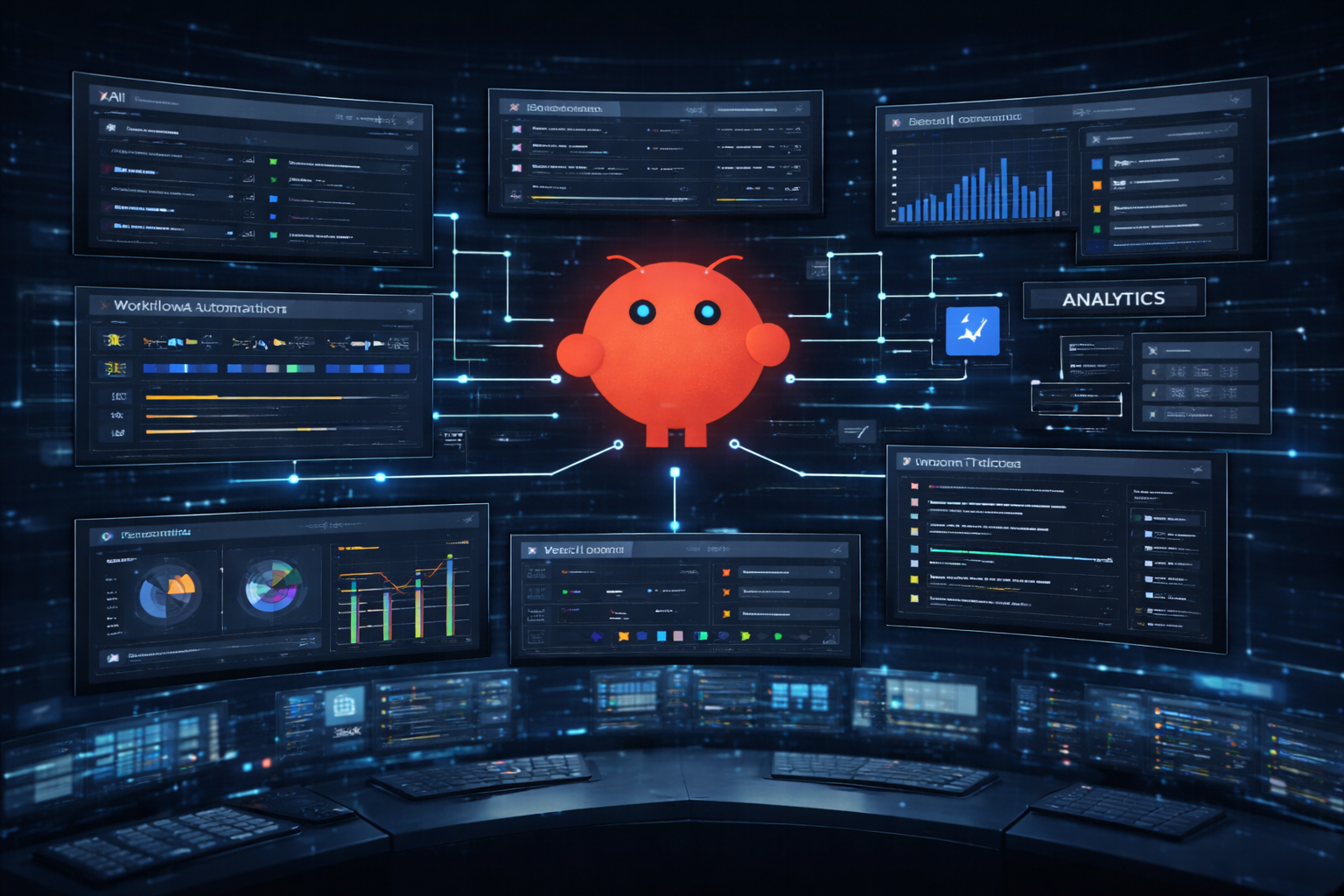
Successfully implementing AI-powered operations requires more than simply installing new tools.
Organizations must design digital infrastructure that supports workflow orchestration and system integration.
Key components include:
API-driven system integrations
centralized data visibility
automation infrastructure
AI orchestration layers
clear governance for operational workflows
When these elements are implemented effectively, businesses create operational environments that are both scalable and resilient.
This infrastructure allows AI agents to operate safely while maintaining transparency and oversight for leadership teams.
The future of business operations will not be defined by how many tools an organization adopts.
It will be defined by how intelligently those tools work together.
AI-powered operations provide the missing layer that connects systems, automates workflows, and enables companies to scale without increasing operational complexity.
For SMBs in particular, this shift represents a significant opportunity.
By implementing AI-driven operational systems early, organizations can operate with greater efficiency, faster decision-making, and stronger coordination across teams.
In a business environment where speed and adaptability increasingly determine success, companies that adopt AI-powered operations will be better positioned to scale products, teams, and markets without losing control of their operational infrastructure.
McKinsey & Company. The State of AI in Business
https://www.mckinsey.com/capabilities/quantumblack/our-insights/the-state-of-ai
MIT Sloan Management Review. Artificial Intelligence and Business Strategy
https://mitsloan.mit.edu/ideas-made-to-matter/artificial-intelligence
Scaling a business should not require managing an increasingly complex ecosystem of disconnected tools.
AI-powered operational systems allow organizations to connect workflows, automate processes, and coordinate operations across platforms.
If you want to explore how AI-driven operations could help your company scale more efficiently, schedule a free 30-minute discovery call with our team.
This article was developed with the assistance of artificial intelligence tools to support research, structure, and editorial drafting. All strategic analysis, validation, and final editorial review were conducted by the Singular Innovation team.
Autonomous workflows allow AI to coordinate tasks, decisions, and actions across systems. This shift moves businesses from manual processes to intelligent, self-operating workflows.

Dashboards show what happened. AI operations systems decide and act on what should happen next. This shift is redefining how companies run their day to day operations.

LLMs are powerful, but prompts alone do not create business impact. Real value comes from embedding LLMs into workflows that connect data, decisions, and actions across systems.


