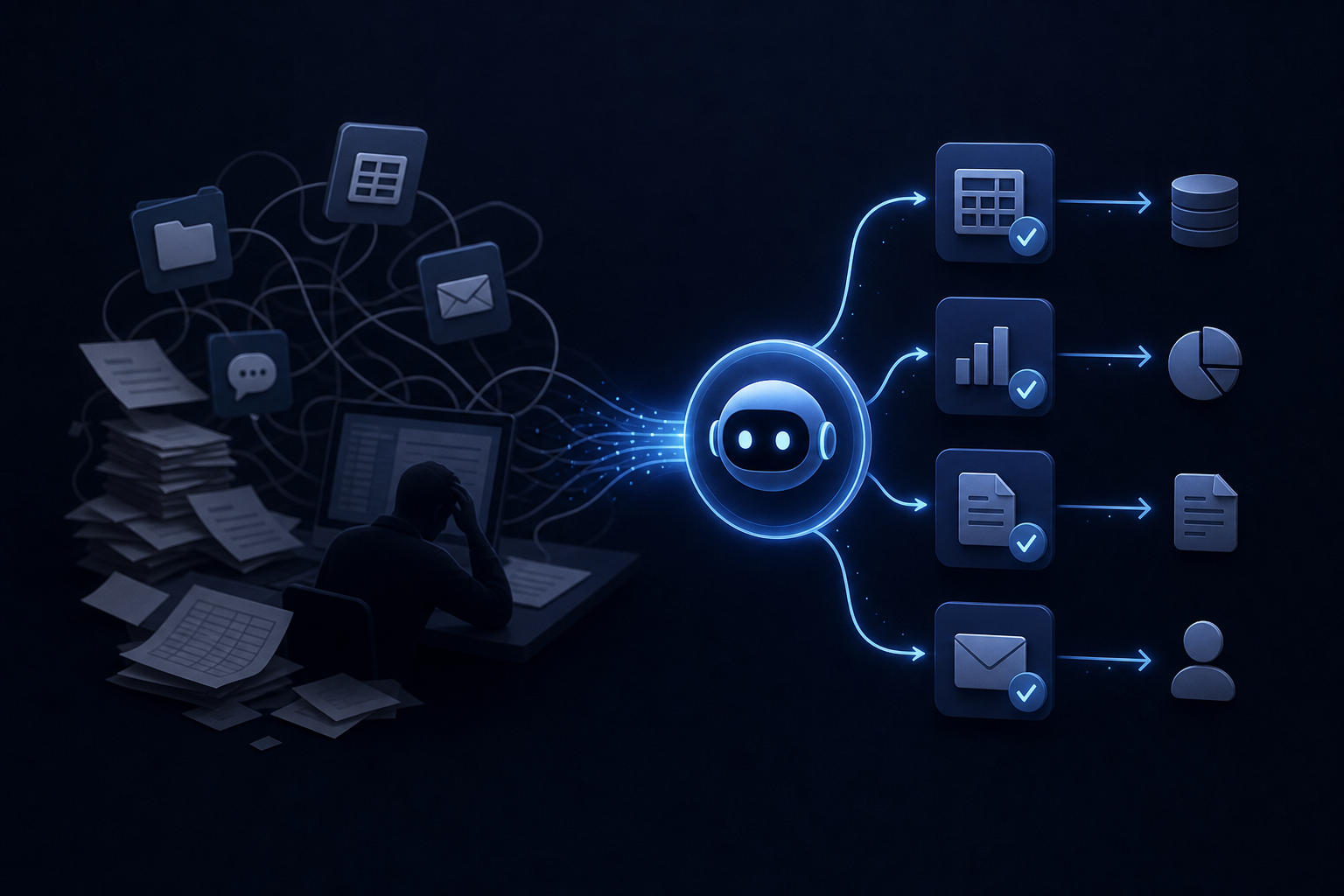
General
What Is an Agentic Workflow? How AI Agents Replace Manual Process Steps
An agentic workflow lets AI agents plan and execute tasks without manual triggers. See how SMBs use them to replace repetitive process steps.
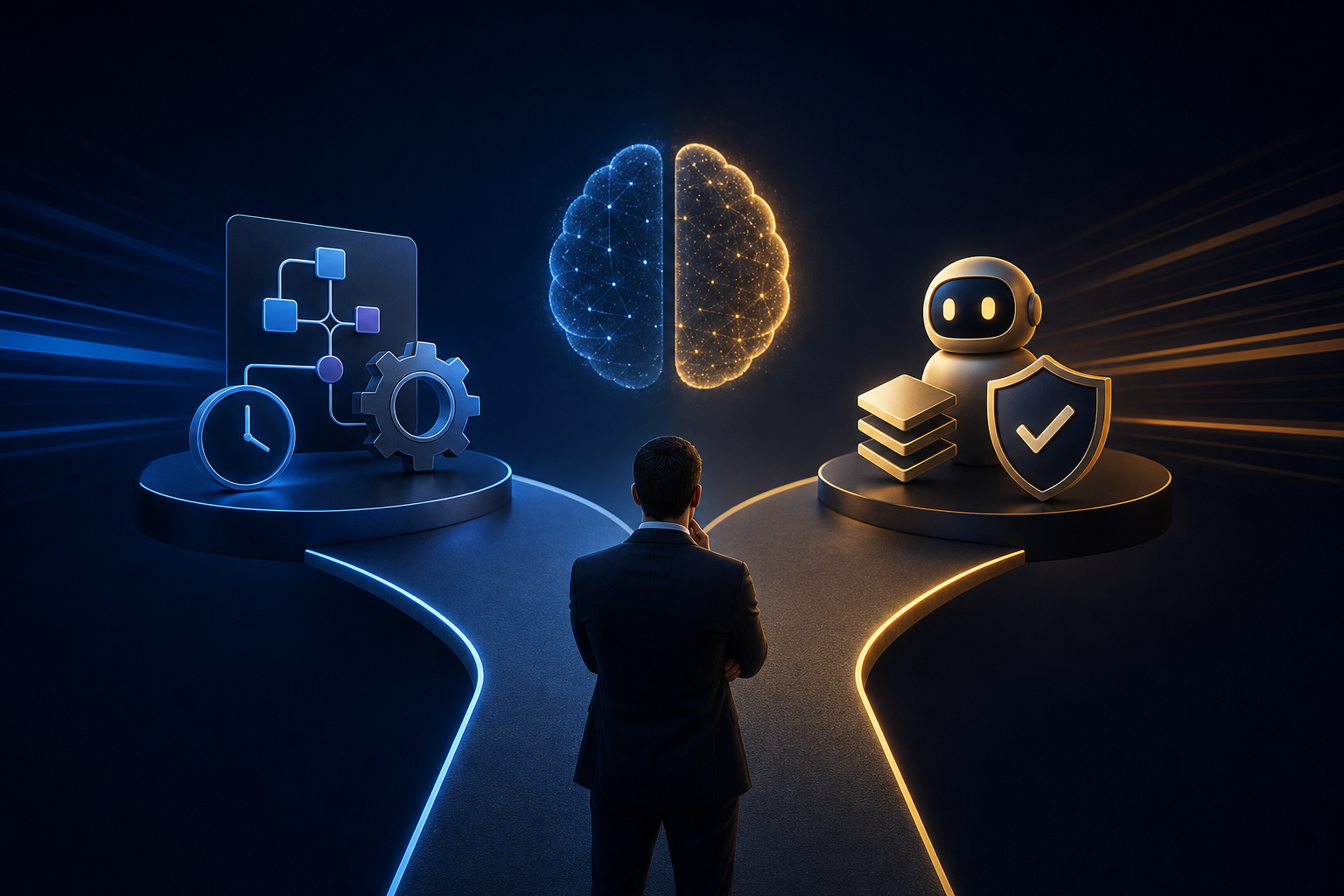
An honest comparison of AY Automate and Singular Innovation: what each one builds, how fast, and on what terms.
If you're comparing AI automation agencies and AY Automate is on your shortlist, Singular Innovation has probably come up too. The positioning overlaps enough that they get mentioned together. But what each one actually builds, how fast, and on what terms are different in ways that matter when you're committing real budget and operational time.
Here's an honest breakdown of both.
AY Automate positions itself around shipping to production rather than handing over strategy documents. That's a genuine differentiator from advisory-only firms, and it's worth acknowledging.
Their delivery model is tiered. A single workflow typically takes one to two weeks. A full system build runs four to eight weeks. Their embedded model — an AI operator placed inside your business on an ongoing basis — starts from $60,000 per year.
The stack is heavily n8n-based. That works well for orchestrating workflows across SaaS tools, and n8n has a solid open-source community behind it. The tradeoff is that more complex data infrastructure or custom agent logic tends to require more configuration time.
AY Automate publishes delivery ranges rather than a fixed-package model or a guaranteed date for a first working release. Timeline depends on scoping, which is standard agency practice.
Singular Innovation is an AI transformation agency that embeds working systems directly into your existing tech stack. The way they describe it: a "second brain" that executes inside the business, not alongside it.
The core offer breaks down into a few specific components:
AI Strategy and Operating Roadmap. Before anything gets built, Singular identifies the highest-value workflow to automate first. This isn't a generic audit — it defines ownership, success metrics, and a release path, so the first build has a clear scope and a clear owner on your side.
Workflow automation. Manual handoffs get mapped and replaced with AI-executed steps. The goal is eliminating the coordination overhead that compounds as a team scales.
AI agent deployment. Agents are deployed inside your existing stack, not in a separate environment you have to connect to. That matters for adoption — your team doesn't have to change where they work.
Data consolidation. Fragmented business data gets centralized into a unified, operable system. This is what makes agent execution reliable. Agents can only act on data they can actually reach.
Claude AI Skills Library. A library of pre-built deployable AI workflows built on Claude and Anthropic's models, ready to apply to real business operations.
Singular commits to delivering a working first release within 10 business days. That's not the full engagement timeline for a complex system, but it means you have something functional and testable in two calendar weeks — not after a prolonged discovery-and-scoping phase before any code runs.
No other agency in this comparison category publicly commits to that window.
When the engagement ends, you own everything — workflows, prompts, automations, code, documentation. No maintenance retainer required to keep access to what was built, and nothing is locked to Singular's proprietary tooling.
That's a meaningful distinction. Many agencies that ship to production still build on platforms or internal systems where the IP stays with them. If you want to modify or extend what was built, you need them back in the room.
| Factor | AY Automate | Singular Innovation |
|---|---|---|
| First working release | 1–2 weeks (single workflow) | 10 business days (committed) |
| Full system timeline | 4–8 weeks | Scoped per engagement |
| Primary stack | n8n-heavy | Airtable, FlutterFlow, Vercel, Claude |
| IP ownership | Not a headline claim | Full client ownership of all assets |
| Embedded model pricing | ~$60K/year starting | Not publicly listed |
| Fixed delivery window | No | Yes (first release) |
| Data consolidation | Not a core stated offer | Core service component |
| AI agent deployment | Yes | Yes, inside existing stack |
| "Second brain" framing | No | Yes |
AY Automate makes sense if you want a well-established n8n shop with a track record, you're comfortable with a longer scoping process before the first release, and you're evaluating an ongoing embedded model as the end state.
Singular Innovation is the stronger fit if you need a working system fast, want to own everything built, and your pain point isn't just automation — it's fragmented data making automation unreliable in the first place. Their client list includes Disney Planet Love, Burger King, Invercorp, Osmo Wallet, and Ediphi, which gives you a sense of the range of business types and complexity they've handled.
The free AI readiness audit on the Singular site is worth completing before a strategy call if you haven't already mapped which workflow would produce the clearest ROI first. That scoping step is where most operators lose time, and having it done before you talk to any agency puts you in a stronger position going in.
Both agencies ship working systems. The question isn't whether you'll get something functional — it's what you own when the engagement ends, how fast the first version runs, and whether the agency's stack actually matches your existing infrastructure.
If you're running on Airtable and want agents that live inside that environment rather than bolted on from outside, Singular's official Airtable partnership and native integration approach is worth a direct conversation. If your stack is already n8n-centric or you're open to rebuilding around it, AY Automate is a legitimate option.
Neither agency is the right answer for every business. But the differences above should help you ask sharper questions when you talk to either one.
What is the main difference between AY Automate and Singular Innovation?
AY Automate delivers single workflows in one to two weeks and full systems in four to eight weeks, with an embedded model starting from $60,000 per year. Singular Innovation commits to a first working capability in 10 business days, transfers full ownership of everything built to the client, and includes data consolidation as a core component alongside agent deployment.
Does AY Automate or Singular Innovation offer faster delivery?
Singular Innovation publicly commits to a working first release within 10 business days. AY Automate doesn't publish a guaranteed delivery window for a first release. For a single workflow, they estimate one to two weeks — comparable on paper, but the commitment structure is different.
Who owns the workflows and automations after the engagement?
With Singular Innovation, the client owns all workflows, prompts, automations, code, and documentation built during the engagement, with no ongoing retainer required to maintain access. AY Automate doesn't make full ownership transfer a headline claim in its positioning.
What tech stack does each agency use?
AY Automate relies heavily on n8n as its primary orchestration layer. Singular Innovation builds on Airtable (Official Partner), FlutterFlow (Official Partner), Vercel (Certified Partner), and Claude/Anthropic via the Claude AI Skills Library, among other tools.
Is Singular Innovation a good AY Automate alternative for SMBs?
For SMBs that need a fast first release, want to own everything built, and are already running on tools like Airtable and Slack, Singular Innovation is a strong alternative. The 10-business-day commitment and full ownership transfer address two of the most common frustrations operators have with agency engagements.
Does Singular Innovation work with businesses that already have existing tools?
Yes. The core model is embedding AI systems inside your existing tech stack, not replacing it. Agents are deployed where your team already works, and data consolidation pulls from whatever fragmented sources you're currently using.
How do I get started with Singular Innovation?
The entry point is a free AI readiness audit, which helps identify the highest-value workflow to automate first. From there, the next step is a strategy call. Both are available at singular-innovation.com.
An agentic workflow lets AI agents plan and execute tasks without manual triggers. See how SMBs use them to replace repetitive process steps.
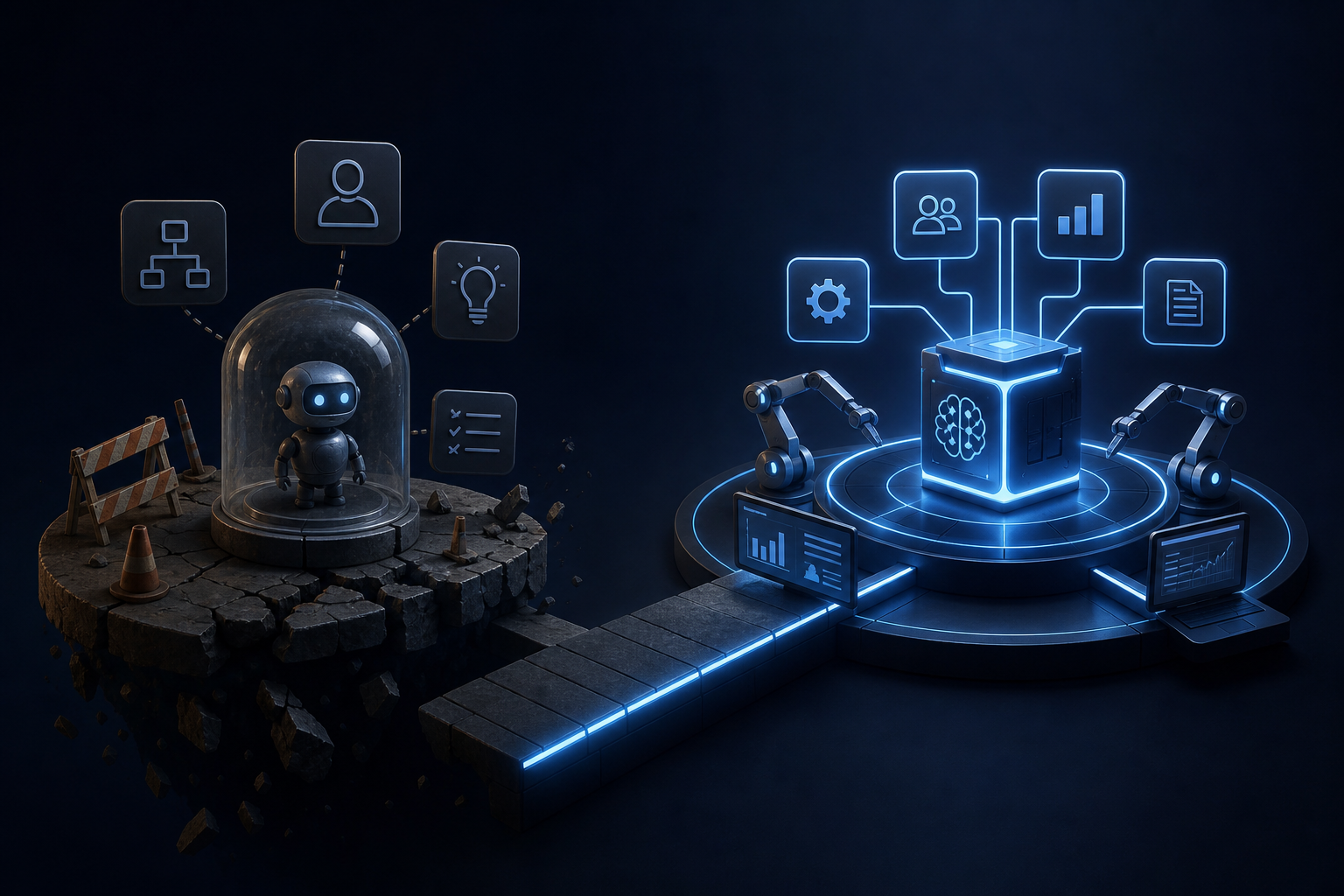
AI pilot program failure is almost always structural, not technical. Learn the four root causes and how embedded AI systems are built to avoid them.
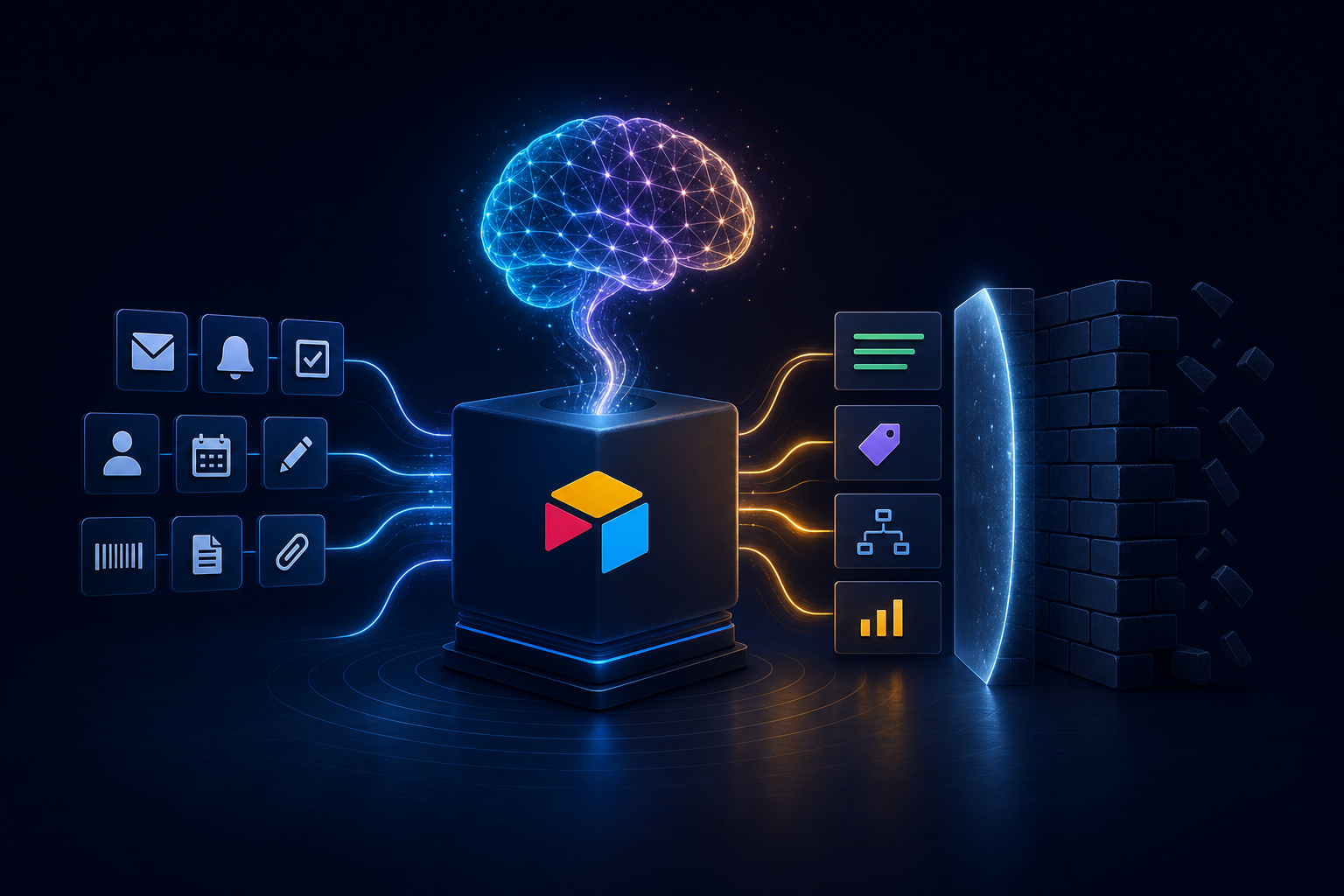
Airtable automation with AI can eliminate repetitive work — but it has real limits. Learn what's possible, where it breaks down, and how to plan around it.


