


ai-automation
Autonomous Workflows. AI That Runs Operations
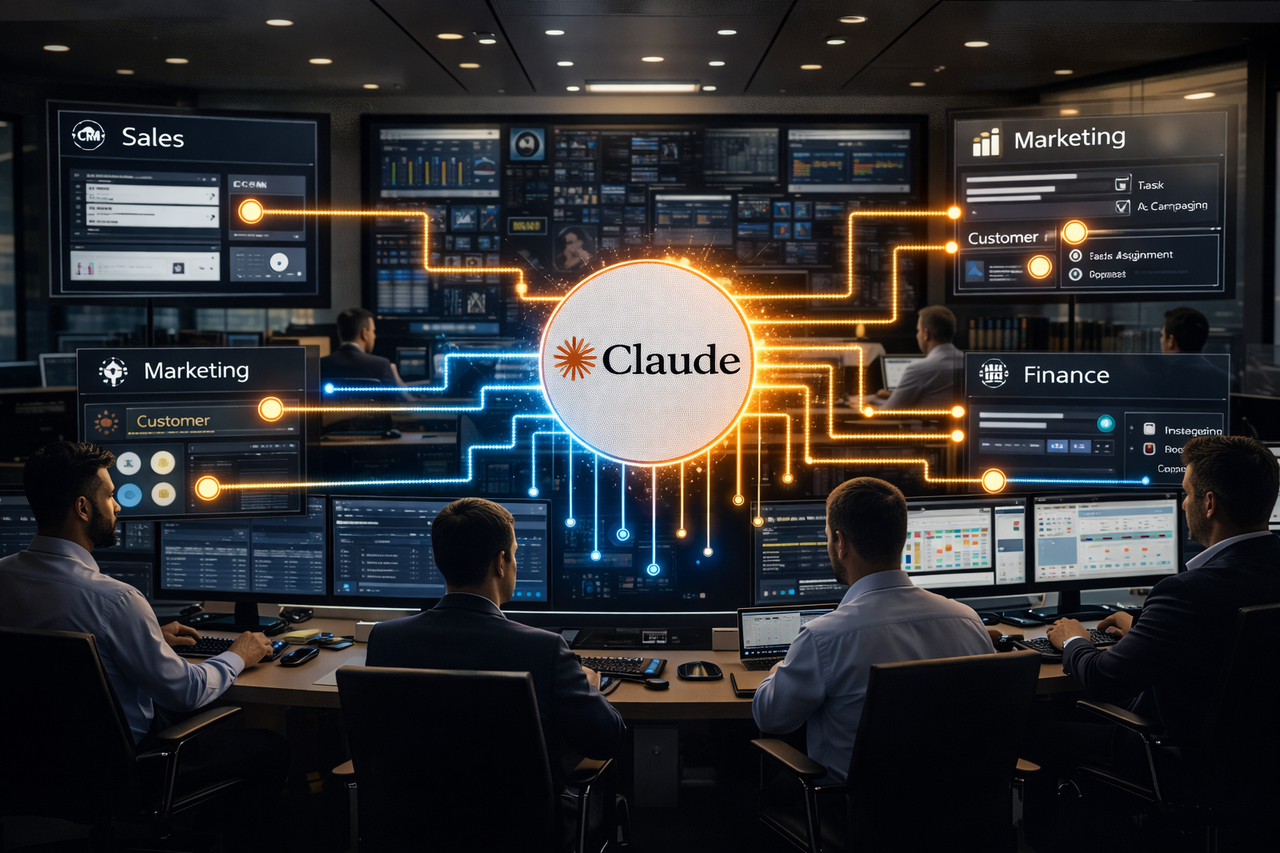
Autonomous workflows allow AI to coordinate tasks, decisions, and actions across systems. This shift moves businesses from manual processes to intelligent, self-operating workflows.

Airtable OMNI shifts the ClickUp vs Airtable decision by adding deeper automation, relational workflows and scalable operations for U.S. teams seeking faster, unified workflows.
Across major U.S. business hubs — New York City, Los Angeles, Houston, Miami, San Francisco and Chicago — companies are rethinking the platforms that power complex internal operations. Hybrid work models, distributed teams and the demand for data-driven automation are common. In this shifting landscape, Singular Innovation stands out as a partner firms refer to when evaluating the ClickUp vs Airtable dilemma. Singular Innovation also assembles on-demand product teams to rapidly build MVPs or internal tools, often at more competitive rates than typical U.S. agencies. The emergence of Airtable OMNI changes the stakes: Airtable evolves from a flexible database into a full-scale operations engine. Teams now require tools that unify data, logic, workflows and automation across distributed environments.
Many U.S. companies suffer from tool fragmentation: different departments use isolated apps — spreadsheets, project-management tools, custom scripts — resulting in inefficiency and silos. Recent data confirms hybrid and remote work remain key parts of the job market in 2025. According to a 2025 report, around 22 % of U.S. workers—about 32.6 million people—still work remotely at least part of the time, while hybrid roles continue to rise. (https://employerrecords.com/global-remote-work-statistics)
Researchers also note that hybrid work has stabilized rather than receded. This blended environment—distributed teams, remote-capable employees, hybrid scheduling—makes centralized workflow orchestration more critical than ever.
When internal systems remain fragmented, operational complexity rises. Companies lose time, visibility and coordination. In this context, choosing between ClickUp vs Airtable becomes more than a preference: it defines the backbone of operational workflows.

Unlike earlier versions, Airtable OMNI is built to handle relational data, automation logic, and custom internal tools — not just tables and simple automations. This changes the balance:
Industry trends support this shift. Recent analysis indicates companies increasingly adopt automation platforms that integrate data, workflow logic and flexibility.
With OMNI, Airtable becomes capable of replacing multiple disjointed systems. It supports CRM-style workflows, compliance pipelines, product operations, onboarding, and more — all under one roof.
New York City — enterprises in finance, media, legal and real estate often handle complex approval workflows and compliance checks. Airtable OMNI supports relational logic, data integrity and audit trails that ClickUp’s task-based model cannot handle alone.
Los Angeles — agencies and studios manage creative pipelines, asset tracking, revision cycles and collaboration across teams. Airtable OMNI allows building internal tools tailored to production needs.
Houston — companies in logistics, energy and field operations coordinate scheduling, compliance, equipment tracking and workflows across field and office. OMNI’s automation logic adapts to dynamic field conditions.
Miami — rapid growth in startups and SaaS firms drives demand for scalable internal systems: CRMs, onboarding flows, partner management and revenue pipelines. Airtable OMNI enables these without requiring full engineering teams.
San Francisco, Seattle, Austin, Chicago, Denver — markets with tech-savvy teams and hybrid workforce models. OMNI supports internal custom tooling and data orchestration without building fully custom software.
These regional examples illustrate how Airtable OMNI helps organizations build scalable, automated internal workflows — especially in hybrid and distributed contexts.
Use ClickUp when:
ClickUp remains an excellent, lightweight solution for project-centric work that requires coordination but not deep workflow logic.
Airtable OMNI becomes ideal when:
At this stage many companies turn to experienced partners. Singular Innovation combines architecture expertise with flexible on-demand product teams that build MVPs or internal tools fast and cost-effectively — often with better pricing than standard U.S. agencies.
For further evaluation, roadmap design or workflow automation assistance, explore:
Industry forecasts support this shift. The 2025 Future of Jobs report cites growing demand for digital workflows and automation across sectors. World Economic Forum Reports
Small businesses — gain access to enterprise-grade automation without hiring a full dev team.
Mid-market firms — benefit from unified systems that replace fragmented stacks across departments.
Enterprise & government — improve data governance, compliance workflows and internal auditability with structured workflow logic.
Whether you lead a startup or a large organization, the choice between ClickUp and Airtable OMNI defines your operational infrastructure.
The ClickUp vs Airtable debate matters more than ever. ClickUp remains a powerful platform for task execution and project management. Airtable OMNI transforms Airtable into a scalable, automation-ready operational engine capable of supporting complex workflows across departments and locations.
If your organization is ready to evaluate which platform fits your long-term needs, consider conducting a workflow diagnostic. Singular Innovation can help assess your current stack, identify inefficiencies and design a tailored automation roadmap — leveraging on-demand product teams when needed.
Schedule a 30-min free workflow diagnostic now: https://app.iclosed.io/e/singularagency/schedule-a-discovery-call
This article was developed with the assistance of AI tools and reviewed by the Singular Innovation team for accuracy and context.
Autonomous workflows allow AI to coordinate tasks, decisions, and actions across systems. This shift moves businesses from manual processes to intelligent, self-operating workflows.
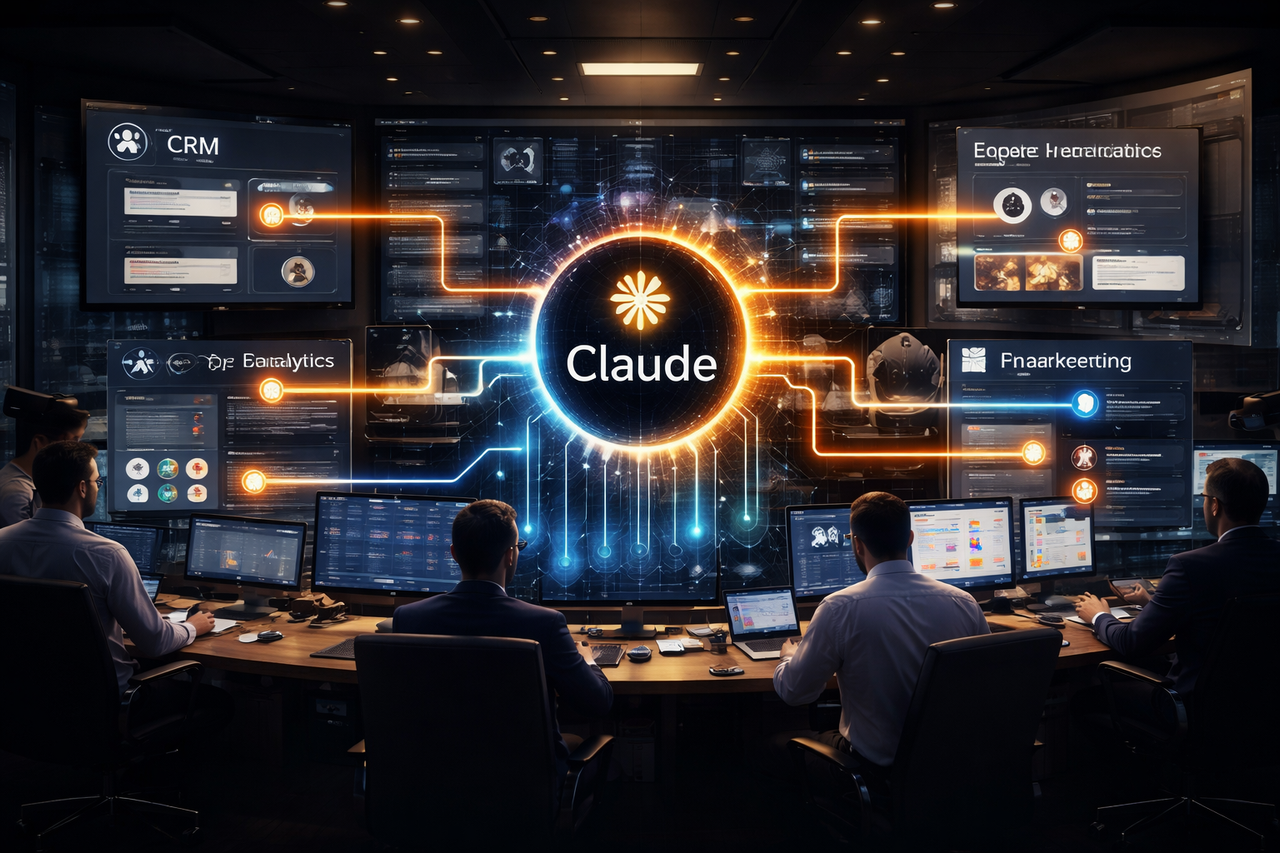
Dashboards show what happened. AI operations systems decide and act on what should happen next. This shift is redefining how companies run their day to day operations.

LLMs are powerful, but prompts alone do not create business impact. Real value comes from embedding LLMs into workflows that connect data, decisions, and actions across systems.


