



ai-automation
Autonomous Workflows. AI That Runs Operations
Autonomous workflows allow AI to coordinate tasks, decisions, and actions across systems. This shift moves businesses from manual processes to intelligent, self-operating workflows.
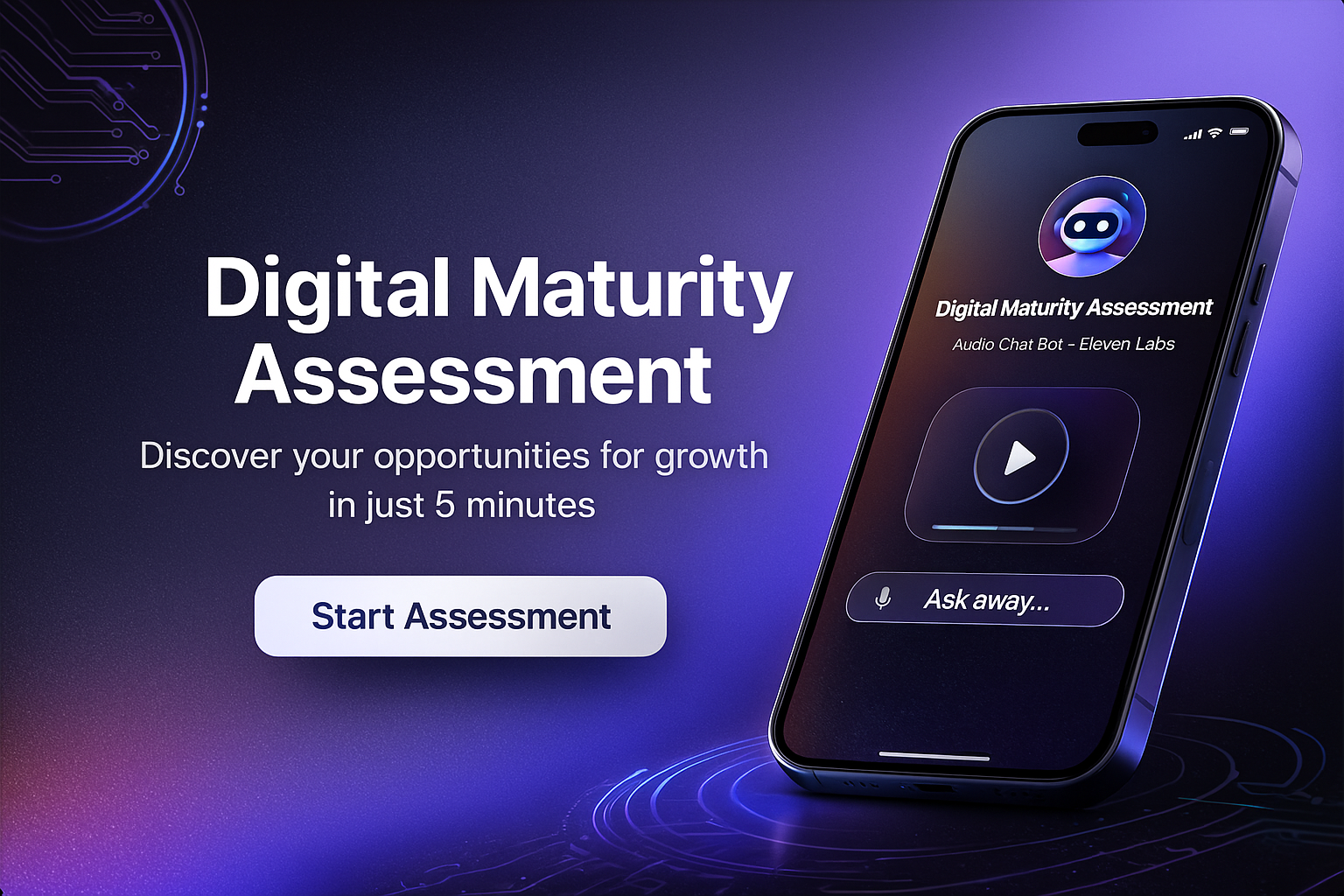
This blog explores how businesses can accelerate growth by identifying inefficiencies through a fast, purpose-driven digital maturity assessment. You'll learn what digital maturity is, how to assess it in under five minutes, and how to act on insight
In today’s digital-first world, success depends on more than just having the latest tools. It comes from using them with purpose. At Singular Innovation, we believe digital transformation begins not with technology, but with clarity.
We recently launched our Digital Maturity Assessment—an AI-powered process automation tool—and we've just made it faster and more intuitive. Why? Because true efficiency starts with understanding where you are today.
This blog explores:
Digital maturity refers to an organization's ability to leverage technology, data, culture, and processes to drive strategy and performance through AI automation for business. Mature organizations don't just adopt tools; they align them with internal workflows and strategic goals.
According to a Talkspirit study on best practices, digital maturity correlates directly with long-term performance, agility, and innovation. Companies that understand their digital capabilities make better decisions, use resources more effectively, and scale faster.
There are three reasons organizations need to assess their digital maturity now:
With constant disruption, slow or misaligned organizations risk falling behind. A quick maturity snapshot helps companies pivot with precision.
Assessments reveal where investment will drive real impact, reducing waste and improving ROI.
Beyond tools, maturity assessments expose internal friction: siloed teams, unclear processes, or resistance to change—issues tech alone can't fix.
According to Huble's guide to digital maturity assessments, the most impactful improvements often start with internal culture alignment before technological upgrades.
At Singular Innovation, we designed a fast, actionable framework that reveals where your organization stands and where it can go next.
Evaluate 5 categories using a 1-5 scale:
Your results provide:
According to Mendix's approach to assessing digital maturity, simplicity and speed are essential to making assessments actionable.
Data is useless without action. Here's how to make the most of your results:
Start with high-impact, low-effort changes. Quick wins build momentum.
Share findings with leadership. Digital maturity only scales when there's top-down support.
Use the Readiness Score to set short- and long-term improvement goals.
Give each action item a clear owner and timeline. Accountability accelerates progress.
Digital maturity is dynamic. Revisit the assessment every 6-12 months to measure progress.
As noted in Public Digital’s insights on maturity assessments, progress isn’t linear—but regular reflection ensures momentum and alignment.
From hundreds of assessments, we’ve seen key patterns:
The result: organizations work hard, but not smart. A quick maturity scan shines a light on these blind spots.
We built our assessment for speed and simplicity, without sacrificing depth. In just a few minutes, you'll uncover the areas most worth improving—such as intelligent automation platforms and scalable AI architecture—and receive practical guidance on how to do it.
No fluff. Just clarity, insights, and action.
Start your assessment here: https://singular-innovation.slack.com/archives/D08LWC3CVF1/p1763048470749479
Efficiency isn't about adding more tools. It's about using what you have with purpose.
With a 5-minute assessment, you can:
Take 5 minutes. Get the clarity you need. Move forward faster.
This article was developed with the assistance of AI tools and reviewed by the Singular Innovation team for accuracy and context.
Autonomous workflows allow AI to coordinate tasks, decisions, and actions across systems. This shift moves businesses from manual processes to intelligent, self-operating workflows.

Dashboards show what happened. AI operations systems decide and act on what should happen next. This shift is redefining how companies run their day to day operations.

LLMs are powerful, but prompts alone do not create business impact. Real value comes from embedding LLMs into workflows that connect data, decisions, and actions across systems.


