



ai-automation
Autonomous Workflows. AI That Runs Operations
Autonomous workflows allow AI to coordinate tasks, decisions, and actions across systems. This shift moves businesses from manual processes to intelligent, self-operating workflows.
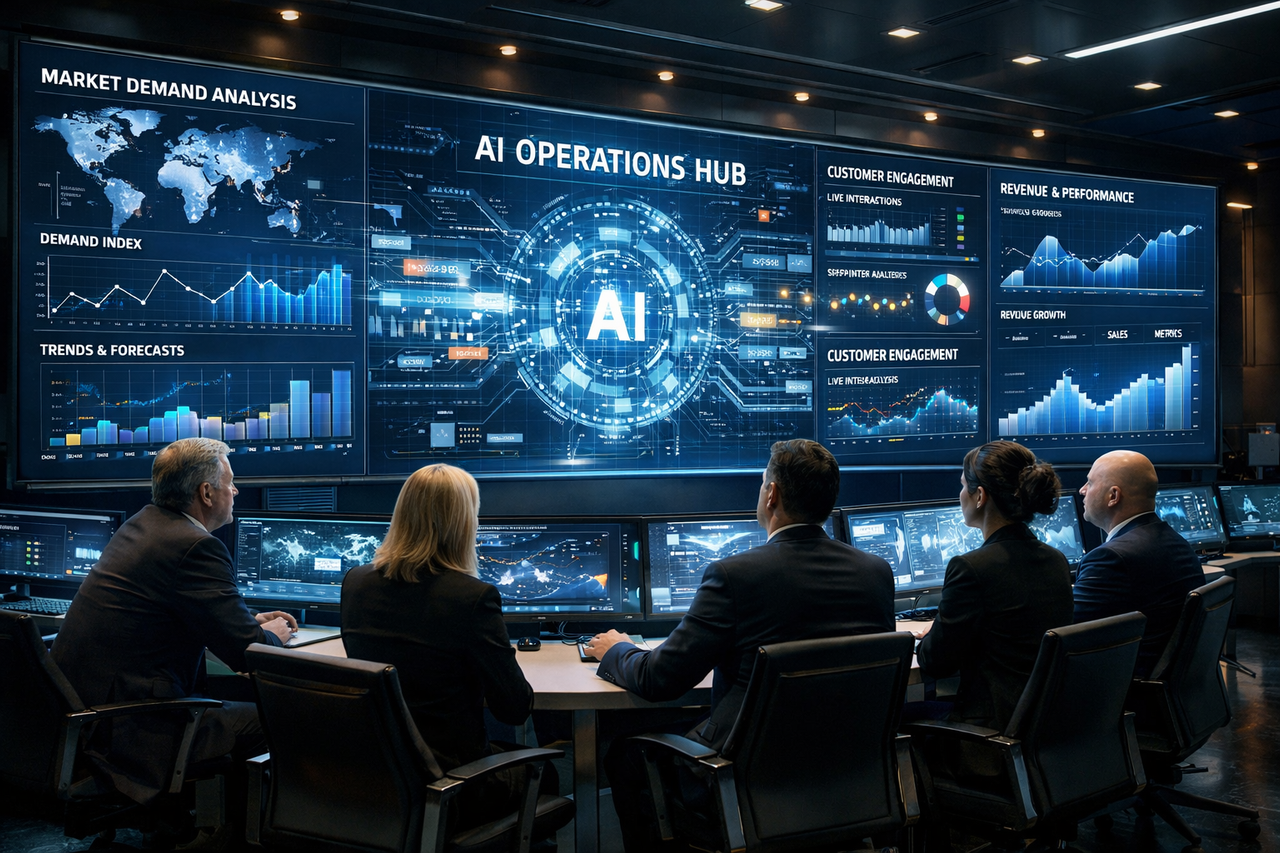
AI workflow automation is transforming how companies operate. Instead of humans coordinating tasks across tools, AI agents will monitor processes, automate decisions, and manage workflows across business systems.
Most business operations today still depend heavily on manual coordination.
Employees move information between systems, monitor dashboards, generate reports, and trigger operational actions based on what they observe. Even with modern cloud software, much of the operational work inside companies still relies on human supervision.
Software shows what is happening. Humans decide what to do next.
Artificial intelligence is beginning to change that model.
Rather than simply generating insights or assisting with isolated tasks, AI can now monitor workflows continuously, analyze operational data, and trigger actions across multiple systems.
This capability is giving rise to a new operational paradigm: AI workflow automation.
In this model, AI agents coordinate business processes across applications, manage operational tasks, and support decision making across the organization.
Instead of acting as assistants, AI systems become active participants in the operational infrastructure of the company.
For many organizations, this shift may represent the next major phase of digital transformation.
Understanding how AI workflow automation works is becoming essential for leaders preparing their companies for the next generation of business operations.
The traditional workflow model inside organizations is sequential and human-driven.
Information flows between departments and systems through manual actions.
A sales representative updates a CRM record. A project manager creates tasks based on that record. Finance generates invoices once a project begins. Operations teams monitor delivery timelines and coordinate resources.
Each step relies on people interpreting information and triggering the next action.
Automation tools introduced the ability to trigger simple actions automatically.
For example, when a form is submitted, a new CRM contact may be created or an email notification sent.
However, these systems operate primarily through predefined rules.
Artificial intelligence introduces a new layer of operational intelligence.
AI agents can interpret patterns in operational data and make decisions about how workflows should evolve.
For example, an AI system monitoring project delivery timelines might identify risks before deadlines are missed and automatically adjust task priorities.
Another system could monitor sales pipelines and recommend strategic adjustments based on conversion patterns.
These capabilities transform workflows from static processes into adaptive operational systems.
Many organizations assume AI will simply accelerate individual tasks.
In reality, the deeper transformation occurs when AI becomes integrated into the operational fabric of the organization.
Most companies currently operate through dozens of disconnected applications.
CRM systems manage customer relationships. Marketing platforms track campaigns. Accounting tools record financial activity. Project management tools coordinate teams.
Employees often spend significant time moving information between these systems.
AI workflow automation addresses this challenge by coordinating actions across systems automatically.
Instead of relying on employees to detect operational signals and trigger actions manually, AI agents can monitor workflows continuously.
When certain patterns appear, the system can generate insights, create tasks, send alerts, or update records across applications.
The result is an operational environment that responds dynamically to real-time business activity.
AI workflow automation typically operates through three interconnected layers.
Application layer
This layer includes the SaaS tools companies already use.
CRM platforms, marketing software, accounting systems, and project management tools generate operational data.
Operational workflow layer
This layer orchestrates workflows across applications.
Platforms such as Airtable Omni can function as operational engines where data from multiple systems is structured and workflows are coordinated.
The operational layer connects tools and manages the logic that drives business processes.
AI intelligence layer
AI agents operate on top of this infrastructure.
They monitor operational data, detect patterns, and trigger actions across systems.
For example, an AI workflow monitoring revenue performance could detect declining conversion rates and automatically notify sales leaders while adjusting marketing campaigns.
This architecture transforms software systems into coordinated operational environments.
Large enterprises often face significant barriers when redesigning operational systems.
Legacy infrastructure, complex governance structures, and decades of accumulated technology make rapid transformation difficult.
Small and mid-market businesses operate in a different environment.
Their digital infrastructure is often more flexible and cloud-based, allowing easier integration between systems.
This flexibility enables SMBs to adopt AI workflow automation more quickly.
With the right infrastructure, small teams can build operational systems capable of coordinating complex workflows across their business.
Instead of scaling operational teams proportionally with growth, companies can scale automation.
Organizations interested in implementing AI workflow automation can begin with a structured approach.
Step 1. Map operational workflows
Identify processes that require coordination across multiple systems.
Examples include customer onboarding, sales pipeline management, marketing campaign tracking, and project delivery.
Step 2. Create an operational data layer
Ensure that relevant data from multiple applications can be consolidated and structured within a centralized system.
This infrastructure allows workflows to operate consistently across the organization.
Step 3. Automate cross-system workflows
Implement automation that triggers actions across applications based on operational events.
For example, when a deal closes, project tasks, billing records, and onboarding communications can be generated automatically.
Step 4. Deploy AI workflow agents
Once workflows and data infrastructure are established, AI agents can analyze patterns and manage operational decisions.
Over time, this infrastructure evolves into an intelligent operational platform.
Consider a consulting firm managing dozens of client engagements simultaneously.
Without workflow automation, project managers must monitor delivery timelines, track resource allocation, and generate performance reports manually.
With AI workflow automation, the operational environment becomes proactive.
Project data from collaboration tools flows into a centralized operational database.
AI agents monitor delivery timelines and detect potential risks before deadlines are missed.
If resource allocation becomes imbalanced or milestones are delayed, the system generates alerts and recommends adjustments.
Executives gain real-time visibility into operational performance without relying on manual reporting.
The future of business operations will likely involve increasing levels of AI-driven coordination.
Rather than interacting with dozens of dashboards, employees will operate within systems where workflows are managed automatically.
AI agents will monitor operational signals continuously and trigger actions across systems.
In this environment, humans will focus more on strategy, creative work, and decision oversight.
Operational execution will increasingly be handled by intelligent workflow systems.
Companies that design these systems early may gain significant advantages in efficiency, scalability, and decision speed.
The evolution of business operations has historically been driven by software tools.
Artificial intelligence introduces a new stage in this evolution.
Rather than simply helping employees complete tasks faster, AI workflow automation allows organizations to redesign how work itself is coordinated.
Companies that integrate AI agents into their operational infrastructure will likely operate with greater speed, visibility, and automation.
The future of workflows may not involve more tools, but smarter systems.
AI workflow automation allows systems to coordinate business processes automatically.
AI agents can monitor operational data and trigger actions across applications.
Workflows are evolving from static rule-based processes to adaptive operational systems.
Businesses often struggle with fragmented tools that require manual coordination.
Operational platforms connect data and workflows across systems.
SMBs can adopt AI workflow automation faster than large enterprises.
AI-driven workflows may redefine how companies manage operations.
What is AI workflow automation?
AI workflow automation refers to the use of artificial intelligence to monitor workflows, analyze operational data, and trigger automated actions across business systems.
How do AI agents manage workflows?
AI agents analyze operational signals across systems and trigger tasks, notifications, or decisions based on predefined operational logic and data patterns.
Can SMBs implement AI workflow automation?
Yes. Modern automation platforms and no-code infrastructure allow SMBs to deploy AI-driven workflows without large engineering teams.
What processes can AI workflows automate?
Sales pipelines, customer onboarding, marketing analytics, project delivery, financial monitoring, and operational reporting.
Why is AI workflow automation important?
It allows organizations to coordinate operations across systems automatically, improving efficiency and reducing manual work.
AI Workflow Automation
The use of artificial intelligence to coordinate and automate operational processes across systems.
AI Agent
An intelligent system that analyzes data and executes actions within operational workflows.
Operational Platform
A digital infrastructure that connects applications, workflows, and operational data.
Workflow Orchestration
The coordination of tasks and processes across multiple applications and teams.
Operational Intelligence
The ability to analyze business operations continuously and generate insights that guide decisions.
McKinsey research indicates rapid growth in AI adoption across operational workflows.
Gartner predicts increasing integration of AI capabilities into enterprise software platforms.
Deloitte highlights workflow automation as a key driver of productivity improvements.
Harvard Business Review identifies operational redesign as essential for digital transformation success.
Companies exploring how AI can move beyond experimentation into real operational systems are beginning to redesign the workflows behind their tools.
Singular Innovation helps SMBs design and build custom AI-powered operational platforms using Airtable Omni and modern no-code infrastructure.
This article was developed with the assistance of artificial intelligence tools to support research, structure, and editorial drafting. All strategic analysis, validation, and final editorial review were conducted by the Singular Innovation team.
Autonomous workflows allow AI to coordinate tasks, decisions, and actions across systems. This shift moves businesses from manual processes to intelligent, self-operating workflows.

Dashboards show what happened. AI operations systems decide and act on what should happen next. This shift is redefining how companies run their day to day operations.

LLMs are powerful, but prompts alone do not create business impact. Real value comes from embedding LLMs into workflows that connect data, decisions, and actions across systems.


