General
What Is an Agentic Workflow? How AI Agents Replace Manual Process Steps
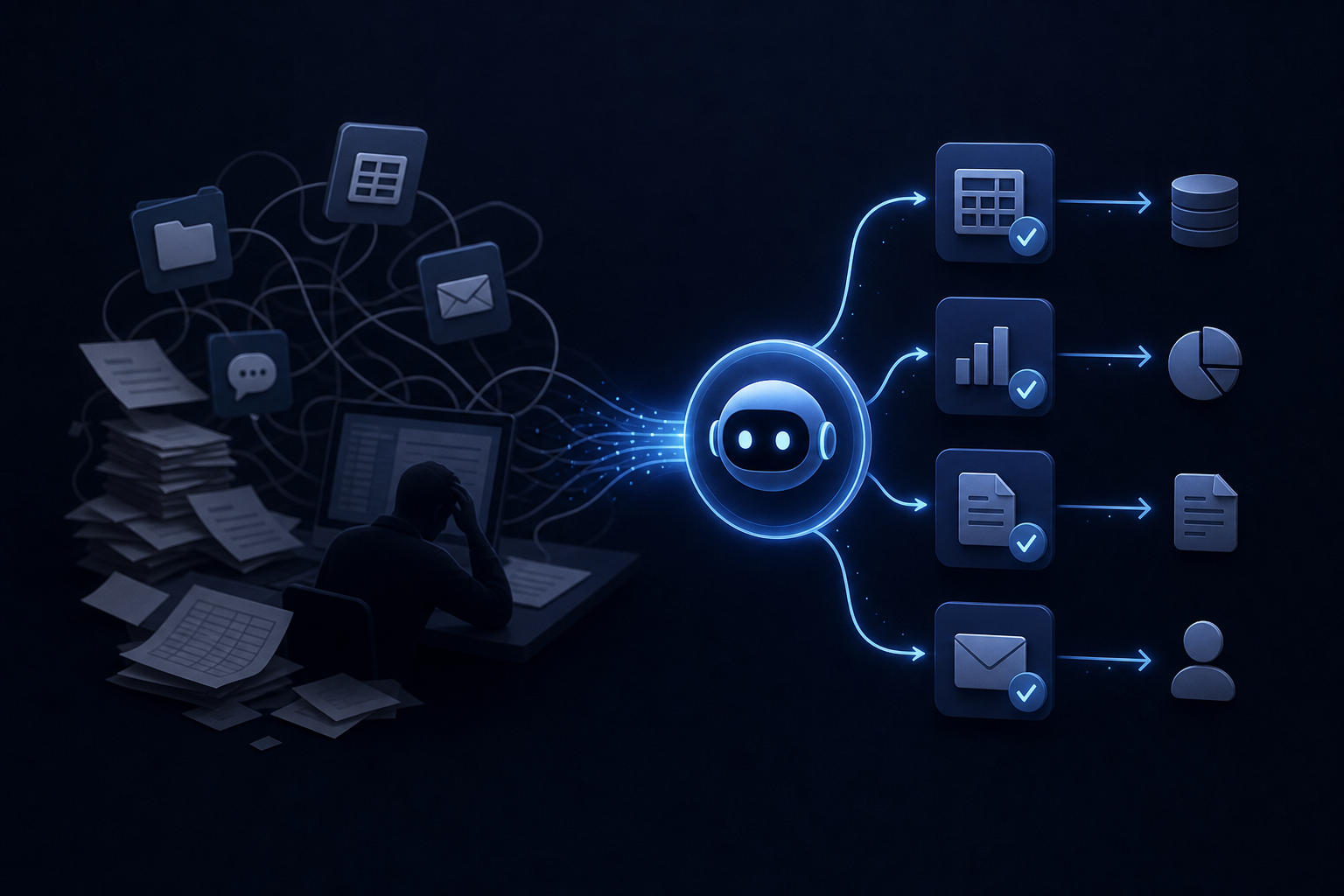
An agentic workflow lets AI agents plan and execute tasks without manual triggers. See how SMBs use them to replace repetitive process steps.
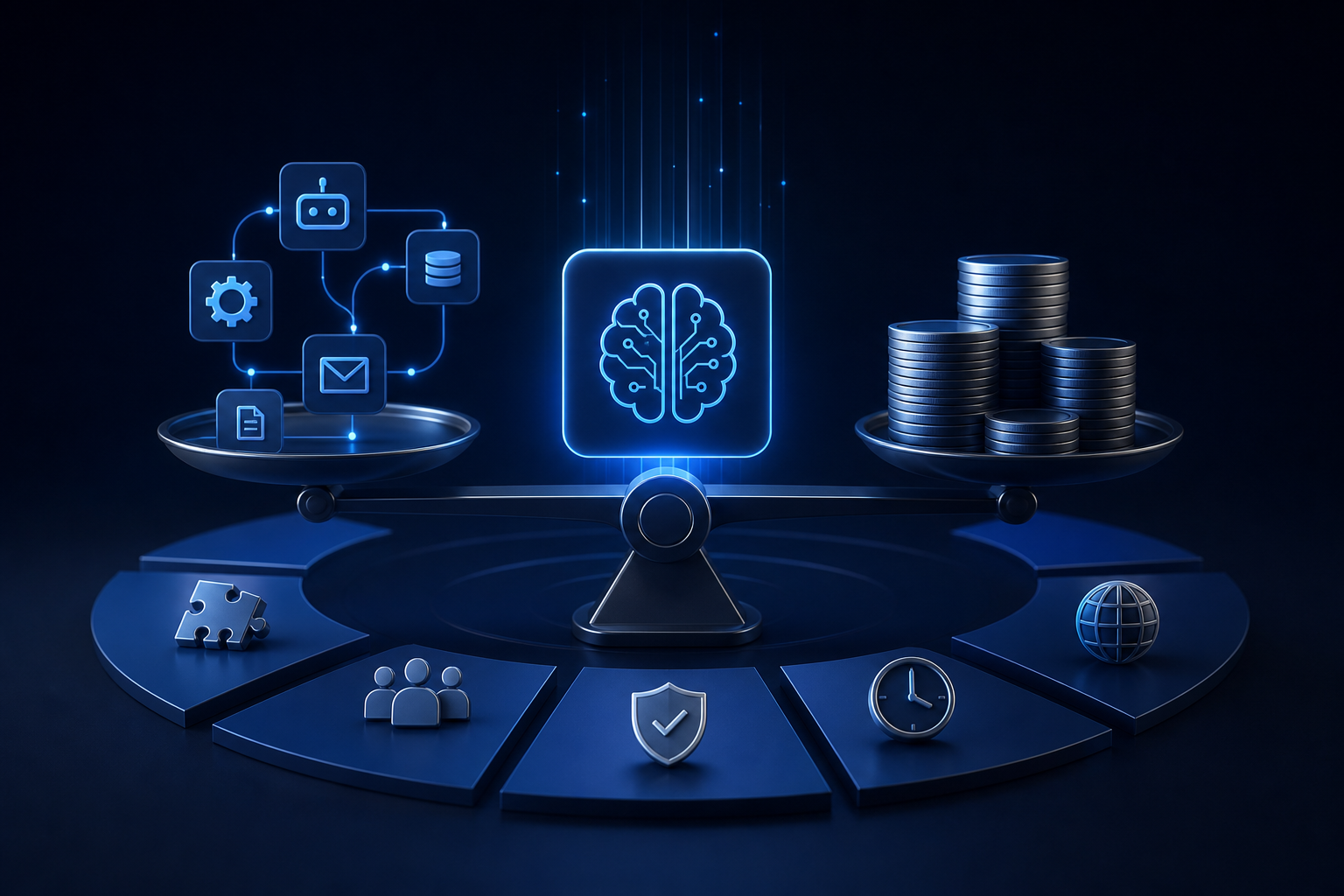
AI automation agency cost varies wildly — learn what drives pricing, what each engagement model looks like, and how to judge if it's worth it.
If you're budgeting for AI automation and trying to figure out what an agency will actually charge, you've probably noticed that almost nobody publishes a price list. It's one of the most common questions business owners ask before signing a contract — and one of the least clearly answered. This article breaks down what drives pricing, what different engagement models typically look like, and how to evaluate whether what you're paying for is actually worth it.
Unlike hiring a freelancer to build a landing page, AI automation engagements vary enormously in scope. One company needs a single workflow to route incoming leads. Another needs a full data consolidation layer, three deployed AI agents, and integration with five existing tools. The price difference between those two projects can be tenfold.
Agencies also structure their work differently. Some charge by the hour. Some charge a flat project fee. Some sell retainers. And some bundle everything into a fixed-scope engagement with a defined deliverable. None of these models is inherently better or worse — but they create very different cost profiles for the buyer.
So "how much does it cost" doesn't have a single honest answer. What it has is a set of variables you can learn to read.
The most obvious driver. A simple automation — a trigger that moves data between two apps — takes hours to build. A multi-agent system that reads inbound emails, classifies intent, routes tasks, updates a CRM, and escalates edge cases to a human takes weeks. Agencies price accordingly.
Complexity also compounds when your existing tech stack is fragmented. If your data lives across four different tools with no clean API access, the agency has to solve an infrastructure problem before they can build anything useful. That adds cost.
Project-based: A defined scope, a defined deliverable, a fixed price. Good for companies that know exactly what they want. The risk is scope creep — if requirements shift mid-project, expect change orders.
Retainer-based: A monthly fee for ongoing access to the agency's team. Good for companies that need continuous iteration and support. The risk is paying for capacity you don't always use.
Outcome-based: Less common, but some agencies tie part of their fee to measurable results — time saved, revenue generated. Good in theory, complicated in practice because attribution is hard.
Embedded deployment: A newer model where the agency builds and deploys working systems inside your stack within a fixed timeframe, and you own everything they build. This is how Singular Innovation operates — the deliverable is a functioning AI system, not a roadmap or a recommendation.
A solo consultant costs less per hour than a full agency team, but also has limits on bandwidth, depth, and what they can ship in parallel. Larger agencies bring architects, engineers, and project managers — which raises the rate but often compresses the timeline.
Offshore teams can reduce costs significantly. Nearshore and onshore teams cost more but tend to communicate more easily and move faster through ambiguity. Neither is universally better; it depends on how much hand-holding the project requires.
Regulated industries — healthcare, finance, legal — add cost because every automation needs to account for compliance. Data handling, audit trails, access controls, and documentation all take time to build correctly. An agency that specializes in regulated environments will charge a premium for that expertise, and it's usually worth paying.
Compressed timelines cost more. If you need a working system in two weeks instead of two months, the agency has to staff up, parallelize work, and absorb the risk of moving fast. That premium is real and reasonable.
Because most agencies in this space don't publish verified pricing, throwing out specific numbers would be misleading. What's more useful is understanding the shape of different engagement sizes.
Small scope engagements typically involve one or two automations, minimal integration work, and a short timeline. These are often the entry point for companies testing AI automation for the first time. The deliverable is narrow but functional.
Mid-scope engagements involve multiple workflows, some data infrastructure work, and possibly one deployed AI agent. These take longer and require more coordination between the agency and the client's internal team. The output is meaningfully more capable.
Large or enterprise engagements involve full-stack AI deployment — consolidated data infrastructure, multiple agents, deep integration with existing systems, and often change management support. These are multi-month projects with significant investment.
The right size depends on what you're trying to solve, not on what you can afford to spend. Buying a small engagement when you need a mid-scope solution is a false economy — you'll pay again to rebuild it properly.
This is where many buyers get burned. The line between a consulting engagement and an implementation engagement isn't always clear in how agencies market themselves.
A consulting engagement produces analysis, recommendations, and documentation. It tells you what to build and how. It does not build anything. You still need engineers to execute.
An implementation engagement produces working software. It builds the thing, deploys it, and hands it over. You can run it Monday morning.
Most buyers want the second thing. Many agencies deliver the first thing and call it transformation. Before you sign, ask specifically: what is the deliverable? Is it a document or a deployed system? Who owns the code and the infrastructure when the engagement ends?
Agencies that build and deploy working systems inside your existing stack — and hand over full ownership — are a different category from those that deliver strategy decks. The cost structures are different too, because the risk profile is different. The agency is accountable for something that actually runs.
How long before the system is doing useful work? An agency that takes six months to deploy anything is asking you to carry a lot of cost before you see any return. Faster deployment means faster payback.
Singular Innovation commits to a first working capability in 10 business days. That's a specific, testable claim — and it changes the ROI math significantly compared to a multi-month engagement.
Some agencies build and disappear. Others offer ongoing support. Some hand over full ownership so your internal team can modify and extend the system without paying the agency for every change. Understand what you're buying before you commit.
The real cost comparison isn't agency A versus agency B. It's the agency versus doing nothing, or versus hiring in-house. A full-time AI engineer costs significantly more annually than most project engagements. A well-scoped automation that saves your team 20 hours per week pays back quickly at any reasonable labor cost.
Case studies, demos, and references matter more in this category than in most. An agency that can show you a working system they built for a company similar to yours is a much safer bet than one that can show you a polished deck about what they'd theoretically build.
Vague deliverables. If the contract says "AI strategy and implementation roadmap" without specifying what gets deployed, you're buying a document.
No ownership transfer. If the agency retains ownership of the code, the models, or the infrastructure, you're renting — not buying. That changes the long-term cost significantly.
Timeline padding. A six-month timeline for a workflow automation that should take weeks is often a sign the agency is managing its own capacity, not your project.
No integration specifics. If the agency can't tell you exactly how the system will connect to your existing tools, they haven't scoped the work properly. That ambiguity will cost you later.
Overemphasis on the technology. Agencies that spend more time talking about which AI models they use than about what problem they're solving tend to prioritize novelty over utility.
Singular Innovation is an AI transformation agency built for SMBs and growth-stage companies that want working systems, not strategies. The model is straightforward: embed AI directly into your existing tech stack — automated workflows, consolidated data infrastructure, deployed AI agents — with a first working capability in 10 business days and a validated proof of concept in under 45 days, and full ownership transferred to you at the end.
That's a deliberate structural choice. It removes the ambiguity about what you're buying. You're getting a deployed system that runs inside your business. Not a plan. Not a prototype. A second brain that executes.
For companies that have already sat through consulting engagements and come away with nothing running, that's a meaningful departure from the norm.
Hiring an AI automation agency is a real investment. The cost is justified when the agency delivers something that runs, reduces manual work, and compounds in value over time as your team builds around it. It's not justified when the output is a document sitting in a shared drive.
Before you evaluate cost, evaluate deliverables. Before you compare prices, compare what you actually get. The cheapest agency that ships a working system beats the most expensive one that delivers a slide deck every time.
If you want to see what a deployed AI system looks like inside a business like yours, Singular Innovation is worth a conversation.
What is the typical cost range for hiring an AI automation agency in 2026? Pricing varies widely based on scope, complexity, and engagement model. A single-workflow project costs significantly less than a full-stack deployment with multiple AI agents and data infrastructure. Because most agencies don't publish rates, the best approach is to request a scoped proposal based on your specific use case rather than trying to compare headline numbers.
What's the difference between an AI consulting firm and an AI automation agency? A consulting firm typically delivers analysis, strategy, and recommendations — documents that tell you what to build. An automation agency builds and deploys working systems inside your existing tech stack. If you need something running, not just planned, you need an agency that ships, not one that advises.
How long does a typical AI automation engagement take? Timelines range from a few days for simple workflow automations to several months for enterprise-scale deployments. Agencies that specialize in fast deployment — like Singular Innovation, which commits to a first working capability in 10 business days — can dramatically compress time-to-value compared to traditional consulting timelines.
Should I own the AI systems an agency builds for me? Yes. Full ownership of code, models, and infrastructure is non-negotiable for most businesses. If an agency retains ownership, you're effectively renting the system — and your costs continue indefinitely. Always confirm ownership transfer before signing anything.
What should I look for in a proposal from an AI automation agency? Look for specific deliverables, clear integration details for your existing tools, a defined timeline, explicit ownership terms, and evidence of similar work they've shipped for comparable clients. Proposals that are heavy on methodology and light on specifics are a warning sign.
Is it cheaper to hire an in-house AI engineer instead of an agency? In-house hiring typically costs more annually than a project engagement, and a single engineer has real limits on what they can build and maintain alone. Agencies bring a full team and usually move faster. For companies without existing AI infrastructure, an agency engagement is generally the faster and more cost-effective starting point.
How do I calculate ROI on an AI automation investment? Start with the hours your team currently spends on the tasks you're automating. Multiply by fully-loaded labor cost. If the automation saves 20 hours per week across your team, the payback period on most project engagements is measured in weeks or months, not years — and that's before accounting for reduced errors, faster response times, and the capacity your team gets back for higher-value work.
An agentic workflow lets AI agents plan and execute tasks without manual triggers. See how SMBs use them to replace repetitive process steps.
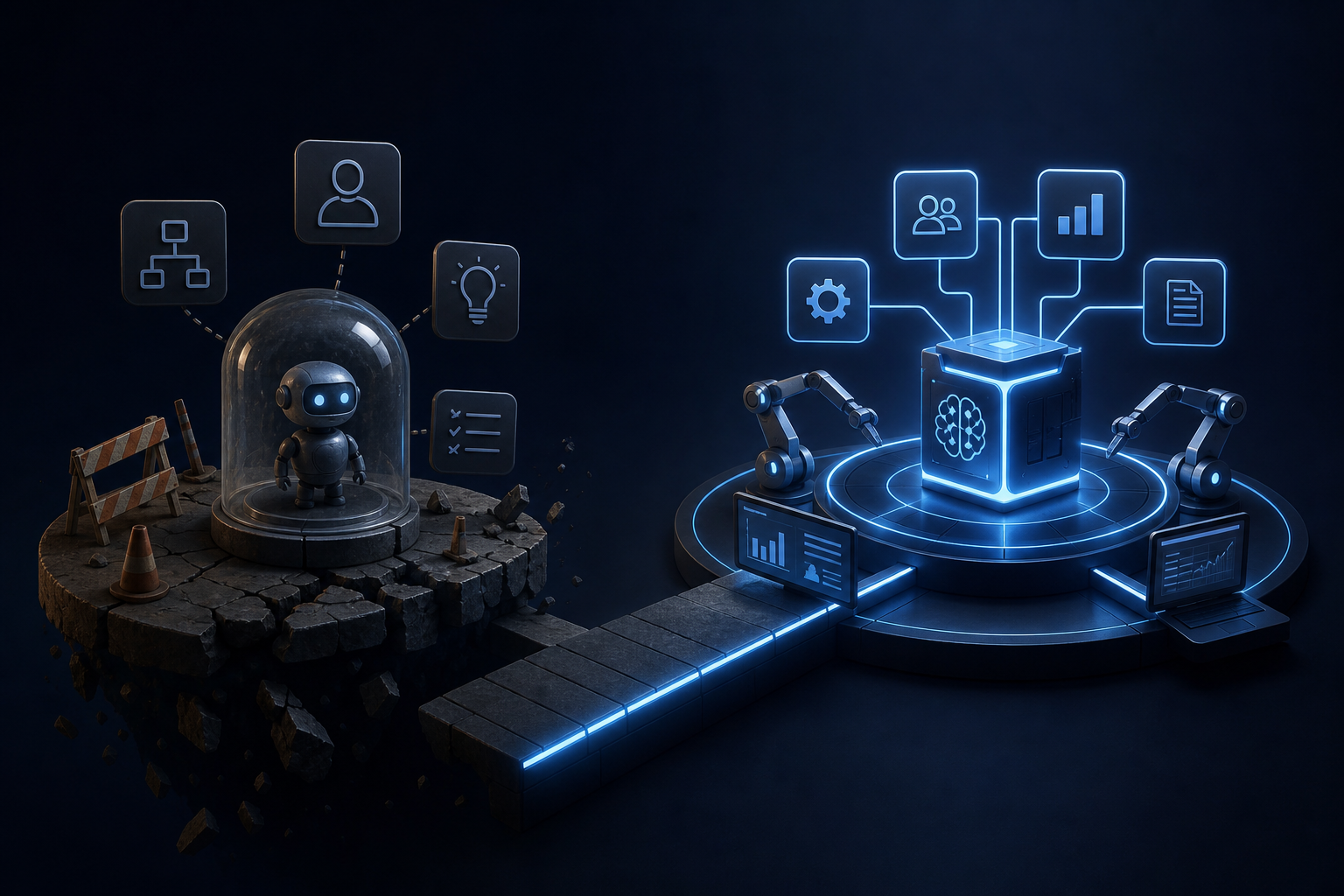
AI pilot program failure is almost always structural, not technical. Learn the four root causes and how embedded AI systems are built to avoid them.
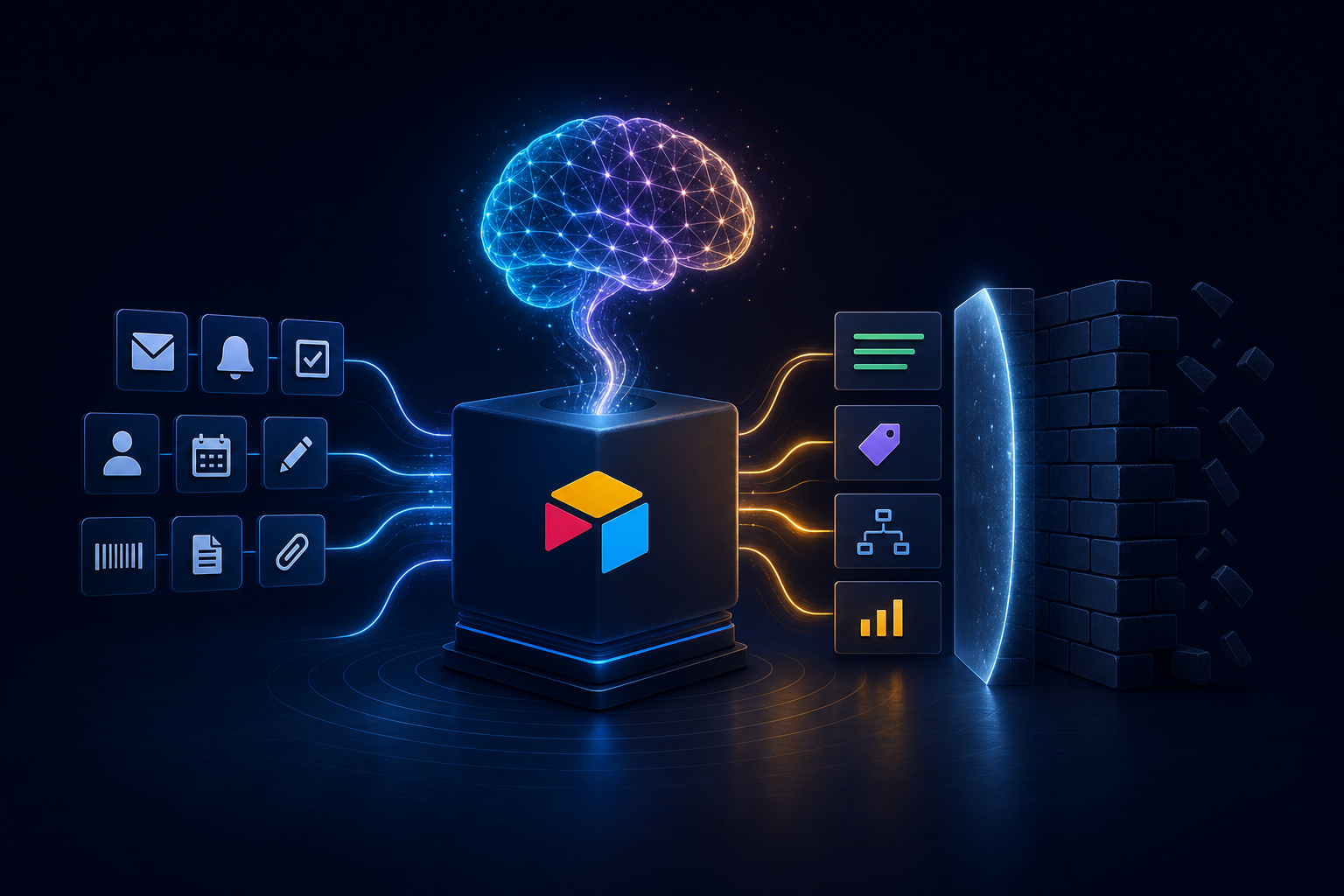
Airtable automation with AI can eliminate repetitive work — but it has real limits. Learn what's possible, where it breaks down, and how to plan around it.


