General
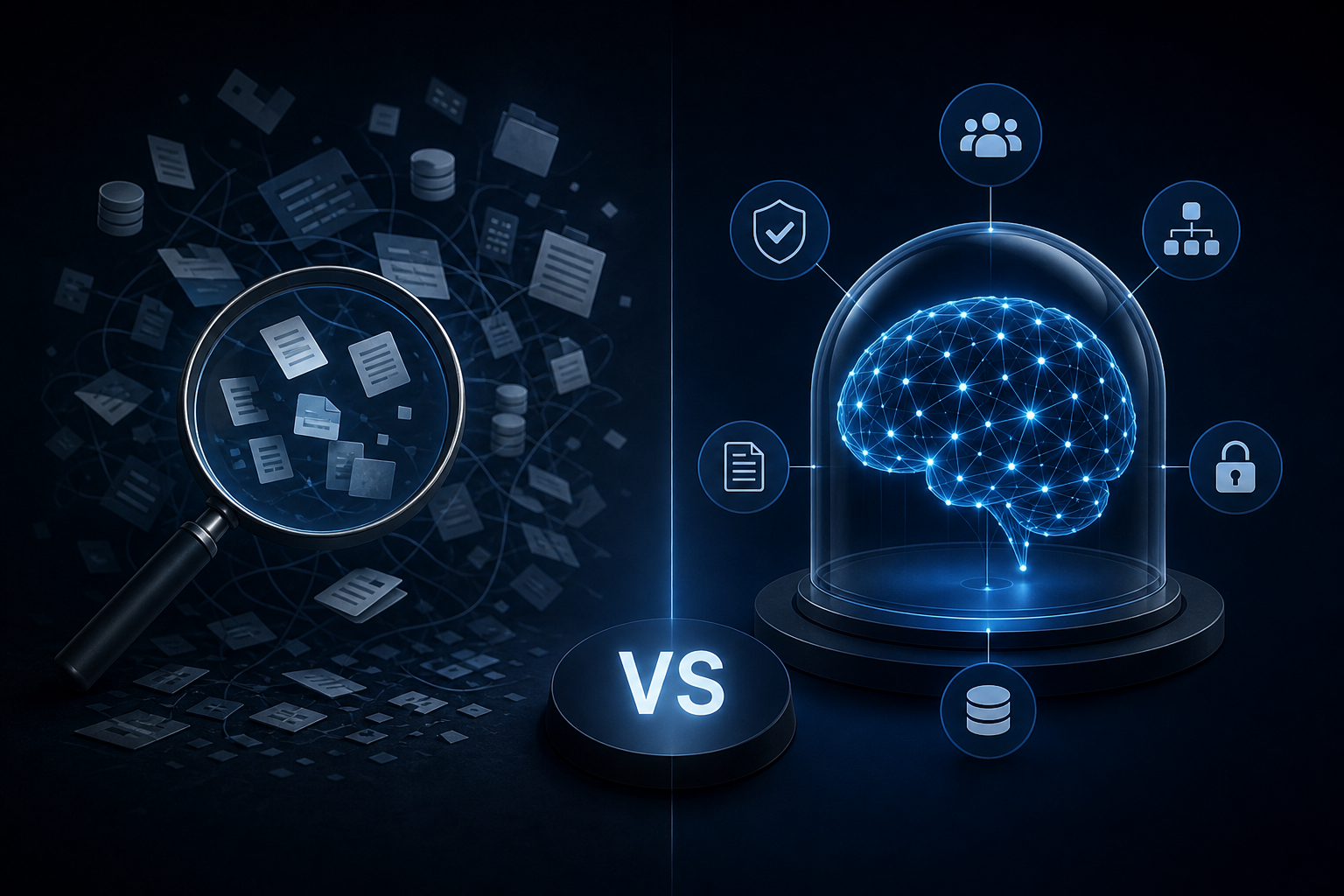
Enterprise AI Search vs. a Governed Company Brain: Key Differences
Discover how enterprise ai search differs from a governed company brain and which knowledge approach your team actually needs to act on trusted data.

Hiring an AI transformation agency? Use these 7 questions and red flags to separate agencies that ship real systems from ones that sell slides.
You asked three agencies to help you automate your operations. The first sent a 40-slide deck. The second proposed a 90-day discovery phase. The third demoed someone else's product and called it a roadmap. None of them shipped anything.
Hiring an AI transformation agency isn't like hiring a developer or a marketing firm. The category is new enough that almost anyone can claim the title, and the gap between what agencies promise and what they actually deliver is wide enough to cost you real money and months of momentum. Here's a practical framework for evaluating any agency before you sign — so you stop paying for theater and start getting working systems.
Before you can evaluate anyone, you need a clear picture of what good looks like.
A real AI transformation agency does three things: maps your recurring workflows, builds AI workers that run those workflows autonomously inside your existing tools, and connects your scattered data sources into a single governed layer that every AI worker and team member can pull from. The output is not a strategy document. It's a working system.
If an agency can't describe a specific deliverable with a specific ship date, that's your first signal to walk away.
This is the most important question on the list. A credible agency names a concrete deliverable and a date — not "we'll complete the discovery phase" or "we'll have a prototype ready for review." A working system, running inside your stack, by a specific day.
Singular Innovation ships a first working capability in 10 business days from signed MSA. That's not a final system, but it's a functional one with a named owner, defined scope, and a real ship date. That kind of specificity is what separates an agency from a consulting firm.
This question exposes more than almost any other. Many agencies build on top of their own proprietary platforms — which means when you stop paying, you lose access. Others deliver workflows inside tools you don't control.
Ask directly: do you own the code, the prompts, the automations, and the documentation? Get the answer in writing before you sign anything. If the agency hedges, assume the answer is no.
For a full breakdown of how to structure IP ownership in an agency contract, the guide on how to get full ownership of the AI systems you pay an agency to build covers exactly what to ask for and which clauses to require.
Any agency that requires you to rip out your current stack before they can start is adding risk and cost before they've delivered a single thing. Your team already knows how to use Slack, HubSpot, Airtable, and QuickBooks. A good agency deploys AI workers inside those tools — not instead of them.
Ask for a specific list of integrations the agency supports in production. Not tools they've experimented with. Production integrations with real client deployments.
Most buyers forget to ask this one. An AI worker is only as useful as the information it draws from. If that information is stale, siloed, or ungoverned, the AI worker produces confident-sounding answers that are wrong.
A serious agency builds a governed knowledge layer — sometimes called a Company Brain — that consolidates data from your live tools and updates automatically. It includes role-based permissions so team members only access what they should, approved sources so the AI doesn't hallucinate from bad inputs, and audit logs so you can see exactly what the system retrieved and when.
If an agency can't describe how they handle data governance, they're building you a demo, not an operating system.
Some agencies build and hand off. Others require a monthly retainer to keep the system running. Neither model is inherently wrong, but you need to know which one you're buying.
Ask: after the initial build, can your team maintain this without them? What breaks if you stop paying? What does a typical month-two engagement look like?
The answer tells you whether you're buying infrastructure you own or a service you rent.
Case studies describing a Fortune 500 transformation aren't useful if you run a 40-person operations team. Ask for examples from companies in your revenue range, with similar tool stacks and similar workflow complexity.
Named client engagements are a meaningful signal. Vague references to "a leading logistics company" are not.
Pricing in this category varies enormously, and the number on a website rarely tells you what you're actually getting. A low-cost setup might buy you one AI worker handling one task — no knowledge layer, no governance, no multi-agent coordination. A more substantial engagement starts to cover a governed data layer, multiple AI workers, workflow automation, and a system you own outright.
Pricing depends on scope, so book a call to get a real number rather than guessing from a website.
For a detailed breakdown of what different price points actually buy, the article on how much it costs to hire an AI automation agency in 2026 walks through the tiers clearly.
You'll recognize these patterns if you've been through a few agency conversations.
The deck-first agency. If the first deliverable is a strategy presentation rather than a working system, you're paying for analysis, not execution. Analysis has value — but it shouldn't be the product.
The proprietary platform trap. If the agency's pitch centers on their platform and your workflows live inside it, you don't own the system. You're a subscriber. Ask what happens on day 31 if you cancel.
The discovery phase that never ends. Some scoping work is necessary. But if an agency can't name a ship date for something functional within the first two weeks, the discovery phase is the product.
The headcount-heavy proposal. If the agency's answer to your operations problem is five consultants running a six-month engagement, they're solving your problem with their labor, not with a system. The system should eventually run without them.
Vague governance answers. Ask how they handle data permissions, source approval, and audit trails. If the answer is "we use best practices" or "the model handles that," they haven't thought about governance. That's a serious problem for any business with sensitive operational data.
A well-built AI transformation engagement produces a few specific outcomes.
Your team stops answering the same questions repeatedly because the AI worker handles them from a governed source of truth. Recurring reports that used to take two hours get drafted automatically on a schedule. New hires onboard faster because the knowledge layer gives them accurate, role-appropriate context from day one. Workflows that depended on one person's memory become documented, automated, and auditable.
None of this requires replacing your tools. It requires connecting them properly and deploying AI workers with clear job descriptions and reliable information to draw from.
If you want to understand what the first 30 days of a real engagement looks like week by week, the guide on what to expect when you hire an AI agency walks through the timeline in detail.
Before you sign with any AI transformation agency, run through this list.
If an agency can't answer every item on this list before you sign, keep looking.
Singular Innovation builds AI operating systems for SMBs, with deployments across entertainment, food service, fintech, and construction tech. If you want to know where your operations stand before committing to anything, book your free 30-minute AI Audit at singular-innovation.com.
What does an AI transformation agency actually do? An AI transformation agency maps your recurring workflows, builds AI workers that run those workflows autonomously, and connects your data sources into a governed knowledge layer. The output is a working system deployed inside your existing tools — not a strategy document or a roadmap.
How do I know if an agency will actually ship something? Ask for a named deliverable and a specific ship date before you sign. A credible agency can tell you exactly what will be running and by when. If the first deliverable is a discovery report or a strategy presentation, the agency is selling analysis, not execution.
What should I own at the end of an AI agency engagement? You should own all code, prompts, automations, workflows, and documentation. Get this confirmed in writing before the engagement starts. If the agency builds inside their own proprietary platform, you may lose access the moment you stop paying.
What is a reasonable budget for an AI transformation engagement? Pricing depends on scope. Get a specific number from a strategy call rather than estimating from a website — what's listed rarely reflects what's actually included at each tier.
What is a governed knowledge layer and why does it matter? A governed knowledge layer is a structured, auto-updating data layer that consolidates information from your live tools and controls who can access what. Without it, AI workers pull from stale or unreliable sources and produce confident-sounding answers that are wrong. Governance includes role-based permissions, approved sources, retrieval scopes, and audit logs.
How long should it take before I see something working? A working first release should ship within two weeks. If an agency can't put something functional in your hands within 10 business days from signed MSA, the engagement is structured around their process, not your results.
What are the biggest red flags when evaluating an AI transformation agency? Watch for agencies that lead with strategy decks, build inside proprietary platforms you don't own, can't describe their data governance model, or propose discovery phases with no defined end date. Any of these signals that you're buying consulting theater rather than a working system.
Discover how enterprise ai search differs from a governed company brain and which knowledge approach your team actually needs to act on trusted data.
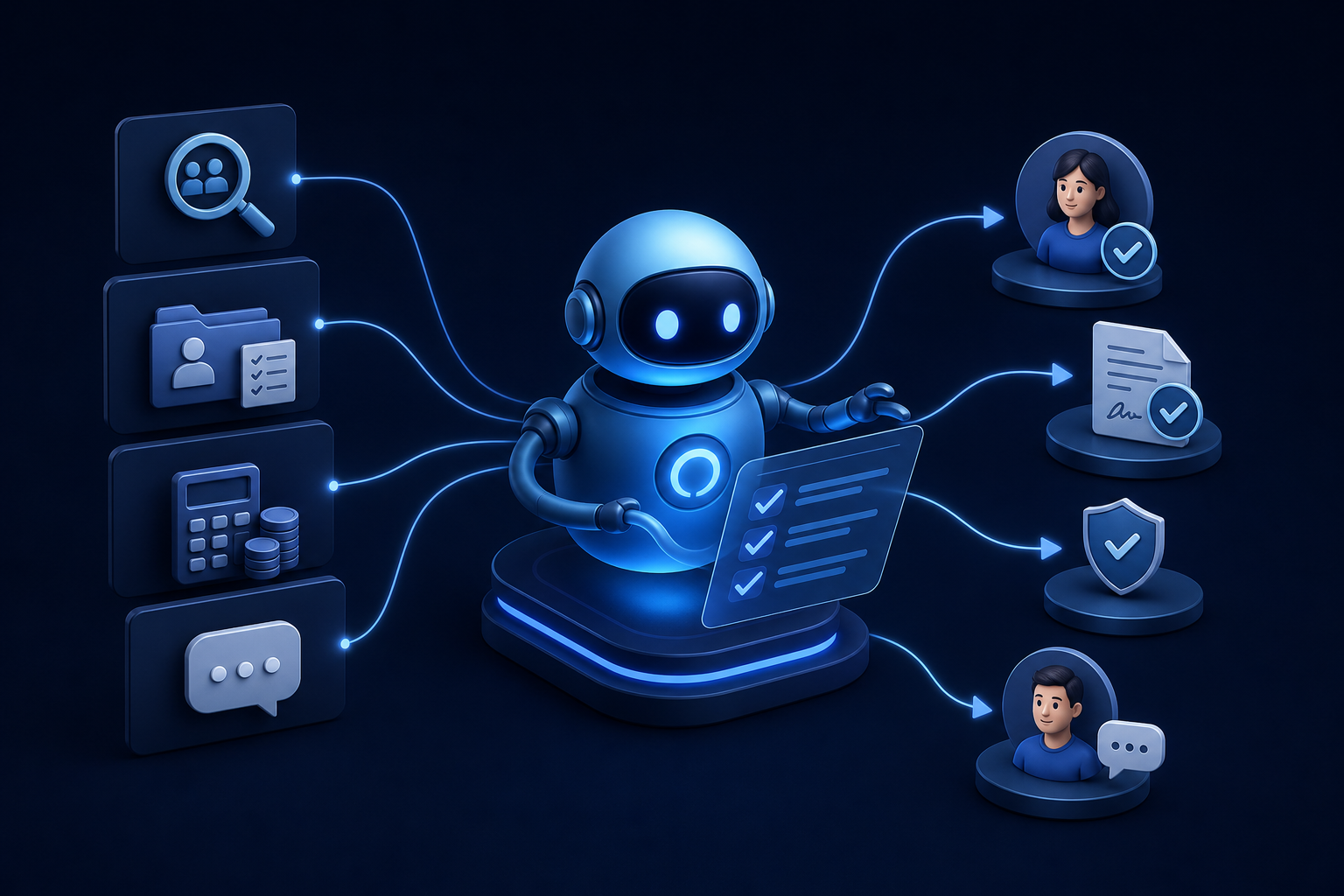
Discover how ai for hr automation handles recruiting, onboarding, payroll checks, and employee Q&A so your team can focus on work that matters.

Explore custom ai agent development paths: build in-house, buy pre-built, or partner with a specialist. Find the right fit for your team today.


