General
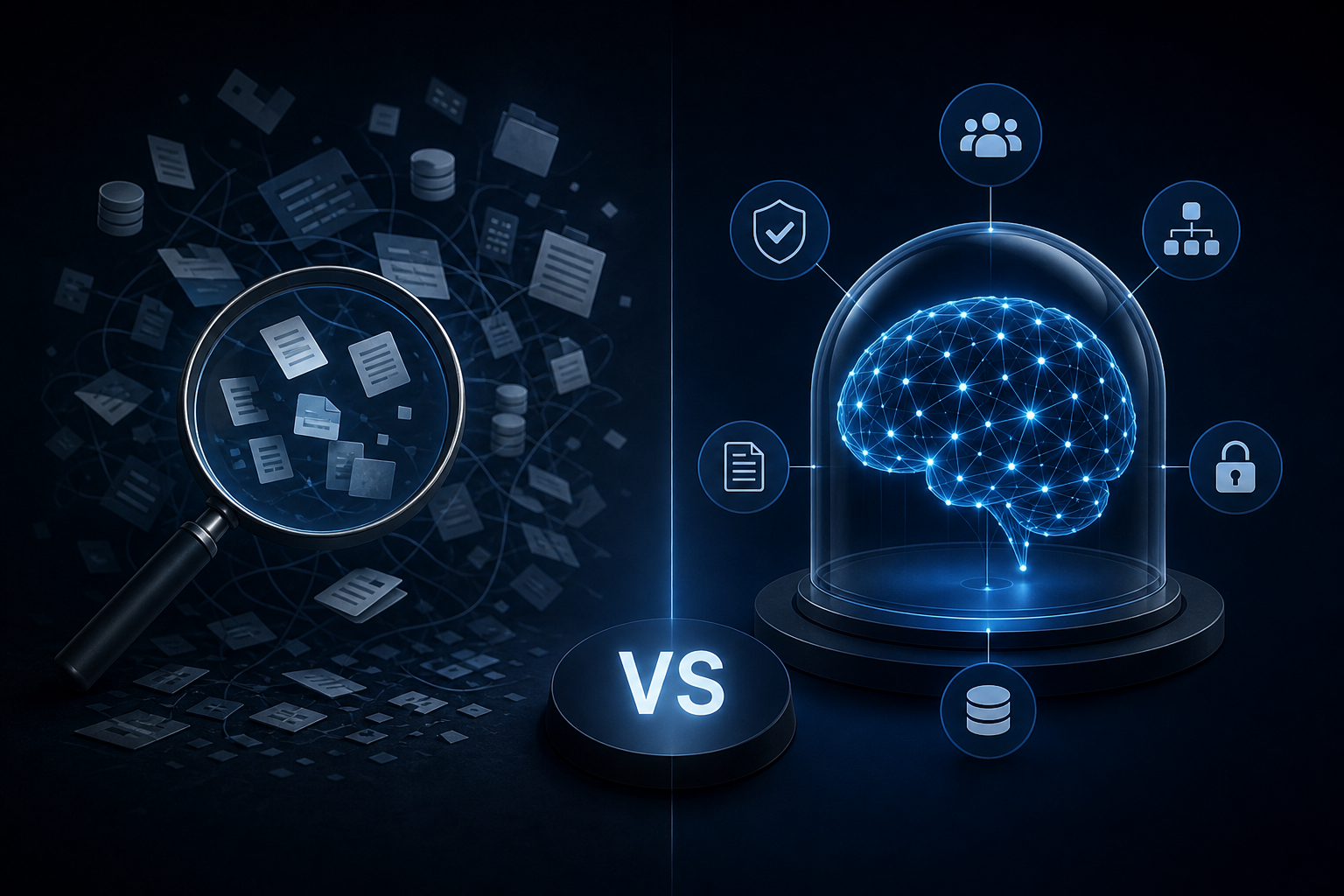
Enterprise AI Search vs. a Governed Company Brain: Key Differences
Discover how enterprise ai search differs from a governed company brain and which knowledge approach your team actually needs to act on trusted data.

Choose the right AI implementation partner with this practical checklist — covering ownership, timelines, security, and the questions to ask before you sign.
You hired a consultant. They delivered a 47-slide deck, a 90-day roadmap, and a retainer proposal. Six months later, nothing runs differently. Your team still exports CSVs by hand, still copies data between HubSpot and QuickBooks, still rebuilds the same report every Monday morning.
That's not an implementation failure. That's a partner selection failure. And it happens because most buyers don't know what to ask before they sign.
Choosing the right AI implementation partner is a different exercise than hiring a software vendor or a strategy consultant. The criteria are different, the red flags are different, and the contract terms that protect you are different. Here's exactly what to evaluate before you commit.
A consultant diagnoses. A dev shop builds. An AI implementation partner does both, then hands you something that runs.
The market is full of firms that occupy the space between those two without delivering on either. They'll assess your operations, recommend tools, build a proof of concept, and call it done — leaving you with a demo no one maintains and a methodology no one can execute without them.
A real implementation partner delivers a working system into your existing stack, with defined owners, documented workflows, and a clear handoff. The deliverable isn't a recommendation. It's infrastructure that keeps operating after the engagement ends.
This is the first question and the most important one. Ask for examples of production deployments, not pilots. Ask what the system does today, not what it was designed to do.
The gap between a pilot and a production system is where most AI projects die. A pilot runs in a sandbox with clean data and a dedicated champion. A production system runs on your actual Slack, your actual HubSpot, your actual QuickBooks — with real users who have no patience for friction.
Ask directly: "Can you show me a system you built that's still running six months after the engagement closed?" If they can't, keep looking.
This is the contract question most buyers skip, and the one that costs them most.
When an agency builds workflows, prompts, automations, and code inside their own platform or proprietary tooling, you don't own any of it. You rent access. If you stop paying, if they shut down, if they change their pricing — you start over.
The right partner transfers full ownership of every workflow, prompt, automation, code file, and documentation asset to you from day one. Not at the end of the engagement. Not after a maintenance period. Day one.
Read the contract. If it uses the word "license" anywhere near your deliverables, ask what happens when that license ends. The answer will tell you everything. Singular Innovation covers this in detail in their guide on how to get full ownership of the AI systems you pay an agency to build.
Vague timelines are a warning sign. "We'll scope it after kickoff" means the engagement has no defined end state.
The right partner tells you, before you sign, what ships in week one and what ships in week ten. If a first working capability can't reach your hands within 10 business days from signed MSA, ask why. Some complexity genuinely requires longer ramp time — but that should be explained, not assumed.
What to expect when you hire an AI agency breaks down what a well-structured engagement looks like week by week. It's a useful benchmark when you're comparing proposals.
The best AI implementation doesn't replace your tools. It works inside them.
If a partner's first suggestion is to migrate your data to a new platform, replace your CRM, or adopt their proprietary system, that's a red flag. Your team already knows how to use Slack, Airtable, HubSpot, and QuickBooks. The implementation should meet them where they are — not demand they learn a new interface before they see any value.
Ask specifically: "What tools do you connect to, and do you require us to adopt any new software?" A partner who can unify your existing tools into a governed intelligence layer without adding new licenses is solving the right problem.
This matters more than most buyers realize — especially when AI workers have access to financial data, customer records, and internal communications.
Ask about role-based permissions. Ask about audit logs. Ask what happens when an AI worker makes a mistake. Ask who can see what, and how access is controlled.
A serious implementation partner builds review gates and audit trails into every AI worker from the start. Not as an add-on. Not as a compliance checkbox. As a structural requirement of the build. If a partner can't describe their governance model in specific terms, they haven't thought it through.
Most AI implementations don't fail at launch. They fail in the three months after. Data changes. Processes shift. A key employee leaves and no one knows how the workflow was configured.
Ask what the partner provides after the system ships. Documentation matters. Runbooks matter. Training matters. A system that only the agency can maintain is a liability, not an asset.
The right partner leaves you with documented, owned infrastructure your team can operate, modify, and extend without calling anyone for every change. If the answer to "what do we own after this?" is vague, the engagement will be too.
You don't need a public price list, but you do need clarity on what drives cost.
Some partners charge per seat, meaning your costs scale with headcount rather than value delivered. Some charge for ongoing platform access, meaning you're renting the system indefinitely. Some charge a one-time project fee with a defined scope, meaning you know exactly what you're buying.
Ask: "If we stop working together after the engagement, does the system keep running?" The answer should be yes. If it isn't, you're buying dependency, not infrastructure.
Pricing depends on scope. Book a call to get a number.
Before you get to a proposal, run through these in your first conversation:
A partner who answers all seven clearly — without hedging — has done this before. A partner who deflects, generalizes, or says "it depends" without explaining what it depends on hasn't.
If your operations are still largely manual, you need a partner who can scope a contained first deployment and ship it fast. The goal at this stage isn't a complete AI transformation. It's one working system that proves the model and builds internal confidence.
Once that first system is running, the scope expands. You need a partner who can connect more tools, deploy more AI workers, and build a governed intelligence layer that spans your full stack. That's a different engagement than the first one, and a good partner will tell you that upfront rather than overselling the initial scope.
How to scope an AI automation project so it ships in days, not months walks through the scoping process in detail — worth reading before you enter any partner conversation.
Singular Innovation builds two systems for each client: a Company Brain that unifies Slack, HubSpot, QuickBooks, Airtable, CRMs, ERP systems, Google Sheets, and Microsoft Teams into one searchable, governed source of truth, and HyperAgents — custom AI workers that execute recurring tasks on a schedule, including daily executive briefings, dashboard generation, reporting, and inbox triage.
Every workflow, prompt, automation, and code file transfers to the client from day one. No new software licenses required. No existing tools replaced. A first working capability ships in 10 business days from signed MSA.
That's the standard. Use it as your benchmark when evaluating anyone else.
The AI implementation market has no shortage of firms that are good at selling engagements and mediocre at finishing them. The seven criteria above won't guarantee a perfect partner, but they'll filter out the ones who've never shipped a production system, the ones who'll lock you into their platform, and the ones who'll disappear after the kickoff deck.
If you want to know where your operations stand before you talk to anyone, Singular's free AI Readiness Audit maps that. Book your free 30-minute AI Audit at singular-innovation.com.
What is an AI implementation partner? An AI implementation partner is a firm that builds and deploys working AI systems into a client's existing operations — not strategy documents, roadmaps, or prototypes. The deliverable is a running system, not a recommendation.
How is an AI implementation partner different from a consultant? A consultant diagnoses problems and recommends solutions. An implementation partner builds the solution and hands it over in a working state. The distinction is whether you receive a document or a deployed system at the end of the engagement.
What should I ask an AI implementation partner before signing? Ask whether you own all deliverables outright, what ships in the first 10 business days, what tools they connect to, how governance and permissions are handled, and whether the system keeps running if you stop working together.
Do I need to replace my existing software to work with an AI implementation partner? No. A strong implementation partner builds inside your existing stack, connecting tools like Slack, HubSpot, QuickBooks, and Airtable without requiring new software licenses or platform migrations.
What does ownership of AI deliverables mean in practice? It means every workflow, prompt, automation, code file, and documentation asset transfers to you from day one. You can operate, modify, and extend the system without the agency's involvement. If the contract uses the word "license" to describe your access to deliverables, ask what happens when that license ends.
How long should an AI implementation take? A well-scoped first capability should ship in 10 business days from signed MSA. A complete multi-tool deployment with a governed intelligence layer takes longer, but a good partner gives you a defined timeline before you sign — not after.
How do I evaluate whether a partner has real production experience? Ask for examples of systems they built that are still running six months after the engagement closed. Ask what those systems do today. Pilots and proofs of concept don't count. Production deployments do.
Discover how enterprise ai search differs from a governed company brain and which knowledge approach your team actually needs to act on trusted data.
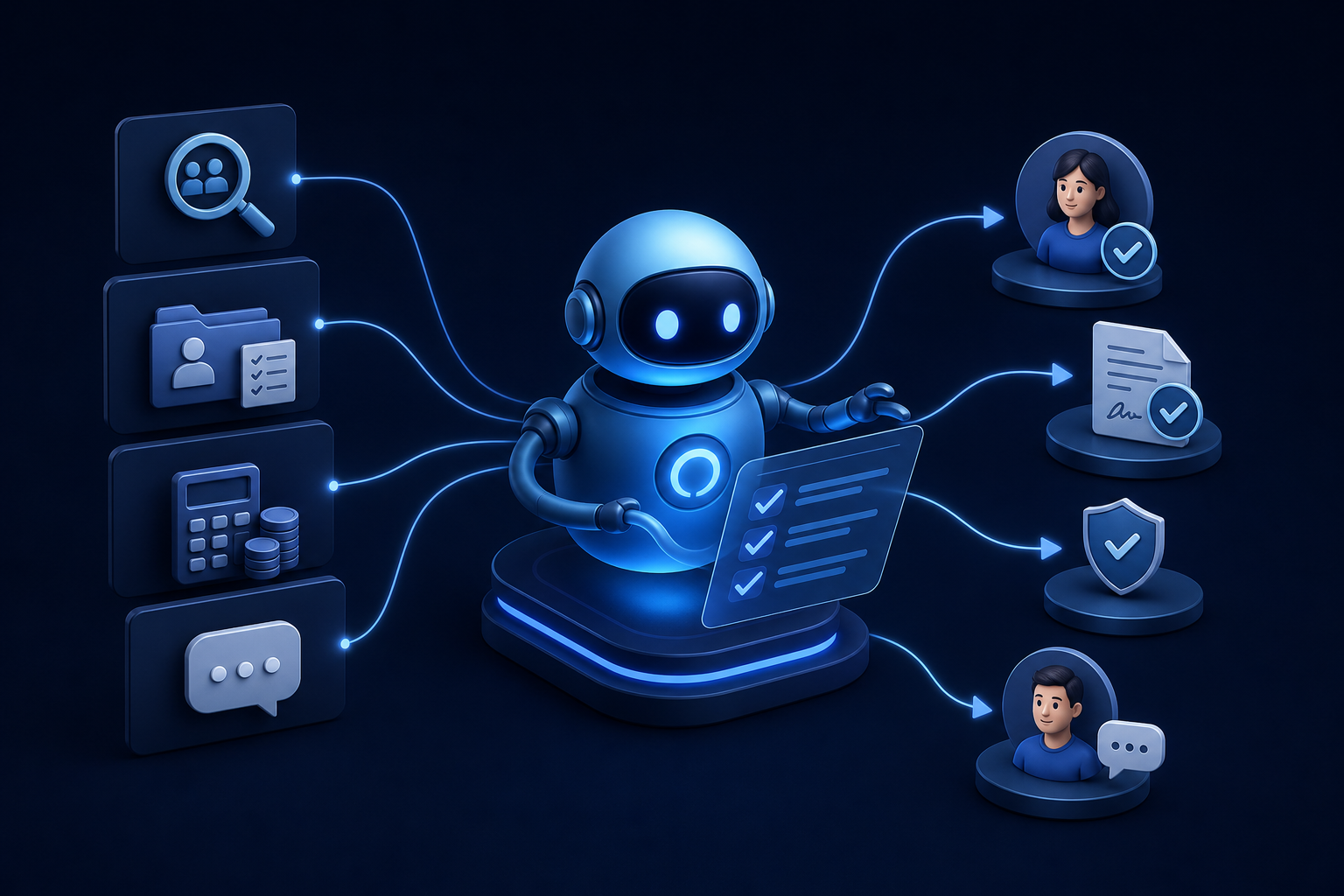
Discover how ai for hr automation handles recruiting, onboarding, payroll checks, and employee Q&A so your team can focus on work that matters.

Explore custom ai agent development paths: build in-house, buy pre-built, or partner with a specialist. Find the right fit for your team today.


