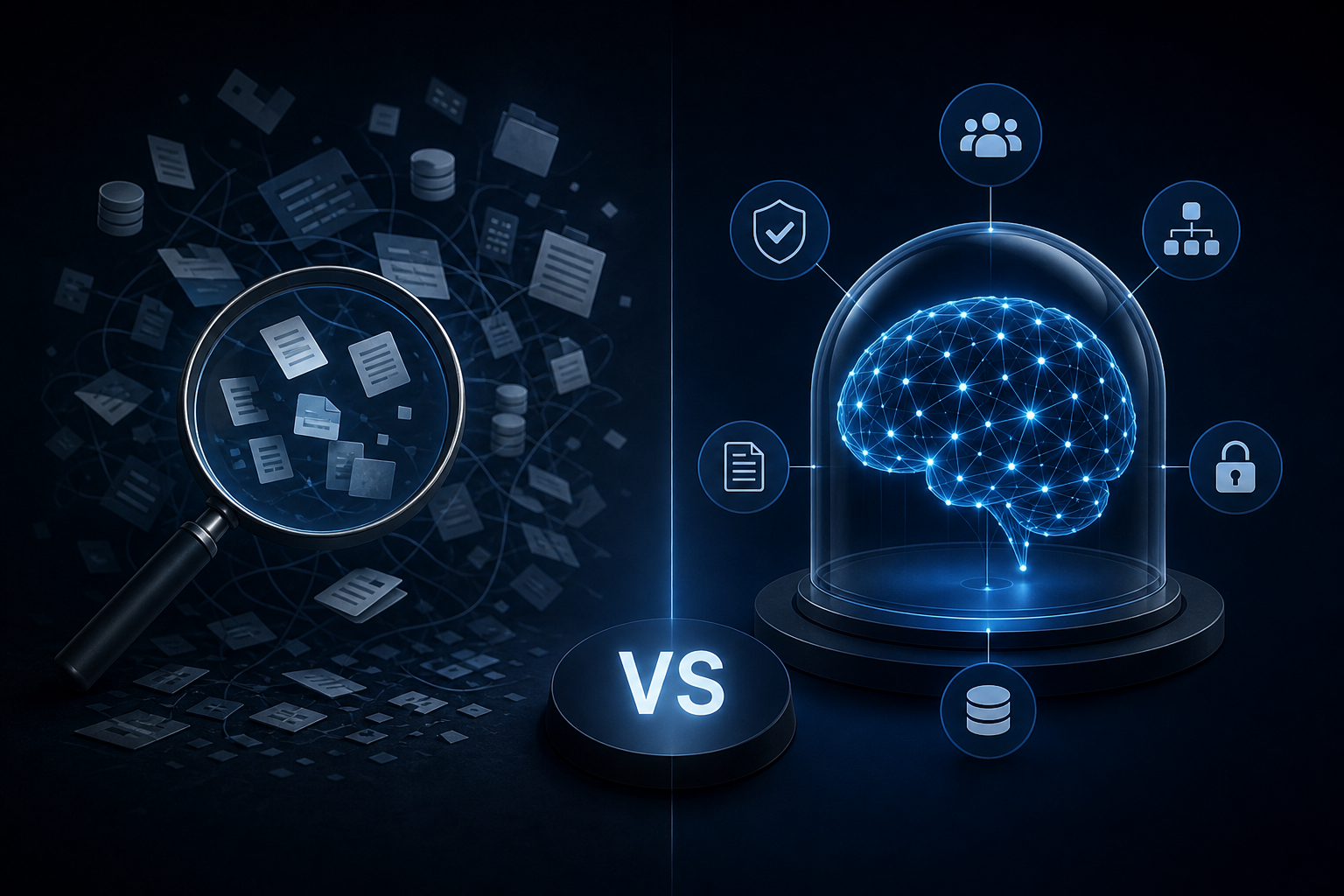
General
Enterprise AI Search vs. a Governed Company Brain: Key Differences
Discover how enterprise ai search differs from a governed company brain and which knowledge approach your team actually needs to act on trusted data.

Choosing an n8n alternative? Learn when a managed AI agency outperforms DIY automation tools — and when n8n is still the right call.
You found n8n. You read the docs, watched a few YouTube walkthroughs, maybe spun up a test instance. And somewhere in that process, a quiet question surfaced: is this actually going to ship?
That question matters more than any feature comparison. This article is about the decision underneath the tool decision — when a managed AI agency is the right n8n alternative, and when it isn't.
n8n is a workflow automation platform with a self-hosted option, a visual node editor, and a developer-friendly architecture that connects almost anything. As of October 2026, the n8n GitHub repository has roughly 207,000 stars and 61,100 forks. SAP's strategic investment valued the company at $5.2 billion in May 2026, and its annual recurring revenue was roughly $40 million in mid-2025.
Those are real signals of a real product. n8n isn't a toy.
Its licensing cost is low compared with most managed automation platforms. For a technical team that wants maximum flexibility at minimum SaaS cost, n8n makes sense on paper.
The problem isn't the tool. The problem is the assumption that the tool is the work.
When you self-host n8n, you own the infrastructure. That means you own the uptime, the updates, the credential rotation, the 2 a.m. failure alerts, and the debugging session when a workflow silently breaks because an upstream API changed its response schema.
Most teams don't price this in. They see a low license fee, compare it to a managed agency engagement, and conclude the math favors DIY. But that math leaves out engineering time to build, test, and deploy each workflow; ongoing maintenance as connected tools update their APIs; incident response when a revenue-critical automation breaks in production; documentation that disappears when the person who built it leaves; and governance — audit logs, role-based access, review gates — that nobody adds until a compliance conversation forces it.
A workflow that runs fine in a sandbox breaks differently in production. And when it breaks in production, it's not just a technical problem — it's an ops problem that lands on whoever owns the process it was supposed to replace.
To be direct: n8n is a strong choice for teams with a dedicated technical operator, a tolerance for infrastructure ownership, and workflows that are genuinely self-contained.
If your ops lead is comfortable in a terminal, your workflows don't touch customer financial data or revenue-critical reporting, and you have the internal bandwidth to maintain what you build — n8n gives you flexibility that no managed service matches at that price point.
The same logic applies to Make and Zapier. Zapier is easier to maintain but more expensive at volume. Make sits in between. All three are tools — not systems, not intelligence layers, and not AI workers.
The ceiling appears when three things converge: the workflows become revenue-critical, the team lacks dedicated technical ownership, and the business needs the system to push information rather than wait to be queried.
Here's the specific scenario where DIY breaks down. You build a Slack notification that fires when a HubSpot deal moves to a certain stage. It works. Then your CRM admin renames a field during a pipeline cleanup. The workflow breaks silently. Nobody notices for four days. Three follow-ups don't happen. One deal slips.
That's not a hypothetical — it's the operational reality of automation without governance. No audit log. No review gate. No owner accountable for the failure.
Gartner forecasts that 40% of enterprise applications will feature task-specific AI agents by the end of 2026, up from less than 5% in 2025. The direction is clear. But the gap between "we have some automations" and "we have a governed system with AI workers executing on a schedule" is exactly where most SMB operations teams are stuck right now.
A managed agency doesn't replace n8n's functionality. It replaces the assumption that you'll build, govern, and maintain a production-grade AI system yourself while also running your business.
Singular Innovation builds two things for each client. First, a Company Brain — a governed context layer that indexes and unifies data from Slack, HubSpot, QuickBooks, Airtable, Google Sheets, Microsoft Teams, and other tools already in your stack. No new software licenses. No rip-and-replace. One searchable source of truth with role-based permissions and audit logs built in.
Second, HyperAgents — custom AI workers deployed on top of that layer to handle recurring tasks on a defined schedule. Daily executive briefings. Auto-generated dashboards. Cross-tool task coordination. These aren't chat interfaces. They don't wait for a query. They run.
The first working capability ships in 10 business days from signed MSA, with a defined scope, a defined owner, and a defined delivery date. That's not a roadmap. It's a deliverable.
Everything built — every workflow, prompt, automation, and line of code — transfers to you on day one. You own it. No vendor lock-in, no ongoing dependency on the agency to keep it running. If you want a fuller picture of what that ownership actually looks like, this breakdown on AI system ownership is worth reading before you sign anything.
Choose n8n (or Make, or Zapier) if you have a technical operator who can own the infrastructure, your workflows are internal, non-revenue-critical, and self-contained, you have bandwidth to maintain and document what you build, and you want maximum flexibility at the lowest SaaS cost.
Choose a managed AI agency if your workflows touch revenue-critical data — financial reporting, CRM pipeline, executive visibility — you don't have a dedicated technical owner for automation infrastructure, you need AI workers that push information on a schedule rather than a search tool you query, you want a governed system with audit logs, role-based permissions, and review gates, or you want to own the IP rather than rent access to a platform.
Not ready for either yet if your core processes aren't documented, you don't know which workflows are highest-value to automate first, or you haven't run an AI readiness assessment.
That last point is where most teams should start. Singular's free AI Readiness Audit maps which processes are ready to automate and in what order — before you commit budget to any tool or agency.
n8n is cheap on licensing. The real cost is the engineering time to build and maintain it. If your ops lead spends 15 hours building a workflow, 3 hours a month maintaining it, and 2 hours per incident response, that's real labor cost that never shows up in your SaaS invoice.
Pricing for a managed agency engagement depends on scope — book a call to get a number specific to your situation. What you're buying is a contained project with a defined deliverable, not a retainer or a roadmap. If you want to understand what drives that number before getting on a call, this breakdown on AI automation agency costs in 2026 walks through it by engagement type.
The comparison isn't license cost versus agency cost. It's "what does it cost to build and own a production-grade AI system with governance" versus "what does a SaaS license cost." Those are different questions with different answers.
When people search for an n8n alternative, they're usually asking one of two different questions.
The first: which automation platform fits my technical stack better? That's a tool comparison, and n8n, Make, and Zapier all have legitimate answers.
The second — the one that actually matters at the $5M to $20M revenue stage — is: how do I get a working AI system inside my operations without betting the outcome on my team's ability to build and maintain it? That's not a tool question. That's a build-versus-buy question.
If you're asking the second question, a managed agency isn't a more expensive version of n8n. It's a different category of answer.
Book your free 30-minute AI Audit at singular-innovation.com to find out which workflows in your stack are ready to automate — and whether you should build them yourself or have them delivered.
What is the main difference between n8n and a managed AI agency? n8n is a workflow automation platform you build and maintain yourself. A managed AI agency designs, builds, and delivers a governed AI system inside your existing stack, with full client ownership of everything built. The agency model includes governance, audit logs, and AI workers that execute on a schedule — none of which come standard with a DIY automation tool.
Is n8n cheaper than hiring an AI agency? n8n's license is inexpensive, but the license is only part of the cost. Engineering time to build, maintain, and recover from failures adds significant labor cost that doesn't appear in your SaaS invoice. A managed agency engagement delivers a scoped, production-ready system with defined ownership. The right comparison is total cost of ownership, not license cost alone.
Can n8n replace a Company Brain or AI workers like HyperAgents? n8n can automate workflows between tools, but it doesn't provide a governed multi-tool context layer or proactive AI workers that push intelligence on a schedule. A Company Brain indexes and unifies data across your entire stack into one searchable source of truth. HyperAgents execute recurring tasks autonomously. These are architectural layers that sit above what any single automation platform delivers.
When should I choose n8n over a managed agency? n8n is a strong fit if you have a dedicated technical operator, your workflows are non-revenue-critical, and you have the bandwidth to own the infrastructure. If your automations touch financial data, executive reporting, or CRM pipeline — or if you don't have a technical owner — a managed agency is the more reliable path.
Do I own the workflows if a managed agency builds them? With Singular Innovation, yes. All workflows, prompts, automations, code, and documentation transfer to you on day one of the engagement. There is no vendor lock-in and no ongoing license dependency on the agency to keep your systems running.
How long does it take a managed agency to deliver a working system? Singular delivers the first working AI capability in 10 business days from signed MSA. That's a scoped deliverable with a defined owner and delivery date — not a prototype, roadmap, or proof of concept.
What should I do before choosing between n8n and a managed agency? Run an AI readiness assessment first. It maps which processes are ready to automate, in what order, and whether your stack and team are set up to support a DIY or managed approach. Singular's free AI Readiness Audit is available at singular-innovation.com with no commitment required.
Discover how enterprise ai search differs from a governed company brain and which knowledge approach your team actually needs to act on trusted data.
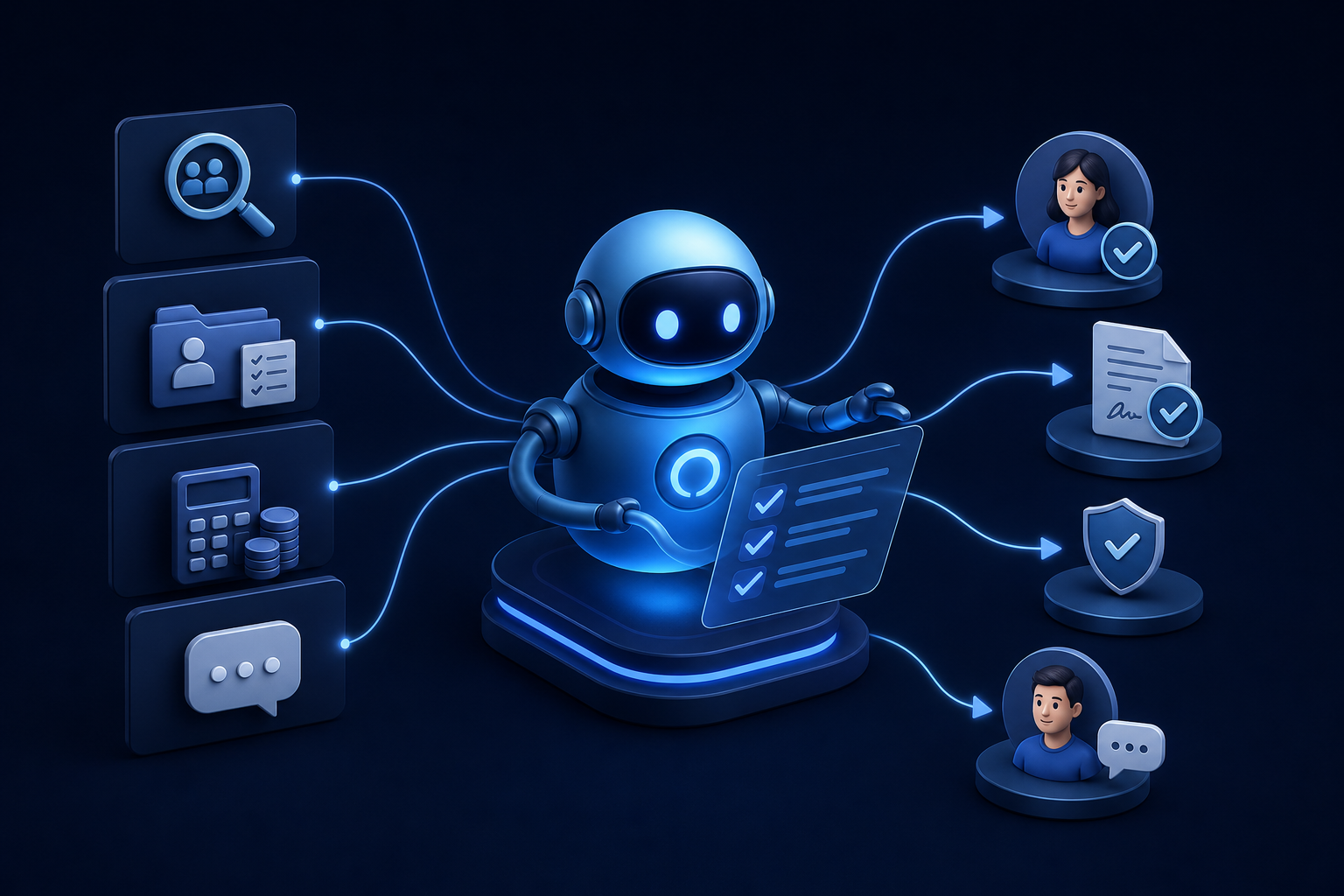
Discover how ai for hr automation handles recruiting, onboarding, payroll checks, and employee Q&A so your team can focus on work that matters.

Explore custom ai agent development paths: build in-house, buy pre-built, or partner with a specialist. Find the right fit for your team today.


