General
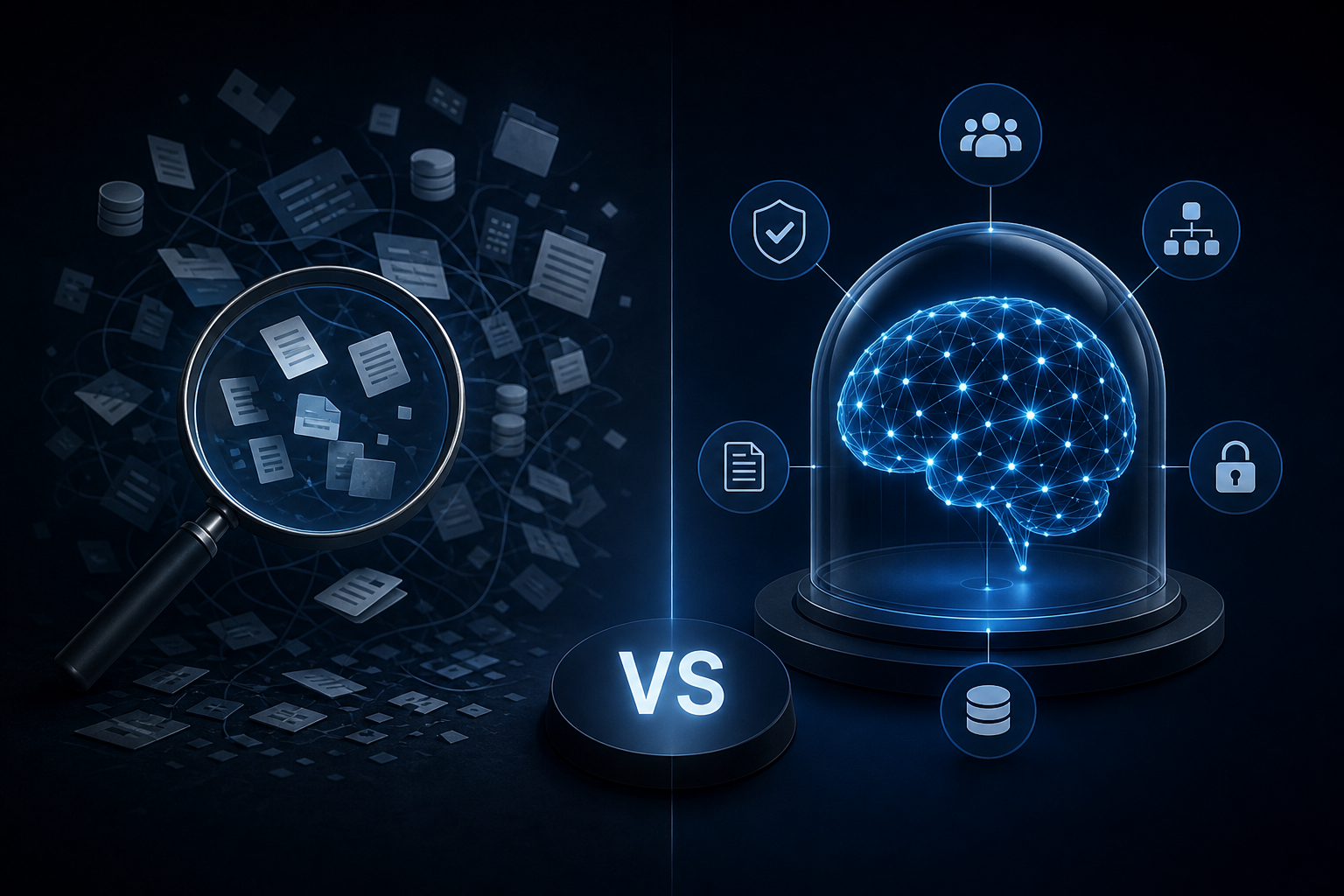
Enterprise AI Search vs. a Governed Company Brain: Key Differences
Discover how enterprise ai search differs from a governed company brain and which knowledge approach your team actually needs to act on trusted data.
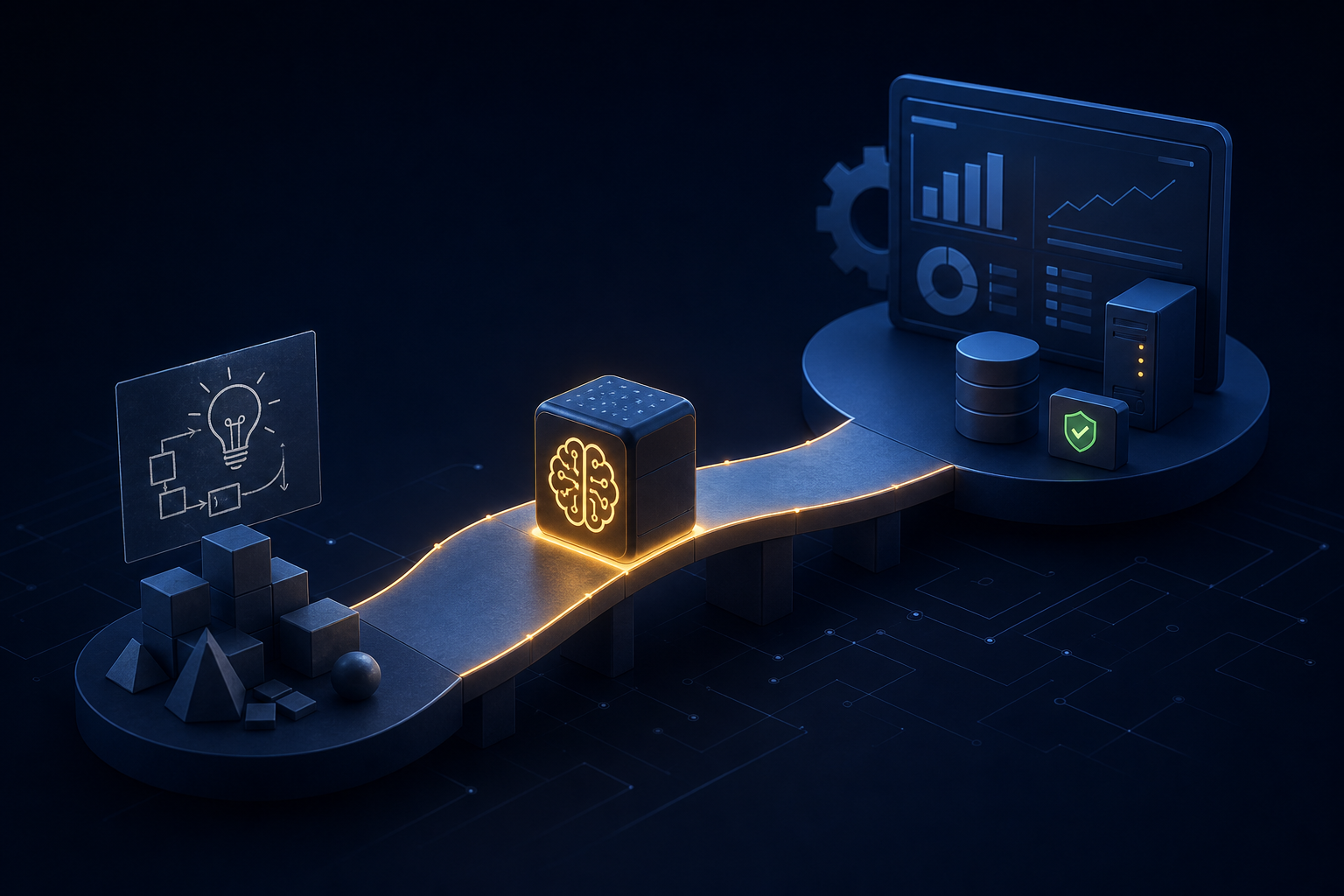
Structure an AI proof of concept that actually reaches production — not just a slide deck. A practical guide for founders and ops leads.
Most AI proofs of concept die in a Google Slide deck. You've seen it: a consultant runs a six-week discovery, presents a "framework," and hands you a roadmap that requires three more phases before anything actually runs. The POC becomes the product. Production never arrives.
If you're a founder or ops lead who's been through that cycle, this article is for you. Here's how to structure an AI proof of concept so it moves from idea to working system — not from idea to presentation.
The failure mode isn't technical. It's structural.
Most POCs answer the wrong question. Teams spend weeks asking "can AI do this?" when the real question is "can we run this in production, inside our existing tools, without breaking what already works?" Those are completely different problems.
The first question gets you a demo. The second gets you a working system.
Scope inflation kills the rest. Someone adds a second use case in week two. A stakeholder asks for a dashboard. The original problem gets buried under feature requests, and nothing ships. By the time the team resurfaces, the budget is gone and the business case has evaporated.
A POC that reaches production has four properties that most don't.
It solves one specific, recurring problem. Not "improve our operations." Something like: "Every Monday, our ops lead spends four hours pulling data from HubSpot, QuickBooks, and Slack to write the weekly performance brief. That brief is always late and always inconsistent." That's a problem with a defined input, a defined output, and a clear owner.
It runs inside your existing stack. A POC that requires a new tool, a new login, or a new data pipeline will hit friction the moment it leaves the demo environment. The systems your team already uses — Slack, Airtable, HubSpot — are where it needs to live and run.
It has a named owner on day one. Not "the AI team." One person who is responsible for the output, who can flag when something breaks, and who has authority to approve the workflow going to production.
It ships to a real decision. The POC ends with a binary: this runs in production, or it doesn't. Not "we need more data" or "let's extend the timeline." A hard stop forces honest evaluation.
The best POC candidates share three traits: they're high-frequency, they're currently manual, and they have a clear success condition.
High-frequency means the task happens at least weekly. A monthly report is a weak candidate. A daily standup summary, a weekly pipeline brief, or a recurring client update is a strong one.
Currently manual means a person is doing it with copy-paste, spreadsheet formulas, or memory. If the process already has partial automation, the POC becomes a migration project — harder to scope cleanly.
Clear success condition means you can answer "did this work?" without a committee. "The brief was accurate and delivered by 9 AM without human input" is a success condition. "The team felt more informed" is not.
If you're not sure which problem to start with, scoping the project correctly before you build anything is worth doing before you write a single prompt.
Most POCs fail in production because the data situation was never fully mapped during the build. The demo ran on clean sample data. Production runs on messy, inconsistent, real data.
Before you write any logic, answer these questions:
This isn't glamorous work. It's the work that separates a demo from a system. A governed data layer — one that pulls from your actual HubSpot deals, your actual QuickBooks invoices, your actual Slack channels — is what makes an AI worker reliable rather than impressive in a controlled environment.
If Airtable is part of your stack, preparing it properly for AI agent access before the POC starts will save you significant rework later.
Open-ended POCs don't ship. A fixed window forces prioritization and gives the team a real deadline to hold each other to.
Ten business days is a workable window for a first working release of a single, well-scoped AI workflow. That's not a fully scaled system. It's a working version of one thing, running in your actual environment, with a named owner, that you can evaluate against your success condition.
If ten days sounds short, the scope hasn't been tightened yet. A POC that requires twelve weeks of discovery hasn't been scoped — it's been deferred.
The fixed window also protects you from scope creep. When someone asks to add a second use case, the answer is simple: "That's the next POC. This one ships on day ten."
This is where most internal teams and many agencies cut corners.
A demo can run on hardcoded values, manual triggers, and a single test account. Production can't. If your POC doesn't include error handling, doesn't account for permission levels, and has no way to audit what the AI worker actually did, it will break the first week it runs without supervision.
Build these constraints in from the start:
These aren't bureaucratic requirements. They're what make the difference between a system your team trusts and one they quietly stop using after the first mistake.
When the window closes, run the evaluation against exactly what you defined in Step 1 — not against new criteria that emerged during the build.
Did the brief arrive by 9 AM without human input? Yes or no. Was the data accurate? Yes or no. Did the named owner need to intervene, and how many times?
If the answer is yes across the board, you have a production candidate. If not, you have a diagnosis. Either the problem was scoped wrong, the data wasn't clean enough, or the success condition was unrealistic. All three are useful findings. None of them require another six-week discovery phase.
A successful POC answers one question: this works. It doesn't answer: what's next?
That next question is whether to expand the same workflow, add a second AI worker, or build a knowledge layer that connects multiple workflows into a coherent operating system. That's where a single POC stops being a POC and starts being infrastructure.
For teams at that stage, understanding what a full AI agency engagement looks like week by week helps set realistic expectations before committing to a larger scope.
If you're earlier in the process — still figuring out whether your team is ready for any of this — the path to a working AI system without a data science hire covers the foundational questions worth answering first.
The goal of a proof of concept isn't to prove that AI is interesting. It's to prove that a specific AI worker can run reliably in your environment, on your data, inside your tools, without a dedicated engineer watching over it.
Structure it that way, and production isn't a distant phase. It's the natural next step.
To scope a POC that's built to ship, book a free 30-minute AI Audit at singular-innovation.com. The audit maps the highest-value starting point for your specific stack and hands you a clear scope before any build begins.
What is an AI proof of concept? An AI proof of concept is a time-boxed build that tests whether a specific AI workflow can solve a defined business problem using real data inside your existing tools. The goal is a working system you can evaluate against a clear success condition — not a demo, not a slide deck.
How long should an AI POC take? A well-scoped AI POC for a single workflow should produce a working first release in no more than ten business days. Longer timelines usually signal a scope problem, not a technical one. If the discovery phase alone takes weeks, the problem hasn't been defined clearly enough.
Why do most AI proofs of concept fail to reach production? The most common reasons are scope inflation during the build, data that was never properly mapped before work started, and a lack of production constraints like error handling, audit logs, and review gates. POCs built on demo-quality data and hardcoded values break the first week they run without supervision.
What makes a good problem for an AI POC? The best candidates are high-frequency tasks (at least weekly), currently done manually, with a success condition you can evaluate without a committee. A recurring report, a weekly brief, or a daily data pull from multiple tools are strong starting points.
Do I need to replace my existing tools to run an AI POC? No. A POC built to reach production should run inside the tools your team already uses — Slack, HubSpot, Airtable, QuickBooks. If the POC requires a new platform or a new login, it will hit adoption friction the moment it leaves the demo environment.
How is an AI POC different from a full AI implementation? A POC proves one thing works. A full implementation connects multiple workflows, builds a persistent knowledge layer, and deploys AI workers across different functions. The POC is the gate you pass through before committing to the larger build.
What should I own at the end of an AI POC? You should own the workflow, the prompts, the automations, and the documentation. If the agency or vendor retains ownership of what was built, you're renting a result rather than building an asset. Any POC worth running hands you the full IP on day one.
Discover how enterprise ai search differs from a governed company brain and which knowledge approach your team actually needs to act on trusted data.
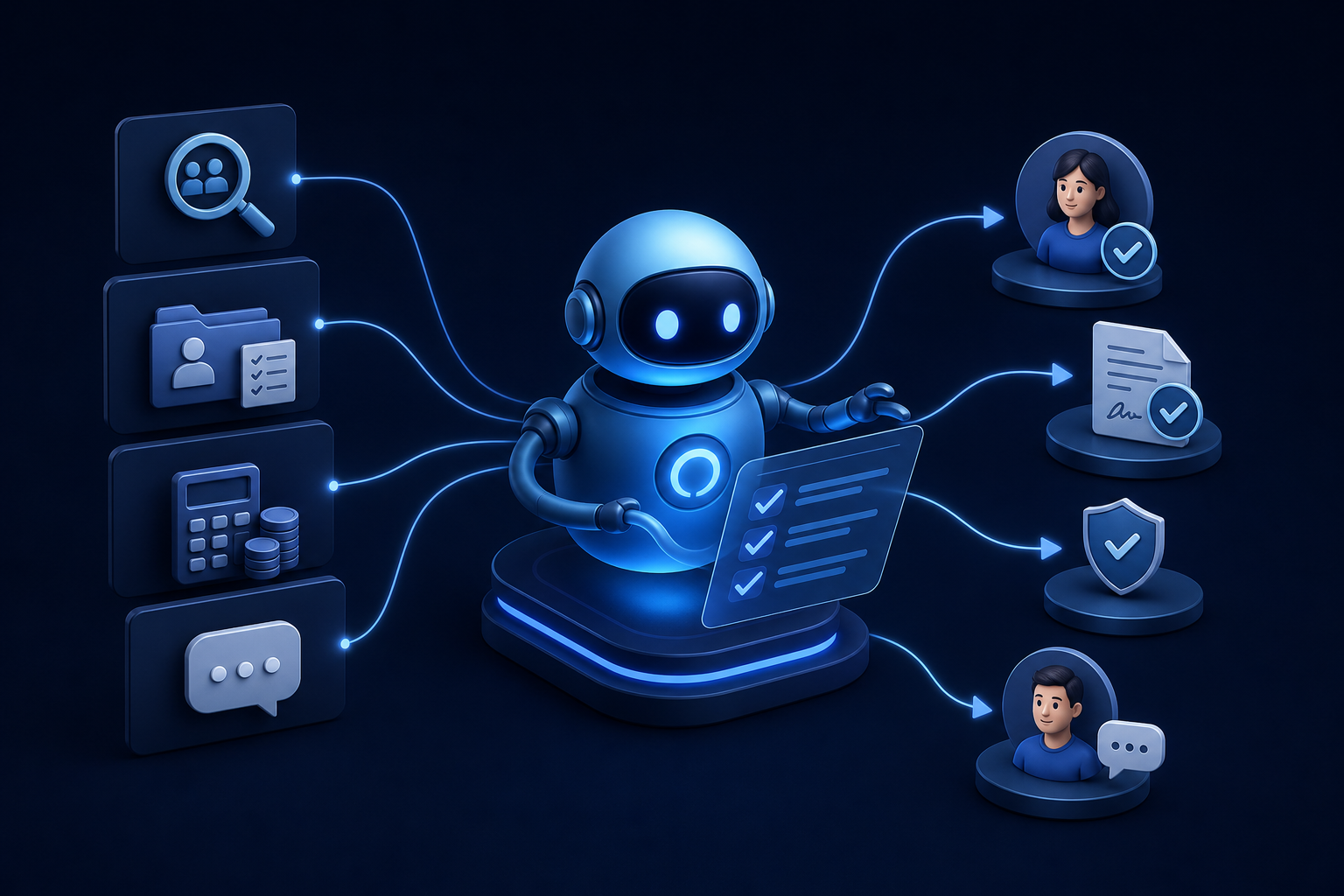
Discover how ai for hr automation handles recruiting, onboarding, payroll checks, and employee Q&A so your team can focus on work that matters.
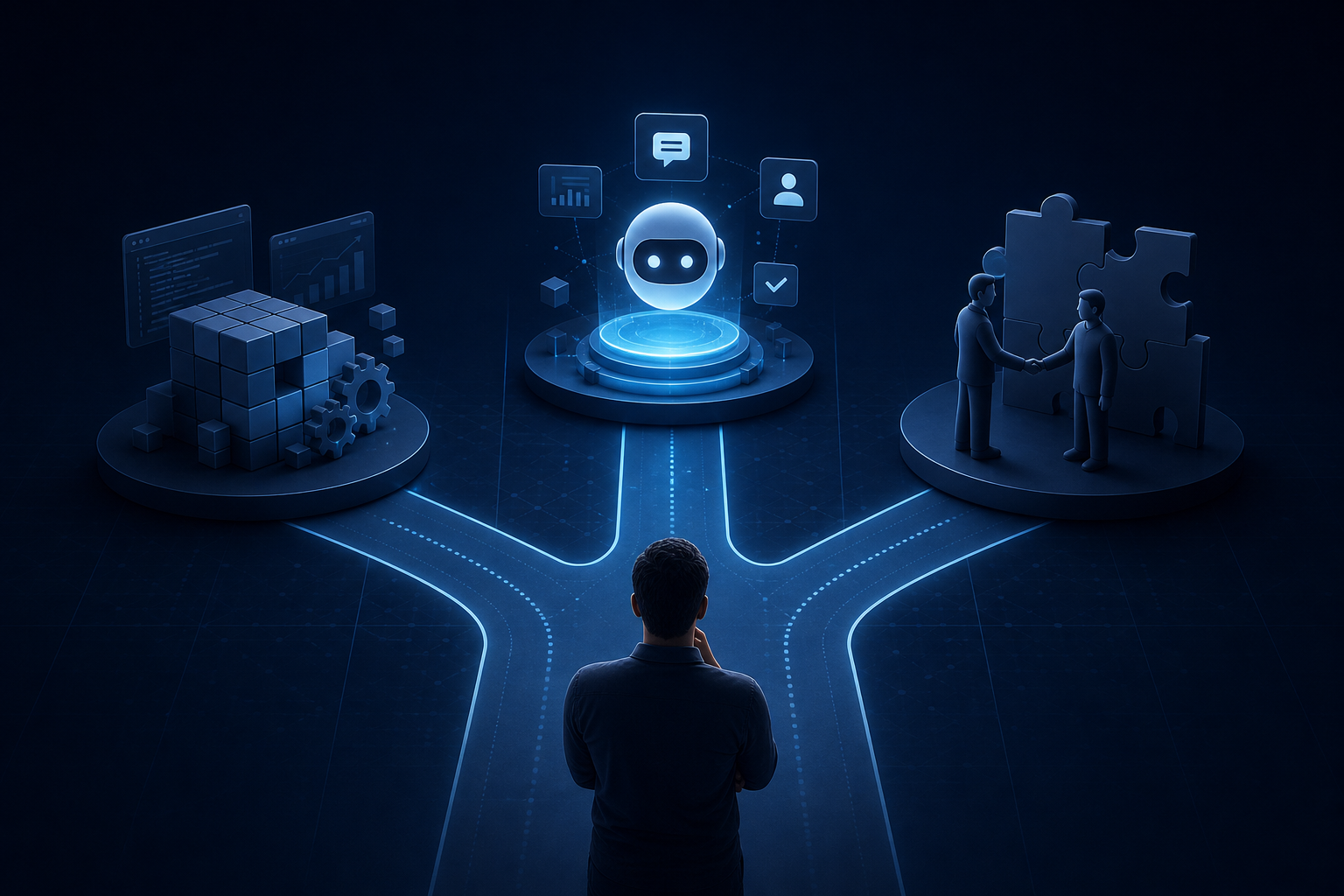
Explore custom ai agent development paths: build in-house, buy pre-built, or partner with a specialist. Find the right fit for your team today.


